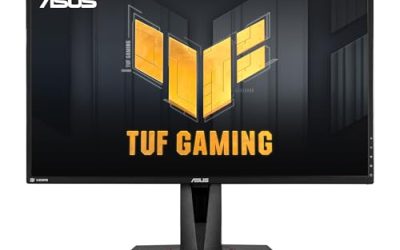
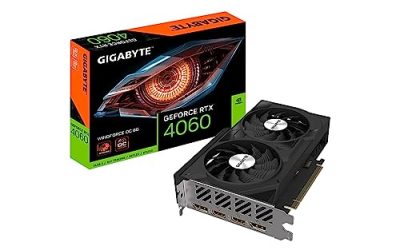
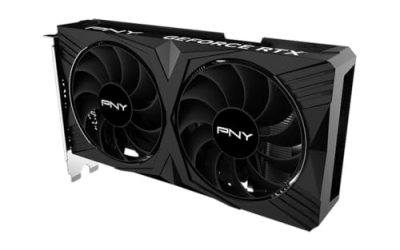
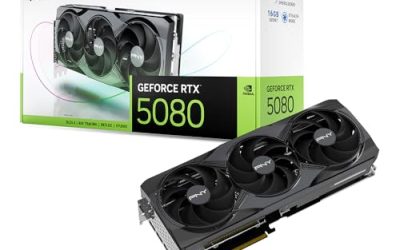
You do not have to buy your dream PC in one transaction. A staggered upgrade path spreads the cost over one to three years, letting you ride sales and avoid paying for performance you cannot use yet. The trick is choosing a foundation that will not trap you, then upgrading the right part at the right time.
As an Amazon Associate we earn from qualifying purchases at no extra cost to you.


Our Top Picks
 ASUS Dual GeForce RTX 4060 Ti EVO OCRTX4060Ti|OC|8GB|EVO8.9 x 4.9 x 2 inches1.4 poundsCheck on Amazon


Top 3 picks at a glance
Build the platform to last, upgrade the performance later
Some parts are “platform” and some are “performance.” Platform parts, the motherboard, power supply, case, and often RAM, define what upgrades are possible. Performance parts, the GPU and CPU, define how fast you are today. Spend a little extra on a flexible platform up front so the cheap upgrades stay open later.
Buy PSU and motherboard with headroom
A power supply with roughly 150W of headroom above your current draw, for example a quality 650–750W 80+ Gold unit, means a future GPU jump does not force a second purchase. A motherboard on a current socket with a decent VRM lets you drop in a stronger CPU later without a new board.
A sample three-stage path
| Stage | Timing | Focus | Rough spend |
|---|---|---|---|
| 1: Foundation | Month 0 | Case, 650–750W PSU, mid-tier board, 16–32GB RAM, entry CPU, midrange GPU | $700–950 |
| 2: GPU jump | Month 8–14 (on sale) | One tier up on the graphics card | $300–500 |
| 3: CPU + storage | Month 18–30 | Stronger CPU on same socket, extra NVMe | $220–380 |
Each stage targets the part that is actually holding you back at that moment, which is how you get the most frames per dollar over time.
Upgrade in the right order
For most gamers the GPU is the first and biggest lever, since it drives frame rates at 1440p and 4K. The CPU comes second, and mostly matters for high-refresh 1080p, heavy simulation games, and streaming. RAM is worth pushing to 32GB once prices dip, and storage is the cheapest quality-of-life upgrade at any time.
Avoid the traps that block upgrades
Do not pair a strong future GPU with a bargain 450–500W PSU, and do not buy a case too small for a longer graphics card. Check GPU length and cooler clearance against your case before stage two. A $10 measurement saves a $100 mistake.
Time each stage to a sale
Because your machine already works, you have the luxury of patience. Wait for seasonal price drops on the GPU and CPU rather than paying street price. Set alerts and pounce only when the discount is real against the recent average, not the inflated “list” price.
FAQ
Should I upgrade CPU or GPU first?
Usually the GPU. If your frame rate drops most when you raise resolution or settings, the GPU is the bottleneck. If frames sag in CPU-heavy games or while streaming, prioritize the processor instead. Monitor which one hits 95–100% usage in your games to confirm.
Is a staggered path more expensive overall?
Slightly, because you may pay a small premium for a flexible platform and buy parts at different times. But you avoid overspending on future-proofing you never use, and you catch sales along the way, which usually nets out cheaper for real-world buyers.
Bottom line
Spend up front on a roomy PSU, a current-socket board, and a case that fits a bigger GPU, then upgrade the graphics card and CPU one at a time on sale. A staggered path turns a single painful purchase into a series of affordable, well-timed wins.
Related guides
More from Amazon
Programs that pair well with the guide above. Offers and eligibility are set by Amazon and may change.
Free shipping on eligible items, Prime Video and more. Eligible new members can start with a free trial.
Start a Prime free trialAd-free music streaming. Eligible new subscribers can start with a free trial.
Try Music Unlimited freeA Prime membership for ages 18-24 with a trial period. Eligibility is set by Amazon.
See Prime for Young AdultsAudiobooks and podcasts to listen to on the go. Eligible new members can start with a free trial.
Try Audible freeAs an Amazon Associate we earn from qualifying purchases.