The best Prime Day MSI laptop deals in 2026 will usually be the models that combine an RTX 4060 or RTX 4070 GPU, a 144Hz-or-faster display, dual-channel memory, and an upgrade path at a price that undercuts their normal market range.
As an Amazon Associate we earn from qualifying purchases at no extra cost to you.



Our Top Picks
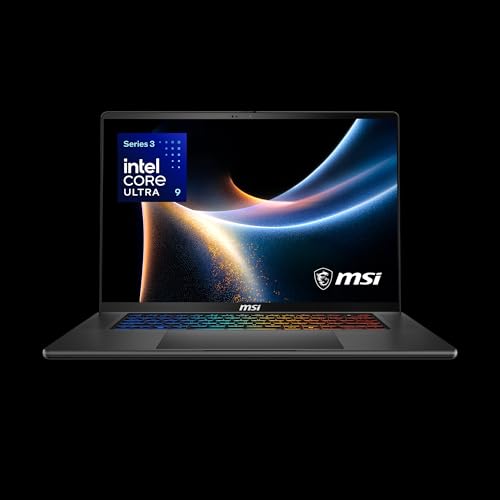
 msi Vector 16 HX AI Gaming Laptop 16"16GB RAM | 1TB SSD19 x 12.4 x 3.5 Inches7 poundsCheck on Amazon


Top 3 picks at a glance
Quick picks by buyer type
| Buyer and target price | MSI laptop class or model family | What to prioritize | Why it makes the shortlist |
|---|---|---|---|
| Lowest-cost 1080p gaming, usually $700–$950 | MSI Thin 15 or Katana 15 | RTX 4050, 144Hz display, 16GB RAM | Good entry performance, but check cooling, battery capacity, and RAM layout |
| Best overall value, usually $900–$1,300 | MSI Katana 15 or Cyborg 15 with RTX 4060 | 8GB VRAM, 144Hz or 165Hz panel, upgradeable memory | The strongest balance of graphics performance and price for 1080p |
| Portable gaming, usually $1,000–$1,500 | MSI Cyborg 15 or Stealth 16 | Weight below about 2kg, USB-C charging support, efficient CPU | Easier to carry, although thin designs can have lower GPU power limits |
| High-refresh competitive gaming, usually $1,400–$2,000 | MSI Raider or Vector with RTX 4070-class graphics | 240Hz panel, high-wattage GPU, strong cooling | Better sustained performance and faster screens than entry-level chassis |
How to identify a real MSI deal
Do not judge a Prime Day offer by its percentage-off label alone. Compare the listed configuration against the normal market range for the same GPU, screen, memory, storage, and CPU class. A laptop with an RTX 4060, 16GB of RAM, and a 1TB SSD can be a better buy than a nominally cheaper RTX 4070 model with only 8GB of memory and a dim 60Hz panel.
For a sensible 2026 buying threshold, treat an RTX 4050 MSI laptop as compelling near the lower end of the $700–$900 range, an RTX 4060 system as compelling around $900–$1,200, and an RTX 4070 system as compelling around $1,300–$1,700. These are general market ranges rather than guaranteed sale prices; CPU generation, GPU wattage, display quality, and storage can move the value substantially.
GPU comparison: RTX 4050, 4060, or 4070?
RTX 4050: choose it for affordable 1080p
An RTX 4050 laptop typically has 6GB of GDDR6 VRAM and is best matched with a 1080p display. It can handle modern games at high settings with sensible use of upscaling, but the 6GB frame-buffer limit makes ultra-quality textures less attractive in newer titles. MSI Thin 15 and entry Katana 15 configurations often compete in this tier.
Choose RTX 4050 if the laptop is substantially cheaper than the nearest RTX 4060 model, or if the games you play are mainly esports titles, older releases, and mainstream 1080p games. Avoid paying a small premium for it when an RTX 4060 is available, because the latter’s 8GB VRAM and wider 128-bit memory bus provide more headroom.
RTX 4060: the value sweet spot
The RTX 4060 laptop GPU generally offers 8GB of VRAM and a 128-bit memory bus. It is the most useful target for an MSI gaming laptop deal because it suits 1080p high-refresh gaming without requiring the larger, heavier chassis associated with top-tier hardware.
In published reviews, RTX 4060 laptops commonly deliver roughly 80–160 frames per second in competitive 1080p games and approximately 50–100 frames per second in demanding modern games, but results vary with settings, resolution, CPU, GPU power limit, and game patches. Those ranges are not a guarantee; the laptop’s cooling design can matter as much as the GPU name.
RTX 4070: worth it for higher settings, not every discount
RTX 4070 laptop graphics usually retain 8GB of VRAM, so the upgrade is primarily about additional shader performance rather than a larger frame buffer. It makes more sense for a 1600p or 1440p screen, heavy ray tracing, or a buyer who wants to keep the laptop for several years.
For ordinary 1080p gaming, an RTX 4070 MSI laptop is not automatically better value than a well-priced RTX 4060 model. Check the GPU’s advertised maximum graphics power. A higher-power RTX 4060 can narrow the gap with a low-power RTX 4070, while also costing less.
Screen refresh rate: match the panel to the GPU
A 144Hz display is the sensible baseline for most MSI gaming laptops. It gives noticeably smoother motion than 60Hz without demanding extreme frame rates. A 165Hz or 240Hz panel is valuable if you play Counter-Strike 2, Valorant, Overwatch 2, or similar games and your CPU-GPU combination can regularly exceed 144 frames per second.
There is a simple bandwidth reason not to overvalue very high refresh rates. A 1920×1080 image contains 2.07 million pixels per frame. At 144Hz, the GPU must produce about 299 million pixels per second; at 240Hz, that rises to about 498 million pixels per second. That is a 67% increase before accounting for shading, lighting, and game-engine overhead. A 240Hz screen is therefore a poor reason to pay extra for an RTX 4050 if the games will usually run below 144 frames per second.
For 1600p or 1440p MSI displays, favor RTX 4070-class graphics or better. The higher resolution contains about 78% more pixels than 1080p, so it benefits from upscaling technologies such as DLSS more often. Also check response time, brightness, color coverage, and whether the panel supports adaptive sync; refresh rate alone does not determine display quality.
Battery life and weight: the trade-off behind thin MSI laptops
Gaming laptops are rarely all-day battery devices. A thin MSI Cyborg or Stealth model may be more comfortable to carry than a Katana or Raider, but it can sacrifice GPU power, port selection, cooling capacity, or battery size. A heavier chassis often sustains performance better during long gaming sessions.
As a practical comparison, a 65Wh battery powering a laptop that averages 12 watts during light web use has a theoretical runtime of 5.4 hours after allowing for conversion losses: 65Wh × 0.85 ÷ 12W. Gaming is completely different. At an average 80 watts, the same battery would last only about 40 minutes under idealized continuous load, and performance will usually be restricted on battery power.
| Design target | Typical weight range | Battery expectation | Best match |
|---|---|---|---|
| Thin and portable | About 1.7–2.0kg | Roughly 4–7 hours of light use, configuration dependent | Students, commuters, and occasional gamers |
| Balanced gaming | About 2.2–2.5kg | Roughly 3–6 hours of light use | Most Katana and mid-range gaming buyers |
| Maximum sustained performance | About 2.6kg or more | Often shorter away from the charger | Desktop replacement and high-refresh gaming |
Use battery capacity as a comparison point, not a promise of runtime. CPU efficiency, screen brightness, refresh-rate settings, discrete-GPU behavior, and background applications can change the result substantially.
Upgradeable RAM and storage: inspect the exact configuration
Upgradeability is one of the most valuable differences between apparently similar MSI deals. Many MSI gaming laptops provide two SO-DIMM memory slots and one or two M.2 SSD slots, but the exact arrangement varies by model and revision. Verify the service manual or official specification page for the precise configuration before buying.
- 16GB RAM: adequate for current gaming, especially when installed as two 8GB modules.
- 32GB RAM: preferable for streaming, game development, large mod packs, virtual machines, and long-term ownership.
- 512GB SSD: usable, but modern games can consume much of it quickly.
- 1TB SSD: the better minimum target for a primary gaming laptop.
- Upgrade check: confirm whether the advertised memory is one module, two modules, soldered memory, or a mix.
Adding a second matching memory module can restore dual-channel bandwidth when a budget configuration ships with one stick. That matters for integrated graphics and can also improve minimum frame rates in CPU-limited games. For storage, an open M.2 slot is preferable to replacing the original drive, because it preserves the operating-system installation and avoids reinstalling everything.
Decision matrix for Prime Day shoppers
| Your situation | Recommended MSI specification | Configuration to avoid |
|---|---|---|
| Competitive 1080p gaming | RTX 4060, 144–240Hz panel, strong cooling, 16GB dual-channel RAM | 240Hz display paired with an RTX 4050 that rarely reaches the refresh rate |
| AAA games at 1080p | RTX 4060, 8GB VRAM, 1TB SSD, upgradeable RAM | RTX 4050 with 8GB total system memory |
| High-resolution gaming | RTX 4070, 1600p/1440p display, adaptive sync | High-resolution panel with entry-level graphics |
| Frequent travel | Sub-2kg chassis, USB-C charging support, efficient processor, at least 1TB storage | Large Raider-class laptop if charger and weight are concerns |
| Long ownership | 32GB-capable system, two M.2 slots, replaceable Wi-Fi module where applicable | 8GB soldered memory or a single small SSD with no expansion slot |
Bottom line
For most shoppers, the best Prime Day MSI laptop deals will be an RTX 4060 Katana 15 or Cyborg 15 with a 144Hz display, 16GB of dual-channel RAM, and a 1TB SSD at roughly $900–$1,200. Choose a Thin 15 with RTX 4050 graphics only when the lower price is substantial. Move to a Raider, Vector, or comparable RTX 4070 system when you need higher-resolution gaming, sustained performance, or a 240Hz panel—and confirm that the extra GPU power is not being canceled by a low power limit, poor display, or non-upgradeable memory.