
The best Prime Day Samsung TV deals in 2026 are usually the right-size QLED for bright rooms, Neo QLED for high-impact HDR and gaming, OLED for the deepest contrast, or Crystal UHD when the goal is a large, affordable screen rather than flagship performance.
As an Amazon Associate we earn from qualifying purchases at no extra cost to you.



Our Top Picks
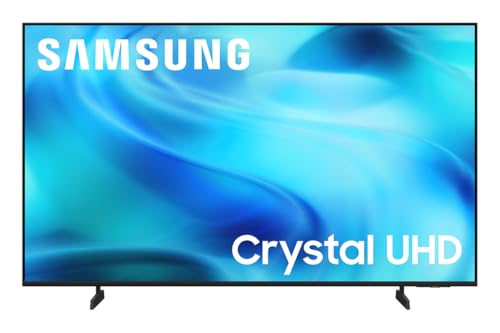 Samsung 65-Inch Class Crystal UHD U8000H Series Samsung65 Inch8.7 x 56.9 x 34.7 Inches31.8 poundsCheck on Amazon


Top 3 picks at a glance
Choose the Samsung TV type before comparing discounts
A lower price does not automatically make one category better than another. Samsung’s ranges solve different room and gaming problems:
| TV type | Best strength | Gaming features to look for | Best room fit | Typical sale range |
|---|---|---|---|---|
| Crystal UHD | Low cost and large screen sizes | 4K, ALLM, low-latency Game Mode | Bedrooms, casual gaming, darker rooms | Usually $300–$700 |
| QLED | Strong color and better brightness than basic LED TVs | 4K, HDR, ALLM; refresh rate varies by model | Mixed-use living rooms and moderate daylight | Usually $400–$1,200 |
| Neo QLED | High brightness with precise Mini-LED backlighting | 120Hz or higher on suitable models, VRR, HDMI 2.1 | Bright living rooms and serious console gaming | Usually $900–$3,000 |
| OLED | Pixel-level black levels and excellent motion clarity | 120Hz, VRR, HDMI 2.1, very low input lag | Movie rooms, bedrooms, and controlled lighting | Usually $900–$3,000 |
Best Prime Day Samsung TV deals by buyer type
Best value: Samsung Crystal UHD DU8000
The Samsung DU8000 is the sensible starting point when you want a 4K Samsung TV at a restrained price. It is available in a broad range of sizes and suits streaming, sports, and consoles that do not require every premium gaming feature.
Its main limitation is HDR impact. Crystal UHD models generally lack the local dimming needed for bright highlights and deep, controlled shadows, so games such as Cyberpunk 2077 or Alan Wake 2 will look less dramatic than on a Neo QLED or OLED.
Choose the DU8000 when the deal lets you move up to a 65-inch or 75-inch screen without exceeding your budget. Avoid paying a small premium for it if a 120Hz QLED or Mini-LED model is nearby in price.
Best all-round QLED: Samsung Q80D or a comparable 120Hz QLED
A Q80D-class QLED is a stronger gaming choice than entry-level Crystal UHD because it combines quantum-dot color with a faster panel and gaming-focused connectivity. Look for four HDMI ports, at least one HDMI 2.1 port, 4K at 120Hz, variable refresh rate, and automatic low-latency mode.
The Q80D is a good fit for a family room where the TV must handle a mixture of console gaming, sports, and daytime viewing. Its contrast is better than basic LED televisions, but it does not provide the same backlight precision as Samsung’s Neo QLED range. If your room has large windows, compare its price carefully with a discounted QN85D or QN90D.
Best bright-room upgrade: Samsung Neo QLED QN85D
The QN85D uses Mini-LED backlighting and is a particularly useful middle ground. It can produce much stronger HDR highlights than a basic QLED while retaining the punch and visibility that help games remain clear during daytime play.
Choose it for a living room with lamps or windows, especially if an OLED’s reflections or brightness behavior would be inconvenient. It is also a strong option for split-screen gaming because its sustained brightness is more comfortable in a room that cannot be darkened.
For the best deal, compare screen size rather than only the percentage discount. A 65-inch QN85D at a sensible market price can be a better purchase than a heavily reduced 55-inch premium model if your seating distance is around 8–10 feet.
Best contrast and cinematic gaming: Samsung OLED S90D or S95D
The Samsung S90D and S95D are the best choices when black level and contrast matter more than maximum room brightness. OLED pixels can switch off individually, so dark caves, space scenes, and night-time city levels have no conventional backlight blooming around bright objects.
The S90D is generally the value-oriented pick, while the S95D adds a more advanced panel and stronger anti-reflection treatment. Both are aimed at buyers who want 4K 120Hz gaming, VRR support, rapid pixel response, and a premium movie experience.
OLED is not automatically the right choice for every gaming room. A bright, static HUD displayed for many hours every day creates more long-term image-retention risk than varied content. Use the TV’s pixel-shift and screen-protection features, reduce static HUD brightness where practical, and avoid leaving a paused game on screen for extended periods.
Best newer OLED deal: Samsung S90F or S95F
If a newer-generation S90F or S95F falls into the same market range as an older S90D or S95D, prioritize the newer model when it provides the panel, brightness, and connectivity combination you need. The S95F is the premium option, while the S90F is usually the more affordable route to high-end OLED gaming.
Do not buy based only on the model-year letter. Check the exact screen size, because panel characteristics can differ between sizes. Also verify whether the model supports the PC refresh rate and resolution you plan to use.
Gaming specifications that actually affect the deal
- 120Hz or higher: Important for a PS5, Xbox Series X, or gaming PC capable of rendering above 60 frames per second.
- HDMI 2.1: Needed for 4K at 120Hz over a single cable on current consoles and many PCs. Confirm the number of full-bandwidth ports rather than assuming every HDMI input has the same capability.
- VRR: Helps reduce tearing when frame rates fluctuate. Look for compatibility with HDMI VRR and, for PC use, the relevant FreeSync or G-Sync mode.
- ALLM: Automatically switches to a lower-latency picture mode when a console or PC starts a game.
- HDR performance: A bright panel is useful, but local dimming or OLED pixel control determines how well highlights stand apart from dark areas.
- Input lag: Modern game modes are typically responsive, but exact results vary by model and picture setting. Do not infer input lag from the panel’s advertised refresh rate alone.
Bandwidth check: will your cable and PC support 4K gaming?
Uncompressed 4K at 120Hz with 10-bit color requires far more data than ordinary 4K video. A useful estimate starts with the active image: 3,840 × 2,160 × 120 equals 995,328,000 pixels per second. At 30 bits per pixel for 10-bit RGB, that is about 29.9 gigabits per second before blanking and transport overhead.
That is why 4K 120Hz HDR normally requires an HDMI 2.1 connection with roughly 40Gbps or 48Gbps of link capacity, depending on the display and signal format. Use a certified Ultra High Speed HDMI cable, set the TV input to its enhanced or high-bandwidth mode, and select 4K 120Hz in the console or Windows display settings. If the option is missing, test the cable, GPU port, and TV input individually before assuming the TV is defective.
Match the deal to your room
| Your situation | Recommended class | Why | What to avoid |
|---|---|---|---|
| Bright room with windows | Neo QLED QN85D or QN90D | High brightness and local dimming preserve HDR impact | Choosing OLED solely for its contrast |
| Dark room for films and single-player games | OLED S90D, S95D, S90F, or S95F | Perfect pixel-level blacks and fast response | Leaving static menus or HUDs on for hours |
| Competitive console gaming | 120Hz QLED, Neo QLED, or OLED with HDMI 2.1 | Low latency, VRR, and 120Hz motion | 60Hz Crystal UHD models |
| Large screen on a strict budget | Crystal UHD DU8000 | More inches per dollar for ordinary 4K content | Paying flagship prices for features you will not use |
| PC with a high-end graphics card | Neo QLED or OLED with 4K 120Hz and full-bandwidth HDMI 2.1 | Supports high-resolution VRR gaming and HDR | Assuming a TV’s “gaming” label guarantees every PC mode |
Settings to apply after buying
- Enable the enhanced HDMI mode: This allows the selected port to accept the higher bandwidth needed for 4K 120Hz HDR.
- Turn on Game Mode: It removes image processing that can add delay. Add motion smoothing only if you accept extra processing and possible artifacts.
- Enable VRR on both devices: Activate it in the TV, console, or graphics-driver control panel. Using VRR on only one side will not provide the intended result.
- Set the console to 4K 120Hz: Start with automatic resolution and HDR, then confirm the console’s information screen reports 120Hz and HDR when supported by the game.
- Calibrate HDR in the game or console: Adjust until the brightest logo is barely visible rather than raising brightness until every test pattern is obvious. This preserves highlight detail.
- Use OLED protection features: Keep pixel shifting and automatic screen protection active, and vary content if the TV displays static PC windows or game interfaces daily.
How to judge whether a Prime Day discount is worthwhile
Compare the sale price with the TV’s normal market range, not its highest advertised list price. A discount is more meaningful when it moves a Neo QLED into the price band of a standard QLED, or an OLED into the price band of a high-end Neo QLED. Also include the cost of a suitable HDMI 2.1 cable, wall mounting, and a larger size if your seating distance makes the original screen too small.
For most buyers, the decision is simple: choose the DU8000 for inexpensive big-screen 4K, a Q80D-class QLED for balanced family use, a QN85D or QN90D for bright-room HDR and gaming, and an S90D, S95D, S90F, or S95F for the strongest contrast and fastest OLED-style response. The best Prime Day Samsung TV deal is the one that preserves the features your room and gaming hardware can actually use.

