
The best Prime Day Blink camera deals depend on placement: choose a Blink Mini 2 for a low-cost indoor view, Blink Outdoor 4 for battery-powered exterior coverage, and a mixed bundle when you need both without paying for duplicate accessories.
As an Amazon Associate we earn from qualifying purchases at no extra cost to you.



Our Top Picks
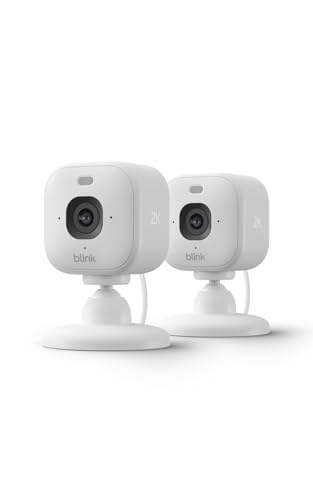


Top 3 picks at a glance
Best Blink camera deals by use case
| Best fit | Camera or bundle type | Power | Storage path | Installation effort | Typical deal-range target |
|---|---|---|---|---|---|
| Indoor room, outlet nearby | Blink Mini 2 | USB-powered | Cloud subscription or Sync Module 2 with USB storage | Low; place, plug in, aim | Usually $25–$45 per camera |
| Indoor room without a convenient outlet | Blink Indoor Camera, 2nd generation | Two AA lithium batteries | Cloud subscription or Sync Module 2 with USB storage | Low; battery setup plus mounting | Usually $40–$70 per camera |
| Front door, driveway, or garden | Blink Outdoor 4 | Two AA lithium batteries | Cloud subscription or Sync Module 2 with USB storage | Low to moderate; weather-aware mounting | Usually $45–$80 per camera |
| Doorbell plus nearby camera | Blink Video Doorbell with Outdoor 4 | Doorbell batteries or existing wiring; camera uses AA batteries | Cloud subscription or compatible local-storage setup | Moderate; doorbell positioning matters | Usually $70–$140 for a two-device bundle |
| Several cameras on one property | Outdoor 4 multi-camera bundle with Sync Module | AA batteries | Cloud plan or USB storage through Sync Module 2 | Moderate; plan camera locations first | Usually $150–$300, depending on camera count |
These are useful target ranges rather than guaranteed Prime Day prices. Promotional discounts change by bundle, generation, and region, so compare the included accessories and storage setup rather than judging a deal by the camera count alone.
Head-to-head: indoor versus outdoor Blink bundles
Blink Mini 2 for indoor coverage
The Blink Mini 2 is usually the most economical choice for a nursery, hallway, office, or pet area. Its main advantage is continuous USB power: there is no battery-runtime calculation and no need to climb a ladder every few months. It is also compact and quick to reposition.
The trade-off is installation freedom. A Mini 2 needs an outlet and is not the natural choice for an exposed exterior location unless it is paired with the appropriate weather-resistant power arrangement. A long indoor USB cable can also create an untidy or unsafe route, particularly in a child’s room.
- Choose it when the camera will remain within practical reach of an outlet.
- Prefer a bundle that includes the required power adapter rather than assuming an existing adapter is suitable.
- Use motion zones to ignore windows, televisions, or busy areas that would otherwise create unnecessary alerts.
Blink Indoor Camera, 2nd generation, for cable-free indoor placement
The battery-powered Indoor Camera is more flexible than the Mini 2 when the best viewing angle is far from an outlet. It is suitable for a shelf, spare room, or rental property where running a cable is undesirable. Its indoor-only design means it should not be treated as an exterior substitute for the Outdoor 4.
Battery life depends heavily on motion frequency, clip length, temperature, Wi-Fi conditions, and live-view use. A quiet room can last far longer than a busy entrance. If an indoor camera will monitor a frequently used doorway, a powered Mini 2 may cost less over time even if its initial bundle is similar.
Blink Outdoor 4 for exterior coverage
The Outdoor 4 is the better fit for a porch, side gate, shed, driveway, or garden because it is designed for outdoor use and runs on two AA lithium batteries. It avoids the installation complexity of routing power outside, but the mounting point must still provide a stable view and reasonable protection from direct weather exposure.
Do not compare an Outdoor 4 bundle with a Mini 2 bundle solely by camera count. The Outdoor 4 bundle may include mounting hardware and a Sync Module, while the Mini 2 bundle may require you to supply a suitable power adapter. Those included parts can change the real cost by more than a small headline discount.
Battery life: calculate the likely replacement burden
Manufacturers quote battery life under particular usage assumptions, not as a guarantee for every home. A simple workload estimate helps reveal why two identical Outdoor 4 cameras can have very different running costs.
Suppose one camera records 30 motion clips per day, each lasting 10 seconds, and live view adds another five minutes per day. That is 300 seconds of recorded motion plus 300 seconds of live view, or 600 seconds—10 minutes—of active camera use daily. If a busy location instead produces 120 clips per day, the recorded portion alone becomes 1,200 seconds, or 20 minutes. Add live view and the active time can be roughly three times higher than in the first example.
For a rough planning model, treat the quiet camera as one battery workload unit. The busier camera’s 20 minutes of clips plus five minutes of live view is 25 minutes versus 10 minutes, or 2.5 workload units. If the quiet camera’s pair of lithium batteries lasts about two years in favorable conditions, the busier location might approach replacement every 9–12 months rather than every two years. This is an estimate, not a guaranteed runtime; cold weather and weak Wi-Fi can shorten it further.
- Mount exterior cameras away from roads and sidewalks if they do not need to monitor them.
- Set activity zones to exclude trees, flags, and reflective windows.
- Keep clips short enough to identify an event without recording every second of movement.
- Use lithium AA batteries for Outdoor 4 rather than assuming ordinary alkaline cells will deliver the same life.
Subscription versus local storage
Blink cameras can use cloud storage through a Blink subscription plan, while a Sync Module 2 can provide local storage with a compatible USB flash drive. The right deal depends on whether you value remote convenience or recurring-cost control.
| Storage approach | Recurring cost | Best for | Important limitation |
|---|---|---|---|
| Cloud plan | Monthly or annual subscription | Simple remote clip access and cloud backup | Stopping the subscription can affect saved-video features and retention |
| Sync Module 2 plus USB drive | No camera-cloud fee, aside from storage hardware | Owners who want local copies and fewer recurring charges | Requires setup, compatible storage, and access to the module’s location |
| Live view without a storage plan | No storage subscription | Occasional checking rather than evidence retention | Recorded-event features may be limited without cloud or local storage |
Before buying a multi-camera deal, check whether the included Sync Module is a Sync Module 2 and whether local-storage functionality is supported for the exact cameras in the bundle. Also check whether the USB drive is included. A “camera bundle” and a “camera plus local-storage bundle” are not the same purchase.
Installation effort: what the bundle does not tell you
Indoor installation is usually a placement exercise, while outdoor installation is a coverage and weather problem. Place a camera high enough to reduce casual tampering, but not so high that changing batteries or pressing the sync button requires special equipment.
- Stand at the proposed mounting position and check the view from the camera’s expected height.
- Point slightly downward so the important area occupies the center of the frame rather than the sky or ceiling.
- Check Wi-Fi at the mounting location before drilling. A good signal beside the router does not prove that a distant wall or garage has adequate coverage.
- For a door, aim to capture a person’s face and the approach path, not just the top of a visitor’s head.
- After installation, trigger motion from several directions and adjust the angle or activity zones to reduce false alerts.
For a rental, choose a Mini 2 on a shelf or a battery-powered indoor camera with a removable mounting solution. For a permanent home, an Outdoor 4 bundle is usually worth considering when exterior cable routing would be expensive or visually awkward.
Decision matrix for the best Prime Day Blink camera deals
| Your situation | Best choice | Why |
|---|---|---|
| You need one indoor camera beside an outlet | Mini 2 | Lowest battery maintenance and simple setup |
| You need indoor coverage where cables are impractical | Indoor Camera, 2nd generation | Flexible placement without outdoor hardware |
| You need a camera at a gate or driveway | Outdoor 4 | Outdoor design and battery-powered installation |
| You need three or more cameras | Outdoor 4 multi-camera bundle with Sync Module 2 | Potentially lower accessory cost and centralized local storage |
| You want to avoid a monthly storage fee | Compatible cameras plus Sync Module 2 and USB storage | Supports a local-storage strategy, subject to compatibility |
| You expect constant activity or frequent live view | Mini 2 indoors; powered solution where possible | Reduces repeated battery replacement |
What to check before accepting a deal
- Confirm the exact camera generation; older Indoor or Outdoor bundles may have different features and battery expectations.
- Count cameras, Sync Modules, mounts, batteries, USB storage, and power adapters separately.
- Check whether the camera location has reliable Wi-Fi before choosing a battery-powered installation.
- Decide whether you need saved recordings or only live viewing.
- Estimate battery replacement effort, not just the initial purchase price.
- For exterior placement, verify that the mounting location is sheltered and accessible for maintenance.
For most households, the strongest value is a Mini 2 for each powered indoor location and an Outdoor 4 bundle for exterior coverage. Add a Sync Module 2 when local storage matters, and favor a mixed bundle only when its included accessories match the way the cameras will actually be installed.

