
Finding genuine value among pc deals is harder than most buyers expect. Prebuilt gaming towers look identical in product photos yet can differ by hundreds of dollars in real-world performance, thermal behavior, and long-term upgrade potential. A machine marketed as a “gaming PC” might ship with a GPU that cannot sustain 60 frames per second at 1080p, or it might cram a capable processor into a case with so little airflow that throttling becomes the daily experience. The spec sheet is never the whole story, and prices that seem steep sometimes reflect legitimate costs in cooling, power delivery, and support.
What separates a worthwhile prebuilt from a frustrating one comes down to balance. A strong GPU paired with an aging CPU creates a bottleneck that no amount of marketing copy fixes. Similarly, a modern processor shackled to 16GB of DDR4 in a system that cannot be upgraded later leaves you paying today for a ceiling you will hit within a year. The roundup below weighs published configurations against what owners consistently report about thermals, noise, and gaming frame rates, so you can shortlist without wading through dozens of spec sheets.
As an Amazon Associate we earn from qualifying purchases at no extra cost to you. Product prices and availability are accurate as of the date shown and are subject to change.
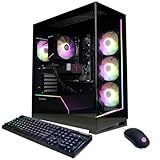


Top 3 picks at a glance
Quick Picks
| Product | Best for | Price |
|---|---|---|
| CyberPowerPC Ryzen 7 / RTX 5060 Ti | High-refresh 1080p gaming | $1349.99 |
| ASUS ROG G700 | Brand-name build with solid cooling | $1799.99 |
| ZYNEEX Ryzen 5 / RTX 3050 | Budget entry into dedicated GPU gaming | $809.98 |
| KOTIN Ryzen 7 / RTX 5060 Ti | Same class as CyberPowerPC at lower cost | $1299.99 |
| STGAubron Core i7 / RX 580 | Light gaming on a tight budget | $448.77 |
| Glorlin Mini PC Ryzen 5 | Home office or media center, not gaming | $251.99 |
| KOTIN Ryzen 7 9700X / RTX 5070 | 1440p gaming with headroom | $1999.99 |
| CyberPowerPC i5-14400F / RTX 5060 | Reliable mid-range with brand support | $1286 |
How We Picked
We ranked these systems on four criteria: GPU-to-CPU balance (a prebuilt with a bottleneck is a poor value regardless of price), memory and storage configuration relative to the asking price, build quality signals from published case and cooling specifications, and owner feedback patterns regarding thermal performance and reliability over months of use. We excluded any unit whose only differentiator was a cosmetic RGB feature at the expense of core components.
The 8 Best Pc Deals in 2026
CyberPowerPC Ryzen 7 / RTX 5060 Ti
This build targets players who want a smooth 1080p experience without spending beyond mid-range territory. The Ryzen 7 8700F provides enough cores for modern multitasking, and the RTX 5060 Ti 8GB delivers a meaningful generational leap over older 60-class cards. CyberPowerPC bundles often include a three-year labor warranty, which matters for buyers who want a fallback if something fails. The tradeoff is that 8GB of VRAM is already a constraint in the most demanding new titles at higher settings. Skip this if you are considering a 1440p monitor; the VRAM ceiling will force compromises.
ASUS ROG G700
The ASUS ROG G700 pairs an Intel Core Ultra 7 265F with an RTX 5070, 1TB of PCIe 4.0 NVMe storage, and 16GB of DDR5. ROG builds carry a reputation for tighter quality control and a cleaner aesthetic than most prebuilts in this bracket. The 265F is a capable mid-range chip that handles streaming and light content work without issue. Owner feedback highlights a quiet thermal profile under sustained load, which is not always true at this price tier. The main downside is the cost: you are paying a premium for the brand and chassis alongside the components. Skip if you would rather allocate those savings toward more RAM or storage.
ZYNEEX Ryzen 5 / RTX 3050
At just over $800, this is the most accessible entry point with a dedicated GeForce GPU in the lineup. The Ryzen 5 5500 handles everyday tasks and lighter esports titles without drama, while the RTX 3050 6GB will run AAA games at 1080p medium settings. ARGB cooling and Wi-Fi are included, which is unusual at this price. The limitation is longevity: the RTX 3050 is already behind the curve for new releases, and DDR4 means a future upgrade path is essentially closed. Skip if you intend to play demanding titles beyond a casual level; you will outgrow it within a year or two.
KOTIN Ryzen 7 / RTX 5060 Ti
The KOTIN matches CyberPowerPC on paper with the same Ryzen 7 8700F and RTX 5060 Ti combination, but at roughly $50 less. It also bundles 16GB DDR5 and a 1TB SSD, keeping the config balanced. Owner reports note the build quality is adequate rather than exceptional, with a simpler case design that trades aesthetics for cost. The value proposition is strong for buyers who care about raw performance per dollar. The con is limited brand recognition and potentially shorter support windows compared to CyberPowerPC or ASUS. Skip if you want a polished out-of-box experience with strong warranty infrastructure.
STGAubron Core i7 / RX 580
Under $450, this system is best understood as a capable general-purpose machine that can also handle older or less demanding games. The RX 580 8GB is a previous-generation card, but 8GB of VRAM gives it surprising endurance in titles that do not require modern ray tracing. The 32GB of RAM is unusually generous at this price. The significant caveat is that the Core i7 generation is unclear from the listing, and the platform is likely several cycles behind current PCIe and DDR standards. Skip if you want to play new releases at acceptable frame rates.
Glorlin Mini PC
The Glorlin is not a gaming PC, and including it in this roundup serves a different buyer: someone who needs a compact desktop for productivity, video calls, or multi-monitor office work. The Ryzen 5 3501U is a mobile chip, not a desktop-class processor, but it handles everyday tasks smoothly. WiFi 6, Bluetooth 5.3, and three display outputs make it practical for a clean desk setup. The absence of a dedicated GPU means gaming is effectively off the table. Skip if you want to play anything beyond very light or older indie titles.
KOTIN Ryzen 7 9700X / RTX 5070
This is the most powerful configuration in the lineup, pairing a Zen 5 Ryzen 7 9700X with 12GB of RTX 5070 VRAM, 32GB DDR5, and 1TB of storage. The 9700X is a current-generation desktop chip that will remain competitive for several years, and the extra VRAM over the 5060 Ti makes 1440p gaming viable without aggressive setting cuts. At $1999.99, it competes with premium-brand systems that offer similar specs. The downside is that KOTIN as a brand still carries less support infrastructure than CyberPowerPC or ASUS. Skip if you want 4K gaming; you would need a step above the 5070.
CyberPowerPC i5-14400F / RTX 5060
This build lands at $1286, a hundred dollars below the Ryzen 7 8700F variant. The Core i5-14400F is a solid mid-range processor that handles gaming workloads without the extra cores of its AMD counterpart, which does not matter in most titles. The RTX 5060 8GB is a step below the 5060 Ti, so expect lower frame rates in GPU-bound scenarios. CyberPowerPC includes a three-year warranty and decent cooling, making this a safe, no-surprises choice for players who want a reliable 1080p system. Skip if you value CPU-heavy tasks like streaming and multitasking; the Ryzen builds handle those more gracefully.
Buying Guide
GPU VRAM Matters More Than Generation
A card with 8GB of VRAM already struggles in new AAA titles at high settings, while a 12GB card provides meaningful breathing room. When comparing systems within a similar price band, prioritize the card with more VRAM even if its benchmark scores are marginally lower. This single factor determines how many years a system remains comfortable at your target resolution.
DDR4 Versus DDR5 Defines Your Upgrade Ceiling
A prebuilt with DDR4 locks you into a platform that has no upgrade path to newer memory standards. If the system already includes 16GB of DDR5, you can add more later without replacing the motherboard. For a machine you expect to keep beyond two years, DDR5 is the more future-proof choice despite the modest cost premium.
Warranty and Support Are Part of the Price
Brand-name prebuilts like CyberPowerPC and ASUS bundle multi-year labor warranties and responsive support channels. Lesser-known sellers often provide shorter coverage or limited service windows. Factor in the cost of a potential repair when comparing a $50 price gap between two systems with similar specs; the cheaper option may cost more if you need service.
Our Verdict
The best overall pick is the KOTIN Ryzen 7 / RTX 5060 Ti at $1299.99. It delivers the same performance core as CyberPowerPC’s variant at a lower price, with a balanced configuration that handles modern 1080p gaming for years. For the tightest budget, the ZYNEEX at $809.98 is the entry point that still provides a dedicated GPU and Wi-Fi, though accept that it is a short-term solution. One condition changes the ranking: if you need 1440p output with comfortable settings, the KOTIN Ryzen 7 9700X / RTX 5070 at $1999.99 becomes the clear choice, as its 12GB VRAM and DDR5 platform give it longevity none of the 8GB alternatives can match.
FAQ
Is a prebuilt gaming PC worth it over building my own?
Prebuilts save time and include warranty coverage that individual component sellers may not match. The tradeoff is often slightly higher cost for equivalent performance, though aggressive pc deals during sales events can close that gap substantially.
How much VRAM do I need in 2026?
Eight gigabytes is the bare minimum for current games at 1080p high settings. Twelve gigabytes or more provides headroom for 1440p play and ensures you are not forced into setting reductions when new titles demand more texture memory.
Should I worry about a mobile processor in a desktop case?
Mobile chips in small-form-factor desktops, like the Ryzen 5 3501U in the Glorlin, deliver lower sustained clocks than their desktop counterparts due to thermal constraints. They are fine for office work but not for demanding gaming or heavy multitasking.
What is the single biggest mistake when shopping for a prebuilt gaming PC?
Choosing a system based on CPU tier alone while ignoring the GPU and VRAM configuration. A faster processor paired with a weaker card results in lower gaming frame rates, and you cannot upgrade a laptop-class GPU later.


