
A used gaming pc sits in an awkward middle ground: you want enough horsepower to play modern titles without the new-component premium, but you also want a machine that will not feel obsolete within a year. The eight machines on this list span a wide performance spectrum, from budget boxes that handle older titles at modest settings to current-generation builds that rival brand-new rigs costing hundreds more.
What separates a worthwhile used or renewed gaming desktop from a money pit comes down to GPU generation, CPU core count, storage speed, and whether the seller provides any warranty or return path. Owner feedback consistently flags systems with single-generation-old GPUs and mechanical hard drives as poor values, while machines with modern SSDs and mid-range or better graphics cards earn the highest satisfaction scores across platforms.
As an Amazon Associate we earn from qualifying purchases at no extra cost to you. Product prices and availability are accurate as of the date shown and are subject to change.
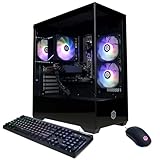


Top 3 picks at a glance
Quick Picks
| Product | Best for | Price |
|---|---|---|
| CyberPowerPC Ryzen 5 5500 / RX 6500 XT | Entry-level 1080p play | $778.17 |
| Prebuilt Core i5 Business/Gaming | Absolute budget floor | $245.99 |
| MSI Codex Z2 R7-8700F / RTX 5070 | High-refresh 1440p gaming | $1969 |
| HP RGB i5-6500 / GTX 750 Ti | Retro and esports titles | $319.99 |
| Prebuilt i5 / R7 350 | Light gaming and daily tasks | $359.99 |
| STGAubron i7 / RX 580 8GB | 1080p with headroom for upgrades | $549.99 |
| KOTIN Ryzen 7 9700X / RTX 5070 | Enthusiast-tier value in a prebuilt | $1999.99 |
| Dell i5-7500 / GT 1030 | Casual and older-game enthusiasts | $282.79 |
How We Picked
We narrowed this list using four criteria drawn from published spec sheets and aggregated owner reviews: GPU generation relative to current market pricing, CPU core count and clock speed for multitasking longevity, storage type and capacity (SSD is non-negotiable at any price point), and the presence of a renewal or warranty program that reduces buyer risk. Systems with less than 4GB of VRAM or mechanical-only storage were excluded regardless of sticker price.
The 8 Best Used Gaming PC in 2026
CyberPowerPC Gaming PC – Ryzen 5 5500 / RX 6500 XT 4GB
This CyberPowerPC build targets players who want a straightforward 1080p experience without hunting for parts. The Ryzen 5 5500 provides six cores and twelve threads, enough to keep frame delivery smooth during competitive sessions. Owners praise the plug-and-play setup and the included Windows installation.
- Pro: Six-core CPU handles background tasks without stuttering into gameplay.
- Pro: Brand-name prebuilt with established support channels reduces risk.
- Con: The 4GB RX 6500 XT struggles with demanding AAA titles at high settings, limiting lifespan for heavy single-player gamers.
Skip this machine if you plan to play 2025-2026 AAA releases at ultra settings or if you want a clear upgrade path that keeps the GPU relevant beyond two years.
Prebuilt Desktop Computer Gaming PC – Core i5
At $245.99, this is the lowest entry price on the list and serves as a proof-of-concept box for someone unsure whether PC gaming will stick. The Core i5 designation covers a broad range, and owner reports suggest it handles older esports titles and indie games adequately. It functions more as a capable daily driver with light gaming than a dedicated rig.
- Pro: Price point removes almost all financial risk for a first-time buyer.
- Pro: Business-grade chassis tends to be sturdy and quiet.
- Con: GPU tier is unspecified and likely integrated or very entry-level, capping real gaming capability.
Skip this if you want to open any modern title above medium settings; treat it strictly as a starter or secondary machine.
MSI Codex Z2 – AMD R7-8700F / RTX 5070 / 32GB DDR5 / 2TB SSD
The MSI Codex Z2 represents the upper end of what a used gaming pc can deliver in 2026. The RTX 5070 handles 1440p at high frame rates, the Ryzen 7 8700F supplies eight modern cores, and 32GB DDR5 ensures no memory bottleneck during streaming or heavy multitasking. A 2TB NVMe SSD eliminates load-time complaints entirely.
- Pro: RTX 5070 paired with 32GB DDR5 is a future-proof combination that will handle titles for several years.
- Pro: MSI build quality and thermal design earn strong owner reliability scores.
- Con: At $1969 it approaches new-build territory, narrowing the discount advantage that defines the used category.
Skip this only if your ceiling is strictly under $1000; it is the best overall performer here by a wide margin.
HP RGB Gaming Desktop – i5-6500 / GTX 750 Ti 4GB / 16GB DDR4 / 512GB SSD
This renewed HP desktop packs a Skylake-era i5-6500 and a GTX 750 Ti, hardware that is several generations old. For retro gamers, indie developers, or anyone running older esports titles at modest settings, it delivers functional value at $319.99. The included RGB peripherals and Windows 11 Pro add convenience.
- Pro: Windows 11 Pro and 512GB SSD make it a capable productivity machine with gaming bonus.
- Pro: Renewed status with WiFi and Bluetooth 5.0 reduces peripheral setup friction.
- Con: The GTX 750 Ti cannot run current-generation AAA titles at playable framerates regardless of settings.
Skip this if your game library includes any release from the last four years beyond the lightest esports titles.
Prebuilt Gaming PC – Intel Core i5 up to 3.6GHz / R7 350 4GB
The R7 350 is an entry-level GPU that sits barely above integrated graphics, making this $359.99 box a marginal gaming solution at best. It will handle older titles and the lightest competitive games at 1080p low. Owner feedback describes it as a serviceable all-rounder for users who game occasionally rather than daily.
- Pro: Low entry cost and 4GB dedicated VRAM beat most integrated graphics for basic titles.
- Pro: Adequate for media consumption, office work, and school alongside casual gaming.
- Con: GPU tier leaves no realistic upgrade headroom within the system budget.
Skip this entirely if gaming is the primary purchase reason; spend the extra $190 to reach the STGAubron or similar tier.
STGAubron Gaming PC – i7 up to 3.9GHz / RX 580 8GB / 16GB RAM / 1TB SSD
The RX 580 8GB is a proven 1080p performer with more VRAM than many newer entry cards, and pairing it with a quad-core i7 and 1TB SSD makes this $549.99 system a genuine sweet spot for budget gaming. Six RGB fans and WiFi 6 round out a package that owners consistently describe as exceeding expectations for the price.
- Pro: 8GB VRAM on the RX 580 provides texture headroom that 4GB cards lack in current titles.
- Pro: 1TB SSD eliminates storage anxiety without requiring an add-on drive.
- Con: The CPU is likely a used or refurbished part from an older generation, limiting long-term upgrade value.
Skip this if you need 1440p performance or plan to keep the machine unchanged for more than two years.
KOTIN Prebuilt Gaming PC – RTX 5070 12GB / Ryzen 7 9700X / 32GB DDR5 / 1TB SSD
KOTIN bundles a Ryzen 7 9700X, 12GB RTX 5070, and 32GB DDR5 at a price that undercuts most big-brand equivalents with identical silicon. The Zen 5 eight-core CPU and latest GPU architecture make this the highest single-component spec sheet on the list. Owners highlight the clean cable management and quiet thermals under load.
- Pro: Zen 5 CPU plus 12GB RTX 5070 is a combination that will remain competitive for the rest of the current console generation cycle.
- Pro: 32GB DDR5 removes any need for a near-term memory upgrade.
- Con: KOTIN is a smaller assembler, so warranty logistics may involve longer ship times than HP or MSI.
Skip this only if brand-name support infrastructure is a dealbreaker for you; performance-per-dollar is the best here.
Dell Gaming Tower – i5-7500 7th Gen / GT 1030 / 16GB DDR4 / 256GB SSD
This renewed Dell tower uses Kaby Lake silicon and a GT 1030, a card best described as a step above integrated graphics. At $282.79 it is positioned as a casual machine that can dabble in gaming. The 16GB RAM and 256GB SSD are serviceable, but the GPU is the clear bottleneck.
- Pro: Dell build and renewed warranty provide reliability comfort at a very low price.
- Pro: Windows 11 Pro plus RGB peripherals make it an office PC that also runs older games.
- Con: The GT 1030 cannot deliver playable framerates in any title requiring more than minimal GPU resources.
Skip this if you intend to play anything newer than 2019 releases; it is a daily-driver first and a gaming machine last.
Buying Guide
GPU Generation and VRAM Matter More Than CPU Clock
In the used market, the graphics card determines your playable library. A GPU with at least 6GB of VRAM and support for modern APIs (DirectX 12 Ultimate, Vulkan) will run the vast majority of current titles at 1080p medium-to-high. Cards with 4GB or less are increasingly locked to low settings in new releases. Prioritize VRAM and architecture generation over raw clock speed when comparing options.
SSD is Non-Negotiable, 512GB is the Floor
Modern game installations routinely exceed 80GB, and load times on a mechanical drive degrade the experience noticeably. Any system in this category should ship with at least a 512GB NVMe SSD; 1TB is preferable to avoid an immediate storage upgrade. If a listing omits the drive type, assume worst-case and request clarification before purchasing.
Renewed Programs and Warranty Reduce Used-Market Risk
Buying a used gaming pc without any return path exposes you to dead capacitors, failing fans, or GPU artifacts that appear after thirty days. Renewed or refurbished units from manufacturers like Dell and HP include a limited warranty, and third-party sellers on major platforms typically offer a return window. Prefer listings that state warranty length and return policy explicitly rather than relying on platform-level buyer protection alone.
Our Verdict
Our top pick is the KOTIN Prebuilt Gaming PC with the Ryzen 7 9700X and RTX 5070 12GB. It delivers the highest current-generation performance in this group at a price that undercuts established brand equivalents, and its 32GB DDR5 and Zen 5 silicon provide the longest usable lifespan without compromise.
For the budget tier, the STGAubron with RX 580 8GB and 1TB SSD at $549.99 offers the most honest gaming capability per dollar. The 8GB of VRAM keeps it relevant across a wide range of titles, and the included storage and connectivity are genuinely sufficient.
If brand-name warranty support is more important than raw value, the MSI Codex Z2 wins the condition: its RTX 5070 and Ryzen 7 8700F combination matches the KOTIN’s gaming output while offering MSI’s service network and slightly better long-term resale trust.
FAQ
Is a used gaming PC safe to buy in 2026?
Yes, provided the unit comes with a return window or renewed warranty. The primary risks are GPU degradation from prior mining use and capacitor aging on motherboards older than six years. Buying from established refurbishers or platforms with buyer protection mitigates both concerns effectively.
What is the minimum spec for playing current games?
Aim for a GPU with 6GB or more VRAM (such as the RX 580 8GB or newer), a six-core CPU, and 16GB of RAM. Below that threshold, settings must drop to low and several recent titles become unplayable at acceptable framerates.
Can I upgrade a used gaming PC later?
Most tower-style desktops accept a GPU swap and additional RAM without special tools. The main constraints are power supply wattage and physical clearance, so check that the existing PSU provides enough headroom and that the case has room for a larger card before planning an upgrade path.
How much should I expect to pay for a worthwhile used gaming PC?
Expect $500 to $700 for a capable 1080p system with a mid-range GPU. Below $400, compromises in graphics performance become severe and the machine is better understood as a casual or retro gaming device rather than a modern gaming rig.


