
A gaming desktop under $1,500 that ships liquid-cooled, or a renewed tower for just over three hundred dollars — the hp gaming pc market now spans a wide range of configurations that can confuse buyers searching for the right fit. The concrete problem most shoppers face is straightforward: matching a budget and use case to a pre-built machine without paying for components that will bottleneck within a year, or under-specifying so badly that modern titles stutter at medium settings.
What separates a strong hp gaming pc pick from a weak one comes down to GPU tier relative to the processor, whether the chassis supports future cooling or airflow upgrades, and how much headroom the RAM and storage leave for multitasking. Owner feedback on this line of machines consistently flags the same pain points: thermal noise from stock fans, limited front-panel USB-C on older chassis, and pre-loaded trial software that bloats first-boot. The eight models below cover renewed budget builds through flagship-class liquid-cooled towers, and the guide helps you narrow the field to one machine that fits your desk and your games.
As an Amazon Associate we earn from qualifying purchases at no extra cost to you. Product prices and availability are accurate as of the date shown and are subject to change.


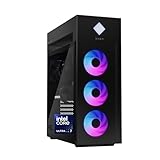


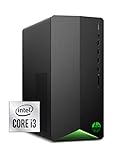
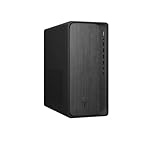
Top 3 picks at a glance
Quick Picks
| Product | Best for | Price |
|---|---|---|
| HP OMEN 45L i7 Liquid Cooled | High-end liquid-cooled i7 value | $1,498.99 |
| HP RGB Gaming Desktop (Renewed) | Tightest budget entry | $319.99 |
| HP OMEN 45L Ultra 7 / RTX 5070 Ti | Premium 4K-class gaming | $2,329.99 |
| HP OMEN 45L Ryzen 7 / ARC A750 | Mid-range AMD with liquid cooling | $919.99 |
| HP Omni Max 45L Ryzen 7 / ARC A750 | Same platform, smaller SSD, lower cost | $839.99 |
| HP Pavilion TG01 RTX 3060 | Streaming and 1080p gaming | $799.99 |
| HP Pavilion GTX 1650 SUPER | First gaming PC on a budget | $729.99 |
| HP OmniDesk Ryzen 7 8700G | Productivity plus light gaming | $1,019 |
How We Picked
We compared published spec sheets, current listed prices, and aggregated owner reviews to score each machine on four criteria: GPU-to-CPU balance (no severe bottleneck pairing), thermal and power delivery headroom, storage and RAM capacity versus price, and upgrade path (tool-less access, standard PSU form factor, remaining M.2 slots or PCIe lanes). Price alone is misleading in this category — a cheaper GPU tier can erase the savings within months if the platform cannot accommodate a swap.
The 8 Best Hp Gaming Pc in 2026
HP OMEN 45L Liquid Cooled i7
This 45L chassis with an Intel Core i7, 32 GB RAM, and a 1 TB SSD targets buyers who want a quiet, thermally managed system without stepping into the highest price band. The liquid cooling loop keeps the processor from throttling during extended sessions, and the 32 GB allocation handles multitasking alongside modern titles.
- Con: No discrete GPU is specified in the listing, so performance in AAA titles depends entirely on whatever graphics card ships inside — verify the exact configuration before purchase.
Skip this if you need guaranteed GPU power for 1440p or 4K gaming and the seller does not confirm the graphics tier.
HP RGB Gaming Desktop (Renewed)
At $319.99 this renewed tower is the only option under four hundred dollars. It pairs an i5-6500 with a GTX 750 Ti 4 GB — a combination that will handle older esports titles and indie games at 1080p but cannot run recent AAA releases acceptably. It suits a parent buying a first computer for a younger player, or someone who needs a desktop for school work with occasional light gaming.
- Con: The GTX 750 Ti lacks driver support for newer APIs, limiting compatibility with recent game engines.
Skip this entirely if your library includes any title released after the last few console generations.
HP OMEN 45L Ultra 7 265K / RTX 5070 Ti
The flagship of this group combines Intel’s Core Ultra 7 265K with an NVIDIA GeForce RTX 5070 Ti, 32 GB RAM, and a 1 TB SSD inside the tempered-glass OMEN chassis. It is built for 4K ultra settings in current titles and ray-traced workloads. Copilot integration on Windows 11 Pro adds AI-assisted features for streaming and content tasks.
- Con: At $2,329.99 it costs more than a full custom-build budget for many enthusiasts, and the liquid cooling loop is sealed with no easy radiator swap.
Skip if you already own a 1080p monitor — the RTX 5070 Ti will not show its advantage at that resolution.
HP OMEN 45L Ryzen 7 7700 / Intel ARC A750
This configuration pairs AMD’s Ryzen 7 7700 with Intel’s ARC A750 in the familiar 45L tower, cooled by liquid and powered by a 1200W Platinum-rated PSU. The wattage headroom is notable because it leaves room for a GPU upgrade without replacing the power supply. DDR5 memory and a 1 TB NVMe SSD round out the platform.
- Con: The ARC A750’s driver maturity lags behind NVIDIA and AMD discrete cards in some niche titles, causing occasional compatibility issues.
Skip if you play games with early-access anti-cheat systems that have known ARC compatibility gaps.
HP Omni Max 45L Ryzen 7 7700 / ARC A750
Essentially the previous OMEN 45L rebranded under the Omni Max name, this unit swaps the 1 TB drive for a 512 GB Gen4 SSD and adds WiFi 6E. The $80 price difference versus the OMEN version makes it attractive if you plan to add storage separately. The same liquid cooling and 1200W Platinum PSU carry over.
- Con: 512 GB fills quickly with two or three modern game installs, forcing an early SSD upgrade.
Skip if you keep a large offline library and want to avoid opening the case for a second drive.
HP Pavilion Gaming Desktop TG01 RTX 3060
The AMD Ryzen 5 4600G drives an RTX 3060 in this compact Pavilion chassis, making it a solid 1080p gaming and streaming box at under $800. The six-core processor handles encoding while the GPU renders, and the listing notes a keyboard-and-mouse bundle. Bluetooth and WiFi are onboard.
- Con: Only 8 GB of RAM limits background tasks; you will hit memory pressure running a browser, OBS, and a game simultaneously.
Skip if you need more than two or three programs open at once during a gaming session without upgrading RAM.
HP Pavilion Gaming Desktop GTX 1650 SUPER
A compact tower with an i3-10100 and GTX 1650 SUPER, this is an honest entry-level gaming desktop. It will run Fortnite, Valorant, Minecraft, and similar titles at playable 1080p settings. The 256 GB NVMe SSD and 8 GB DDR4 are adequate for a single-drive setup but tight for modern libraries.
- Con: The i3-10100’s four cores will bottleneck newer titles that lean on six or eight threads, making the CPU the limiting factor before the GPU.
Skip if your budget stretches another $70 — the RTX 3060 model above offers a far longer usable life.
HP OmniDesk Ryzen 7 8700G
This is the least traditional “gaming” pick here. The Ryzen 7 8700G with Radeon 780M integrated graphics handles esports and older titles at moderate 1080p settings without a discrete card. With 32 GB DDR5 and a 1 TB NVMe SSD, it excels as a productivity machine that games casually.
- Con: The Radeon 780M cannot match any discrete GPU in this list for demanding 3D workloads or ray-traced games.
Skip if you play AAA titles beyond the lightest settings — this machine is a workstation first.
Buying Guide
GPU Tier and Game Requirements
The single biggest performance divider in any hp gaming pc is the graphics card. A GTX 750 Ti handles older esports at 1080p medium, while an RTX 5070 Ti pushes 4K ultra. For 1080p high settings in current titles, an RTX 3060 is the practical floor; for 1440p or ray-traced AAA, you need something well above that. Check the GPU model explicitly — some listings omit it, and an i7 alone will not guarantee strong frame rates.
RAM Capacity and Memory Type
Eight gigabytes of DDR4 is the bare minimum for a gaming desktop in 2026 and will cause stutters with Chrome tabs and Discord in the background. Sixteen gigabytes is the comfortable floor for this category; thirty-two gigabytes benefits streaming, video editing, or heavy multitasking. DDR5 offers higher bandwidth and better efficiency, which matters more in integrated-graphics builds like the OmniDesk 8700G.
Cooling, PSU Headroom, and Upgrade Path
Pre-built gaming towers often use proprietary motherboards and sealed liquid loops that limit future swaps. The 1200W Platinum PSUs found in the OMEN and Omni Max 45L models are a genuine advantage — they allow a GPU upgrade without replacing the power supply. Check whether the case uses standard ATX mounting and whether M.2 slots remain open. A 512 GB SSD will feel cramped within a year, so either confirm an extra drive bay or budget for a secondary drive.
Our Verdict
The OMEN 45L with the RTX 5070 Ti is the strongest gaming hp gaming pc in this group for anyone playing at high or ultra settings above 1080p. The Pavilion TG01 with the RTX 3060 is the best budget pick for 1080p players who want a new (not renewed) machine with a discrete GPU under $800. The OmniDesk 8700G wins outright if the buyer needs a quiet, fast workstation that also plays lighter games — no other model balances 32 GB DDR5 and a 1 TB SSD for under $1,020 while staying fan-quiet.
FAQ
Can I upgrade an HP OMEN 45L desktop myself?
Yes. The 45L chassis uses a tool-less design for the front panel, drive bays, and GPU slot. RAM, SSD, and the power supply are accessible without removing the motherboard, though the sealed liquid cooler on some variants cannot be serviced or swapped without voiding the warranty.
Is a renewed HP gaming desktop safe to buy?
Renewed units are inspected, tested, and sold with a limited warranty by the refurbisher. The GTX 750 Ti model in this list is the only renewed option, and it is suited for older titles only. Expect shorter remaining hardware life versus a new build, but at this price the value is hard to match for a casual setup.
Do these hp gaming pc models support WiFi?
Most do. The Pavilion TG01 includes WiFi and Bluetooth, the Omni Max 45L adds WiFi 6E, and the OmniDesk includes WiFi 6 plus Bluetooth 5.4. The RTX 5070 Ti model and the renewed desktop also list wireless connectivity. Confirm the exact spec sheet because HP varies radio hardware between regional SKUs.
What is the best resolution for each GPU tier here?
The GTX 750 Ti is limited to 1080p at low-to-medium settings for older games. The GTX 1650 SUPER reaches 1080p medium in current titles. The RTX 3060 handles 1080p high and some 1440p. The RTX 5070 Ti is designed for 1440p ultra and 4K with DLSS. The ARC A750 sits between the 1650 SUPER and 3060 in most benchmarks.


