
Floor cleaner sounds like a commodity until you pick the wrong bottle for your flooring. A neutral pH concentrate that handles warehouse tile beautifully will streak a sealed hardwood surface, while a ready-to-use hardwood formula diluted wrong loses its effectiveness. The eight Zep floor cleaner options in this roundup span two distinct use cases—industrial all-purpose cleaning and residential hardwood/laminate care—and the gap between the best match and the wrong match is the difference between a streak-free shine and a damaged finish.
What separates a strong Zep floor cleaner pick from a mediocre one comes down to three factors: surface compatibility, cost per usable gallon after dilution, and the actual concentration strength versus what the label implies. Owner feedback across hundreds of verified reviews points to specific failure modes—residue on LVP, dulling on oiled wood, and confusing dilution ratios—so this 2026 guide weighs published specs, per-unit pricing, and recurring complaints rather than marketing claims to identify which bottle solves which problem.
As an Amazon Associate we earn from qualifying purchases at no extra cost to you. Product prices and availability are accurate as of the date shown and are subject to change.

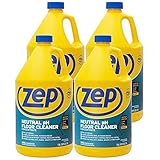


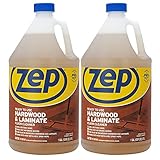


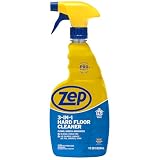
Top 3 picks at a glance
Quick Picks
| Product | Best for | Price |
|---|---|---|
| Zep Neutral pH (1 Gal) | Pro-grade all-purpose cleaning | $12.98 |
| Zep Neutral pH (Pack of 4) | Bulk value for facilities | $38.73 |
| ZEP Ready-to-Use Hardwood & Laminate | Convenient no-mix hardwood care | $16.19 |
| Zep Hardwood & Laminate (32 oz) | Trial or small apartment | $5.98 |
| Zep Hardwood & Laminate (Pack of 2) | Whole-home hardwood maintenance | $25.48 |
| Zep 3-in-1 Hard Floor (1 Gal Concentrate) | Versatile LVP, tile, and marble | $15.48 |
| Zep Neutral pH (Pack of 2) | Light commercial or large home | $28.46 |
| Zep 3-in-1 Hard Floor (32 oz) | Spot cleaning or testing the formula | $7.48 |
How We Picked
Every product here was scored on four criteria. First, surface compatibility: whether the published pH range and ingredient list match the flooring types the buyer actually owns. Second, cost efficiency calculated per usable diluted gallon rather than per bottle, since concentrates and ready-to-use formulas are not directly comparable at face price. Third, recurring owner complaints—residue, streaking, strong scent, packaging defects—weighted by frequency across verified purchase reviews. Fourth, concentration strength relative to label claims, because a “professional” bottle that underperforms a cheaper alternative fails the value test regardless of brand reputation.
The 8 Best Zep Floor Cleaner in 2026
Zep Neutral pH (1 Gallon)
This is the baseline Zep floor cleaner most buyers encounter—the industrial concentrate that commercial cleaning crews have relied on for years. It suits anyone maintaining tile, sealed concrete, vinyl composition tile, or stone floors in a workshop, garage, or large home. The neutral pH protects grout lines and sealants that acidic or alkaline cleaners degrade over time.
- Pro: Extremely low cost per diluted gallon when mixed at recommended ratios.
- Pro: Cuts through grease and industrial grime that consumer formulas leave behind.
- Con: Requires dilution and a mop bucket; not a grab-and-spray convenience product.
Skip it if your floors are engineered hardwood or oiled wood—this formula is designed for hard industrial surfaces and may leave a film on delicate finishes.
Zep Neutral pH (Pack of 4)
The same industrial concentrate, but at roughly $9.68 per gallon versus $12.98 for a single bottle. This pack makes sense for property managers, restaurant owners, or anyone cleaning more than 2,000 square feet weekly. The dilution ratio is aggressive enough that four gallons of concentrate will last a small commercial operation several months.
- Pro: Lowest per-gallon cost in the entire lineup at $9.68 equivalent.
- Pro: Bulk packaging reduces shipping frequency and single-use plastic waste.
- Con: Four one-gallon jugs require significant storage space and a proper handling setup.
Skip it if you only mop monthly or have under 1,000 square feet of hard floor—storage outweighs savings.
ZEP Ready-to-Use Hardwood and Laminate Floor Cleaner
Designed for homeowners who want zero setup. Pull the trigger, spray, and mop—no measuring, no dilution confusion. The formula is pH-balanced specifically for sealed hardwood and laminate, the two surfaces most vulnerable to the wrong cleaner. Owners consistently praise the lack of residue on high-gloss finishes.
- Pro: No dilution step eliminates the most common user error with concentrate formulas.
- Pro: Dries streak-free on polyurethane-sealed wood according to the majority of verified reviews.
- Con: Highest per-gallon cost among hardwood options once you calculate usable volume.
Skip it if you have oiled or unfinished hardwood—ready-to-use solutions can be too wet for those surfaces regardless of pH.
Zep Hardwood and Laminate Floor Cleaner (32 oz)
The entry point. At $5.98, this small bottle lets you test whether the Zep hardwood formula works on your specific floor finish before committing to a gallon. For renters, dorm residents, or anyone with under 400 square feet of laminate, it lasts a reasonable number of cleanings without expiring on a shelf.
- Pro: Lowest absolute price to evaluate a new floor care routine.
- Pro: Compact size fits under-sink storage without dominating the cabinet.
- Con: Worst cost efficiency in the lineup—nearly four times the per-gallon price of the concentrate options.
Skip it if you clean more than a small apartment—buying multiples becomes pricier than a single gallon.
Zep Hardwood and Laminate Floor Cleaner (Pack of 2, Gallon)
Two gallons of the same hardwood-safe formula at $12.74 per gallon, undercutting the 32-ounce version by a wide margin. This is the sweet spot for a multi-room home where sealed wood and laminate coexist. The gallon size pairs well with a microfiber mop system for even coverage without over-wetting.
- Pro: Strong per-gallon value for residential hardwood maintenance.
- Pro: Two-bottle redundancy means you never run out mid-clean on a large floor.
- Con: Still requires dilution or careful application rate management to avoid moisture damage.
Skip it if your home has fewer than three hard-floor rooms—you will likely use one gallon before the other approaches a practical shelf life.
Zep 3-in-1 Hard Floor Cleaner (1 Gallon Concentrate)
The versatility play. One concentrate addresses LVP, tile, and marble—three surfaces with conflicting pH sensitivities—by staying neutral enough for all of them. For homeowners with mixed flooring or landlords cycling between properties, a single product simplifies the supply closet. Dilution flexibility lets you adjust strength between a marble bathroom and a tiled kitchen.
- Pro: Covers three distinct floor types with one SKU, reducing product-switching errors.
- Pro: Concentrate format offers the best cost-per-floor-type in the hard-floor category.
- Con: Not optimized for any single surface the way dedicated formulas are.
Skip it if you have premium engineered hardwood or oiled floors—this formula prioritizes breadth over finish-specific gentleness.
Zep Neutral pH (Pack of 2)
Two gallons at $14.23 per gallon—more expensive per unit than the four-pack but still cheaper than buying singles. This intermediate option fits buyers who want backup supply without committing to four jugs. Light commercial users, large-home owners with tile and vinyl throughout, and small business operators with modest square footage land squarely on this tier.
- Pro: Balanced storage footprint for a two-gallon reserve.
- Pro: Same proven industrial formula without the logistics of a four-pack delivery.
- Con: Per-gallon price sits awkwardly between the single bottle and the four-pack value.
Skip it if you can accommodate four gallons of storage—the four-pack delivers a meaningfully lower unit cost.
Zep 3-in-1 Hard Floor Cleaner (32 oz)
The trial-size version of the versatile concentrate, priced at $7.48. It exists for the cautious buyer who wants to confirm that one formula genuinely handles their vinyl kitchen and tile bathroom without leaving haze. At 32 ounces it will not last long under regular use, but it prevents a $15.48 mistake on a product that might not suit your specific finish.
- Pro: Low-risk evaluation of a multi-surface formula before buying bulk.
- Pro: Convenient for spot-cleaning between full mop sessions.
- Con: Extremely poor cost efficiency at roughly $30 per usable gallon equivalent.
Skip it if you already know the concentrate works for your floors—go straight to the gallon for ongoing use.
Buying Guide
Match pH to Your Floor Finish
Sealed hardwood and laminate tolerate neutral pH (6-8) formulas without issue, but oiled, waxed, or unfinished wood degrades when exposed to any water-based cleaner that is not explicitly labeled safe for those finishes. Tile and grout handle slightly alkaline cleaners better, while marble requires strict pH neutrality below 7 to avoid etching. Before comparing Zep floor cleaner options, identify whether your floor is sealed, oiled, stone, or resilient vinyl—this single question eliminates half the lineup.
Calculate True Cost per Diluted Gallon
A $5.98 bottle of 32-ounce concentrate might yield two usable gallons after dilution, while a $12.98 gallon of the same product diluted to the same strength yields ten. Ready-to-use sprays never dilute, so their per-gallon cost equals their bottle price. Divide the listed price by the manufacturer-recommended dilution ratio to get the honest number. The Zep Neutral pH line consistently produces the lowest effective cost across large areas because its dilution ratio exceeds 1:64.
Convenience Versus Control Trade-Off
Ready-to-use formats remove the most common failure point—incorrect dilution—at the expense of application control. Concentrates let you dial strength for the specific soil load: a light maintenance mop needs less product than a post-renovation clean. If you mop weekly on well-maintained floors, a concentrate with a simple dilution chart offers better long-term value. If you mop sporadically and want zero decision friction, the ready-to-use hardwood formula justifies its premium.
Our Verdict
Top pick: Zep 3-in-1 Hard Floor Cleaner (1 Gallon Concentrate) at $15.48. It covers the widest range of common residential hard-floor types, delivers strong per-gallon value, and the dilution flexibility lets one product serve a whole home. Budget pick: Zep Hardwood and Laminate Floor Cleaner (32 oz) at $5.98 for a low-commitment trial of the residential formula. Condition where another wins: if your floors are exclusively tile, vinyl, or sealed concrete and you mop more than twice weekly, the Zep Neutral pH (Pack of 4) at $9.68 per gallon is unbeatable on cost and cutting power.
FAQ
Can I use Zep Neutral pH on laminate flooring?
The manufacturer positions it for tile, vinyl, and stone rather than laminate specifically. Laminate is a composite surface sensitive to excess moisture, and the neutral pH formula is designed for hard surfaces that tolerate more water volume. Owners report better streak-free results on laminate using the dedicated hardwood and laminate formula.
How often should I dilute Zep concentrates?
Every time you prepare a fresh mop bucket. Pre-mixed solutions lose effectiveness as surfactants break down in standing water, and sitting concentrations can leave residue. Use the dilution chart on the label for the specific soil level you are addressing, and discard leftovers rather than storing mixed solution.
Is the 3-in-1 formula safe on natural marble?
Zep lists marble as a compatible surface for the 3-in-1, and the formula is pH-neutral enough to avoid the acidic etching that damages calcium-based stone. However, marble varies widely in porosity and sealant quality, so test on a hidden area first and use the lightest effective dilution.
Which Zep floor cleaner works best on luxury vinyl plank?
The 3-in-1 Hard Floor Cleaner is explicitly formulated for LVP alongside tile and marble, making it the natural fit. LVP has a wear layer that responds well to neutral cleaners without dulling. Avoid overly alkaline industrial formulas on LVP, as they can degrade the urethane topcoat over repeated use.


