Dynamic microphones are a favorite for streaming and podcasting because they reject room noise, handle close talking well, and forgive untreated rooms. Their one weakness is output level. Popular broadcast style dynamics are quiet by design, so many interfaces run their preamps near maximum, and that is where hiss and thin tone creep into a stream.
Mic preamp activators solve that problem simply. These small inline devices sit between the microphone and the cable, draw phantom power from the interface, and add clean gain before the signal reaches the main preamp. The interface then works in its comfortable middle range and the noise floor drops. This guide compares five proven activators and helps match the right booster to a streaming desk, a podcast rig, or a ribbon microphone.
As an Amazon Associate, we earn from qualifying purchases.
Top 3 picks at a glance

What to look for in mic preamp activators
Gain is the headline number, and most activators add between twenty five and twenty eight decibels. A very quiet dynamic paired with a modest interface usually wants the full twenty eight, while a louder handheld dynamic may need only twenty five. More gain is not automatically better, since excessive gain can push a loud voice into clipping, so match the booster to the microphone.
Power comes from standard forty eight volt phantom power supplied by the interface or mixer. A good activator uses that power for itself and does not pass phantom voltage through to the microphone, which protects ribbon elements. Check that the interface provides phantom power, since a few small mixers do not.
Circuit design shapes both noise and tone. Clean JFET and low noise designs aim for transparency, adding level without changing the character of the microphone. Transformer based designs may add weight and saturation that some podcasters enjoy on spoken voice. Streamers who want their microphone to sound exactly as intended prefer transparent designs, while voice artists may enjoy a transformer model.
Build and placement are easy to overlook. A slim inline barrel plugs into the back of the microphone and keeps the desk tidy, while a larger boxed booster sits on the desk and connects with two cables. Barrel designs are neater for boom arms, but a heavy barrel can cause droop if the arm is near its limit. Connector quality matters too, since a loose connector can crackle when the arm moves.
1. Cloud Microphones Cloudlifter CL-1

The Cloudlifter CL-1 popularized this whole category and remains the reference point other activators are measured against. It adds up to twenty five decibels of clean gain using a discrete JFET circuit, runs entirely on phantom power, and sits in a compact metal enclosure with a connector at each end. For streamers using a quiet broadcast dynamic, it is the straightforward, set and forget answer.
That gain transforms how an interface behaves. Instead of pushing a budget preamp to its noisy upper range, the interface gain can sit much lower, where it is cleaner. Compression and noise gating also work better with a strong, steady signal than with a faint one near the noise floor.
The CL-1 is also ribbon friendly, because it does not pass phantom power through to the microphone, so podcasters can leave it in the chain when swapping between dynamic and ribbon microphones. The enclosure feels dense and durable, and the unit disappears into a cable run on a boom arm. It offers no switches or adjustments, which is a strength for a streaming desk: plug it in, set the interface gain once, and the level stays consistent.
Specs
| Item | Detail |
|---|---|
| Gain | Up to 25 dB of clean gain |
| Circuit | Discrete JFET design |
| Power | 48V phantom power from the interface |
| Phantom pass through | No, safe for ribbon microphones |
| Connectors | XLR input and XLR output |
| Intended microphones | Passive dynamic and ribbon microphones |
2. sE Electronics Dynamite DM1
The sE Electronics Dynamite DM1 is the slim stick many streamers choose when they want maximum gain in the neatest package. It delivers twenty eight decibels of boost, the highest figure in this roundup, inside a thin metal tube that plugs directly into the microphone. For the quietest dynamics paired with entry level interfaces, that extra gain makes a genuine difference to the noise floor.
The DM1 uses a low noise design with a low output impedance, which helps it drive longer cable runs without losing clarity. Its slim body adds little bulk behind the microphone, keeps boom arm balance almost unchanged, and looks tidy on camera.
Build quality is a strong point: the all metal housing and gold plated XLR connector are made for repeated plugging and unplugging. Like the other activators here, it runs on phantom power and does not pass that power to the microphone. Two host podcasts need one per microphone, but the compact size makes a pair easy to manage.
Specs
| Item | Detail |
|---|---|
| Gain | 28 dB of clean gain |
| Circuit | Low noise active inline design |
| Power | 48V phantom power from the interface |
| Phantom pass through | No, safe for ribbon microphones |
| Connectors | XLR input and XLR output, gold plated connector |
| Intended microphones | Passive dynamic and ribbon microphones |
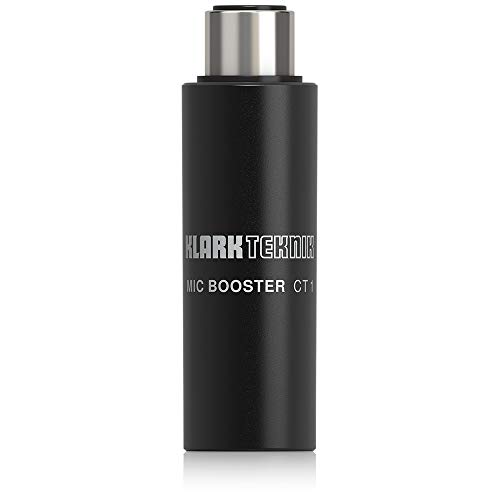
3. Klark Teknik Mic Booster CT-1
The Klark Teknik Mic Booster CT-1 brings the activator concept to an accessible tier while keeping the core specification intact. It adds twenty five decibels of clean gain, runs on phantom power, and uses a compact rugged enclosure that plugs inline between microphone and cable. For new streamers who bought a quiet dynamic and an entry level interface in the same month, it is an easy first upgrade.
Performance is straightforward and transparent. The boost lets the interface preamp relax into its quieter range, reducing the hiss that otherwise sits under speech during quiet moments. The CT-1 also works well with preamps that have a relatively low input impedance, which broadens compatibility with compact mixers and older starter interfaces.
The metal housing feels ready for life in a gig bag as well as on a desk. There are no controls to set, and the small size means it can hide behind the microphone on a boom arm or sit unnoticed in a cable run. Anyone building a two host setup on a budget will appreciate that a second channel only means adding a second compact unit.
Specs
| Item | Detail |
|---|---|
| Gain | 25 dB of clean gain |
| Circuit | Low noise active booster design |
| Power | 48V phantom power from the interface |
| Phantom pass through | No, safe for ribbon microphones |
| Connectors | XLR input and XLR output |
| Intended microphones | Dynamic and ribbon microphones |
4. Soyuz Microphones Launcher

The Soyuz Launcher takes a different route from the transparent boosters above. It adds around twenty six decibels of gain, but its transformer based circuit also introduces a gentle analog color, a hint of saturation and weight that gives plain dynamics some character associated with classic console channels. For podcasters and voice focused streamers, that subtle thickening can be the entire reason to choose it.
Spoken voice gains a touch of density in the low midrange, while the Launcher still solves the practical problem first: interface gain comes down, hiss recedes, and processing chains receive a stronger signal. The color stays mild enough for everyday streaming and narration.
The Launcher sits in a distinctive sturdy case and connects inline with XLR connectors at each end. It does not pass phantom power to the microphone, so ribbon owners can use it as well. Streamers chasing a neutral chain should pick a transparent model instead, but anyone who wants their voice more finished straight into the interface will find it the most characterful option here.
Specs
| Item | Detail |
|---|---|
| Gain | Around 26 dB of gain |
| Circuit | Transformer based design with gentle analog color |
| Power | 48V phantom power from the interface |
| Phantom pass through | No, safe for ribbon microphones |
| Connectors | XLR input and XLR output |
| Intended microphones | Dynamic and ribbon microphones |
5. Radial Engineering McBoost

The Radial Engineering McBoost is the heavy duty option, from a company known for stage and studio direct boxes that survive touring. Unlike the barrel style activators, it is a compact boxed booster that sits on a desk or floor and connects with separate cables, adding up to twenty five decibels of clean gain from a Class A circuit.
What sets the McBoost apart is adjustability. A three position load switch subtly shifts tone and response, and a variable high pass filter tames rumble and proximity boom before the signal reaches the interface, keeping compressors and gates calmer later in the chain.
The steel construction is reassuringly solid, and the boxed format suits permanent podcast studios where the booster lives under a desk rather than hanging off a boom arm. It is the largest device in this guide, and casual streamers may prefer a simple barrel, but recordists who like tonal options at the source will value the load settings. Phantom power is consumed by the booster and not passed on to the microphone, keeping ribbons safe.
Specs
| Item | Detail |
|---|---|
| Gain | Up to 25 dB of clean gain |
| Circuit | Class A active design |
| Power | 48V phantom power from the interface |
| Extra controls | Three position load switch and variable high pass filter |
| Connectors | XLR input and XLR output |
| Intended microphones | Dynamic and ribbon microphones |
FAQ
Do mic preamp activators work with condenser microphones?
No, and they should not be used that way. Activators are designed for passive dynamic and ribbon microphones that produce a low output and do not need phantom power. Condensers already require phantom power and deliver a much stronger signal, so an inline booster is unnecessary. If a setup mixes both types, keep the activator only on the dynamic or ribbon channel.
Will an activator remove hiss from a stream?
It usually reduces hiss a great deal, because most audible hiss in a streaming setup comes from the interface preamp working at very high gain. By adding clean gain before the interface, an activator lets that preamp run lower and quieter. It cannot fix hiss from a noisy room, a faulty cable, or ground problems, but for the classic quiet microphone problem it is the most direct fix available.
How is an activator different from turning up interface gain?
Turning up interface gain amplifies everything the preamp produces, including its own electronic noise, and many affordable preamps get noisier near the top of their range. An activator adds gain earlier, right at the microphone, using a very quiet circuit, so the signal arrives stronger and the interface stays in its cleanest range. The result is the same loudness with a lower noise floor.
Does every microphone in a podcast setup need its own activator?
Yes, each activator serves one microphone channel. A two host podcast with two quiet dynamics needs two activators, one inline with each microphone, and the interface must supply phantom power on both channels. Since activators need no settings, a matched pair behaves consistently, and both hosts get the same cleaner levels.
Final verdict
For most streamers, the Cloudlifter CL-1 remains the safest recommendation: proven and simple. The DM1 suits the quietest microphones and neatest boom arm setups, while the CT-1 covers the same job for budget conscious desks. The Launcher is the pick for voice character, and the McBoost serves permanent studios that want load options and rumble control. Any of the five will help a quiet dynamic.
Product and ASIN Reference
| Product | ASIN |
|---|---|
| Cloud Microphones Cloudlifter CL-1 | B004MQSV04 |
| sE Electronics Dynamite DM1 | B07JNK3HHH |
| Klark Teknik Mic Booster CT-1 | B07ZK69F2R |
| Soyuz Microphones Launcher | B07XW6XM32 |
| Radial Engineering McBoost | B0189XSV6O |
Related guides
More from Amazon
Programs that pair well with the guide above. Offers and eligibility are set by Amazon and may change.
Free shipping on eligible items, Prime Video and more. Eligible new members can start with a free trial.
Start a Prime free trialAd-free music streaming. Eligible new subscribers can start with a free trial.
Try Music Unlimited freeA Prime membership for ages 18-24 with a trial period. Eligibility is set by Amazon.
See Prime for Young AdultsAudiobooks and podcasts to listen to on the go. Eligible new members can start with a free trial.
Try Audible freeAs an Amazon Associate we earn from qualifying purchases.