Sweat bees are the small, often metallic green bees that visit gardens, parks, and window boxes, and they look nothing like the striped honeybee on a cereal box. A child who meets one usually asks whether it is a bee at all, which makes these tiny pollinators a wonderful starting point for backyard science. The picks below suit a family that wants play, reading, and observation to work together rather than compete for attention.
No toy maker sells a sweat-bee-only play set, so this guide gathers the closest honest matches: realistic bee figurines, a soft plush bee, and three picture books, two of which profile green sweat bees by name. Each pick was chosen from the names and details shown on its Amazon product page, and the books below explain how to tell a sweat bee from a fly, a wasp, or a honeybee.
Quick Picks
As an Amazon Associate we earn from qualifying purchases.
| Product | Best for | Key spec from title |
|---|---|---|
| 3TVol 4PCS Bee Figurines | Science displays and nature tables | 4 realistic honey bee models |
| Wild Republic EcoKins Mini Bee | Cuddly play for younger children | 8-inch recycled-bottle plush |
| The Thing About Bees: A Love Letter | Gentle read-aloud time for ages 3 to 7 | 32-page illustrated love letter |
| Can You See If I’m a Bee? | Learning to identify a green sweat bee | 38-page bee identification picture book |
| University of Cambridge: Secrets of Bees | Older readers who want bee science | Hardcover guide for ages 7 to 10 |
How to Choose
Start with the size of the bee in real life
A sweat bee is far smaller than a honeybee, and many children picture every bee as large, yellow, and striped. Look for a toy or book that shows the insect at a believable scale or explains the size difference in plain words. Figurines that are easy to hold still help a child compare a bee with an ant or a fly on the same table. Books with labelled drawings give the same lesson without any small parts. When a product skips scale entirely, pair it with a ruler and a garden walk so the child can see how tiny the real insect is.
Match the pick to the child’s age
A soft plush suits a toddler who wants to carry a bee around the house, while a four-piece figurine set suits a school-age child who can arrange models, sort them, and keep track of small pieces. Picture books list a reading age on the product page, and that range is worth more than a guess about difficulty. The love-letter book below lists ages 3 to 7, the identification book lists 5 to 12, and the science guide lists 7 to 10. Choose the range that fits the child who will actually use the item most.
Check what the item is made from
Parents who care about materials should read the product page before ordering, because a figurine, a plush, and a book are built in very different ways. The figurine set below uses ABS plastic with odorless paint, while the plush uses fabric and fill made from recycled water bottles. Books list a publisher, a page count, and a weight, which together say more about sturdiness than a cover photo can. If a listing leaves the material blank, treat that gap as a reason to ask the seller rather than a reason to assume the best.
Think about where the play will happen
Some picks belong on a shelf, and others belong in a backpack for a park visit. A resin-free figurine set works well on a nature table beside a magnifier, yet the same small figures can vanish in long grass within minutes. A plush bee survives car rides, waiting rooms, and reading corners without any extra care. Books travel well too, though a hardcover guide holds up better in a school bag than a thin paperback does. Decide the main setting first, then let the setting narrow the list.
The 5 Best Options
3TVol 4PCS Bee Figurines

Four matching honeybee figures give a child something solid to hold while a book explains what a sweat bee looks like, and that contrast is the point of this set. The figures work on a nature table, in a science display, or beside a magnifier during a garden observation session. Because the set includes four identical-style bees, a child can place one beside a flower, one beside a leaf, and one beside a drawing without worrying about breaking a single precious model. The hand-painted detail rewards close looking, and the sturdy build suits repeated handling by curious hands.
Specs
- Brand: 3TVol
- Colour: Yellow
- Material: ABS plastic with odorless paint
- Number of items: 4
- Hand-painted with detailed textures, realistic body shapes, and vivid colors
- Ideal for science projects, insect displays, nature exhibits, and educational presentations
- Suits cake toppers, party decorations, display arrangements, and craft projects
Best for: A nature table or science display where a child can handle and arrange realistic bee models.
Watch out for: Small figurines can roll off a table or get lost outdoors, so keep the set in a tray or a lidded box between uses.
Wild Republic EcoKins Mini Bee

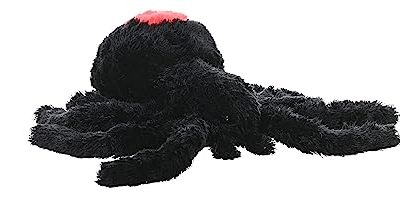
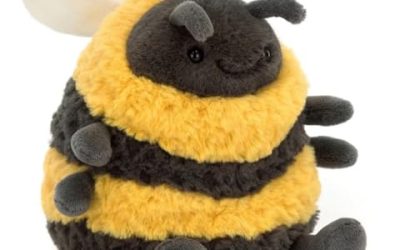
This soft plush bee is the gentlest pick in the guide, and it works best as a companion for stories rather than as a science model. A younger child can carry it through the house, hold it during a bee book, or tuck it beside a pillow at bedtime. The recycled-bottle fabric gives parents a clear talking point about reusing materials, and the realistic shape keeps the toy grounded in the real insect instead of turning it into a cartoon. Its eight-inch length fits small arms without overwhelming a toddler, and the soft fill makes it safe for everyday cuddling.
Specs
- Brand: Wild Republic
- Size: 8 inches
- Fabric and fill made of recycled water bottles
- Product dimensions: 20.98 x 9.98 x 14.99 cm
- Item weight: 81.65 g
- Model number: 25965
- Meets CPSIA (USA) and EN71 (EU) safety standards
Best for: Younger children who want a soft, huggable bee to carry during stories and quiet play.
Watch out for: The plush is a cuddly toy rather than a detailed model, so pair it with a book when a child asks how a real sweat bee differs from a honeybee.
The Thing About Bees: A Love Letter
Shabazz Larkin wrote this picture book as a love letter to bees, and its warm tone suits families who want to ease a child’s fear of stings. The story frames bees as pollinators that help food grow, which gives a young reader a reason to admire the insect instead of avoiding it. At thirty-two pages, the book fits a single bedtime reading without rushing, and the illustrated edition keeps the mood light while the words do the teaching. Its reading age of three to seven years makes it the easiest entry point in this guide for preschool children.
Specs
- Author: Shabazz Larkin
- Publisher: Readers to Eaters
- Publication date: Aug. 11 2019
- Edition: Illustrated
- Print length: 32 pages
- ISBN-10: 0998047791
- ISBN-13: 978-0998047799
- Reading age: 3 – 7 years
- Grade level: Preschool – 2
- Dimensions: 12.7 x 1.27 x 22.86 cm
Best for: A gentle bedtime read-aloud that helps a young child feel friendly toward bees.
Watch out for: The listing showed only one copy left in stock on the Canadian storefront at check time, so confirm availability before ordering.
ASIN: 0998047791
Can You See If I’m a Bee?
This is the most directly useful book in the guide for a family chasing sweat bees, because it profiles a green sweat bee alongside honeybees, cuckoo bees, mason bees, and leafcutter bees. Melissa Garrick Edwards wrote the text in rhyme, and each spread asks the reader to decide whether the insect shown is truly a bee. That guessing game turns identification into play, which suits a child who likes quizzes more than lectures. An appendix at the back gives parents and teachers extra detail about each species, so the book grows with the reader instead of running out of ideas after one sitting.
Specs
- Author: Melissa Garrick Edwards
- Publisher: Dorrance Publishing Co.
- Publication date: July 26 2021
- Print length: 38 pages
- ISBN-10: 1648042414
- ISBN-13: 978-1648042416
- Reading age: 5 – 12 years
- Dimensions: 29.21 x 0.64 x 22.86 cm
Best for: A child who enjoys guessing games and wants to spot a green sweat bee in the garden.
Watch out for: The listing showed only three copies left in stock on the Canadian storefront at check time, so confirm availability before ordering.
ASIN: 1648042414
University of Cambridge: Secrets of Bees
Ben Hoare wrote this hardcover guide with the University of Cambridge, and it covers sweat bees among many other kinds, from diggers and leafcutters to meat-eating vulture bees. The book explains how bees see the world, how they pollinate plants, and how they communicate, which gives an older reader real science rather than a single fun fact. Its larger hardcover format suits a school bag or a classroom shelf, and the grade level of five to seven matches children who already read independently. This is the pick for a family that wants one thorough reference instead of several short introductions.
Specs
- Author: Ben Hoare
- Publisher: Nosy Crow Ltd
- Publication date: April 3 2025
- ISBN-10: 1805133179
- ISBN-13: 978-1805133179
- Reading age: 7 – 10 years
- Grade level: 5 – 7
- Dimensions: 23.3 x 1 x 29.2 cm
- Item weight: 492 g
Best for: An independent reader aged seven to ten who wants a thorough, science-rich guide to bees.
Watch out for: The listing showed only one copy left in stock on the Canadian storefront at check time, so confirm availability before ordering.
ASIN: 1805133179
Which One Fits Your Situation
A toddler who just wants a bee friend
Choose the Wild Republic EcoKins Mini Bee, because it is soft and sized for small arms. A toddler does not need identification keys or Latin names, and a plush bee gives the child a friendly shape to carry while a parent reads a short book aloud. Add the love-letter book when the child starts asking questions, and keep the figurines on a high shelf until the small-parts stage has passed.
A school-age child building a nature table
Choose the 3TVol figurine set, because four sturdy models let a child arrange a scene, compare sizes, and rebuild it the next day. Pair the figures with the identification book so the child can point at a green sweat bee in the pages and then place a model beside it. This combination turns a shelf display into a small research station that the child can rearrange after every garden walk.
A family that reads together at bedtime
Choose The Thing About Bees first, because its gentle tone and thirty-two pages fit one calm reading without rushing. The love-letter framing helps a nervous child relax, and the short length leaves room for questions afterward. When the child starts asking which bee is which, move on to the identification book as the next bedtime title.
An older reader who wants real bee science
Choose Secrets of Bees, because it explains pollination, communication, and bee vision in a hardcover built for repeated use. The book suits a reader who already finishes chapter books and wants facts that hold up in a school project. Keep the identification book nearby as a field companion, since the guide explains ideas while the picture book helps with naming what the child sees outside.
Common Mistakes
- Expecting a sweat-bee-only toy set: no maker sells one, so buyers who search for that exact phrase often land on generic bee toys that never mention sweat bees at all.
- Assuming every bee is yellow and striped: sweat bees are often metallic green and much smaller than honeybees, so a striped toy alone teaches the wrong shape.
- Skipping the reading age: a science guide written for ages seven to ten can frustrate a five-year-old, while a preschool book can bore a ten-year-old.
- Ordering a low-stock book late: three of the books in this guide showed only a few copies left on one storefront, so check stock early when a gift date is fixed.
- Leaving small figurines loose outdoors: the four-piece set is easy to lose in grass or soil, so use a tray indoors and a lidded container for garden trips.
Frequently Asked Questions
What is a sweat bee?
A sweat bee is a small bee in the family Halictidae, and many kinds are metallic green rather than yellow and striped. The name comes from their attraction to the salt in human sweat. Most sweat bees are solitary, nesting in soil or hollow stems instead of a large hive. They are usually gentle and far smaller than a honeybee, so children often mistake them for flies.
Are sweat bees safe for children to watch?
Sweat bees are calm when left alone, and watching one from a short distance is a safe garden activity. Teach a child to stay still, avoid swatting, and never reach into a nest entrance in bare soil. A magnifier or a picture book helps with close looking without any touching. If a child is allergic to bee stings, follow the family’s allergy plan and watch from farther away.
Which pick helps a child identify a green sweat bee?
Can You See If I’m a Bee? is the best pick for identification, because it profiles a green sweat bee and asks readers to judge whether each insect shown is truly a bee. Secrets of Bees also discusses sweat bees in a wider guide to bee diversity. The figurines and the plush show honeybee shapes instead, so use them for play and display rather than for naming garden insects.
Do I need all five picks in this guide?
No family needs all five, and the guide works best as a menu rather than a shopping list. A toddler needs the plush, a nature-table builder needs the figurines, and a keen reader needs one book that matches their age. Start with the pick that fits the child’s age and interest, then add a second only when the first shows what is missing.
Related guides
More from Amazon
Programs that pair well with the guide above. Offers and eligibility are set by Amazon and may change.
Free shipping on eligible items, Prime Video and more. Eligible new members can start with a free trial.
Start a Prime free trialAd-free music streaming. Eligible new subscribers can start with a free trial.
Try Music Unlimited freeA Prime membership for ages 18-24 with a trial period. Eligibility is set by Amazon.
See Prime for Young AdultsAudiobooks and podcasts to listen to on the go. Eligible new members can start with a free trial.
Try Audible freeAs an Amazon Associate we earn from qualifying purchases.