
As an Amazon Associate we earn from qualifying purchases at no extra cost to you. Product prices and availability are accurate as of the date shown and are subject to change.


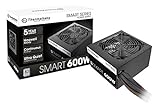

Buying a power supply is the least glamorous part of building a gaming PC, and that’s exactly why so many people get it wrong. The two most common mistakes: buying the cheapest unit that matches your wattage math, or swinging to the other extreme and overspending on 1200W of headroom you’ll never use. Both end up costing you. A bad PSU can crash a perfectly good system, and a heavily overbuilt one is money that could have gone toward a better GPU — the part that actually moves your frame rates.
Here’s the thing about power supplies: the spec sheet tells you maybe half the story. Wattage is easy to compare, but the quality of the power delivery, the protections on board, and the cabling matter just as much for a system you want to run stable for five-plus years. This guide walks through what actually matters, in the order you should think about it.
Top 3 picks at a glance
Decide These 3 Things First
Before you look at a single product, nail down three decisions:
1. Your total system wattage. Add up your components: a modern mid-range CPU draws 65–125W under load, a mainstream graphics card 150–250W, and a high-end GPU 300–450W. Add roughly 75–100W for the motherboard, RAM, drives, and fans. A typical mid-range gaming build lands around 450–550W of real draw; a high-end RTX-class build can hit 600–700W. You want your PSU’s rated wattage to sit comfortably above that — ideally with your expected load at 50–70% of the unit’s capacity, where efficiency and fan noise are best.
2. Your case size and PSU clearance. Measure the PSU bay. Standard ATX units are 150mm deep, but some models stretch to 160–180mm, and compact cases often cap clearance at 140–160mm. If you’re building in a small form factor case, you may need a shorter unit or even an SFX model (125 × 63.5 × 100mm).
3. Your GPU’s power connector. Modern high-end graphics cards use the 12V-2×6 connector (the updated version of 12VHPWR), which delivers up to 600W through a single cable. If your GPU needs one, buying a PSU with a native 12V-2×6 cable — rather than an adapter daisy-chained from PCIe cables — is genuinely worth it for cable management and safety margin.
Once those three are settled, the factors below determine which specific unit to buy.
Wattage: How Much You Really Need
Wattage is the spec everyone fixates on, and it’s simpler than marketing suggests:
– 500–600W: Entry-level builds with a 60–75W CPU and a GPU drawing under 200W. Fine for 1080p gaming rigs.
– 750W: The sweet spot for most mid-range gaming builds in 2026. Covers a 105–125W CPU plus a 220–300W GPU with healthy headroom.
– 850W: The new default for high-end builds. Most GPU manufacturers now recommend 850W for their flagship cards, and it leaves room for your next upgrade.
– 1000–1200W: Only necessary for overclocked flagships, dual-GPU setups (rare now), or serious future-proofing. Diminishing returns below that.
Don’t buy wattage you won’t use — a quality 750W unit outperforms a mediocre 1000W unit in every way that matters. Note that PSUs deliver most efficiently at 40–60% load, so an 850W unit powering a 500W system is actually running near its efficiency sweet spot, not wasting power.
Efficiency Certification: 80 Plus Ratings Explained
The 80 Plus certification measures how efficiently a PSU converts AC wall power to DC power. Higher ratings mean less wasted electricity and less heat:
– 80 Plus White/Bronze: Roughly 80–85% efficient at typical loads. Acceptable on a tight budget; expect to pay $40–60 for 500–600W.
– 80 Plus Gold: About 87–90% efficient at typical loads. This is the sweet spot for gaming builds. Gold units start around $80–90 for 750W and $100–110 for 850W.
– 80 Plus Platinum/Titanium: 90–94% efficient. Marginal real-world savings for most gamers — you’ll trim maybe $10–20 per year off your electric bill going Gold to Platinum at typical gaming usage.
The practical math: a Gold-rated 850W unit under a 500W gaming load wastes roughly 25% less power as heat than a White-rated equivalent. That means a cooler, quieter case and a few dollars saved monthly if you game daily.
Form Factor and Size
Check your case before anything else. The standards:
– ATX: 150 × 86 × 140mm standard. Fits nearly all mid-tower and full-tower cases. Some units run deeper than 140mm — verify your case’s clearance.
– SFX and SFX-L: 125 × 63.5 × 100mm (SFX-L adds depth for a larger fan). Required for most mini-ITX cases. Expect to pay a $20–40 premium over equivalent ATX units.
– Compact ATX: Some modern units shorten to 130–140mm depth, which helps in small mid-tower cases where cable routing space is tight.
Weight is a rough quality proxy here: quality units use heavier heatsinks and a substantial DC-to-DC conversion board, so a decent 850W ATX unit typically weighs 3–4 pounds versus 2–2.5 pounds for budget models.
Modularity and Cable Quality
Modularity affects airflow, aesthetics, and build sanity:
– Non-modular: All cables permanently attached. Cheapest, but you’re stuffing unused cables behind the motherboard tray. Fine for budget builds in cases with decent shroud space.
– Semi-modular: Essential cables (24-pin, CPU) fixed, everything else detachable.
– Fully modular: Every cable detaches. Worth the $10–20 premium in most cases — you install only what you need.
On the cable side, look for flat, black ribbon cables (easier to route), and if your GPU uses a 12V-2×6 connector, prioritize a native cable rated for the full 600W. Also confirm the CPU cable configuration: dual EPS 8-pin connectors are ideal for high-end motherboards and overclocking; a single 8-pin (4+4) is adequate for mainstream chips.
Build Quality and Protection Circuits
This is where spec sheets get vague, so look for concrete markers:
– DC-to-DC design: Regulation of the minor rails (3.3V/5V) from the 12V rail. All quality modern units use this; avoid older group-regulated designs.
– Japanese or quality main capacitor: The single most failure-prone component. Japanese capacitors (listed by brand: Chemi-Con, Nippon Chemi-Con, Rubycon) carry a real reliability premium.
– Protections: Your unit should list OVP (over-voltage), UVP (under-voltage), OCP (over-current), SCP (short-circuit), OPP (over-power), and OTP (over-temperature) protection. Any PSU missing these from its spec sheet is an automatic pass.
– Fan quality and zero-RPM mode: A 120mm or 135mm fluid dynamic bearing fan that doesn’t spin below 40–50% load keeps a mid-range build near-silent at idle and light use.
Warranty: The Best Quality Signal You Get
Because PSU internals are hidden and few reviewers test every unit, the warranty length is your most honest indicator of manufacturer confidence:
– 3–5 years: Budget tier. Common on $40–60 units. Adequate, but expect replacements rather than long service life.
– 7 years: Solid mid-range confidence.
– 10 years: Premium tier. Increasingly standard on Gold-rated ATX 3.1 units in the $90–130 range, which is excellent value.
A 10-year warranty on an $89–110 unit is arguably the best reliability-per-dollar deal in PC building — it means the manufacturer expects the unit to last a decade of daily use.
Standards Compliance: ATX 3.1 and PCIe 5.1
These are the current power standards, and they matter for two reasons. ATX 3.1 units are engineered to handle GPU power excursions — modern graphics cards briefly spike well above their rated draw (a 300W card can transiently spike 2–3x that for milliseconds). Older PSUs may trip their protection circuits on these spikes and shut your system down mid-game. PCIe 5.1 readiness means the native 12V-2×6 cable and connector are rated to the current safety revision, with improved sense-pin and latch design versus the original 12VHPWR.
Practical guidance: if you’re buying a GPU that uses the 12V-2×6 connector, an ATX 3.1/PCIe 5.1 unit is worth a modest premium. For older or lower-power GPUs on standard 8-pin PCIe cables, it’s nice to have but not mandatory.
Price Tiers: What Your Money Buys
– Budget ($35–60): 500–600W, 80 Plus White or Bronze, non-modular or semi-modular, 3–5 year warranty. Legitimate options exist here for entry builds — a 600W Bronze unit around $43 or a 500W White unit near $40 will reliably power a modest 1080p system. Just check that protections are listed.
– Mid-range ($80–120): 750–850W, 80 Plus Gold, fully modular, ATX 3.1/PCIe 5.1 compliance, native 12V-2×6 cable, 7–10 year warranty. This is where nearly every gamer should shop. A fully modular 750W Gold unit at $90 or an 850W at $110 hits every modern requirement.
– Premium ($130–220+):** 1000–1200W, Gold or Platinum, top-tier capacitors, ultra-quiet zero-RPM fan profiles, 10–12 year warranties. Only worth it for flagship GPUs, heavy overclocking, or multi-year upgrade roadmaps.
For most buyers, the mid-range tier is the answer: the price-to-spec ratio there is dramatically better than it was a few years ago.
Spec Checklist
| Spec | Budget ($35–60) | Mid-range ($80–120) | Premium ($130–220) |
|---|---|---|---|
| Wattage | 500–600W | 750–850W | 1000–1200W |
| Efficiency | 80 Plus White/Bronze | 80 Plus Gold | Gold/Platinum |
| Modularity | Non/semi-modular | Fully modular | Fully modular |
| ATX 3.1 / PCIe 5.1 | Rare | Standard | Standard |
| Native 12V-2×6 | No | Yes | Yes |
| Warranty | 3–5 years | 7–10 years | 10–12 years |
| Best for | Entry 1080p builds | Most gaming builds | Flagship/overclocked rigs |
Red Flags
– “Peak” or “max” wattage claims. Reputable units advertise continuous power. A “700W peak” label on a 500W-rated unit is marketing filler.
– No efficiency certification listed. Uncertified units convert as little as 70% of wall power and run hot.
– Missing protection circuits. If OVP/OCP/SCP aren’t in the spec sheet, walk away.
– No-name brands at suspicious prices. A “1000W” unit for $35 is not delivering 1000W safely. The PSU is the one component that can take the rest of your build down with it.
– Group-regulated design in a new purchase. Older topology that handles modern GPU transient loads poorly.
– Warranty under 3 years. Signals the manufacturer’s own low expectations.
FAQ
Can a PSU be too powerful for my build?
Not in any harmful way — a quality 1000W unit powering a 400W system runs cooler and quieter than a stressed smaller unit, and modern units have low minimum loads. The only real cost is money. That said, you lose efficiency running below ~20% load, so a 750W or 850W unit is the practical ceiling for most builds.
Is 80 Plus Gold worth it over Bronze?
For a system you game on daily, yes. The efficiency gap at typical loads is roughly 3–5%, which translates to modest electricity savings and noticeably less heat inside your case. Since Gold units now start under $90 with fully modular cables and long warranties, the Bronze tier mainly makes sense for the tightest budgets.
Do I need an ATX 3.1 PSU for my graphics card?
If your GPU uses the 12V-2×6 connector, strongly recommended — you get a native cable and handling of transient power spikes. If your card uses traditional 8-pin PCIe connectors, an older-standard PSU with adequate wattage and quality protections works fine.
How long does a power supply last?
A quality unit typically lasts 7–10 years, often outliving two or three GPU upgrades. Budget units more commonly show issues around the 4–6 year mark, usually as fan bearing noise or difficulty booting under load. Buying a unit with a 10-year warranty is the cheapest insurance you can get for the rest of your components.


