
Surround sound on a gaming headset is not about adding more effects, it is about giving your brain accurate directional cues without destroying tonal balance or adding latency. Most gaming headsets use virtual surround, which takes a 7.1 channel mix and applies head-related transfer function (HRTF) processing to create the impression of speakers around you on two drivers. Done correctly, that helps you pinpoint footsteps, reloads, and callouts. Done poorly, it makes everything sound hollow, distant, and harder to locate.
Prioritize accuracy over immersion. The best configuration keeps the Windows audio pipeline clean, lets only one surround engine process the audio at a time, and tunes equalization to preserve the frequency range where positional audio lives. In modern competitive shooters as of 2026, developers mix audio for headphones first, so a flat, well-tuned stereo feed with a single high-quality HRTF layer will almost always beat stacking multiple virtualizers. Your goal is a single surround path, a stable sample rate, and an EQ that does not mask 2 kHz to 5 kHz detail.
As an Amazon Associate we earn from qualifying purchases at no extra cost to you. Product prices and availability are accurate as of the date shown and are subject to change.

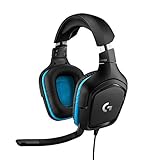

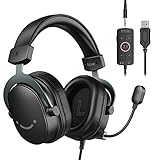
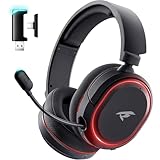
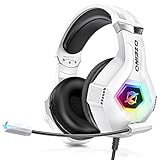


Top 3 picks at a glance
Quick Recommended Settings
| Setting | Recommended value | Why |
|---|---|---|
| Windows Spatial Sound | Off, or Windows Sonic for Headphones / Dolby Atmos for Headphones (pick ONE) | Prevents double-processing; only one HRTF engine should be active |
| Headset Software Surround (Logitech G HUB, SteelSeries Sonar, Razer Synapse) | Off if using Windows Sonic/Dolby Atmos; On only if software is your sole engine | Avoids phasing and reverb from stacked virtualizers |
| Windows Sound Format | 24-bit, 48000 Hz (Studio Quality) | Matches native game audio, avoids resampling; set via Settings > System > Sound > More sound settings |
| Windows Configuration | Stereo when using HRTF; 7.1 only if headset requires it for its own engine | HRTF engines expect stereo output to virtualize correctly |
| In-Game Audio Mode | Headphones / 3D Audio / HRTF On | Uses the game’s own binaural mix instead of upmixing a speaker layout |
| Equalizer (EQ) | Low shelf -2 dB at 120 Hz, +2 dB at 3 kHz (Q 1.2), -3 dB at 7-8 kHz if sibilant | Keeps bass from masking footsteps while preserving vocal presence |
| Microphone Sidetone / Monitoring | Off or below 15% | Reduces latency and prevents feedback in the surround mix |
| ChatMix / Game/Chat Balance Dial | Center detent (50/50) for setup, then adjust in-app | Ensures neither game nor voice channel is attenuated during tuning |
| Exclusive Mode | Allow applications to take exclusive control: Unchecked for Discord/Chrome, Checked for competitive games if needed | Prevents sample rate conflicts while allowing low-latency access when required |
Setting-by-Setting
1. Windows Spatial Sound: Choose One Engine and Stick With It
Exact value: Settings > System > Sound > Select your headset under Output > Click the arrow for Properties > Spatial sound > Type: Off (if using headset app) OR Windows Sonic for Headphones OR Dolby Atmos for Headphones.
Trade-off: Windows Sonic is free, system-wide, and has the lowest chance of conflict. Dolby Atmos for Headphones offers per-game profiles and slightly more precise height cues, but requires a license and an extra background service (Dolby Access). Using either alongside your headset’s own surround will create a hollow, echoey soundstage and smeared imaging. If you enable a Windows option, you must disable the headset app’s surround toggle completely.
2. Headset App Surround Toggle: The Master Switch
Exact value: Logitech G HUB > Select Headset > Acoustics > Enable Surround Sound: Off (if using Windows/Dolby) or On (if G HUB is your only engine). SteelSeries GG > Sonar > Spatial Audio: Off/On. Razer Synapse > Sound > THX Spatial Audio: Off/On. Corsair iCUE > Headset > Surround Sound button: Gray = Off, Yellow = On.
Trade-off: Headset-native surround often provides the widest perceived soundstage and preset EQ integration, but it ties you to that vendor’s driver and can add 10-20 ms of processing delay. Disabling it and using the game’s built-in HRTF gives you the most accurate front/rear separation because the game knows the true 3D position of each sound source, rather than guessing from a 7.1 downmix.
3. Windows Sound Format and Channel Layout
Exact value: Settings > System > Sound > More sound settings > Playback tab > Double-click your headset > Advanced tab > Default Format: 24-bit, 48000 Hz > Uncheck Give exclusive mode applications priority if you use Discord + game + browser audio simultaneously. On the same Properties window > Spatial sound tab > ensure format matches.
For channel layout: More sound settings > Playback > Configure > Audio channels: Select Stereo when any HRTF engine is active. Select 7.1 Surround only if your headset manual explicitly states its surround requires a 7.1 input to function. File location for backing up this config: The setting is stored in the registry, but you can export your audio device presets from %APPDATA%\SteelSeries\GG\sonar\settings.json or %LOCALAPPDATA%\LGHUB\settings.json before changing.
Trade-off: 48000 Hz is the native sample rate for most game engines (Unreal, Unity, Wwise). Forcing 44100 Hz or 96000 Hz forces Windows to resample, which can subtly soften transients like footstep clicks. Stereo + HRTF is cleaner, but some older games that lack a headphone mode will only output proper surround if Windows is set to 7.1, in which case you must use the headset’s 7.1 virtualizer.
4. In-Game Audio Output Mode
Exact value: Inside the game: Settings > Audio > Output Device: Headphones. Examples: Call of Duty > Audio > Audio Mix: Headphones + 3D Headphones On. Valorant > Settings > Audio > Sound > HRTF: On. Counter-Strike 2 > Settings > Audio > Audio Device: Headphones > 3D Audio Processing: On. Overwatch 2 > Options > Sound > Dolby Atmos for Headphones: On (this replaces Windows setting).
Trade-off: Headphone/HRTF mode narrows the overall soundstage slightly but gives you true 360-degree positioning with correct distance attenuation. Speaker modes (Stereo, 5.1, 7.1, Home Theater) sound louder and more cinematic but collapse front and rear cues together on headphones, making it hard to tell if an enemy is in front of or behind you.
5. Equalizer (EQ): Tune for Clarity, Not Bass
Exact value: In your headset app EQ (10-band): 32 Hz: -1 dB, 64 Hz: -1 dB, 125 Hz: -2 dB, 250 Hz: 0 dB, 500 Hz: 0 dB, 1 kHz: +1 dB, 2 kHz: +1.5 dB, 4 kHz: +2 dB (Q 1.0-1.4), 8 kHz: -2 to -3 dB, 16 kHz: 0 dB. Value range for adjustments: Move in 1 dB steps, never exceed +/- 4 dB for surround tuning.
Trade-off: Cutting low bass (below 150 Hz) reduces explosion masking so footsteps in the 2-4 kHz range cut through. Boosting 3-4 kHz improves presence and localization, but boosting too much causes harshness and listening fatigue. Cutting 7-8 kHz tames sibilance on many gaming drivers, but cutting too much dulls the air and makes distance cues harder to read. Test with key combo Win + Ctrl + V to open Volume Mixer quickly while adjusting.
6. Microphone, Sidetone, and Communications Tab
Exact value: Settings > System > Sound > More sound settings > Communications tab > When Windows detects communications activity: Do nothing. Settings > System > Sound > Input > Your headset mic > Properties > Input volume: 75-85. In headset app > Sidetone/Mic Monitoring: 0-12%.
Trade-off: Setting Communications to Reduce the volume of other sounds by 80% will duck your game audio every time Discord activates, destroying your ability to hear directional cues during callouts. Sidetone at high levels feeds your own voice with latency back into the processed mix, which can confuse spatial perception. Low or off is cleaner for surround; higher is only useful if you need to regulate how loud you speak.
By Hardware Tier
Low Tier: Sub-$60 Stereo Headsets, No Dedicated Software (e.g., basic USB or 3.5mm headsets)
Use Windows-native processing. Set Windows Spatial sound to Windows Sonic for Headphones. Leave Windows format at 24-bit, 48000 Hz, Stereo. In-game, set Output to Headphones and enable any built-in HRTF. If bass is overwhelming, use Windows built-in EQ via Settings > System > Sound > All sound devices > Your headset > Enhancements > Equalizer (if available) or use the free Equalizer APO + Peace GUI. Location for Equalizer APO config: C:\Program Files\EqualizerAPO\config\config.txt. Keep EQ subtle: -2 dB at 125 Hz, +2 dB at 3 kHz. Do not install multiple virtual surround apps to compensate for hardware; one engine is enough. To undo: Set Spatial sound back to Off and uninstall Equalizer APO via its installer > Uninstall.
Mid Tier: $70-$150 Headsets with Software (Logitech G435/G733, SteelSeries Arctis Nova 3/5, HyperX Cloud Alpha Wireless, Razer BlackShark V2 X)
Pick one engine and disable the other two. Recommended path: Disable Windows Spatial sound (Off), disable headset surround, and rely on in-game HRTF for shooters. For cinematic single-player games, flip it: Enable the headset’s surround (Sonar Spatial Audio, G HUB Surround, THX) and set Windows Spatial sound to Off, then set in-game to Home Theater or 7.1 so the headset has channels to virtualize. Manage via SteelSeries Sonar > Sonar > Gaming slider > Spatial Audio toggle, or G HUB > Acoustics > Surround Sound. Set ChatMix dial to center before tuning, then use Discord > Settings > Voice & Video > Output Device: Specifically select your headset’s Chat device, not Default, to keep Game and Chat separate. To undo: Re-enable the toggle you turned off and set Windows Spatial sound back to Off.
High Tier: $150+ Headsets with Hardware DAC, Dolby License, or Planar Drivers (SteelSeries Arctis Nova Pro, Astro A50, Logitech G Pro X 2, Corsair Virtuoso)
Use the licensed engine. Install Dolby Access from the Microsoft Store, set Settings > System > Sound > Spatial sound > Dolby Atmos for Headphones > Open Dolby Access > Product > Settings > Performance Mode: Game, Virtual Surround: On, Intelligent Equalizer: Off for competitive play. Set the hardware base station or DAC to Passthrough/Stereo mode if it has a Dolby button, to avoid double-encoding. Connect via USB in PC mode (switch on base station/DAC to PC), not 3.5mm, to maintain 24-bit/48000 Hz. In-game, set to Headphones/HRTF Off if Dolby Atmos is handling virtualization, or HRTF On if you prefer the game’s engine over Dolby; never both. For fine tuning, Dolby Access > Custom EQ > create a profile with the same -2 dB / +2 dB shape above. Config file location for backup: %LOCALAPPDATA%\Dolby\Dolby Access\settings.db (copy before editing). To undo: Set Spatial sound to Off, set DAC to default, and toggle Dolby Access > Settings > Off.
Common Mistakes
1. Running Two Surround Engines at Once What causes it: Enabling Windows Sonic or Dolby Atmos while also leaving THX, Sonar Spatial, or G HUB Surround enabled. The audio is HRTF-processed twice, adding reverb and phase cancellation. How to check: Play a YouTube 7.1 surround test. If the voice announcing Rear Left and Rear Right both sound like they come from directly behind or from inside your head with echo, you have stacking. Also check Settings > System > Sound > Spatial sound and your headset app simultaneously; only one should show On. What to do: Set Spatial sound to Off and keep only the headset app On, OR set the headset app to Off/Stereo and set Spatial sound to Windows Sonic/Dolby. Test again with the same video. How to undo: Re-enable the engine you disabled; no restart needed, toggle takes effect instantly.
2. Windows Set to 7.1 While HRTF Expects Stereo What causes it: Using More sound settings > Playback > Configure > 7.1 Surround with a game or Windows Sonic that expects a stereo feed. Positional audio becomes vague, with front and back indistinguishable. How to check: In More sound settings > Playback > Right-click headset > Configure, see if it shows 7.1. In-game, move in a circle around a constant sound source like a generator; if direction does not change smoothly, layout is wrong. What to do: Set Configure to Stereo, click Next > Finish, then restart the game so it re-detects the layout. Value range: Stereo is correct for all HRTF paths; only switch to 7.1 if your headset’s manual requires it. How to undo: Return to Configure > 7.1 Surround > check all optional speakers > Finish.
3. Aggressive Bass Boost Hiding Footsteps What causes it: Using Bass Boost enhancement or a +6 to +10 dB low shelf from a Fun or Immersion preset. Low frequencies mask the 2-5 kHz transient of footsteps. How to check: In headset app EQ, see if 32-250 Hz sliders are above +3 dB, or if Settings > System > Sound > All sound devices > Enhancements > Bass Boost is checked. Listen to a game with the EQ bypassed vs. enabled using the app’s Bypass button or key combo for your app (G HUB: click the EQ on/off toggle, Sonar: Bypass button top-right). What to do: Disable Bass Boost, set 32-125 Hz to -1 to -2 dB, add +1.5 to +2 dB at 2-4 kHz. Test in a custom match. How to undo: Reload the app’s default preset (G HUB > Acoustics > Restore Defaults, Sonar > Preset > Default).
4. Communications Tab Ducking Game Audio What causes it: Windows default When Windows detects communications activity: Reduce the volume of other sounds by 80% lowers game volume whenever Discord or Xbox Game Bar voice triggers. How to check: Settings > System > Sound > More sound settings > Communications tab. See if it is set to Reduce volume. Reproduce by joining a Discord voice channel and having someone talk while you play music; if music dips, ducking is active. What to do: Set to Do nothing > Apply. Also set Discord > Settings > Voice & Video > Attenuation slider to 0%. How to undo: Set back to Reduce the volume of other sounds by 80% > Apply.
5. Wrong Output Device Selected After Reboot What causes it: Windows defaults back to monitor speakers or Game vs. Chat endpoint after a driver update, so surround settings appear to stop working. How to check: Settings > System > Sound > Output shows the wrong device name (e.g., LG UltraGear instead of Arctis Nova Pro Game). Press Win + G > Audio widget > see which output is active. What to do: Settings > System > Sound > All sound devices > Set your headset’s Game device as Default Device and Default Communications Device. In Discord and in-game, manually set Output to that same named device instead of Default. How to undo: Reselect your previous Default Device in the same menu.
FAQ
Should I use Stereo or 7.1 for the best surround on headphones?
Use Stereo if you are using any HRTF-based surround (Windows Sonic, Dolby Atmos for Headphones, or the in-game Headphones/HRTF mode). HRTF engines are designed to take a stereo signal and place sounds in 3D space. Use 7.1 only if your headset’s own virtual surround explicitly requires a 7.1 input to work, which is rare on modern firmware. If a game offers a dedicated Headphone or 3D Audio mode, choose that regardless of your Windows setting.
Why does surround sound make my headset sound echoey or far away?
An echoey or distant sound is almost always double-processing or an overly wet reverb preset. Check that only one surround is active: Windows Spatial sound, the headset app, and the in-game HRTF should not be on at the same time. Disable two, keep one. Then lower any Reverb or Distance slider in the app (Sonar > Spatial Audio > Room slider to Near, G HUB > Surround sliders to minimum). If it still sounds distant, disable surround entirely and use stereo with the game’s HRTF, which has the least reverb.
Where do I turn on surround in Windows 11 step by step?
Path: Settings > System > Sound > Output > Click your headset name > Spatial sound > Select Windows Sonic for Headphones or Dolby Atmos for Headphones > Apply. If you do not see Spatial sound, go to Settings > System > Sound > More sound settings > Playback > Double-click headset > Spatial sound tab. You will need to install Dolby Access from the Microsoft Store before Dolby Atmos appears. After enabling, restart the game so it detects the new pipeline.
Does virtual surround add lag or hurt competitive performance?
Software virtual surround adds a small amount of processing latency because it must buffer and filter the audio. On modern PCs the delay is minimal and often imperceptible, but stacking two engines or using heavy EQ + noise suppression together can increase it and soften transient timing. For competitive shooters, the cleanest and lowest-latency path is disabling Windows and headset surround and enabling only the game’s built-in HRTF, with Windows format locked to 24-bit, 48000 Hz and Exclusive Mode unchecked. For single-player or cinematic games, the slight trade-off of Dolby or THX surround is worth it for height and immersion.


