
For years, the phrase “budget wireless gaming mouse” was an oxymoron. If you didn’t want to spend $100 or more, you were forced to accept sluggish response times, heavy designs that felt like bricks, and batteries that died mid-match. Today, the landscape has completely shifted. High-performance optical sensors and zero-latency wireless chips have trickled down to highly accessible price points, making it easier than ever to cut the cord without breaking the bank.
However, this accessibility has also flooded the market with sub-par products wrapped in flashy marketing. When researching what to look for in budget wireless gaming mice, many buyers make the critical mistake of prioritizing RGB lighting, overly aggressive “gamer” aesthetics, and absurdly high DPI (dots per inch) ratings that no human could actually use. They end up with a mouse that looks impressive on a desk but suffers from sensor spinouts, high latency, and cheap plastic construction that creaks under pressure. To get the best value, you need to look past the surface-level gimmicks and focus on the internal engineering and ergonomics that actually impact your gameplay.
As an Amazon Associate we earn from qualifying purchases at no extra cost to you. Product prices and availability are accurate as of the date shown and are subject to change.

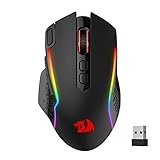


Top 3 picks at a glance
Decide These 3 Things First
Before diving into specific product listings, you must narrow your focus by making three foundational decisions. These choices will immediately filter out about 80% of the budget options on the market, saving you hours of aimless scrolling.
- 1. 2.4GHz USB Dongle vs. Bluetooth: If you plan to play fast-paced games (such as first-person shooters or MOBAs), a 2.4GHz wireless USB dongle is non-negotiable. Bluetooth connection protocols introduce roughly 20 to 50 milliseconds of latency, which feels sluggish and unresponsive during gameplay. A dedicated 2.4GHz wireless connection matches the 1ms speed of a wired mouse. Only opt for a hybrid mouse (offering both modes) if you plan to swap between a work laptop (via Bluetooth) and a gaming PC (via the USB dongle).
- 2. Battery Type (AA/AAA Alkaline vs. Rechargeable Lithium-ion): Budget wireless mice handle power in two ways. Some use a single AA or AAA battery, which adds physical weight but offers hundreds of hours of battery life and can be swapped out instantly. Others feature an internal, rechargeable Lithium-ion battery charged via a USB cable. Rechargeable mice are typically lighter, but you must remember to plug them in, and their total capacity will slowly degrade over several years of use.
- 3. Your Grip Style and Hand Size: No matter how good a mouse’s sensor is, it will hinder your aim if it does not fit your hand. Determine if you are a palm gripper (entire hand rests on the mouse), a claw gripper (palm rests on the back, fingers arched over the buttons), or a fingertip gripper (only fingertips touch the mouse). Palm grippers need larger, more ergonomic shapes; fingertip and claw grippers should look for shorter, symmetrical, or low-profile designs.
1. Physical Dimensions and Weight Ranges
Weight and dimensions are the most critical factors in how a mouse performs in your hand. In the budget category, you will find a massive variance in physical builds. A standard medium-sized budget mouse typically measures between 120mm and 127mm (4.7 to 5.0 inches) in length, 60mm to 68mm (2.3 to 2.6 inches) in width, and 38mm to 42mm (1.5 to 1.6 inches) in height. If your hands measure over 190mm (7.5 inches) from wrist to middle fingertip, look for a mouse closer to 130mm in length.
Weight is where budget mice diverge significantly:
- Ultra-Lightweight (45g to 65g): These mice often utilize a honeycomb shell design (perforated holes to cut plastic weight) or extremely thin but structural internal walls. They are optimized for fast, flick-heavy shooters where minimizing inertia is key to quick aiming adjustments.
- Medium Weight (70g to 85g): The sweet spot for general gaming and office productivity. These mice feel solid in the hand without causing wrist fatigue over long sessions.
- Heavy (90g to 110g+): Often found in budget mice that rely on heavy AA batteries or feature large, bulky ergonomic shells with thumb rests. While some players prefer a heavy mouse for steady tracking, anything over 100 grams can feel sluggish during intense, fast-paced gaming.
2. Sensor Performance, DPI, and Polling Rates
Do not fall for the DPI marketing trap. Brands love to brag about “10,000 DPI” or “16,000 DPI” sensors on budget packaging. In reality, almost all professional gamers play at 400, 800, or 1,600 DPI. What actually matters is the sensor’s tracking accuracy, maximum speed (measured in IPS, or Inches Per Second), and the polling rate.
When shopping in the budget range, look for an optical sensor with a tracking speed of at least 150 IPS (preferably 220 IPS or higher). This ensures that if you swing your arm rapidly across your mousepad, the sensor will not lose track of the surface and spin out toward the sky.
Additionally, verify the polling rate. The polling rate is how often the mouse reports its position to your computer. A standard office mouse polls at 125Hz (every 8 milliseconds). A true wireless gaming mouse must support a 1,000Hz polling rate (every 1 millisecond). Some ultra-budget options advertise themselves as “gaming” mice but max out at 250Hz or 500Hz; avoid these if you want competitive performance.
3. Materials, Shell Construction, and Switch Durability
To hit low price points, manufacturers must cut costs somewhere, and it often starts with the plastic shell and internal switches. A quality budget mouse will use high-grade ABS plastic with a matte, textured finish that resists finger oils. Cheap glossy plastics look sleek out of the box but quickly become slippery and greasy during gameplay.
Pay close attention to the mouse switches (the mechanisms beneath the left and right click buttons):
- Mechanical Switches: Found in most budget mice. They offer a tactile, crispy click. Look for reputable switch brands like Omron, Huano, or Kailh. Durability should be rated for at least 10 million to 20 million clicks. Avoid generic, unbranded switches, which can develop a frustrating “double-click” defect within a few months.
- Optical Switches: Rarely found in the sub-$30 category but highly desirable. They use a light beam instead of physical metal contacts to register a click, making them virtually immune to double-clicking issues and significantly faster.
- Side Buttons and Scroll Wheel: Make sure the side buttons do not feel mushy or have excessive pre-travel (how far you have to push the button before it clicks). The scroll wheel should have distinct, tactile steps rather than spinning loosely.
4. Battery Life and Charging Ports
The convenience of a wireless mouse is quickly ruined if you have to plug it in every other day. Budget mice with internal lithium-ion batteries should offer a minimum of 40 hours of continuous use on a single charge with the RGB lighting turned off. If you leave flashy RGB lighting on, expect that battery life to drop by 50% to 70%.
As we head into 2026, any gaming peripheral still utilizing a Micro-USB port is an immediate pass; USB-C is the mandatory standard. A USB-C port ensures faster charging times and allows you to use the same cable you use for your phone or keyboard. For mice powered by AA or AAA batteries, look for power-saving sensors (like Logitech’s HERO sensor) that can squeeze 200 to 250 hours of gaming performance out of a single alkaline cell, making the weight trade-off highly practical for casual users.
5. Software, Onboard Memory, and Macro Programming
A great budget wireless mouse should be functional right out of the box, but companion software elevates its utility. Good configuration software allows you to rebind buttons, program custom macros, adjust the DPI steps in increments of 50 or 100, and tweak the RGB lighting.
Crucially, look for a mouse with onboard memory profiles. This feature allows you to save your DPI steps, button binds, and lighting preferences directly onto the mouse’s internal chip. Once saved, you can close or completely uninstall the resource-heavy background software, or plug your mouse into a different computer (like a work laptop or a console), and all your custom settings will remain active without needing the software installed on that machine.
6. Price Tiers: What to Expect from $10 to $30
The budget wireless gaming mouse market is tightly packed, but small price jumps yield massive upgrades in quality. Understanding these tiers helps you decide exactly how much to spend:
- The Ultra-Budget Tier ($9.99 – $14.99): At this price point, you are largely buying an office mouse with a gaming paint job and colorful LED lights. These mice typically feature heavy latency (250Hz polling rates or lower), basic optical sensors that spin out during fast movements, and mushy silent switches. They are fine for casual strategy games or office work, but inadequate for competitive play.
- The Entry-Level Tier ($15.00 – $24.99): This is where true gaming performance begins. You will find lightweight honeycomb designs (under 50g) and solid entry-level optical sensors with 1,000Hz polling rates. Brands in this tier often offer tri-mode connectivity (2.4GHz, Bluetooth, and wired USB-C) and software for macro programming, making them incredibly versatile.
- The Sweet-Spot Tier ($25.00 – $29.99): Here, you find entry-level options from major legacy brands. These mice typically skip flashy RGB to invest in premium, highly efficient proprietary sensors, ultra-stable wireless connections with sub-1ms response times, and highly durable mechanical switches rated for up to 50 million clicks.
Spec Checklist
Use this quick-reference table to compare what features you should demand in a budget wireless gaming mouse versus what you get as you move up into mid-range and premium price points.
| Spec / Feature | Budget Tier (Under $30) | Mid-Range Tier ($30 – $70) | Premium Tier ($70+) |
|---|---|---|---|
| Wireless Latency | 1ms (via 2.4GHz USB Dongle) | 1ms or lower | Sub-0.5ms (up to 4,000Hz – 8,000Hz polling) |
| Sensor Tracking Speed | 150 to 220+ IPS | 300 to 400 IPS | 650+ IPS (flawless surface tracking) |
| Weight Range | 49g (honeycomb) to 99g (AA battery) | 55g to 75g | 39g to 60g (ultra-light structural engineering) |
| Charging Interface | USB-C or AA/AAA Alkaline | USB-C standard | USB-C / Magnetic Dock / Qi Wireless Charging |
| Switch Lifespan | 10M – 20M clicks (Mechanical) | 30M – 80M clicks (Advanced Mechanical/Optical) | 90M+ clicks (Premium Optical Switches) |
| Onboard Profile Memory | 1 Profile (often basic or software-reliant) | 1 to 3 Profiles | Up to 5 highly detailed Profiles |
Red Flags to Avoid
When shopping online, many third-party sellers use misleading terminology to make cheap office mice look like high-performance gaming gear. Keep an eye out for these red flags:
- “Silent Click” Buttons: While silent switches are great for a quiet office or library, they lack the tactile feedback and rapid rebound speed required for quick double-tapping in games. True gaming mice use crisp, clicky micro-switches.
- No Mention of Weight or Polling Rate: If a manufacturer’s listing does not explicitly state the weight in grams or the polling rate in Hertz (Hz), it is almost always because the mouse is heavy (over 100g) and slow (125Hz polling rate).
- “Wireless” but Bluetooth-Only: Some budget listings advertise “Wireless Gaming Mouse” but only feature Bluetooth connectivity. If there is no dedicated 2.4GHz USB receiver included in the box, do not buy it for gaming.
- Proprietary or Micro-USB Cables: Avoid mice that use outdated charging ports or feature deeply recessed ports that only accept the manufacturer’s specific, proprietary cable shape.
FAQ
Is Bluetooth good enough for gaming on a budget mouse?
No. Bluetooth is designed for low power consumption and office productivity, not speed. It introduces a noticeable delay (latency) between your physical hand movement and the cursor movement on screen. For gaming, always use the 2.4GHz wireless dongle that comes with the mouse.
How long do budget wireless mouse batteries actually last?
It depends heavily on the power source and lighting. A mouse running on a single AA alkaline battery can easily last 200 to 250 hours. A rechargeable lithium-ion budget mouse typically lasts between 30 and 70 hours on a single charge. Turning off all RGB lighting will often double or triple your battery life.
Do honeycomb-shell gaming mice get dirty easily?
Yes, dust, hair, and dead skin cells can fall through the holes over time. However, most reputable manufacturers coat the internal circuit boards with a protective water- and dust-resistant varnish. You can easily keep them clean by using a can of compressed air once a month to blow out any debris.
Can I use a budget wireless mouse while it is charging?
Almost all rechargeable budget wireless mice can be used as a standard wired mouse while plugged in to charge. The charging cable is included in the box. Just ensure the cable is flexible enough so it does not drag heavily on your desk while you play.


