No toy maker sells a sawfly-only figure, play set or plush, so shopping for toy sawflies means choosing the closest match instead of an exact one. A sawfly looks like a wasp at a glance, yet it has no sting, and that harmless look-alike is the whole point of the hunt: children want the wasp shape without the wasp worry. The real decision is what kind of stand-in fits your child, a tool for catching real insects gently, a kit for raising real insects at home, or a book that explains where sawflies sit in the insect world.
This guide is for parents, grandparents and teachers buying for children who love insects and outdoor play. Each product below was chosen from the names and specifications on its Amazon product page, and each is the closest match for a sawfly-only toy that does not exist. Nothing here is presented as a sawfly toy when it is something else.
Quick Picks
As an Amazon Associate we earn from qualifying purchases.
| Product | Best for | Key spec from title |
| RB&G Humane Bug Catcher | Catching a wasp-shaped insect without touching it | Contactless Spider Catcher with Sliding Closure |
| Insect Lore Two Cups of Live Caterpillars | Watching real insects change form at home | Two Cups of Live Caterpillars with Butterfly Life Cycle Figurines |
| National Geographic Little Kids First Big Book of Bugs | A first bug book for younger children | Little Kids First Big Book of Bugs |
| Eyewitness Explorers: 04 Insects | Studying insects in close-up photographs | Eyewitness Explorers: 04 Insects |
| Sawfly Life History Adaptations to Woody Plants | Reading the only book named for sawflies | Sawfly Life History Adaptations to Woody Plants |
How to Choose
Start with the sting question
A sawfly looks like a wasp, so the first thing to settle is the sting question, because it shapes every other choice. Sawflies have no sting, while wasps do, and a child who knows that difference can enjoy the wasp shape without fear. Look for picks that keep hands away from the insect, such as a catcher with a sliding closure or a book with clear photographs, rather than anything that invites grabbing. Talk through what your child will do when a real wasp-shaped insect appears in the garden, and choose the tool or book that matches that plan. The safest sawfly play is look-and-release play.
Match the pick to the child’s age
Little children do best with sturdy picture books and a simple catcher used with an adult nearby, because the learning is in looking, naming and letting go. School-age children can handle a longer project, such as raising live caterpillars over three weeks and watching each stage in turn. Older readers can use a photo field guide on their own and compare insects side by side. The academic sawfly book in this guide is different again: it is a dense reference written for adults, so buy it for the shelf and read the useful parts aloud rather than handing it to a young child.
Check what actually arrives in the box
Read the listing before ordering, because the contents vary more than the titles suggest. Live caterpillars arrive in cups with food and holding logs, but the habitat is sold separately, and the order should wait when daytime temperatures sit below 50 or above 90 degrees Fahrenheit. A catcher arrives ready to use, with no habitat, food or extra parts to assemble. Books are simpler, yet the details still matter: check the page count, the binding and the publication date, since an older field guide can use names that newer books have changed.
Plan for release and storage
Every pick in this guide needs a plan for what happens after the fun. A caught insect should go back outside the same day, in the same garden where it was found, because a catcher is a viewing box and not a home. Live caterpillars need a habitat, daily checks and a release day once the butterflies emerge. Books need a shelf where a child can reach them again, since a field guide only teaches when it gets opened. Decide the release day and the storage spot before the box arrives, and the pick will do its job instead of becoming clutter.
The 5 Best Options
RB&G Humane Bug Catcher

A sawfly hunt in the garden needs a tool that catches without harming, and this RB&G catcher is the most direct pick in the guide. A child places the transparent hood over the insect, slides the handle until the bug moves onto the green pad, and closes it, so the insect can be watched up close and then released where it was found. One-handed use matters here, because the other hand stays free for a notebook or a magnifier, and the compact size fits a pocket or a small backpack.
Specs
- Transparent hood that fits over the insect for viewing
- Sliding closure that moves the bug onto a green pad
- One-handed operation with no crushed legs and no mess
- Catches spiders, crickets and other small bugs without getting close
- 11 inches (28 cm) long, 1.85 inches (4.7 cm) wide, 2 inches (5 cm) high
- Lightweight and easy to store or carry on outdoor adventures
Best for: Garden hunts where a child wants to catch, look at and release a wasp-shaped insect without touching it.
Watch out for: The catcher holds one insect at a time, so it suits a single catch and a quick look rather than a collection.
ASIN: B0FMF7V6NV
Insect Lore Two Cups of Live Caterpillars
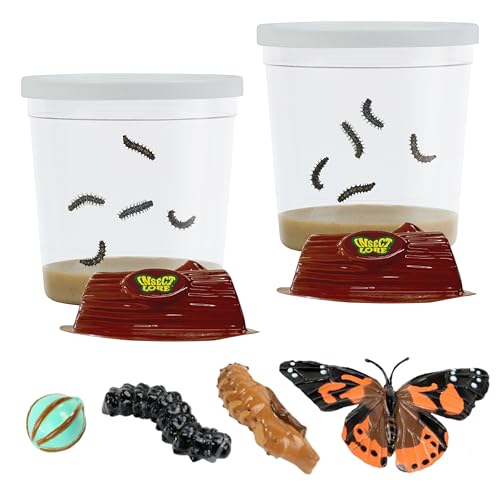
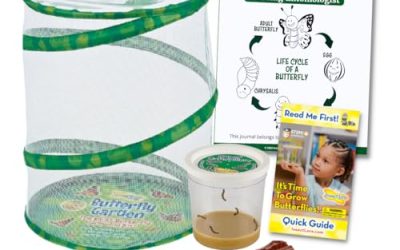
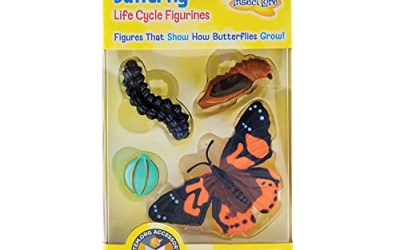
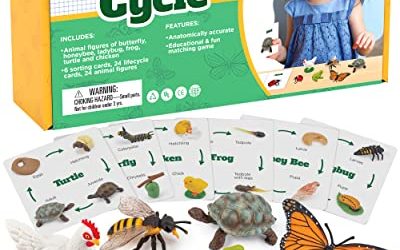
No toy sawfly shows a life cycle, so this Insect Lore kit earns its place by showing a real one. Ten live caterpillars arrive in two cups with food, and over about three weeks a child watches them eat, form chrysalides and emerge as Painted Lady butterflies. The included life cycle figurines show the egg, caterpillar, chrysalis and butterfly stages, which gives younger children a way to follow the change without handling the live insects. It is the most involved pick here, and the one that needs the most adult planning.
Specs
- 10 live caterpillars in two cups with food
- Two Chrysalis Holding Logs
- Caterpillar Quick Guide with raising instructions
- Life cycle figurines showing egg, caterpillar, chrysalis and butterfly stages
- Painted Lady butterflies that are raised and then released
- Three-week project from caterpillars to butterflies
- Butterfly Garden habitat not included
- Postpone the live order when daytime temperatures are below 50 or above 90 degrees Fahrenheit
Best for: Families who want a three-week raising project that ends with a butterfly release in the garden.
Watch out for: The habitat is not included, and the live order should wait for mild weather, so check both before ordering.
ASIN: B09RSH4RFN
National Geographic Little Kids First Big Book of Bugs
Young children meet sawflies through pictures first, and this National Geographic book is the friendliest starting point in the guide. It introduces bugs of all kinds with big photographs and short text, so a child can spot a wasp-shaped insect on the page and learn how it differs from a bee or a wasp. The square hardcover format survives small hands and repeated reading, and the 128 pages give a parent plenty of material for garden walks. It is the pick to reach for when a child asks what the insect in the flower bed is called.
Specs
- Hardcover
- 128 pages
- Publisher: National Geographic Kids
- Publication date: 14 Oct. 2014
- Language: English
- Dimensions: 25.7 x 1.5 x 25.7 cm
- ISBN-13: 978-1426317231
Best for: Younger children meeting insects for the first time through photographs and short facts.
Watch out for: The book covers bugs in general and has no sawfly-only chapter, so use it to teach insect families rather than sawflies alone.
ASIN: 1426317239
Eyewitness Explorers: 04 Insects
Older children who already know the common insects need a book that goes further, and this Eyewitness Explorers volume does that with close-up photography and short explanatory spreads. It shows insects as they look in real life, which helps a child compare a sawfly with a wasp and a bee side by side and notice the differences in body shape and wings. The 64-page hardcover format suits a school bag or a nature-table shelf, and the DK Explorers series styling makes it easy to find again among other reference books.
Specs
- Hardcover
- 64 pages
- Publisher: Dorling Kindersley Publishers Ltd
- Publication date: 28 May 1992
- Language: English
- ISBN-13: 978-0863188282
Best for: School-age readers who want close-up photographs for comparing wasps, bees and sawflies.
Watch out for: The book dates from 1992, so a few names and groupings may differ from newer guides, and it has no sawfly-only section.
ASIN: 0863188281
Sawfly Life History Adaptations to Woody Plants
This is the only book in the guide named for sawflies, and the only sawfly-titled product found on Amazon, so it belongs here even though it is not a children’s book. Written by Michael R. Wagner and Kenneth F. Raffa, it is a 564-page academic volume about how sawflies live on woody plants, with chapters on their life history, distribution and the galls some species induce. A parent or teacher can read the useful parts aloud and use them to answer a curious child’s questions properly, while the book itself stays on the adult shelf.
Specs
- Hardcover
- 564 pages
- Publisher: Academic Press Inc
- Publication date: 29 Oct. 1997
- Language: English
- Dimensions: 16.51 x 3.18 x 24.13 cm
- ISBN-13: 978-0127300306
Best for: A parent or teacher who wants real sawfly facts to answer a child’s questions from an authoritative source.
Watch out for: The regional listings showed this book as currently unavailable when checked, and the text is dense academic writing, so do not buy it as a gift for a young child.
ASIN: 0127300309
Which One Fits Your Situation
A younger child who loves bugs but fears stings
Start with the National Geographic picture book and the RB&G catcher used together. The book shows what a wasp-shaped insect looks like on the page, and the catcher lets the child look at a real one through clear plastic without touching it. Keep the first hunts short, stay nearby, and release each catch in the same garden. The pair teaches the key lesson gently: a sawfly looks like a wasp, yet it has no sting.
A child who wants to watch something change
Choose the Insect Lore live caterpillars, because nothing else in this guide changes day by day. Order only in mild weather, buy or borrow the habitat before the cups arrive, and mark the release day on the calendar so the butterflies do not wait indoors. The included figurines help younger children follow the stages, and the daily check becomes a small routine the whole family can share.
A school-age reader building an insect shelf
Pair the Eyewitness Explorers volume with the National Geographic book, and let the child compare the two. The older book brings close-up photographs for telling wasps, bees and sawflies apart, while the newer book covers more bug families in a friendlier layout. Add the catcher for garden trips, so the shelf reading connects with real insects found outside.
A parent or teacher who wants the sawfly facts
Keep the academic sawfly book on the adult shelf and read the useful parts aloud. It is the only source here written about sawflies themselves, so it answers the questions the children’s books skip, such as which trees sawflies live on and how galls form. Check the listing first, since the regional pages showed it as currently unavailable when checked, and consider a library copy while waiting.
Common Mistakes
- Buying any of these picks while expecting a sawfly-only toy, because no standalone toy sawfly exists on Amazon and every pick here is a closest match.
- Ordering live caterpillars in very hot or cold weather, or without a habitat ready, when the listing warns to wait for mild temperatures.
- Keeping a caught insect in the catcher overnight instead of releasing it the same day in the garden where it was found.
- Assuming every wasp-shaped insect can sting, when sawflies have no sting and need a calm look rather than a panicked swat.
- Buying the 564-page academic sawfly book for a young child, or ordering it without noticing that the regional listings showed it as currently unavailable.
Frequently Asked Questions
Is there a toy sawfly I can buy?
No, there is no standalone toy sawfly on Amazon. No maker sells a sawfly-only figure, play set or plush, so this guide lists the closest matches instead: a humane catcher for finding real wasp-shaped insects, live caterpillars for watching a real life cycle, and three insect books, including the only book named for sawflies. Nothing here pretends to be a sawfly figure.
Do sawflies sting like wasps?
No, sawflies do not sting. They look like wasps at a glance, with a similar narrow body and wings, yet they have no sting at all, and the females carry a saw-like egg-laying tube that gives the group its name. That harmless shape is why a catcher or a book suits them better than a toy. Teach the difference early, and a child can watch one calmly.
What age are these picks best for?
The picture book suits younger children, roughly ages four to eight, while the catcher works from about age five with an adult nearby. The live caterpillar kit fits school-age children who can follow a three-week routine with help, and the Eyewitness volume suits readers from about age seven upward. The academic sawfly book is for adults, so a parent should read useful parts aloud.
Can my child keep a sawfly they catch?
No, a wild sawfly should be watched and released the same day, in the same garden where it was found. A catcher is a viewing box, not a home, and wild insects do best back outside within hours. Live caterpillars from the Insect Lore kit are different, since they are raised on purpose and released as butterflies after about three weeks. Keep the two ideas apart.
Related guides
More from Amazon
Programs that pair well with the guide above. Offers and eligibility are set by Amazon and may change.
Free shipping on eligible items, Prime Video and more. Eligible new members can start with a free trial.
Start a Prime free trialAd-free music streaming. Eligible new subscribers can start with a free trial.
Try Music Unlimited freeA Prime membership for ages 18-24 with a trial period. Eligibility is set by Amazon.
See Prime for Young AdultsAudiobooks and podcasts to listen to on the go. Eligible new members can start with a free trial.
Try Audible freeAs an Amazon Associate we earn from qualifying purchases.