
The Short Answer
No, you do not strictly need an aftermarket cooler for a budget CPU, but you will almost certainly want one if you value a quiet, comfortable home environment.
The single deciding condition comes down to your tolerance for noise. If your budget processor—typically a chip with a Thermal Design Power (TDP) of 65 watts or lower, such as an Intel Core i3/i5 or an AMD Ryzen 3/5—comes bundled with a free stock cooler in the box, that basic piece of aluminum is technically sufficient. It is engineered to keep your processor just below its thermal throttling threshold (usually around 90°C to 95°C) under standard workloads. However, to keep those temperatures down, the tiny stock fan must spin at high speeds, creating a persistent, high-pitched whine that can easily disrupt a quiet home office or living room.
As an Amazon Associate we earn from qualifying purchases at no extra cost to you. Product prices and availability are accurate as of the date shown and are subject to change.
What You Actually Get
When you ask yourself, “do i need an aftermarket cooler for budget cpu?” it helps to understand exactly what your money buys. Stock coolers are minimalist, top-down aluminum blocks with small 80mm or 90mm fans. Because they have very little surface area to dissipate heat, they rely on raw fan speed, often screaming along at 2,500 RPM or higher under load, generating noise levels that exceed 38 to 40 dBA.
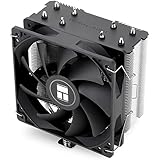
Upgrading to a budget aftermarket cooler completely changes the physical dynamics of your computer tower. Instead of a basic metal block, you get a dedicated tower heatsink. A standard budget option, like the Thermalright Assassin X120 Refined SE (priced at a modest $17.9), introduces four direct-contact copper heat pipes utilizing Anti-Gravity Heat Pipe (AGHP) technology. These pipes pull heat away from the CPU lid and transfer it up into a dense stack of aluminum fins.
Because the physical surface area of a tower cooler is vastly larger than a stock cooler, it does not require a tiny, high-speed fan. Instead, it utilizes a standard 120mm PWM (Pulse Width Modulation) fan that can move a larger volume of air while spinning at a much slower, whisper-quiet speed of 1,000 to 1,500 RPM. This reduces noise levels to a barely audible 20 to 25 dBA, converting a distracting workspace drone into a gentle, unobtrusive hum.
Furthermore, the drop in operating temperatures is dramatic. While a stock cooler might let a 65W CPU hover around 82°C during a video rendering task or light gaming session, a budget 120mm tower cooler will easily drop those temperatures down to a comfortable 60°C to 65°C. As we look ahead to 2026, software applications are becoming increasingly complex and resource-intensive. Keeping your processor running cool ensures it can maintain its maximum boost clock speeds consistently, preventing the sudden performance drops known as thermal throttling.
Pros
- Whisper-Quiet Operation: Moving from a stock cooler to a 120mm aftermarket fan lowers noise levels by up to 15 dBA, transforming your home office into a peaceful sanctuary.
- Substantial Temperature Reductions: Expect a drop of 15°C to 20°C under heavy workloads, which preserves the long-term health of both your CPU and motherboard components.
- Enhanced Boost Performance: Modern CPUs automatically boost their clock speeds when thermal headroom allows. Lower temperatures mean your budget chip runs faster for longer.
- Improved Home Aesthetics: Stock coolers often look cheap, exposing raw green motherboards and messy wiring. Aftermarket options feature clean anodized aluminum covers or sleek black top plates that elevate the look of a glass-paneled desktop.
- Incredible Value: High-quality entry-level coolers cost less than a family lunch, offering one of the highest returns on investment of any computer upgrade.
Cons
- Added Financial Cost: Even though budget air coolers are affordable, spending $18 to $35 is money that could otherwise be allocated toward a larger solid-state drive or additional system memory.
- Installation Complexity: Unlike a stock cooler that simply snaps or screws directly into place, aftermarket coolers require assembling a custom mounting bracket, applying the correct amount of thermal paste, and carefully securing the heavy heatsink.
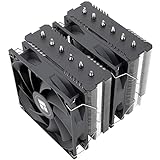
- Case and RAM Clearance Issues: A typical single-tower cooler stands about 148mm to 152mm tall, while larger dual-tower options can reach 155mm or more. You must measure your computer case width to ensure the side panel can close. Additionally, bulky coolers can overhang your motherboard’s memory slots, blocking tall RAM heat spreaders.
- Unnecessary Weight: An aftermarket cooler adds 600 to 1,000 grams of hanging weight to your motherboard, which requires extra care if you frequently transport your computer tower.
Who Should Buy It
You should absolutely purchase an aftermarket cooler if you use your computer in a quiet room where fan noise is highly noticeable. Writers, remote professionals, students, and home-office workers will find the silence well worth the small investment.
It is also a must-buy for anyone living in a warm climate without constant air conditioning, as high ambient room temperatures make it incredibly difficult for a stock cooler to keep up. Finally, if you purchased an OEM “tray” processor that did not come packaged with a stock fan, or if you bought a budget processor with a TDP higher than 65W, an aftermarket cooler is a mandatory requirement rather than an optional luxury.
Who Should Skip It
You can safely skip the aftermarket cooler if you are building an ultra-budget machine where every single dollar is critical—such as a strict $400 home-school PC. If saving $20 means the difference between getting a fast 1TB SSD versus a slow 512GB drive, stick with the free stock cooler for now.
You should also skip it if your computer is tucked inside a closed cabinet, placed in a noisy workshop, or used exclusively for basic tasks like checking emails and writing documents. Under light usage, your CPU rarely works hard enough to make the stock fan spin fast enough to become loud.
Cheaper Alternatives
If you decide to move away from the basic stock cooler, you do not need to spend a fortune. The market offers highly effective options ranging from basic entry-level towers to beefy dual-tower configurations that rival liquid cooling systems.
| Option | Approximate Cost | Trade-off |
|---|---|---|
| Stock Box Cooler | $0 (Included with CPU) | Runs loud (35–40 dBA) and hot (80°C+); zero aesthetic appeal. |
| Single-Tower Air Cooler (e.g., Thermalright Assassin X120 Refined SE) |
$15 – $22 | Requires manual installation and roughly 148mm of case width clearance; highly quiet and cool. |
| Dual-Tower Air Cooler (e.g., Thermalright Peerless Assassin 120 SE) |
$30 – $40 | Overkill for budget CPUs; heavy (approx. 730g without fans); potential RAM clearance interference. |
FAQ
Will using a stock cooler shorten the lifespan of my budget CPU?
No. Stock coolers are fully certified by manufacturers like Intel and AMD to keep the processor within safe operating limits. While your CPU will run warmer (often in the 80°C to 85°C range under heavy loads), modern silicon is designed to withstand these temperatures for many years without degrading.
Is it difficult to install an aftermarket cooler on a budget motherboard?
It is not difficult, but it does require patience. Most budget aftermarket coolers use a secure backplate system. You will need to remove the stock mounting clips, install the new bracket, apply a small pea-sized amount of thermal paste to the center of the processor, and screw down the heatsink evenly. Most installations take about 15 to 20 minutes with a standard Phillips screwdriver.
Do budget aftermarket coolers come with thermal paste included?
Yes, almost all reputable aftermarket coolers include a small tube or pre-applied patch of thermal paste in the box. For example, budget-friendly options like the Thermalright Assassin line ship with a small syringe of high-quality thermal compound, meaning you do not need to spend extra money on third-party paste.
How do I know if a tower cooler will fit inside my computer case?
You need to check your PC case specification sheet for “Maximum CPU Cooler Height.” A standard single-tower cooler with a 120mm fan typically requires around 148mm to 152mm of vertical clearance. Most mid-tower cases easily accommodate this, but slim office PCs or small-form-factor (SFF) cases may require a specialized low-profile cooler instead.


