
Fortnite has always lived at the intersection of accessibility and ambition. Epic keeps raising the visual ceiling with each new season, while the competitive community demands frame rates that leave no room for stutter. For players who want the best of both worlds, a fortnite cloud gaming pc setup has become the default answer: local hardware handles the smoothest possible experience when the network cooperates, and cloud streaming fills the gaps when it does not. The problem is that “compatible” and “optimal” are two very different things.
What separates a genuinely good purchase from a mediocre one in this space comes down to three practical concerns. First, raw GPU headroom determines whether you can run high settings locally without your fans screaming, or whether you are perpetually leaning on cloud fallback. Second, RAM and storage speed affect load times and texture streaming, both of which matter in a game that updates weekly. Third, the peripherals ecosystem—controllers, handhelds, and their battery life—determines whether your cloud sessions feel like a native experience or a compromise. The eight products below span entry-level bundles to full RTX-class towers, and the differences in value are significant.
As an Amazon Associate we earn from qualifying purchases at no extra cost to you. Product prices and availability are accurate as of the date shown and are subject to change.


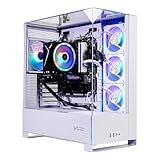

Top 3 picks at a glance
Quick Picks
| Product | Best for | Price |
|---|---|---|
| Skytech Crystal (Ryzen 7 5700) | High-FPS local play on a budget | $1149.99 |
| Evounic 12-Core | VRAM headroom at a midrange price | $758.88 |
| VRA Gaming PC Bundle | Entry-level cloud streaming | $449 |
| Skytech Crystal (Ryzen 7 7700) | Maximum settings without compromise | $1599.99 |
| PowerA OPS v1 Fortnite Edition | Cloud gaming comfort and precision | $41.09 |
| OnePro Cloud Handheld | Portable cloud play on the go | $272.99 |
| Skytech Archangel 5 | Balanced price-to-performance ratio | $1249.99 |
| Skytech Azure 3 | Quiet sustained performance | $1379.99 |
How We Picked
We evaluated these products against four criteria that define the fortnite cloud gaming pc category in 2026. GPU class and VRAM capacity determine how well a system handles Fortnite’s current visual demands locally, which directly affects how often you need to fall back to cloud streaming. Memory configuration—capacity, generation, and speed—governs texture streaming stability and multitasking comfort. Thermal design and PSU quality predict long-session reliability under sustained load. Finally, for peripherals and handhelds, we looked at connectivity options, battery endurance, and whether the build quality justifies the asking price relative to established competitors.
The 8 Best Fortnite Cloud Gaming Pc in 2026
Skytech Gaming Crystal — AMD Ryzen 7 5700, RTX 5060
Who it is for: players who want a capable RTX 5060 system without the DDR5 tax. The 32GB of DDR4 at 3200 MHz is more than sufficient for Fortnite and multitasking, while the Ryzen 7 5700 provides eight cores for smooth frame delivery.
- RTX 5060 handles Fortnite at high settings with comfortable frame margins
- 32GB RAM provides generous headroom for streaming and background applications
- DDR4 platform keeps the total cost below its DDR5 sibling by roughly $450
Skip it if: you want the latest platform for future-proofing, since DDR4 is on its way out and the 7700-based Crystal exists for that exact purpose.
Evounic Gaming Desktop — 12-Core, GTX 1080 Ti 11GB
Who it is for: budget-conscious buyers who value VRAM capacity above all else. Eleven gigabytes of video memory is unusual at this price point and helps with texture streaming in demanding titles, though the GTX 1080 Ti is an aging architecture that lacks the codec improvements of newer GPUs.
- 11GB VRAM is rare under $800 and helps with high-resolution texture packs
- 12-core processor provides solid multithreaded performance for its price
- Older Pascal architecture means no DLSS or modern encoding features
Skip it if: you need hardware-accelerated ray tracing or modern upscaling, as the Pascal GPU simply cannot compete with RTX 5060-class cards on those fronts.
VRA Gaming PC Bundle — Intel Core i7-4790, RX 580 8GB
Who it is for: first-time PC players or those primarily using cloud streaming with occasional local sessions. The RX 580 8GB can run Fortnite at medium settings at acceptable framerates, making it a serviceable fortnite cloud gaming pc hybrid for anyone whose primary use case is streaming.
- Under $450 makes it the cheapest viable option for local Fortnite sessions
- 8GB VRAM on the RX 580 helps with texture quality above what integrated graphics offer
- Haswell-era i7-4790 is four generations behind and limits upgrade path
Skip it if: you plan to play demanding AAA titles locally, as both the CPU and GPU are showing their age for that workload.
Skytech Gaming Crystal — AMD Ryzen 7 7700, RTX 5060 Ti 8GB
Who it is for: enthusiasts who want the best of the RTX 5060 Ti lineup with a modern platform. The Ryzen 7 7700 on AM5 with 32GB DDR5 at 5600 MHz represents a genuinely current build that will handle Fortnite at maximum settings without compromise.
- RTX 5060 Ti with 8GB VRAM is the sweet spot for high-refresh 1080p and solid 1440p
- AM5 platform and DDR5 ensure straightforward future CPU upgrades
- At $1599.99 it is the most expensive tower here and demands a serious commitment
Skip it if: your budget is under $1200, since the Archangel 5 and the 5700-based Crystal both deliver strong value below that threshold.
PowerA OPS v1 Wireless Controller — Fortnite Edition
Who it is for: cloud gamers who want a dedicated fortnite cloud gaming pc controller without breaking the bank. Hall Effect thumbsticks eliminate drift concerns, mappable buttons allow custom loadout switching, and the turbo function helps with rapid-fire scenarios during local sessions.
- Hall Effect thumbsticks are a durability feature typically reserved for premium controllers
- Multiple connectivity modes (wireless, wired, Bluetooth) offer flexibility across devices
- The design prioritizes function over aesthetics, which may not appeal to display-focused buyers
Skip it if: you are a competitive player who prefers a mouse and keyboard for aim precision, as no controller fully replicates that input method.
OnePro Cloud Handheld — 7″ 1080P Touchscreen, 64GB
Who it is for: players who want a dedicated portable device for Xbox Cloud Gaming, GeForce NOW, and remote play without tying up a desktop. The 7-inch 1080P touchscreen with long battery life makes it a focused tool for cloud sessions on the go.
- Purpose-built for cloud platforms with minimal software overhead and fast boot times
- 7-inch 1080P display is sharp enough for competitive play without being oversized
- 64GB storage limits local game installation, making it strictly a streaming device
Skip it if: you want to run Fortnite locally anywhere, as this handheld has no discrete GPU and depends entirely on network quality.
Skytech Gaming Archangel 5 — Intel i5 14400F, RTX 5060
Who it is for: buyers who want a modern Intel platform with RTX 5060 power at the best value among the Skytech options. The i5 14400F handles Fortnite’s CPU requirements effortlessly, and 16GB DDR5 at 6000 MHz is the current sweet spot for gaming frame consistency.
- 750W Gold PSU provides ample power margin for future GPU upgrades
- DDR5 at 6000 MHz pairs well with the 14400F for smooth frame times
- 16GB RAM may feel limiting if you stream while playing or run heavy multitasks
Skip it if: you regularly run resource-heavy background applications, since the 32GB Crystal at $1149.99 offers more multitasking headroom for a similar price.
Skytech Gaming Azure 3 — AMD Ryzen 7 9700X, RTX 5060, 360 AIO
Who it is for: players who prioritize silence and thermal stability during long gaming sessions. The 360mm ARGB AIO combined with the 9700X’s efficient Zen 5 architecture means this system sustains boost clocks without thermal throttling, and the 850W ATX 3 PSU is overkill in the best way.
- 360mm AIO keeps noise levels low even during extended Fortnite sessions
- 9700X is the newest-generation CPU in this roundup with strong single-thread performance
- Only 16GB RAM at this price point is the one spec that feels underwhelming versus the Crystal 7700
Skip it if: every dollar matters, because the Archangel 5 delivers 90 percent of the gaming experience for roughly $130 less.
Buying Guide
GPU Class and VRAM: The Local-Cloud Balance
The single most important spec in a fortnite cloud gaming pc build is the graphics card, because it determines how often you actually need cloud streaming. An RTX 5060 or RX 580 8GB can run Fortnite at medium-to-high settings with framerates that feel responsive locally. Older cards like the GTX 1080 Ti offer unusual VRAM capacity but lack modern upscaling features. If your internet is unreliable, a stronger local GPU becomes a necessity rather than a luxury, since cloud fallback is your safety net and you want it to be optional, not mandatory.
RAM Generation and Capacity for Streaming Workloads
Fortnite’s texture streaming is memory-bandwidth sensitive, and cloud gaming apps add their own overhead. DDR5 at 5600 MHz or 6000 MHz provides a measurable improvement in frame consistency over DDR4 3200, though the difference narrows at lower settings. Capacity matters more for multitaskers: 32GB suits anyone who streams, records, or keeps a browser with dozens of tabs open during sessions. At 16GB you are fine for pure gameplay but will notice slowdowns when you add Discord overlay, recording software, or a second monitor for guides.
Peripheral Ecosystem for True Cloud Flexibility
A cloud gaming PC is only as good as its input devices. A Hall Effect thumbstick controller eliminates the drift that degrades aim precision over months of use, and mappable buttons let you swap loadouts without opening menus mid-match. For players who want cloud access away from their desk, a dedicated handheld like the OnePro removes the friction of pairing a laptop with a controller. Consider whether your setup needs to work from a couch, a dorm bed, or a travel seat, and choose peripherals that match that environment rather than defaulting to desktop-only gear.
Our Verdict
The top pick is the Skytech Gaming Crystal with the Ryzen 7 7700 and RTX 5060 Ti at $1599.99. It is the only system here with a current-generation AM5 platform, 32GB of DDR5, and a GPU tier that makes cloud fallback genuinely optional rather than necessary. For budget buyers, the VRA Gaming PC Bundle at $449 is the smartest entry point: the RX 580 8GB handles medium settings locally while the cloud streaming handles the rest, and the savings leave room for the PowerA OPS v1 controller. If you already own a capable desktop and only need to expand into portable or couch play, the OnePro Cloud Handheld wins on convenience despite its limited local performance.
FAQ
Can any PC work for Fortnite cloud gaming?
Technically yes, since cloud streaming shifts the processing load to remote servers. In practice you want at least a modern integrated GPU or discrete card like the RX 580 to decode video smoothly, sufficient RAM to run the streaming client alongside Windows, and a reliable network adapter. A dedicated fortnite cloud gaming pc setup benefits from a stronger local GPU because you can mix cloud and local sessions seamlessly.
Is 16GB RAM enough for cloud gaming with Fortnite?
For streaming Fortnite on a cloud platform while running a browser and a voice chat application, 16GB is workable but tight. If you also record gameplay, run Discord with screen sharing, or keep many tabs open for build guides, 32GB removes the stutter risk entirely. The Skytech Crystal models at both $1149.99 and $1599.99 include 32GB, which is one reason they represent better long-term value than 16GB alternatives at similar prices.
Do I need a special controller for cloud gaming?
No, but a controller designed for cloud use improves the experience meaningfully. Hall Effect thumbsticks prevent drift from degrading your aim over time, mappable buttons let you assign loadout swaps without navigating menus, and trigger locks reduce fatigue during long sessions. The PowerA OPS v1 at $41.09 includes all three features and is explicitly marketed for Fortnite, making it the most focused option without paying premium-brand prices.
How does a handheld compare to a cloud gaming PC for Fortnite?
A dedicated handheld like the OnePro offers portability that no desktop can match, but it depends entirely on network quality for frame rate and input latency. A fortnite cloud gaming pc can toggle between local rendering for maximum responsiveness and cloud streaming for access to higher visual presets or remote server sessions. If you play primarily at a desk, a desktop with cloud fallback gives you the best of both approaches; a handheld is the right choice when your play location changes frequently.


