
Buying an instant gaming pc used to mean accepting one of two compromises: overpaying for brand-name prebuilts with mediocre internals, or saving a few hundred dollars only to discover the cooling system was an afterthought. In 2026, the middle ground has widened considerably, and the options now span from genuine performance machines at aggressive price points to budget builds that can barely open a browser without stuttering. The gap between a worthwhile purchase and a regrettable one is often determined by a single component pairing—whether the GPU has enough VRAM for current titles, or whether the CPU will bottleneck the system within a year.
The core problem a buyer faces is straightforward: most people want to plug in a machine and start playing without researching motherboard compatibility or thermal paste application. That demand is exactly what separates good prebuilt gaming systems from bad ones. A good instant gaming pc balances its GPU tier with a CPU that will not throttle it, includes enough RAM and storage for modern installs, and ships with a cooling solution that sustains those components under load. A bad one looks impressive on a spec sheet but stumbles in practice because the vendor cut corners on power delivery or thermal design. This roundup compares published specifications, listed prices, and available owner feedback to identify which systems meet that bar and which do not.
As an Amazon Associate we earn from qualifying purchases at no extra cost to you. Product prices and availability are accurate as of the date shown and are subject to change.


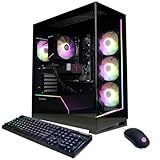


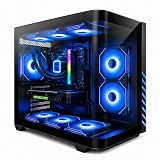
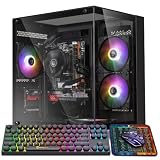
Top 3 picks at a glance
Quick Picks
| Product | Best for | Price |
|---|---|---|
| KOTIN RTX 5070 / Ryzen 7 9700X | High-end 1440p gaming | $1999.99 |
| KOTIN RTX 5060 Ti / Ryzen 7 8700F | Best overall value | $1299.99 |
| CyberPowerPC RTX 5060 Ti / Ryzen 7 8700F | Brand-name support | $1349.99 |
| YAWYORE RTX 5060 / Ryzen 7 5700X | Mid-range with proven CPU | $1299.99 |
| Evounic GTX 1080 Ti 11GB | Ultra-low-budget starter | $758.88 |
| CyberPowerPC RTX 5060 / i5-14400F | Intel ecosystem preference | $1286 |
| Liquid Cooled RTX 4060 Ti 16GB / Ryzen 7 8700F | Quiet thermals, high VRAM | $1158.88 |
| Desktop Computer i5 / 16GB / 256GB SSD | Extreme budget only | $269.99 |
How We Picked
Three criteria drive every selection in this category. First, GPU generation and VRAM headroom: a card with too little memory will force you into lowered textures or outright refusal to run certain titles, making it a poor investment regardless of price. Second, CPU-to-GPU balance: pairing a lower-tier processor with a strong graphics card invites bottlenecking that wastes the GPU’s potential. Third, price-to-spec adequacy for the stated tier—storage, RAM quantity, and cooling design should match what the hardware demands to run sustained without thermal throttling. Owner-reported issues with noise, power supply quality, or driver conflicts factor in as a fourth qualitative layer.
The 8 Best Instant Gaming Pc in 2026
KOTIN Prebuilt Gaming PC RTX 5070 12GB, Ryzen 7 9700X, 32GB DDR5, 1TB SSD
- Pro: RTX 5070 12GB delivers high-end frame rates at 1440p without needing to compromise texture settings.
- Pro: Ryzen 7 9700X paired with 32GB DDR5 eliminates any realistic CPU bottleneck for this GPU tier.
- Con: At $1999.99, the price sits well above every other option in this list, making it a hard recommendation for anyone not committed to the highest tier.
This instant gaming pc suits buyers who know they want sustained high-refresh 1440p performance and will not upgrade again within a few years. The 32GB DDR5 capacity means multitasking and future game installs will not require immediate expansion. Skip it if your budget cannot clear the $2000 threshold, or if you primarily play at 1080p where lower-tier cards deliver sufficient performance at half the cost.
KOTIN Gaming PC Desktop, Ryzen 7 8700F, RTX 5060 Ti 8GB, 16GB DDR5, 1TB SSD
- Pro: RTX 5060 Ti 8GB with a Ryzen 7 8700F creates a well-matched pairing for 1080p and 1440p gaming at $1299.99.
- Pro: 16GB DDR5 and a 1TB SSD cover current game storage demands without needing a secondary drive at purchase.
- Con: The 8GB VRAM ceiling on the RTX 5060 Ti means you may face texture resolution trade-offs in the most demanding upcoming titles.
This is the system to buy if you want current-generation GPU performance without the $2000 commitment. The CPU and GPU are balanced, the RAM is adequate, and the price undercuts the CyberPowerPC equivalent. Skip it only if you demand more VRAM for ultra-texture packs or plan to run the most demanding titles at maximum settings without any adjustment.
CyberPowerPC Gaming PC, AMD Ryzen 7 8700F, GeForce RTX 5060 Ti 8GB
- Pro: CyberPowerPC offers a more established customer support channel than the smaller brands in this roundup.
- Pro: The internal specification mirrors the KOTIN at $1299.99 almost exactly, with the same GPU and CPU pairing.
- Con: At $1349.99, it costs $50 more than a functionally equivalent configuration, paying for brand presence over measurable hardware advantage.
Choose this instant gaming pc if you value warranty and support infrastructure enough to pay a premium for it. The hardware inside is competitive; the markup buys peace of mind rather than performance. Skip it if the KOTIN alternative is available and you prefer maximum specs per dollar over corporate support channels.
YAWYORE Gaming PC, AMD Ryzen 7 5700X, GeForce RTX 5060 Desktop Computer
- Pro: The Ryzen 7 5700X is a proven eight-core CPU with strong single-thread performance for gaming workloads.
- Pro: The RTX 5060 tier keeps the price at $1299.99 while delivering modern architecture efficiency.
- Con: The 5700X is an older-generation chip, and pairing it at this price point means you are paying current-market money for previous-generation CPU silicon.
This system works for buyers who trust the 5700X’s track record and want a known-quantity processor without worrying about platform compatibility. Skip it if the KOTIN or CyberPowerPC options with the 8700F are available at similar pricing—the newer CPU justifies the switch when the GPU tier matches.
Evounic Gaming Desktop PC 12-Core Processor, GeForce GTX 1080 Ti 11GB
- Pro: 11GB VRAM on the GTX 1080 Ti is the highest memory allocation in this entire list at any price tier.
- Pro: At $758.88, it undercuts every current-generation option by a wide margin while still carrying a card that runs most modern titles at 1080p.
- Con: The GTX 1080 Ti is a several-generation-old card lacking modern features like current upscaling and ray tracing performance.
This instant gaming pc exists for buyers who genuinely cannot stretch their budget past $800 and still want a desktop that plays current games at reasonable settings. Skip it if you can find even $100 more, because stepping up to a 5060-class card transforms the longevity and feature set of the system.
CyberPowerPC Gaming PC, Intel Core i5-14400F, GeForce RTX 5060 8GB
- Pro: The i5-14400F handles gaming workloads capably and keeps the price at $1286, making it one of the cheapest RTX 5060 systems from a name-brand vendor.
- Pro: Intel platform compatibility means straightforward driver support and broad peripheral ecosystem familiarity.
- Con: An 8GB VRAM card combined with the RTX 5060 tier means you are buying into a GPU that may need texture compromises within a year or two.
This suits buyers who prefer Intel and want the simplest path to a current-generation GPU without exceeding $1300. Skip it if AMD platform features or the additional CPU core count of the Ryzen 8700F systems appeal to you at comparable pricing.
Gaming PC Desktop Liquid Cooled Ryzen 7 8700F RTX 4060 Ti 16GB DDR5 RAM
- Pro: 16GB VRAM on the RTX 4060 Ti is double what current RTX 5060 and 5060 Ti cards offer, providing the most texture headroom in the mid-range bracket.
- Pro: Liquid cooling at $1158.88 keeps noise low and thermals sustained without expensive aftermarket upgrades.
- Con: The RTX 4060 Ti is a prior-generation card, so you sacrifice modern architecture features in exchange for VRAM quantity.
This instant gaming pc makes the most sense for buyers who play at 1440p with high texture settings and cannot tolerate the 8GB ceiling on newer cards. Skip it if ray tracing performance or current-generation upscaling matters more than raw VRAM capacity to you.
Desktop Computer Gaming PC, i5 CPU Up to 3.6GHz, 16GB RAM, 256GB SSD
- Pro: At $269.99, it is the only system on this list that costs less than many standalone game purchases, making it accessible to anyone.
- Pro: 16GB RAM is sufficient for light gaming and general desktop use if the integrated graphics handle the workload.
- Con: The 256GB SSD cannot hold even two or three modern game installs, and the unnamed i5 with no dedicated GPU means this will not run demanding titles at playable settings.
Buy this only if your goal is very light gaming at low settings or if you plan to add a GPU separately later. Skip it for any serious gaming intent—the storage constraint alone makes it impractical, and the GPU situation renders most modern titles unplayable.
Buying Guide
Match GPU VRAM to Your Resolution and Texture Goals
Video memory determines whether you can push texture quality to ultra settings or must drop to high or medium to avoid stuttering. Eight gigabytes is the current minimum floor for 1080p gaming in demanding titles. Twelve or sixteen gigabytes lets you run 1440p with high or ultra textures without immediate regret. The GTX 1080 Ti with 11GB is a notable exception—it has the VRAM but lacks the architecture efficiency to fully exploit it in modern titles.
Avoid CPU-GPU Mismatch at Every Price Point
A powerful GPU paired with a weak or aging processor wastes money because the CPU cannot feed the GPU fast enough, creating frame drops in CPU-bound scenarios like open-world games and strategy titles. The ideal pairing at the 5060 Ti tier is at least a current Ryzen 7 or a recent Intel i5. At the budget tier, ensure the CPU has enough cores for background processes without stealing resources from the game itself.
Storage and RAM Should Match the GPU’s Longevity
A 256GB SSD cannot hold a single modern AAA game install alongside the operating system. One terabyte is the realistic minimum for a gaming instant gaming pc in this generation. Sixteen gigabytes of RAM remains adequate today, but thirty-two gigabytes provides meaningful headroom for future titles and multitasking without requiring an immediate upgrade. Cooling design also matters: liquid cooling or high-quality air solutions prevent thermal throttling that silently erodes the performance you paid for.
Our Verdict
The top pick is the KOTIN Gaming PC Desktop with the Ryzen 7 8700F and RTX 5060 Ti 8GB at $1299.99. It delivers the best balance of current-generation GPU architecture, a CPU that will not bottleneck it, sufficient RAM and storage, and a price that undercuts name-brand alternatives with identical specifications. The budget pick is the Evounic GTX 1080 Ti 11GB system at $758.88—imperfect, but it runs most titles at 1080p when nothing else on this list is within reach. If you prioritize VRAM capacity and quiet operation over current-generation ray tracing features, the Liquid Cooled RTX 4060 Ti 16GB system at $1158.88 wins on that specific trade-off.
FAQ
Is a prebuilt gaming PC worth more than building one myself?
A prebuilt saves time and eliminates compatibility risk, which is the entire value proposition of an instant gaming pc. You pay a premium of roughly ten to twenty percent over component prices for assembly, warranty support, and the convenience of a plug-and-play system. If you enjoy the building process, self-assembly typically yields more hardware per dollar.
How much VRAM do I actually need for gaming in 2026?
Eight gigabytes is the functional minimum at 1080p for current titles, but it is already a constraint in the most demanding releases. Twelve gigabytes provides comfortable 1080p and workable 1440p performance. Sixteen gigabytes future-proofs you for high-texture 1440p and entry-level 4K without immediate compromise.
Do I need 32GB of RAM for gaming?
Not yet for most titles, but 16GB is becoming tight in open-world games that also run background applications. If a system costs only a small premium for 32GB DDR5, it is worth taking as insurance against needing a manual upgrade within a year or two.
What is the biggest red flag on a prebuilt gaming PC spec sheet?
An unnamed or vague processor model number paired with a low-end motherboard brand is the clearest warning sign. Reputable vendors list the exact CPU model, GPU variant, RAM speed, and power supply wattage. If any of those are missing or described with terms like “gaming-grade” without specifics, the build likely uses surplus or low-quality components elsewhere.


