
An internal NVMe drive fills up faster than most gamers expect, especially with modern titles regularly exceeding 100 GB. An ssd external storage device for gaming pc is the pragmatic fix when your motherboard lacks a second M.2 slot or you simply do not want to reinstall your entire library every time you swap drives. The problem is that not every external drive behaves like a game drive. Some portable SSDs sustain peak read speeds only during short bursts and throttle aggressively once a 50 GB file transfer crosses a thermal threshold, turning what should be a seamless experience into stuttering loads and long patch installs.
What separates a solid external gaming SSD from a mediocre one comes down to three published metrics: sustained sequential read performance over extended transfers, the interface generation of the controller, and whether the drive’s firmware prioritizes random access at queue depths typical of game engines. Below, we compared eight options across price brackets using published specifications and aggregated owner feedback so you can match a drive to your budget without guessing whether a listing’s headline number reflects real-world gaming conditions in 2026.
As an Amazon Associate we earn from qualifying purchases at no extra cost to you. Product prices and availability are accurate as of the date shown and are subject to change.




Top 3 picks at a glance
Quick Picks
| Product | Best for | Price |
|---|---|---|
| Samsung T7 1TB | Reliable everyday library expansion | $241.85 |
| Samsung T9 1TB | Maximum bandwidth on 20Gbps ports | $239.99 |
| WD P40 Game Drive 1TB | Gamers who want RGB and console versatility | $174.99 |
| Samsung T7 2TB | Large libraries without frequent culling | $382.99 |
| UnionSine 2TB | Massive cold storage on a tight budget | $133.98 |
| GODBPNYMU 500GB | Emergency overflow or single-title installs | $34.82 |
| SanDisk Extreme 2TB | Travel-tough build and proven read speeds | $289.99 |
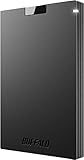
| BUFFALO 1TB | PS4 and PS5 cross-platform consistency | $159.99 |
How We Picked
We filtered these eight drives on four criteria: interface generation and peak sequential read as stated by the manufacturer, price per terabyte at current retail listings, form-factor durability relevant to gamers who move their drives between desk and LAN events, and recurring owner-reported issues such as connector looseness or thermal throttling under sustained game patch downloads. Drives that met at least three of four thresholds made the list.
The 8 Best Ssd External Storage Device For Gaming Pc in 2026
Samsung T7 Portable SSD 1TB Titan Gray
The T7 is the default recommendation for anyone who wants a no-nonsense ssd external storage device for gaming pc at a mid-range price. Its USB 3.2 Gen 2 interface tops out at 1,050MB/s, which is fast enough to load open-world assets from an external volume with minimal perceptible delay versus an internal SATA SSD.
- Pro: Aluminum shell dissipates heat during long transfer sessions, reducing throttle events owners commonly report with plastic-cased rivals.
- Pro: Samsung Magician software provides firmware updates and health monitoring without bloat.
- Con: No IP-rated water or dust protection, so treat it as a desk drive rather than a backpack companion.
Skip this if you own a 20Gbps USB-C port and want to exploit the extra bandwidth for faster patch installs.
Samsung T9 Portable SSD 1TB
Twice the headline bandwidth of the T7 at nearly the same street price, the T9 makes sense when your motherboard exposes a USB 3.2 Gen 2×2 header or you plan to upgrade within a year. Published 2,000MB/s read speeds mean large game archives unpack noticeably faster, a tangible benefit when downloading 80 GB updates overnight.
- Pro: 20Gbps ceiling future-proofs you against the next wave of oversized open-world titles.
- Pro: Rubberized bumper corners survive desk-to-floor drops better than the T7’s bare aluminum.
- Con: Falls back to Gen 2 speeds on single-lane ports, so the premium is wasted without 2×2 support.
Skip this if your current system lacks a 20Gbps port and you cannot justify paying for bandwidth you cannot use yet.
Western Digital 1TB P40 Game Drive SSD
The P40 targets the gamer who wants console compatibility and a design that looks at home on a lit desk alongside RGB peripherals. Its 2,000MB/s rating matches the T9, and the integrated RGB lighting strips sync with WD software profiles.
- Pro: Native support for PS4, PS5, Xbox, and PC makes it a one-drive solution across platforms.
- Pro: Street price sits below both Samsung options with comparable bandwidth.
- Con: The RGB feature draws extra power and adds a thin layer of firmware complexity that occasionally conflicts with older PC BIOS USB initialization sequences.
Skip this if you dislike software-managed lighting or need a drive that boots from an older Intel chipset without driver quirks.
Samsung T7 Portable SSD 2TB Titan Gray
Capacity is the main upgrade here: 2TB means you can park a full library of 15-20 AAA titles without rationing which ones live on the internal drive. Performance is identical to the 1TB T7, so the trade-off is purely about storage volume versus cost.
- Pro: Enough headroom for multi-year game collections without deleting older titles.
- Pro: Proven thermal behavior from the same hardware revision keeps long transfers stable.
- Con: Price per terabyte climbs noticeably above the T9 1TB, making it harder to justify if bandwidth matters more than capacity to you.
Skip this if you primarily play three or four titles at a time and can keep your active library under 1TB.
UnionSine 2TB Ultra Slim Portable External Hard Drive HDD
This is a mechanical drive, not an SSD, included here because some buyers conflate external storage categories and the price is genuinely tempting at 2TB. As an ssd external storage device for gaming pc it is not a gaming drive at all, but it excels as a cold-storage archive where sequential read latency does not matter.
- Pro: Lowest cost per terabyte on this list by a wide margin.
- Pro: USB 3.0 compatibility ensures it works with any port from the last decade.
- Con: Mechanical platters mean 5400 RPM spindle speeds with access latencies far too high for loading game worlds directly.
Skip this for active game installs and reserve it for storing backups, screenshots, or titles you play once then archive.
GODBPNYMU 500GB External Hard Drive
At $34.82 this is the cheapest entry on the list and serves a narrow purpose: temporary overflow when a single large download overfills your internal drive and you need a staging volume immediately. It is not a long-term gaming solution but can rescue a LAN trip or a weekend install session.
- Pro: Price is under $40, making it the lowest financial risk if the drive fails.
- Pro: Dual USB-A and USB-C connectors eliminate the need for an adapter at a friend’s setup.
- Con: 500GB fills quickly with a single modern AAA title plus its updates and optional packs.
Skip this if you need reliable long-term storage; treat it as a disposable convenience drive.
SanDisk 2TB Extreme Portable SSD
The older Extreme model carries a solid reputation for IP-rated ruggedness and a carabiner loop that appeals to gamers who travel. At 1,050MB/s it matches the T7’s bandwidth while offering better environmental protection, and owner reports on sustained transfers remain positive even after years of use.
- Pro: IP55-equivalent sealing and rubberized housing handle rain, dust, and rougher handling than the Samsung options.
- Pro: 2TB capacity keeps large libraries accessible without frequent file management.
- Con: As an older model it lacks the firmware and power-efficiency updates found in newer Samsung revisions.
Skip this if you want the absolute latest controller optimizations and do not prioritize physical durability.
BUFFALO External SSD 1TB
BUFFALO is a niche brand in Western markets but well established in Japan, and this drive ships with explicit PS4 and PS5 compatibility certifications. For a gamer who splits time between a console and a PC, it eliminates the guesswork about whether the drive will mount correctly on Sony’s operating system.
- Pro: Certified cross-platform compatibility with both PlayStation generations and Windows and macOS out of the box.
- Pro: USB-C to USB-A and USB-C to USB-C cables included, removing accessory purchases.
- Con: USB 3.2 Gen 1 or Gen 2 ceiling depending on firmware revision means it trails the T9 and P40 in peak bandwidth.
Skip this if you are a PC-only gamer who wants the fastest possible external interface on a modern motherboard.
Buying Guide
Interface Generation Is the Single Biggest Multiplier
Match your drive to your port. USB 3.2 Gen 2 delivers up to 1,050MB/s, while Gen 2×2 doubles that ceiling to 2,000MB/s. If your motherboard only exposes a 10Gbps Type-A port, a 20Gbps drive cannot exceed the slower link. Check your system’s USB controller in Device Manager or the motherboard manual before spending extra for bandwidth your port cannot carry.
Sustained Performance Matters More Than Peak Numbers
Manufacturer spec sheets quote sequential read on empty drives with short burst workloads. Game installs and patch applications write tens of gigabytes continuously. Look at owner reports on long file transfers rather than the headline number; drives with metal housings and NAND that includes a DRAM cache layer tend to hold speeds better under load than budget controllers that rely on SLC write caching alone.
Thermal Throttling and Form Factor Go Hand in Hand
A pocket-sized SSD dissipating 4W of heat has limited surface area for passive cooling. Aluminum shells conduct heat away from the controller more effectively than plastic, and drives with internal heatsinks or thermal pad contact between NAND and enclosure report fewer speed-drops during extended sessions. If you frequently copy 50GB-plus game archives, prioritize a metal-bodied option.
Our Verdict
Our top pick is the Samsung T9 Portable SSD 1TB. At $239.99 it undercuts the T7 1TB on price while doubling published read speed, and the marginal cost of a rubberized bumper and 20Gbps controller makes it the better long-term value on any modern system. Our budget pick is the Western Digital P40 Game Drive at $174.99, which offers the same 2,000MB/s ceiling without the premium of a 2×2-rated brand badge and adds console versatility. If you already own a 20Gbps port and want maximum bandwidth for under $250, the P40 wins outright.
FAQ
Can an external SSD match the load times of an internal NVMe drive?
Sequential reads on a USB 3.2 Gen 2 drive at 1,050MB/s sit close to PCIe 3.0 x2 NVMe performance, but random 4K access is bottlenecked by the USB protocol overhead. For game world streaming, expect load times that are 15-25 percent slower than an internal NVMe on a demanding open-world title.
Do I need a USB-C port or will USB-A work?
USB 3.2 Gen 2 can operate over a Type-A connector on many motherboards, so you are not forced into USB-C. However, Gen 2×2 requires a Type-C port that explicitly supports the 20Gbps dual-lane mode; check your board’s manual before buying a 2×2 drive.
Is it safe to run installed games directly from an external SSD?
Yes, Steam, Epic, and Xbox all treat an external volume as a standard install location. The main caution is ensuring the drive remains connected during play; unplinking it mid-session can corrupt save files or force a reinstall.
How long can I expect a portable gaming SSD to last?
Under typical gamer write patterns of 20-50 GB per week, a modern TLC NAND drive rated for 300 TBW or higher will remain healthy for several years. Samsung Magician and WD Dashboard report wear percentage, so monitoring is straightforward without third-party tools.


