
Top 3 picks at a glance
The Short Answer
For most players, a 27-inch monitor is the best size for 1440p gaming. At 2560 × 1440 resolution, a 27-inch screen delivers a sharp image at about 109 pixels per inch (PPI), while still fitting comfortably on a typical desk. Text is crisp, game details are easy to see, and the screen is large enough to feel immersive without requiring you to sit far back.
A 24- or 25-inch 1440p monitor looks even sharper, but its smaller physical size can make interface text, maps, and menus feel undersized. A 32-inch 1440p monitor offers a bigger, more cinematic view, though its lower pixel density—about 92 PPI—means it is less crisp when viewed from the same close desk distance.
As an Amazon Associate we earn from qualifying purchases at no extra cost to you. Product prices and availability are accurate as of the date shown and are subject to change.


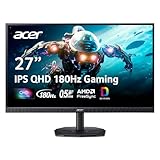
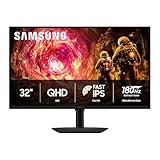
In practical terms, choose a 27-inch 1440p monitor for competitive and everyday gaming, a 32-inch model for a deeper single-player experience or a larger desk, and a 24- to 25-inch model only if you sit very close or strongly prefer a compact setup. In 2026, 27-inch QHD monitors remain the sweet spot because they combine strong image clarity, high refresh-rate availability, and approachable pricing.
Standard Sizes
The measurements below are for the visible 16:9 screen area, not the full monitor cabinet, stand, or bezel. Actual product width can be roughly 0.5 to 1.5 inches wider, and height with the stand is commonly 16 to 23 inches depending on adjustability.
| Screen Size | Visible Screen Width | Visible Screen Height | 1440p Pixel Density | Best Viewing Distance | Best For |
|---|---|---|---|---|---|
| 24 inches | 20.9 in / 53.1 cm | 11.8 in / 29.9 cm | 122 PPI | 20–28 in / 51–71 cm | Small desks, close seating, esports |
| 25 inches | 21.8 in / 55.3 cm | 12.3 in / 31.1 cm | 118 PPI | 22–30 in / 56–76 cm | Compact competitive setups |
| 27 inches | 23.5 in / 59.8 cm | 13.2 in / 33.6 cm | 109 PPI | 24–36 in / 61–91 cm | Most 1440p gaming desks |
| 32 inches | 27.9 in / 70.8 cm | 15.7 in / 39.9 cm | 92 PPI | 32–42 in / 81–107 cm | Immersive gaming, large desks |
A 27-inch model is also the easiest size to shop. High-refresh 1440p IPS monitors with 180Hz to 260Hz refresh rates are widely available around $150 to $200. For example, 27-inch options such as the Acer Nitro KG271U, ASUS TUF VG27AQ3A, and AOC Q27G41ZE typically sit in that range. A 32-inch QHD option such as Samsung’s Odyssey G5 can also be near $200, although larger screens may require more desk space and more careful positioning.
Most 27-inch gaming monitors weigh about 10 to 15 pounds with their stands. Typical 32-inch models weigh approximately 13 to 18 pounds with stands. If you plan to use a monitor arm, check the monitor’s exact stand-free weight and VESA mounting pattern before buying; 100 × 100 mm VESA mounting is common. Power use varies by brightness and refresh rate, but many QHD gaming monitors use roughly 25 to 45 watts during normal gaming.
How to Measure Your Space
- Measure usable desk width. Measure the open area where the monitor will sit, excluding speakers, desktop towers, lamps, and storage. Allow at least 2 to 4 inches of clearance on each side of the monitor. A 27-inch monitor usually needs a minimum of 28 inches of open width; a 32-inch model needs about 32 inches.
- Measure desk depth. A desk that is 24 inches deep can work for a 27-inch monitor, especially with a monitor arm. A 30-inch-deep desk is more comfortable for a 32-inch 1440p display because it lets you maintain a 32-inch or greater viewing distance.
- Measure from your seated eye position. Sit in your normal chair posture and measure from your eyes to the back edge of the desk. Subtract the monitor stand depth, often 7 to 10 inches, to estimate your likely eye-to-screen distance.
- Check vertical clearance. Measure from the desktop to shelves, wall cabinets, or window ledges. A 27-inch monitor with its stand is often 17 to 20 inches tall. A 32-inch screen can stand 20 to 23 inches tall.
- Plan for the stand footprint. Do not use screen width alone. Wide V-shaped gaming stands can extend 9 to 12 inches deep and 18 to 22 inches wide. A monitor arm can free up desk surface, but it needs room behind the desk for its clamp or mounting plate.
- Account for a keyboard and mouse zone. Keep at least 10 to 14 inches between the front edge of the desk and the keyboard. This prevents the monitor from being pushed too close simply to make room for your hands.
By Room or Use Case
Small Bedroom Desk or Apartment Setup
Choose a 24-, 25-, or 27-inch 1440p monitor, depending on desk depth. On a shallow 20- to 24-inch desk, 27 inches is usually the upper limit unless you use a monitor arm. A 25-inch screen is especially practical if your eyes are only 22 to 28 inches away. It provides a very sharp image without overwhelming a compact desk.
Standard Home Office and Gaming Desk
A 27-inch 1440p monitor is the clear choice for a standard 24- to 30-inch-deep desk. It works well for fast shooters, RPGs, racing games, and everyday work. At this size, 1440p offers enough workspace for side-by-side windows while maintaining readable text at normal scaling for many users. A high-refresh 27-inch IPS monitor in the $150 to $200 range is often the best value.
Competitive FPS and Esports Gaming
For players who prioritize fast visual scanning, use a 25- or 27-inch display. A 27-inch monitor is ideal if you want 1440p detail and sit about 24 to 30 inches away. A 25-inch screen may feel more comfortable if you sit close and want every corner of the screen within your central field of view. Avoid a 32-inch model for close-range competitive play unless your desk is deep enough to place it at least 32 inches away.
Single-Player, Racing, and Console Gaming
Pick a 32-inch 1440p monitor if immersion matters more than maximum pixel density. The larger screen gives open-world games, driving games, and cinematic titles more impact. It is best on a 30-inch-deep desk or when mounted farther back. For console use, make sure the monitor supports the refresh rate and resolution output you expect from your system, since not every QHD monitor handles every console mode in the same way.
Mixed Work and Gaming Setup
A 27-inch model remains the most balanced option for working during the day and gaming at night. It is large enough for documents, browser windows, spreadsheets, and creative tools without making text appear as large as it can on a 32-inch QHD screen. If you frequently read dense text or edit photos, the sharper 109 PPI of a 27-inch panel is a meaningful advantage.
Common Sizing Mistakes
Buying by diagonal measurement alone. A 32-inch monitor is not just five inches bigger than a 27-inch monitor in everyday use. Its screen is about 4.4 inches wider and 2.5 inches taller, which changes how much desk and viewing distance it needs.
Putting a 32-inch QHD screen on a shallow desk. A large 1440p screen placed 22 to 26 inches from your eyes can look less sharp and force more head movement. Use a deeper desk, a monitor arm, or choose 27 inches instead.
Assuming 1440p looks identical at every size. Resolution stays the same while pixels spread farther apart on larger panels. A 27-inch QHD monitor is noticeably sharper than a 32-inch QHD monitor at close range.
Ignoring stand depth and height. Many gaming monitor stands are much larger than expected. Check the listed dimensions with the stand attached, not only the panel dimensions.
Choosing a smaller screen solely for sharpness. A 24- or 25-inch QHD display is crisp, but some players find HUD text and small interface elements too small. Consider your eyesight, game genres, and usual viewing distance before downsizing.
FAQ
Is 27 inches too big for 1440p gaming?
No. A 27-inch monitor is widely considered the ideal size for 1440p gaming. Its 109 PPI pixel density provides a clear, detailed image at a typical desk distance of 24 to 36 inches.
Is 32 inches too big for 1440p?
Not necessarily, but it depends on distance. A 32-inch 1440p monitor works best when your eyes are about 32 to 42 inches from the screen. At closer distances, pixels and text may appear less crisp than on a 27-inch QHD display.
Should I get a 27-inch 1440p or 32-inch 1440p monitor?
Choose 27 inches for sharper text, competitive gaming, mixed office use, and typical desks. Choose 32 inches for a larger, more immersive image when you have a deep desk or can sit farther back.
How deep should a desk be for a 27-inch 1440p monitor?
A 24-inch-deep desk is generally sufficient for a 27-inch 1440p monitor. A 27- to 30-inch-deep desk gives you more flexibility for a large stand, full-size keyboard, and a comfortable 28- to 36-inch viewing distance.


