
Buying a gaming monitor should be simple, but most people get it backwards. They chase the highest refresh rate number on the box, pay for a resolution their graphics card can’t push, or bring home a 34-inch ultrawide only to discover their desk is 40 inches deep. Others spend $500 on a premium panel for esports titles that render at 200 frames per second on a $60 monitor just as effectively. This guide walks through what actually matters when you’re shopping — in the order you should think about it — so you can match the monitor to your games, your GPU, and your space without overpaying.
Top 3 picks at a glance
Decide These 3 Things First
Before comparing spec sheets, answer three questions. They eliminate most of the field immediately.
As an Amazon Associate we earn from qualifying purchases at no extra cost to you. Product prices and availability are accurate as of the date shown and are subject to change.


1. What does your graphics card actually output? A monitor can only display what your PC renders. If your GPU averages 90–120 frames per second in your main game at 1080p, a 240Hz monitor is wasted money — buy a 144Hz–165Hz panel instead. If you play graphically demanding single-player titles at 40–60 fps, prioritize resolution and image quality over refresh rate entirely.
2. What games do you play? Competitive shooters and fighting games reward high refresh rates and low input lag. Story-driven games, RPGs, and strategy titles reward resolution, color accuracy, and screen real estate. Simulation and racing players often benefit from curved ultrawides. Most people play a mix, which is why 1440p/165Hz has become the default sweet spot.
3. How much desk space do you have? Measure it. A 27-inch monitor is roughly 24 inches wide; a 34-inch ultrawide runs about 32 inches wide and wants at least 30 inches of desk depth for comfortable viewing distance. Curved panels also need a bit more clearance than flat ones of the same diagonal.
Size and Desk Fit: The First Real Decision
Size drives everything else — price, resolution requirements, and viewing distance. The common sizes break down like this:
21.5–24.5 inches: Best for 1080p gaming and tight desks. A 24-inch 1080p panel has a pixel density of about 92 pixels per inch, which looks crisp at typical 2–3 foot viewing distances. Competitive players still prefer 24–25 inch 1080p screens because the whole frame fits in your field of view without head movement. Expect to pay $60–130 here. Typical weight: 6–9 pounds.
27–28 inches: The mainstream sweet spot, ideal for 1440p. A 27-inch 1440p display hits roughly 109 ppi — noticeably sharper than 1080p at the same size. 27-inch 1080p monitors exist, but pixel density drops to about 82 ppi and you may see visible pixel structure. Budget $150–350 for a good 27-inch 1440p panel.
32 inches: 1440p works fine at this size (around 93 ppi), but 4K (about 137 ppi) is where 32-inch panels shine if your GPU can drive it. You’ll want 3+ feet of viewing distance. Plan on $250–600 depending on panel quality.
34-inch ultrawide (3440×1440): A curved 1500R ultrawide wraps roughly the edges of your peripheral vision at arm’s length, which is genuinely immersive in racing, flight, and open-world games. It’s effectively like having a 27-inch 16:9 screen with 30% extra width. Note that ultrawides demand more GPU horsepower — 3440×1440 is about 34% more pixels than 2560×1440. Budget $200–500 for solid options.
Resolution and Refresh Rate: Match Them to Your Hardware
These two specs are a package deal, and the right pairing depends on your GPU tier:
1080p at 144–180Hz: The budget-gaming standard. Entry cards and integrated graphics can push high frame rates at 1080p, making these monitors feel dramatically smoother than a basic 60Hz office display. Good examples run $65–130 — monitors like the SANSUI 24-inch 180Hz at $79.99 or the Sceptre 22-inch 144Hz at $64.97 deliver real competitive performance for less than a new game bundle.
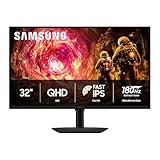
1440p at 144–240Hz: The current sweet spot for a reason. You get a visible sharpness upgrade over 1080p while modern midrange and high-end GPUs maintain high frame rates. The Samsung 32-inch Odyssey G5 (G50F) at $199.99 fits this tier — QHD resolution on a large panel with high refresh for under $200.
1440p ultrawide at 165–240Hz: For immersive single-player gaming with a strong GPU. The Sceptre 34-inch curved Prime at $209.97 (3440×1440, up to 240Hz, 1ms, 1500R curve) shows how far this tier’s pricing has come — you’re getting premium-format specs at a midrange price.
4K at 120–160Hz: Only worth it with a high-end GPU. If your card can’t render 60+ fps at 4K in your games, you’re paying for pixels you’ll never see moving smoothly.
On response time: anything rated 1–5ms is fine for gaming. Don’t pay extra for marketing claims below 1ms — real-world differences are imperceptible.
Panel Type: What You’re Actually Looking At
VA panels: Deepest contrast (typically 3000:1 or better), rich blacks, and common in curved screens. Tradeoff: slightly slower pixel response in dark transitions, which can produce minor “black smearing” in fast motion. Excellent value — most budget curved monitors, including the examples above, use VA.
IPS panels: Best color accuracy and viewing angles (colors hold up when viewed off-center, which matters for couch co-op or shared screens). Contrast is typically around 1000:1, so blacks look grayer in dark rooms. Usually costs $30–80 more than an equivalent VA.
TN panels: Fastest response but washed-out colors and poor viewing angles. Increasingly rare at retail; only consider for pure competitive play on a strict budget.
For color work, look for 99–100% sRGB coverage, which even budget gaming panels now commonly advertise. Avoid panels that only claim “85% NTSC” without an sRGB figure.
Ergonomics, Connectivity, and Comfort
Stand adjustability: Look for height adjustment (ideally a 4–5 inch range), tilt (at least -5° to +15°), and ideally swivel and pivot. Many budget monitors — including some under $100 — ship with tilt-only stands, so plan for a $25–40 monitor arm or stand riser if you need proper positioning. Your screen’s top edge should sit at or slightly below eye level.
Ports: For 144Hz and above at 1440p, you’ll want DisplayPort (version 1.2 handles 1440p at 165Hz; 1.4 handles more). HDMI 2.0 supports 1440p at 144Hz; HDMI 2.1 is needed for 4K above 120Hz if you also connect a console. Count the inputs — two HDMI plus one or two DisplayPort inputs lets you keep a console and PC connected simultaneously. Built-in speakers are a bonus on budget models (handy for a spare setup), but expect them to sound thin; plan for headphones or desktop speakers regardless.
Eye comfort features: Flicker-free backlighting and a low-blue-light mode matter for multi-hour sessions. VESA mounting (100×100mm pattern is standard on sizes 24 inches and up) is worth confirming if you ever want an arm.
Power draw: Typical 22–32 inch gaming monitors draw 25–50 watts in use, adding roughly $8–15 per year to your electric bill at average usage — trivial, but a reason laptop-grade USB-C power delivery isn’t a gaming priority.
Price Tiers: What Your Budget Buys in 2026
Under $100: 1080p at 144–180Hz on 22–24 inch VA panels. You give up resolution, often stand adjustability, and sometimes premium color accuracy, but the gaming experience is legitimately fast. This is the right tier for casual players, secondary setups, and anyone with an entry-level GPU.
$100–250: The sweet spot. 1440p at 144–240Hz on 27–34 inch panels, curved and flat, with better color coverage and more complete port selection. If you spend more than this without a specific reason (4K, OLED, professional color work), you’re likely paying for diminishing returns.
$250–600: 4K high-refresh panels, higher-end IPS with better factory calibration, USB hubs, premium stands, and HDR with meaningful brightness (400+ nits with local dimming). Worth it for enthusiasts with matching hardware.
$600+: OLED and mini-LED territory — perfect blacks, near-instant response, and reference-grade motion. Fantastic, but only justified if your GPU and budget both support it.
Spec Checklist
| Spec | Budget (under $100) | Mid ($100–250) | Premium ($250+) |
|---|---|---|---|
| Resolution | 1080p (1920×1080) | 1440p (2560×1440) or 3440×1440 | 4K (3840×2160) or 3440×1440 |
| Refresh rate | 144–180Hz | 144–240Hz | 120–240Hz+ |
| Panel type | VA (sometimes IPS) | VA or IPS | IPS, OLED, or mini-LED |
| Response time | 1–5ms | 1–4ms | 1ms or faster |
| Screen size | 22–24 in | 27–34 in | 27–49 in |
| Sync technology | FreeSync (basic) | FreeSync / G-Sync Compatible | Full G-Sync or VRR certification |
| Ports | 1× HDMI, 1× DisplayPort | 2× HDMI 2.0, 1–2× DP 1.4 | HDMI 2.1, DP 1.4, USB hub |
| Stand | Tilt only | Height, tilt, swivel | Full ergonomic + VESA 100×100 |
| Typical weight | 6–9 lbs | 10–18 lbs | 15–25+ lbs |
Red Flags to Walk Away From
High refresh rate with no DisplayPort input. Some cheap high-Hz monitors only achieve their rated refresh over DisplayPort and drop sharply over HDMI. If the listing doesn’t specify which port hits top refresh, assume the worst.
“240Hz” on a budget panel with vague specs. Frequency numbers can be inflated through overclocking modes that introduce artifacts. Cross-check that resolution, refresh, and port version are listed together.
No VESA mount holes. Fine if the stand suits you, but it limits your options later. Confirm 100×100mm compatibility on any monitor over 24 inches.
No adaptive sync. A monitor without FreeSync or G-Sync Compatible labeling will show screen tearing when frame rates fluctuate — which they always do.
Listings without a stated panel type. If a product page doesn’t tell you whether it’s VA, IPS, or TN, that’s usually because the answer isn’t flattering.
Warranty under 1 year. Standard coverage is 3 years from major brands; anything less on a new unit deserves scrutiny. Backlight failure and dead pixels are the most common early faults.
FAQ
Is a curved monitor better for gaming?
Curved panels (1500R–1800R) improve immersion at 27 inches and above, especially ultrawides, by keeping the screen edges at a more uniform distance from your eyes. At 24 inches and below, the curve adds little. Competitive players sometimes prefer flat screens for consistent geometry in aiming.
Is 144Hz really that much better than 60Hz?
Yes — it’s the single most noticeable upgrade in PC gaming. Motion appears smoother, and input feels more responsive. The jump from 144Hz to 240Hz is far more subtle and matters mainly for dedicated competitive players.
Should I get 1080p or 1440p?
If your GPU can render 80+ fps at 1440p in your main games, go 1440p — the sharpness improvement at 27 inches is easy to see. If you have an entry-level GPU or play fast esports titles, 1080p at high refresh delivers better value and higher frame rates.
Do I need G-Sync or FreeSync?
You need adaptive sync of some kind — it eliminates tearing and stutter when frame rates dip. FreeSync monitors work with modern NVIDIA cards (labeled “G-Sync Compatible”), so brand matching matters less than simply having the feature. Skip monitors without it.


