
As an Amazon Associate we earn from qualifying purchases at no extra cost to you. Product prices and availability are accurate as of the date shown and are subject to change.

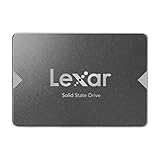


When you’re building or upgrading a gaming PC in 2026, the storage decision feels deceptively simple: do you buy more capacity at a lower speed, or less capacity at a much higher speed? That’s the real question behind 1tb sata ssd vs 512gb nvme for gaming value. A 1TB SATA drive like the Samsung 870 EVO or Lexar NS100 gives you roughly double the room for your game library, while a 512GB NVMe drive like the TeamGroup T-Force G50 delivers sequential reads five to nine times faster. Neither choice is wrong — but the right one depends on how many games you actually install, what motherboard you own, and whether raw capacity or load times matter more to your daily experience.
This guide breaks down both options across price, longevity, and real-world use so you can spend your money where it counts.
Top 3 picks at a glance
Quick Verdict
For most gamers focused purely on value, the 1TB SATA SSD is the smarter buy in 2026. Modern games routinely exceed 100GB each, and 512GB fills up fast — a full drive performs worse and forces constant uninstalling. However, if your motherboard has an available M.2 slot and your game library is modest, a fast NVMe drive like the TeamGroup T-Force G50 at around $100 offers blistering speed and a cleaner build with no cables. Here’s the short version:
– Choose 1TB SATA if you play many large games, use a console-style setup, or have an older PC without an M.2 slot.
– Choose 512GB NVMe if you play a handful of games at a time and want the fastest possible load times per dollar.
– The capacity ceiling is the deciding factor: running out of space hurts more than a few extra seconds of load time.
Side by Side
| Factor | 1TB SATA SSD | 512GB NVMe SSD |
|---|---|---|
| Typical sequential read | 550–560 MB/s | 3,500–5,000 MB/s |
| Price range | $150–$321 (Lexar NS100 at $150.52; Samsung 870 EVO at $321.49) | $99–$139 (TeamGroup G50 at $99.99; WD Gaming Gen4 at $139) |
| Game capacity | Roughly 12–18 modern AAA titles | Roughly 5–8 modern AAA titles |
| Physical fit | 2.5-inch drive, 7mm thick, needs SATA cable and power | M.2 2280 stick (80mm long), plugs flat into motherboard |
| Power draw | ~2–3 watts under load | ~3–7 watts under load (Gen4 runs warmer) |
| Cooling needs | None; runs cool in any bay | Graphene spreader or heatsink recommended for Gen4 drives |
| Installation skill | Beginner-friendly; two cables, one screw | Easy but requires M.2 slot access and tiny screw work |
| Lifespan (TBW rating) | 600 TBW typical for 1TB class | 600–800 TBW typical for 512GB Gen4 class |
| Upgrade path | Can pair with a second SATA drive later | Leaves SATA bays free for a future capacity drive |
| Best for | Large libraries, older systems, budget per gigabyte | Speed-focused builders, compact PCs, PS5 compatibility |
Where 1TB SATA SSD Wins
The biggest advantage is simple math: dollars per gigabyte. The Lexar NS100 1TB works out to roughly $0.15 per gigabyte, while the 512GB TeamGroup G50 comes in around $0.20 per gigabyte despite costing less overall. If you store your library rather than stream it in and out, that gap compounds quickly.
Capacity anxiety is a real cost, too. Call of Duty, Baldur’s Gate 3, and similar blockbusters each claim 100–150GB. A 512GB drive with Windows installed leaves perhaps 350GB of usable space — enough for four to six big games before you’re deleting things. A 1TB SATA drive comfortably holds 12 or more, and a drive that’s only half full maintains better sustained performance over the years.
Compatibility is another quiet win. Every desktop and laptop built in the last 15 years has a SATA connection, and 2.5-inch drives slide into standard bays measuring 2.75 by 3.96 inches. PS4 owners upgrading internally must use SATA. If you’re refreshing an aging machine rather than building new, SATA is the only option that works everywhere.
SATA drives also run cool — typically just 2 to 3 watts under load — so they need no heatsink, no airflow planning, and no M.2 slot on your motherboard. That matters in small form factor builds where every watt of heat counts.
Where 512GB NVMe for Gaming Value Wins
Speed is the headline, and it’s not close. The TeamGroup T-Force G50’s rated 5,000 MB/s read speed is roughly nine times faster than a SATA drive’s 560 MB/s. In practice, game load times improve far less dramatically — perhaps 10 to 25 percent faster than SATA in most titles — because games load many small files rather than one big stream. But level streaming, shader compilation, and Windows boot all feel noticeably snappier.
The value angle is stronger than people expect. At $99.99, the G50 is cheaper than every 1TB SATA option listed here. You get Gen4 performance, SLC caching over 3D TLC NAND, and an ultra-thin graphene heat spreader for less than the Lexar. If your library is small, spending less for more speed is textbook value.
The M.2 form factor is a genuine quality-of-life upgrade. The 2280 stick measures just 80mm long and weighs a few grams — no cables, no drive bay, no mounting bracket. It declutters your build, improves airflow around the motherboard, and makes small-form-factor and ITX builds far easier.
PS5 owners should note that the G50 is officially PS5-compatible, meeting Sony’s 5,000 MB/s recommendation for expanding console storage. No SATA drive can do that.
Cost Over 5 Years
Storage is one of the few PC components with a flat cost curve — there’s no subscription, no power bill impact worth measuring (even at 7 watts, an NVMe drive costs under $8 per year at typical US electricity rates). The real 5-year costs come from capacity pressure:
– 512GB NVMe ($99–$139): If you outgrow it in year two — a common outcome for AAA players — you’ll likely add a second drive, pushing total spend to $250–$340.
– 1TB SATA ($150–$321): The Lexar at $150.52 very likely lasts the full five years for a moderate library. The premium Samsung 870 EVO at $321.49 buys top-tier endurance (600 TBW warranty) but more speed than SATA can use.
Hybrid strategy: many gamers start with a 512GB NVMe for the OS and current games, then add a 1TB SATA drive later. That’s roughly $250 total and arguably the best of both worlds — but if you must pick one now, the 1TB SATA drive ages more gracefully.
Which One for Your Home
Small Apartment or Compact Setup
If your gaming lives in an ITX case, a console nook, or a slim laptop, go NVMe. The M.2 stick needs zero bay space, and the TeamGroup G50’s graphene spreader handles thermals even in cramped cases. A SATA drive requires a free 2.5-inch bay, which compact cases often lack.
Family with Kids or Pets
Shared family PCs accumulate games fast — kids’ titles, party games, plus your own library. The 1TB SATA drive’s capacity earns its keep here, and the Lexar NS100 at $150.52 is the budget-friendly pick. SATA’s two cables and screw-mounted bay also make it slightly harder for curious hands to dislodge than a single retaining screw on an M.2 stick.
Rental or Frequently Moved Setup
If your rig travels to dorms, LAN nights, or between apartments, NVMe wins on ruggedness. With no moving parts and no exposed connectors, an M.2 drive bolted flat to the board survives transport better than a cabled 2.5-inch drive whose SATA connector can work loose. The $99.99 G50 also keeps the total rig cost low if you’re building disposable-ish machines.
Long-Term Home
For a desktop that stays put and grows over the years, start with 1TB SATA — the Lexar offers the best value — and add an NVMe drive later if your motherboard supports it. Games will only get bigger through the rest of the decade, and capacity is the constraint that bites first. Keeping both drive types in the mix means you never have to delete a game to install another.
FAQ
Does NVMe actually make games load faster than SATA?
Yes, but modestly. In most games, load times improve by 10 to 25 percent going from SATA’s ~560 MB/s to NVMe’s 3,500–5,000 MB/s, since games read many small files rather than one continuous stream. The difference in open-world titles with heavy streaming is more noticeable than in older games.
Is a 512GB drive enough for gaming?
It can be, but barely. After Windows and drivers, you’ll have roughly 400GB free — enough for four to six modern AAA games. If you rotate a small library and uninstall finished titles, it works. If you keep 10+ games installed at once, you’ll want 1TB or more.
Can I use both types of drive at the same time?
Absolutely. A typical setup runs Windows and a few favorite games on the NVMe drive, with the 1TB SATA drive holding the bulk of the library. Most motherboards support several drives of each type simultaneously.
Do I need a heatsink for an NVMe gaming SSD?
For PCIe Gen4 drives like the TeamGroup G50, some cooling is wise during long sessions. The G50 includes an ultra-thin graphene heat spreader, which is sufficient for most builds. If your motherboard includes its own M.2 heatsink, use it — sustained writes can throttle an uncooled Gen4 drive. SATA drives generate far less heat and never need one.


