
Choosing between a 60 percent and a TKL keyboard for gaming is less about raw performance and more about how the keyboard fits into your room, desk, and everyday routines. Both layouts can deliver responsive switches, low-latency wired connections, RGB lighting, and competitive-game features. The practical difference is what you give up—or gain—in desk space and dedicated keys.
A 60 percent keyboard removes the number pad, function row, navigation cluster, and arrow-key cluster from the main layout. A TKL, short for tenkeyless, removes only the number pad. That makes a 60 percent board dramatically smaller, while a TKL retains dedicated arrows, Delete, Home, End, Page Up, Page Down, and F1 through F12 keys.
As an Amazon Associate we earn from qualifying purchases at no extra cost to you. Product prices and availability are accurate as of the date shown and are subject to change.


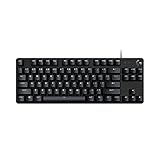
For a gamer setting up a home desk, the real decision is simple: do you value the smallest possible keyboard footprint, or do you want gaming-friendly compactness without relying on function layers for common commands?
Top 3 picks at a glance
Quick Verdict
Choose a 60 percent keyboard if you play mostly mouse-and-keyboard games, have a narrow desk, want more room for low-sensitivity mouse movements, or need a keyboard that can be tucked away after use. Most measure about 11.5 to 12.5 inches wide and weigh roughly 1 to 1.5 pounds.
Choose a TKL keyboard for gaming if you want a compact board that still works comfortably for school, work, browsing, strategy games, and everyday household use. TKL models usually measure 14 to 15 inches wide and weigh around 1.5 to 2.5 pounds. They are the safer all-purpose choice for a shared home computer.
For most homes, TKL is the easier layout to live with. For a dedicated gaming setup in a small space, 60 percent is often the more satisfying choice.
Side by Side
| Buying Factor | 60 Percent Keyboard | TKL Keyboard |
|---|---|---|
| Typical size | About 11.5–12.5 inches wide; 4–4.5 inches deep | About 14–15 inches wide; 5–6 inches deep |
| Comfort | Excellent mouse-side space, but requires layers for arrows and functions | More familiar layout with dedicated arrows, navigation keys, and F-row |
| Durability | Fewer physical keys; durability depends on case, switches, and cable | Similar build potential, with more keys and stabilizers to maintain |
| Typical price range | About $20–$150 for wired gaming models | About $40–$180 for wired gaming models |
| Maintenance | Fast to wipe down; compact key spacing can make deep cleaning tighter | More surface area and keys, but easier access to dedicated clusters |
| Desk space needed | Works well on desks as narrow as 30–36 inches | More comfortable on desks 40 inches wide or larger |
| Look | Minimal, streamlined, and easy to visually declutter | Balanced, traditional, and still noticeably smaller than a full-size board |
| Resale appeal | Strong among keyboard enthusiasts and competitive gamers | Broader appeal for gamers, students, and office users |
| Best for | Small desks, travel, FPS players, and dedicated game stations | Mixed-use desks, shared computers, and gamers who use shortcuts |
Where 60 Percent Wins
The defining advantage of a 60 percent keyboard is space. Compared with a typical TKL, it can free up 2 to 3 inches of desk width. That may not sound dramatic until you play a fast shooter with a large mouse pad. With the keyboard moved farther left or angled slightly, your mouse gets more room for wide sweeps without bumping the keyboard.
This layout also suits apartment living. On a 32-inch writing desk, a monitor stand, mouse pad, controller dock, drink coaster, and keyboard can quickly make the surface feel crowded. A compact board makes the desk feel intentional rather than overfilled. It is also easier to slide into a drawer or storage bin when the room needs to serve another purpose.
60 percent boards can be a cost-effective route to gaming-oriented features. For example, the Aula WIN60 HE is a compact wired option listed at $45.99, with magnetic-switch functionality, adjustable actuation, and rapid-trigger features. At the budget end, the Newmen GM611 is listed at $19.99 and shows how inexpensive a basic wired compact mechanical gaming keyboard can be.
The trade-off is layers. On most 60 percent boards, arrow keys are accessed through an Fn combination, often using I, J, K, and L or a similar arrangement. F-keys, media controls, Print Screen, and navigation commands also move to secondary layers. That is manageable for players who spend most of their time in shooters, battle royale games, action games, or titles with a stable control setup. It is less convenient for games that use frequent F-key commands, menus, inventory shortcuts, or map controls.
A 60 percent keyboard also wins aesthetically if you prefer a clean gaming room. Its small case leaves more visible desk surface and lets a large desk mat become part of the design. For minimalist bedrooms, modern home offices, and multipurpose living spaces, that reduced visual weight is a real benefit.
Where TKL Keyboard for Gaming Wins
A TKL keyboard for gaming is the more forgiving choice because it preserves the keys people reach for without thinking. Dedicated arrow keys matter in menus, puzzle games, emulators, racing-game menus, and everyday document work. The function row is useful for games that assign abilities, squads, tools, or macro-like commands to F1 through F12. Home, End, and Delete are equally useful outside of games.
That matters in a household where one desk serves several people. A child doing homework, a partner managing spreadsheets, or a guest using the computer should not have to learn a compact keyboard’s layer shortcuts. TKL offers a smaller footprint than a full-size board while remaining immediately familiar.
It is also the better fit for genres beyond competitive shooters. Simulation, strategy, MMO, management, and role-playing games can use many key bindings. Even if the game technically supports a 60 percent layout, dedicated keys reduce mental friction during busy moments.
There are straightforward TKL choices at accessible prices. The SteelSeries Apex 3 TKL is listed at $49.97 and includes a compact tenkeyless layout, while the Logitech G413 TKL SE is listed at $59.99. These examples illustrate the typical middle ground: more room than a 60 percent board, but no full-size number pad taking over the desk.
TKL boards can also be easier to share with people who are accustomed to laptops or conventional desktop keyboards. They do not look unusual, and the learning curve is almost nonexistent. If you want one keyboard that handles gaming at night and regular household tasks during the day, TKL is usually the practical winner.
Cost Over 5 Years
The purchase price is only part of the cost. Over five years, a wired 60 percent or TKL keyboard uses very little electricity—typically well under 2 watts with lighting off and often around 2 to 5 watts with RGB lighting active, depending on brightness and model. Even at several hours of use each day, keyboard electricity costs are usually only a few dollars over five years.
For budget planning, expect a basic 60 percent model to cost roughly $20 to $60, while a better-built compact mechanical or magnetic-switch model may run $70 to $150. TKL keyboards commonly start around $40 and can reach $180 or more with premium switches, wireless connectivity, metal cases, or advanced software features.
Maintenance costs are modest. A $5 to $10 keycap puller and soft cleaning brush can last for years. A can of compressed air may cost $6 to $10, though a reusable electric air duster can make more sense for homes with pets. Replacement keycap sets range from about $15 to $50. If you choose a hot-swappable board, replacement switches generally cost around $20 to $45 for enough switches to refresh a compact layout.
Over five years, budget approximately $35 to $90 for a basic 60 percent setup including occasional cleaning supplies, or $60 to $210 for a nicer model plus optional replacement caps or switches. For TKL, a reasonable five-year range is $55 to $110 for a basic setup and $80 to $240 for a more customizable one. Neither format has a meaningful operating-cost disadvantage; your choice should rest on layout and room use.
Which One for Your Home
Small apartment
Choose a 60 percent keyboard if your desk is under 40 inches wide or placed in a bedroom, studio, or living-room corner. The smaller footprint makes it easier to maintain usable mouse space and clear the desk when guests arrive. A TKL still works well if you regularly use the computer for work, forms, or school assignments.
Family with kids or pets
Choose TKL for a shared computer. Dedicated arrows and function keys make it more intuitive for different users. Look for a wired model with a detachable cable if possible, and clean it weekly with a soft brush. If spills are a concern, the SteelSeries Apex 3 TKL’s IP32 water- and dust-resistant design is the kind of practical feature worth considering in a busy home.
Rental
Choose a 60 percent board if you need a portable setup that can move easily between rooms or pack quickly for a future move. Its lower weight and smaller size are helpful when your desk setup is temporary. A wired model also avoids keeping track of charging cables or batteries during a move.
Long-term home
Choose TKL if you are building a permanent office or gaming room that will serve more than one purpose. It gives you lasting flexibility for work, gaming, household administration, and guests. Choose 60 percent instead if the room is a dedicated gaming space and you know you prefer a spacious, low-clutter mouse area.
FAQ
Is a 60 percent keyboard good enough for gaming?
Yes. It is especially effective for FPS, action, and battle royale games where WASD and nearby keys do most of the work. The main adjustment is using Fn layers for arrows, F-keys, and navigation commands.
Is TKL better than 60 percent for gaming?
TKL is better for versatility, not automatically for in-game speed. It retains dedicated keys that help with complex genres and everyday computer tasks. A 60 percent board may be better for players who want maximum mouse room.
Do 60 percent keyboards have arrow keys?
They usually have arrow-key commands through a function layer rather than four dedicated arrow keys. Check the keyboard’s printed legends and software options before buying, because layouts vary by brand.
Should I buy a full-size keyboard instead?
Buy full-size only if you regularly use a number pad for finance, data entry, schoolwork, or work applications. For most gaming homes, TKL provides the more useful balance of familiar keys and saved desk space.


