
Shopping for a gaming PC during a major sale event usually comes down to two windows: Black Friday, the late-November markdown season, and Prime Day, Amazon’s mid-summer deal event. Both promise serious discounts, but they behave very differently when it comes to gaming hardware. Black Friday tends to deliver deeper cuts on complete prebuilt desktops, while Prime Day often shines on components, peripherals, and lightning deals that vanish fast. The real decision a buyer faces is not just which event has a better price — it is whether you can wait until November for the configuration you want, or whether you need a machine now and should grab the best summer discount available. This guide compares both events across price depth, selection, timing, and total cost of ownership, so you can decide where your money goes furthest.
Top 3 picks at a glance
Quick Verdict
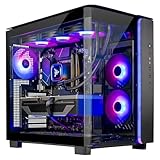
If you want a full prebuilt gaming desktop at the lowest price of the year, Black Friday is usually the better bet — discounts on complete systems commonly run 10–25% off, and retailers beyond Amazon (Best Buy, Newegg, Walmart) compete aggressively. If you are comfortable configuring your own build or you need upgrades and accessories in summer, Prime Day deals can be excellent, especially on monitors, SSDs, and GPUs. For a high-end prebuilt like the Skytech Gaming PC with a Ryzen 7 9850X3D and RTX 5080 (typically $3,699.99 list), even a 10% Black Friday cut saves around $370 — money that covers a 1440p monitor and a headset. If your current PC still works, waiting for Black Friday usually pays. If it does not, a good Prime Day prebuilt deal beats limping along for six months.
As an Amazon Associate we earn from qualifying purchases at no extra cost to you. Product prices and availability are accurate as of the date shown and are subject to change.



Side by Side
| Factor | Black Friday | Prime Day Gaming PC Deals |
|---|---|---|
| Timing | Late November, extending through Cyber Monday | Typically mid-July, with a fall follow-up event in October |
| Price range for prebuilts | $700–$3,000+ entry to flagship | $800–$3,700, deeper cuts on midrange |
| Typical discount depth | 10–25% on complete desktops | 5–20%, often shorter-lived flash pricing |
| Selection | Widest — nearly every retailer participates | Amazon-centric, though rivals run counter-sales |
| Inventory pressure | High demand; popular configs sell out fast | Flash deals sell out in hours; less overall stock |
| Accessories and peripherals | Strong, bundled with system deals | Excellent — monitors, SSDs, keyboards often 20–40% off |
| Convenience | Multiple retailers, varied return windows | Fast Prime shipping, easy returns, single account |
| Resale value | Machines bought in November hold value well into the next cycle | Summer purchases mean you are one generation older at resale time |
| Best for | Complete prebuilt desktops, bundle savings | Components, upgrades, peripherals, urgent needs |
Where Black Friday Wins
Depth on complete systems. Retailers treat prebuilt desktops as doorbusters. A Skytech rig with the Ryzen 7 9850X3D, RX 9070 XT, 32GB of RAM, and a 2TB SSD lists around $2,899.99 — Black Friday pricing on that tier of machine has historically landed 10–20% lower, which is $290–$580 back in your pocket.
Competition between retailers. Amazon is not the only player in November. Best Buy, Newegg, Micro Center, and direct-from-builder sales force prices down and give you options on warranty and return terms. During Prime Day, that competitive pressure exists but is softer.
Bundle potential. Black Friday frequently pairs a desktop with a monitor, mouse, or game codes at no extra cost. A free 27-inch 1440p display is worth $200–$300 and effectively deepens the discount.
Holiday timing. Buying in November means the machine is ready for winter break gaming and arrives before year-end gift deadlines. It also means you benefit from the newest GPU and CPU generations, which typically launch earlier in the calendar year and have settled into stable pricing by then.
Where Prime Day Gaming Pc Deals Wins
Urgency. If your PC died in June, waiting five months for Black Friday is not realistic. A solid summer deal on a capable prebuilt beats months of frustration or a stopgap laptop.
Components and upgrades. Prime Day is historically strong on NVMe SSDs (2TB models frequently drop 30–40%), RAM kits, power supplies, and case fans. If you already own a tower, upgrading storage and memory for $150–$250 in July can postpone a full system purchase for a year or more.
Peripherals. Gaming monitors, mechanical keyboards, and headsets often see their steepest discounts of the year during Prime Day, sometimes 25–40% off. Many buyers do well building the desk setup in summer and buying the tower itself on Black Friday.
Less chaos. Prime Day deals live in one account with consistent shipping and returns. There is no fighting in-store stock or juggling five different retailers’ coupon codes at midnight.
Cost Over 5 Years
Assume a mid-to-high-tier prebuilt around $2,900–$3,700 at list. On Black Friday, a 15% discount brings an effective price of roughly $2,465–$3,145. Over five years, add these realistic ownership costs:
- Electricity: A system pulling 450–650W under load, played 3 hours daily at $0.15/kWh, costs about $75–$110 per year, or $375–$550 over five years.
- Upgrades: One storage bump (adding 2TB for ~$110) and possibly a RAM or fan refresh at $60–$120 totals $170–$230.
- Peripherals replaced: A mouse, headset, or keyboard swap every couple of years adds $150–$300.
- Resale offset: A well-maintained desktop sells for $500–$900 after five years, recouping part of the spend.
Net five-year cost lands around $2,300–$3,900 depending on the event you bought in and how much you recoup. The Black Friday buyer typically starts $300–$500 ahead, while a Prime Day buyer who needed the machine immediately simply spreads the same costs over a longer useful window — which can neutralize the discount difference entirely.
Which One for Your Home
Small Apartment
Space and noise matter more than the calendar. Look for compact mid-tower or mini-ITX prebuilts with good airflow, roughly 16–19 inches deep and 30–40 pounds. A 600–750W system with efficient cooling keeps heat and fan noise manageable in a studio. Either sale event works; prioritize a deal on the right chassis size over a deeper discount on a full tower you cannot fit.
Family with Kids or Pets
Durability and placement win here. Choose a case with a solid steel panel, keep it off carpeted floors to protect intake fans from pet hair, and budget $20–$40 for a dust filter kit. Buy during Black Friday if you can — the bundle deals often include a second monitor or controller for siblings, and November timing means setup happens when the house is otherwise calm.
Rental
If you move every year or two, portability and resale matter. A standard ATX mid-tower (about 18 x 9 x 17 inches, 30–35 pounds) is easy to pack and sells quickly on the used market. Avoid exotic cases with fragile glass panels. Buying in November positions the resale window nicely, since demand for used gaming rigs peaks each fall when new titles launch.
Long-Term Home
If you own and plan to stay, buy the strongest configuration the discount allows. A flagship system like the Skytech with the RTX 5080 at $3,699.99, trimmed by a Black Friday cut, stretches further across five-plus years than a cheaper box replaced twice. Dedicate a ventilated desk nook, keep ambient room temperature in mind during summer gaming sessions, and plan one storage upgrade around year three.
FAQ
Are Prime Day gaming PC deals actually cheaper than Black Friday?
Rarely on complete prebuilts. Black Friday’s retailer competition usually produces the year’s lowest prices on full desktops — often 10–25% off. Prime Day tends to match or beat Black Friday on components and peripherals, not on whole systems.
Should I buy a gaming PC on Black Friday or wait for Cyber Monday?
Buy on Black Friday if the configuration you want is in stock at a good price. Cyber Monday sometimes brings modest extra cuts, but popular desktop configs — especially high-end GPU models — often sell out before Monday arrives.
How much should I expect to spend on a good gaming PC?
A capable 1440p prebuilt runs $1,200–$1,800. High-end systems with flagship GPUs like the RTX 5080 sit at $3,000–$3,700. Budget at least $150–$250 more for a monitor if you do not own one.
Is it better to buy a prebuilt or build my own during these sales?
During Black Friday, prebuilts frequently cost the same as or less than the sum of their parts, since builders buy components wholesale. Prime Day favors DIY builders, because that is when individual parts — SSDs, RAM, PSUs, and sometimes GPUs — see their best prices of the year.


