
The best bass guitars for beginners under $300 are the Yamaha TRBX174 for an all-purpose first bass, the Ibanez GSRM20 Mikro for smaller players, and the Squier Sonic Precision Bass for the simplest traditional rock and pop setup.
At this price, the bass itself is usually more important than the bundled accessories. A weak practice amp can make an otherwise good instrument sound muddy, while a comfortable neck and sensible pickup layout will keep you practicing. The comparisons below focus on scale length, neck profile, body weight, pickups, and whether the included amp is useful or merely a temporary starter accessory.
As an Amazon Associate we earn from qualifying purchases at no extra cost to you.
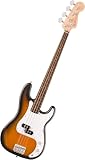


Top 3 picks at a glance
Quick comparison
| Model | Typical guitar-only range | Scale length | Pickup configuration | Approx. weight | Best fit |
|---|---|---|---|---|---|
| Yamaha TRBX174 | $230–$300 | 34 inches | Split-coil P plus single-coil J | About 8.5–9.5 lb | One bass for many styles |
| Ibanez GSRM20 Mikro | $200–$260 | 28.6 inches | Split-coil P plus single-coil J | About 7–8 lb | Smaller players and easy reach |
| Squier Sonic Precision Bass | $230–$300 | 34 inches | One split-coil P pickup | About 7.5–9 lb | Rock, punk, and straightforward learning |
| Jackson JS Series Spectra Bass JS2 | $250–$300 when discounted | 34 inches | Two passive humbuckers | About 8–9 lb | Modern rock and metal tones |
Weights vary with wood, finish, hardware, and production batch, so treat them as useful comparisons rather than guarantees. A bass that is only one pound lighter can feel much more comfortable if its body is better balanced and its neck does not pull downward.
1. Yamaha TRBX174: the best all-round choice
The TRBX174 is the safest recommendation for most first-time players because its 34-inch scale feels like a full-size bass without being unusually difficult to handle. Its split-coil Precision-style pickup produces the familiar thick, mid-focused bass sound, while the bridge-position single-coil Jazz-style pickup adds more definition. A two-pickup layout also lets a beginner hear how pickup placement changes tone.
The neck has a fairly slim, approachable profile rather than a large vintage-style shape. It is not a short-scale instrument, but the fingerboard feels manageable for ordinary adult hands. The body is typically heavier than the Ibanez Mikro, yet its balanced double-cutaway design works well when standing.
What the bundle amp is worth
A TRBX174 package may include a small practice amp in the 10–15 watt class. That is enough for bedroom volume, basic tuning-by-ear exercises, and learning with headphones if the amplifier provides a headphone output. It is not enough for playing with a loud drummer, and small bundled speakers often sound thin when the low E string is played hard.
If the amp has a 6.35 mm headphone jack, clean volume control, and no obvious speaker rattling, keep it initially. Upgrade later to a dedicated 20–40 watt practice amp when you need clearer low end or an auxiliary input for backing tracks.
2. Ibanez GSRM20 Mikro: easiest reach and lowest fatigue
The GSRM20 Mikro uses a 28.6-inch scale, making the distance between frets substantially shorter than on a standard 34-inch bass. This is a practical advantage for children, smaller adults, players with hand mobility limitations, and guitarists who find full-size bass stretches uncomfortable. It is also easier to play while seated.
Its slim GSRM neck profile is one of the friendliest in this price range. The shorter scale produces slightly softer string tension at the same tuning, so bends and fretting require less effort. The trade-off is that the low strings can feel less tight, and some players prefer the fuller, more authoritative response of a full-scale instrument.
The Mikro combines a split-coil pickup in the neck position with a single-coil pickup near the bridge. That is more versatile than the simple control layout suggests: favor the neck pickup for round bass lines, the bridge pickup for articulation, or blend them for a balanced practice sound.
What to know before buying a short-scale bass
A short scale is not automatically a beginner-only format. However, if you expect to move soon to a regular 34-inch bass, the change will require a period of readjustment. The Mikro is best when comfort and reach are the deciding factors, not merely because its price is low.
Packages built around the GSRM20 often use compact amps in the 10–15 watt range. Such an amp is usable for quiet practice, but the short-scale bass still needs a speaker designed to reproduce bass frequencies cleanly. If the included unit has a 6-inch speaker and begins buzzing below moderate volume, replace the amp rather than assuming the bass is at fault.
3. Squier Sonic Precision Bass: the simplest traditional option
The Squier Sonic Precision Bass is a sensible choice if you want a familiar rock and pop sound with fewer controls to distract you. Its single split-coil pickup has strong midrange and naturally masks some beginner inconsistency, making individual notes easier to hear in a band-style mix.
The 34-inch scale follows the standard bass format. The neck is generally slim enough for new players, although the exact feel can vary more between individual instruments than the model name suggests. The body is relatively light for a full-scale bass, but check balance with a strap: some lightweight instruments can feel neck-heavy depending on the individual example.
One pickup is a limitation for players who want funkier bridge tones or a wide range of timbres. It is also an advantage for learning: set the volume and tone, then concentrate on muting, rhythm, and accurate fretting. For punk, classic rock, indie, and straightforward pop, the restricted control set is rarely a serious problem.
Is a Sonic bundle amp usable?
A Squier package may be sold with a small Frontman-style practice amplifier or another entry-level combo, depending on the retailer and region. A compact amp is adequate for private practice at low volume, but it should be considered part of the starter budget, not a long-term performance solution. If the package pushes the total close to $300, compare it with buying the bass separately and choosing a better small amp.
4. Jackson JS Series Spectra Bass JS2: the modern-sounding alternative
The Jackson JS2 is worth considering when the player prefers hard rock, metal, or aggressive modern tones. Its dual passive humbuckers provide a thicker, less single-coil-like sound than the Yamaha or Squier. The 34-inch scale and generally slim neck keep it familiar to players moving from electric guitar.
The extra pickup output can make a cheap amp distort earlier. That is not necessarily a defect, but it means you may need to lower the bass volume or amp gain. A low-cost bundled amp with limited headroom can become muddy sooner than it would with a lower-output Precision-style pickup.
The JS2 is often near the top of a $300 budget rather than comfortably below it. It also leaves less money for a tuner, strap, cable, and setup. Choose it when its pickup character matters more than having the most accessories.
Which bass matches your situation?
| Your priority | Best match | Why | Main compromise |
|---|---|---|---|
| Small hands or shoulder fatigue | Ibanez GSRM20 Mikro | Shorter 28.6-inch scale and lighter body | Less full-scale feel and looser string tension |
| One bass for several genres | Yamaha TRBX174 | P and J pickup combination | Usually heavier than the Mikro |
| Simple rock or punk setup | Squier Sonic Precision Bass | Strong, familiar split-coil sound and simple controls | Less tonal variety |
| Modern rock or metal | Jackson JS2 | Dual humbuckers and assertive output | Less budget left for a good amp and accessories |
| Already own a practice amp | Buy the best guitar-only option | More of the budget goes toward neck, hardware, and setup | No immediate replacement accessories |
A practical $300 buying calculation
Do not spend the entire budget on the bass if you need a complete setup. A realistic allocation is $220 for the instrument, $40–$60 for a basic bass practice amp, $15–$25 for a cable, $10–$20 for a strap, and $10–$20 for a clip-on tuner. That totals roughly $295–$345, so a bundle is useful only if its amp is genuinely functional.
For example, suppose an instrument-and-amp package costs $280. If the included amp has a headphone output and stays clean at bedroom volume, its practical value may be $35–$50. If it rattles, has no headphone output, and sounds distorted at low volume, assign it perhaps $10 of value and spend the remaining money on a better amp later. The cheaper headline price does not make it the better setup.
What to check before keeping the bass
- Plug in each pickup separately and rotate every control. Crackling or silence may indicate a wiring problem rather than a tonal difference.
- Check fret ends by running a finger lightly along the edge of the neck. Sharp metal can be corrected, but it should be reported promptly on a new instrument.
- Play every fret on each string. Buzz on one or two notes can be setup-related; widespread buzzing or dead notes deserve closer inspection.
- Look down the neck from the headstock toward the bridge. A small amount of relief is normal, but obvious twisting is not a beginner setup issue.
- Test the bass through the included amp at low and moderate volume. A little speaker noise at maximum volume is less concerning than rattling during ordinary practice.
- Confirm that the tuner, cable, strap, and amp power supply are included if the listing calls the product a bundle. Package contents differ by region.
Frequently asked questions
Is a full-size bass harder for beginners than a short-scale bass?
A full-size bass is not necessarily too difficult for beginners, but a short-scale model can reduce stretching and fretting effort. The Yamaha TRBX174 and Squier Sonic Precision Bass use a 34-inch scale, while the Ibanez GSRM20 Mikro uses a 28.6-inch scale. The shorter instrument is especially practical for smaller players or anyone who finds full-size stretches uncomfortable.
Why do pickup types matter on a beginner bass?
Pickup types affect the bass’s sound and the range of tones available. A split-coil pickup usually provides a thick, mid-focused sound, while a bridge-position single-coil adds definition. The Yamaha and Ibanez combine these pickup types, the Squier uses one split-coil pickup, and the Jackson uses dual passive humbuckers for thicker modern tones.
Can a beginner bass be played comfortably while standing?
Yes, a beginner bass can be comfortable while standing if its body and neck are well balanced. The Yamaha’s double-cutaway design is described as working well when standing, while lighter instruments can sometimes feel neck-heavy. A bass that is only one pound lighter may still feel less comfortable if the neck pulls downward.
Should I buy a bass with one pickup or multiple pickups?
Choose one pickup for a simpler learning experience, or multiple pickups for greater tonal variety. The Squier Sonic Precision Bass has one split-coil pickup, so there are fewer controls to distract from rhythm, muting, and fretting. The Yamaha and Ibanez offer split-coil and single-coil pickups, allowing players to compare warmer and more articulate sounds.
What accessories are essential for starting bass?
A beginner setup generally needs an amplifier, cable, strap, and tuner in addition to the bass. A bundle can be useful when its compact amplifier works cleanly at bedroom volume and provides a headphone output. If you already own a practice amp, buying the best guitar-only option can direct more of the setup toward the instrument, neck, hardware, and setup.
Final recommendation
Choose the Yamaha TRBX174 if you want the most flexible full-size beginner bass. Choose the Ibanez GSRM20 Mikro when reach, weight, and playing comfort are the main obstacles. Pick the Squier Sonic Precision Bass for a direct, traditional rock sound and uncomplicated controls. Select the Jackson JS2 only when its humbucker-driven modern tone is worth spending more of the $300 budget.
Whichever model you choose, prioritize a comfortable neck and a usable practice amp over extra accessories. A modest bass that fits your hands and produces a clear low note will teach you more—and keep you practicing longer—than a larger bundle filled with equipment you will replace immediately.


