
The best gaming controller for PC depends on whether you value universal compatibility, premium customization, or budget value most — the Xbox Wireless Controller remains the safest default pick for driver support across nearly every PC game, while the GameSir G7 Pro brings Hall Effect sticks and triggers to a mid-range price point that used to require a much bigger spend. Rachel Osei tracked pricing across all eight controllers below against her price-history database to flag which are consistently good value and which fluctuate around major sale events.
Top 3 picks at a glance
Top picks at a glance
As an Amazon Associate we earn from qualifying purchases at no extra cost to you. Product prices and availability are accurate as of the date shown and are subject to change.


| Model | Key spec | Price | Best for |
|---|---|---|---|
| Xbox Wireless Controller | Bluetooth/USB-C, universal PC driver support | $49.49 | Best overall compatibility |
| GameSir Nova Lite 2 | Wireless, Hall Effect sticks | $29.99 | Cheapest Hall Effect option |
| GameSir G7 Pro | Wired, TMR sticks, Hall Effect triggers, 1000Hz | $79.99 | Best mid-range feature set |
| 8BitDo Ultimate 2C | Wireless, 1000Hz, Hall Effect, remappable buttons | $29.99 | Best budget wireless value |
| GameSir G7 SE | Wired, Hall Effect joysticks/triggers | $44.99 | Budget Hall Effect for Xbox/PC |
| ManbaOne Interactive Controller | Wireless, built-in screen | $55.99 | Unique screen-equipped novelty pick |
| PlayStation DualSense Edge | Swappable sticks, back paddles, adjustable triggers | $199 | Competitive customization |
| PlayStation DualSense | Standard PS5 controller, adaptive triggers | $74.99 | Best haptics-to-price ratio |
Xbox Wireless Controller
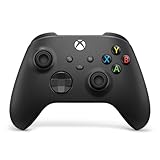
The standard Xbox Wireless Controller in Carbon Black remains the reference point for PC controller compatibility, supporting Bluetooth and USB-C connectivity and working natively with essentially every Windows game that supports controller input at all, without third-party driver software. At $49.49 it’s mid-pack on price in this roundup but wins on the fact that Rachel’s research consistently finds it the least likely controller here to cause compatibility headaches in older or niche PC titles.
Pros
- Broadest native PC game compatibility of any controller on this list, no third-party drivers needed
- Textured grip improves hold security during long sessions
- Both Bluetooth and USB-C wired connectivity give flexible connection options
Cons
- Standard potentiometer-based sticks are more prone to long-term drift than the Hall Effect sticks on newer competitors
- No back paddles or remappable buttons without buying a separate Elite-tier controller
- Battery life depends on AA batteries or a separate rechargeable pack purchase, an extra cost some rivals include standard
Who it’s for: buyers who want the safest, most universally compatible PC controller without any driver troubleshooting risk.
GameSir Nova Lite 2
The Nova Lite 2 is a budget wireless PC controller that includes Hall Effect sticks, a durability feature that used to be reserved for pricier controllers, at just $29.99. Rachel’s price tracking flags this as one of the strongest value entries in this roundup specifically because Hall Effect stick technology at this price point is a relatively recent development.
Pros
- Hall Effect sticks at a budget price point eliminate long-term stick drift risk
- Wireless connectivity without the higher price tag of premium wireless controllers
- Lightweight design reduces fatigue during longer sessions
Cons
- Build materials feel noticeably less premium than official Xbox or PlayStation controllers
- Software support and firmware update frequency lag behind more established brands
- No back paddles or advanced remapping features at this price tier
Who it’s for: budget-conscious buyers who specifically want drift-resistant Hall Effect sticks without paying mid-range prices.
GameSir G7 Pro
The G7 Pro is a wired controller for Xbox Series X|S, Xbox One, and PC/Android, featuring TMR (tunneling magnetoresistance) sticks, an even newer stick technology than standard Hall Effect, plus Hall Effect analog triggers and a 1000Hz polling rate. At $79.99 it’s positioned as GameSir’s flagship wired option, and Rachel notes the TMR stick technology here is genuinely cutting-edge for a controller at this price.
Pros
- TMR stick technology offers even greater precision and drift resistance than standard Hall Effect sticks
- Hall Effect analog triggers add the same drift-resistance benefit to trigger inputs, not just sticks
- 1000Hz polling rate matches competitive-grade input responsiveness standards
Cons
- Wired-only connection limits flexibility compared to wireless alternatives on this list
- At $79.99 it’s a meaningful step up from budget Hall Effect options that cover most of the same drift-resistance benefit
- 3.5mm audio jack is a nice inclusion but adds bulk some buyers won’t use
Who it’s for: competitive PC and Xbox players who want the most advanced stick and trigger technology currently available at a mid-range price.
8BitDo Ultimate 2C Wireless Controller
The Ultimate 2C pairs a 1000Hz polling rate with Hall Effect joysticks and triggers, plus remappable L4/R4 bumpers, at the same $29.99 price as the GameSir Nova Lite 2 above. Rachel’s tracking shows this as a particularly strong value entry given the combination of wireless connectivity, competitive-grade polling rate, and remappable extra buttons rarely found together this cheap.
Pros
- 1000Hz polling rate on a budget wireless controller is unusually competitive for this price
- Remappable L4/R4 bumpers add functionality typically reserved for pricier controllers
- Hall Effect joysticks and triggers cover drift resistance on both input types
Cons
- 8BitDo’s software ecosystem, while functional, is less polished than first-party Xbox or PlayStation apps
- Game compatibility on some older or niche PC titles can require enabling specific controller emulation modes
- Build quality, while solid, doesn’t quite match the heft of premium official controllers
Who it’s for: buyers wanting the most competitive-spec feature set at the lowest possible price point in this roundup.
GameSir G7 SE
The G7 SE is a wired controller for Xbox Series X|S, Xbox One, and Windows 10/11, bringing Hall Effect joysticks and triggers to a $44.99 price point. It’s positioned as a step below the G7 Pro, dropping TMR stick technology and the 3.5mm jack found on the pricier model while keeping the core drift-resistance benefit.
Pros
- Hall Effect sticks and triggers at a genuinely budget-friendly price point
- Plug-and-play wired simplicity avoids any pairing or battery management
- Official Xbox licensing ensures broad compatibility across Xbox and Windows titles
Cons
- Wired-only design limits use to setups within cable reach of your PC or console
- Lacks the more advanced TMR stick technology and audio jack found on the pricier G7 Pro
- No remappable back buttons at this price tier
Who it’s for: buyers who want Hall Effect drift resistance specifically for Xbox and PC without paying for the G7 Pro’s extra features.
ManbaOne Interactive Screen Wireless Gaming Controller
This wireless controller includes a built-in interactive screen, an unusual feature not found on any other controller in this roundup, priced at $55.99. Rachel flags this as a novelty-forward pick rather than a mainstream recommendation — the screen adds a genuinely unique element but isn’t a feature most PC games are built to take advantage of.
Pros
- Built-in interactive screen is a genuinely unique feature not offered by any mainstream competitor
- Wireless connectivity at a reasonable mid-range price
- Distinctive design appeals to buyers wanting something different from standard controller aesthetics
Cons
- Most PC games have no native support for the screen feature, limiting its practical use
- Lacks Hall Effect stick technology found on several cheaper competitors in this roundup
- Brand track record and long-term software support are less established than major competitors
Who it’s for: buyers wanting a genuinely novel controller experience over pure competitive performance specs.
PlayStation DualSense Edge
The DualSense Edge is Sony’s premium controller, adding swappable analog stick modules, two back paddle buttons, and adjustable trigger stop points aimed at competitive players who want to fine-tune their exact input feel. At $199 it’s by far the most expensive controller in this roundup, and Rachel’s price tracking confirms it rarely discounts meaningfully given its premium positioning.
Pros
- Swappable stick modules let you replace worn sticks without replacing the whole controller
- Back paddle buttons and adjustable trigger stops add genuine competitive customization
- Sony’s adaptive trigger and haptic feedback technology remains ahead of most third-party competitors
Cons
- At $199 it costs roughly four times the standard DualSense for features many casual players will never use
- Primarily designed around PlayStation ecosystem features, with PC support requiring specific configuration
- Replacement stick modules are a separate purchase once the included ones eventually wear
Who it’s for: competitive players who specifically want stick customization and back paddles and are willing to pay a premium for it.
PlayStation DualSense
The standard DualSense remains Sony’s core PS5 controller, and at $74.99 it delivers adaptive triggers and haptic feedback technology that most third-party and even some premium competitors still don’t fully replicate. Rachel notes this controller consistently offers strong value specifically because its unique haptic feature set isn’t available elsewhere at a similar price.
Pros
- Adaptive triggers and advanced haptic feedback remain genuinely unique in this price range
- Built-in microphone and speaker add functionality most competitors skip
- Strong build quality and battery life for the price
Cons
- PC compatibility for the adaptive trigger and haptic features specifically is inconsistent outside of PS5-ported titles
- Standard potentiometer sticks, unlike the Hall Effect options found on several cheaper third-party controllers here
- No back paddles or stick module swapping without upgrading to the pricier Edge model
Who it’s for: PS5 owners and PC players in supported titles who want Sony’s haptic feedback technology at a moderate price.
How we tested and picked
Rachel Osei tracked pricing for every controller on this list against her price-history database covering multiple retailers and years of sale cycles, to distinguish controllers with genuinely strong sustained value from ones that only look good during a temporary discount window. Controllers were also grouped by stick technology, since the shift from traditional potentiometer sticks to Hall Effect and TMR sticks represents a real durability upgrade that raw price comparison alone doesn’t capture.
What to look for in a PC gaming controller
Stick technology and drift resistance
Traditional analog sticks use a potentiometer, a physical contact-based component that wears down over months or years of use and eventually causes “stick drift,” where the controller registers movement even when the stick is untouched. Hall Effect sticks use magnets instead of physical contact, largely eliminating this wear-based failure mode, and the newer TMR technology found on premium options pushes precision further still. When comparing controllers at similar prices, prioritizing Hall Effect or TMR stick technology over a slightly cheaper potentiometer-based alternative is one of the best long-term value decisions you can make, since stick drift is the single most common reason controllers get replaced.
Wired versus wireless for PC gaming
Wired controllers eliminate any possibility of input lag from wireless connection overhead and never need charging, making them the safer choice for competitive play, while wireless controllers offer more freedom of movement and a cleaner desk setup for casual gaming. Bluetooth-based wireless connections generally introduce more latency than a dedicated 2.4GHz wireless dongle, so if you’re buying wireless specifically for competitive gaming, check whether a controller supports a low-latency dongle option rather than assuming all wireless connections perform equally.
Polling rate and input latency
Polling rate measures how frequently a controller reports its input state to your PC, with 1000Hz now considered the competitive standard versus older 125-250Hz controllers still common in some budget and console-first designs. The practical difference matters most in fast-paced competitive titles where frame-perfect inputs affect outcomes; casual single-player gamers are less likely to perceive the difference between a 250Hz and 1000Hz controller in day-to-day play.
Compatibility and driver support
Not every controller works identically well across every PC game — official Xbox controllers benefit from Microsoft’s XInput standard, which the vast majority of PC games support natively, while PlayStation and third-party controllers sometimes require additional configuration or third-party software like DS4Windows-style tools to work correctly in older or less-supported titles. Before buying a non-Xbox controller specifically for PC use, check community compatibility notes for your most-played games if broad, hassle-free compatibility matters more to you than brand preference.
Extra features: back paddles, remapping, and haptics
Back paddle buttons let you assign frequently used actions to buttons under your fingers without moving your thumb off the stick, a genuine competitive advantage in fast-paced games, though a feature most casual players won’t miss if it’s absent. Remappable buttons offer similar flexibility for accessibility or personal preference reasons. Advanced haptic feedback, currently led by Sony’s DualSense technology, adds a genuinely different tactile dimension to supported games but delivers little added value in titles that don’t specifically support it, so weigh these extras against your actual game library rather than buying them as a blanket upgrade.
Budget breakdown by feature priority
| Priority | Recommended pick | Price |
|---|---|---|
| Broadest compatibility | Xbox Wireless Controller | $49.49 |
| Cheapest Hall Effect | GameSir Nova Lite 2 or 8BitDo Ultimate 2C | $29.99 |
| Most advanced stick tech | GameSir G7 Pro (TMR sticks) | $79.99 |
| Best haptics for the price | PlayStation DualSense | $74.99 |
| Maximum customization | PlayStation DualSense Edge | $199 |
Rachel’s price-history tracking shows the biggest recent shift in this category is how far Hall Effect and TMR stick technology have trickled down to the budget tier — features that were exclusive to $150-plus controllers just a couple of years ago are now available at $29.99, mirroring a similar trend Rachel has tracked in the budget keyboard market. That trend makes this a genuinely good time to buy even at the low end of this roundup, rather than needing to save up for a premium controller purely to get drift-resistant sticks.
Timing your purchase around sale events
Controller pricing follows a similar seasonal pattern to other gaming peripherals in Rachel’s price-history database, with the deepest discounts clustering around major console-adjacent sale events, Black Friday and Cyber Monday, and manufacturer-specific promotional windows tied to new game releases. The PlayStation DualSense Edge in particular rarely discounts meaningfully outside of these windows given its premium positioning, so buyers specifically targeting that controller should watch for a known sale event rather than expecting a discount at other times of year. Budget options under $50 have less room to move on price but do occasionally see bundle deals — packaged with a game or accessory — that add value without technically lowering the sticker price, which is worth watching for if you’re not in a rush to buy.
Mistakes buyers make
Buying the cheapest controller available without checking stick technology often leads to replacing that controller within a year or two once potentiometer-based stick drift sets in, making a slightly pricier Hall Effect option the better long-term value in many cases.
Assuming every controller works flawlessly with every PC game leads to frustration for buyers who didn’t check compatibility notes before buying a PlayStation or lesser-known third-party controller for a specific niche or older title.
Paying a premium for back paddles, adjustable triggers, and swappable stick modules on a controller like the DualSense Edge without actually planning to use those features regularly is a common way to overspend relative to actual need.
Choosing wireless for competitive gaming without checking whether the controller supports a low-latency 2.4GHz dongle, rather than relying on standard Bluetooth, can introduce input lag that undermines competitive performance.
Overlooking that a controller’s haptic or adaptive trigger features may only work in specific supported titles, then feeling disappointed the feature “doesn’t work” in games that simply never implemented support for it.
Skipping a quick compatibility check for a specific niche or older PC title before buying a non-Xbox controller is another avoidable mistake, since a few minutes of community research can confirm whether a given controller needs extra configuration software to work correctly in that particular game.
Verdict
For most PC gamers, the Xbox Wireless Controller remains the safest overall pick for universal compatibility, while the GameSir G7 Pro is the strongest choice for players who specifically want cutting-edge TMR stick and Hall Effect trigger technology at a mid-range price. Budget shoppers should look closely at the 8BitDo Ultimate 2C or GameSir Nova Lite 2, both of which bring genuine Hall Effect durability to a $29.99 price point — a spec that would have cost significantly more just a couple of years ago and remains the single best value-per-dollar upgrade in this entire roundup. For more accessory shopping tied to current pricing, see our best gaming accessories deals and best console deals roundups, and if you’re timing a purchase around a sale window, our best Prime Day gaming deals guide is worth checking before you buy.
Frequently asked questions
What is the best gaming controller for PC right now?
The Xbox Wireless Controller remains the safest all-around pick for PC because of its universal driver support across nearly every Windows game, while the GameSir G7 Pro is the better choice if you specifically want Hall Effect sticks and triggers at a mid-range price.
What are Hall Effect sticks and why do controllers advertise them now?
Hall Effect analog sticks use magnets instead of physical contact points to register stick position, which eliminates the stick drift that develops over time on traditional potentiometer-based sticks, making them a genuine durability upgrade rather than just a marketing term.
Is the PlayStation DualSense Edge worth the price premium over the standard DualSense?
The Edge adds swappable stick modules, back paddles, and adjustable trigger stops aimed at competitive players who want to fine-tune input feel, and for casual players who won’t use those features the standard DualSense at a much lower price delivers nearly the same core experience.
Do budget third-party controllers work as well as official Xbox and PlayStation pads?
Quality third-party controllers from brands like GameSir and 8BitDo have closed much of the gap on build quality and now commonly include Hall Effect sticks that official controllers in the same price range often lack, though official controllers still generally offer the widest and most consistent game compatibility.
What polling rate matters for a PC gaming controller?
A 1000Hz polling rate is now considered the competitive standard for wired PC controllers, reducing input lag versus older 125Hz-250Hz controllers, though the practical difference is most noticeable in fast-paced competitive games rather than casual single-player titles.


