
Our Top Picks
 Breville BES880BSS Barista Touch Espresso MachineOne Size12.7 x 15.5 x 16 Inches21.8 PoundsCheck on Amazon
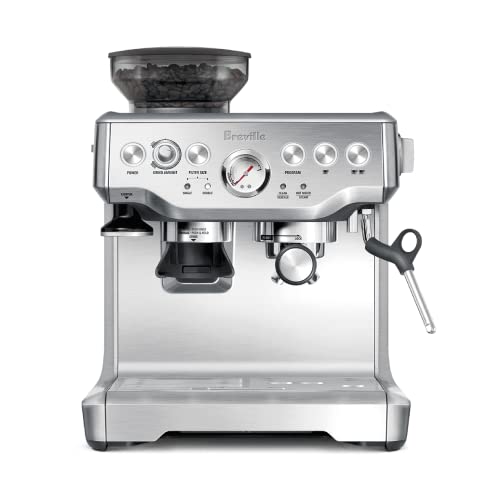 Breville BES870XL Barista Express Espresso MachineLarge13.8 x 12.5 x 15.9 Inches22.09 poundsCheck on Amazon
 Breville BES870BTR Barista Express Espresso Machine213.81 x 12.53 x 15.9 inches22.09 PoundsCheck on Amazon
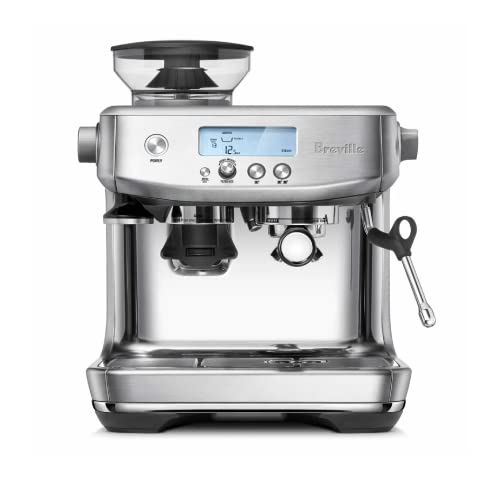
Top 3 picks at a glance

Best Espresso Machines for Home Baristas in 2026
The best espresso machines for home baristas are the Breville Dual Boiler for control and temperature stability, the Breville Barista Express Impress for an all-in-one setup, and the Gaggia Classic Evo Pro for a compact, upgradeable machine—though each needs a different grinder and workflow to make consistently good coffee.
Ranked picks by the way you make coffee
| Rank | Machine | Best for | What stands out | Main compromise | Typical price range |
|---|---|---|---|---|---|
| 1 | Breville Dual Boiler | Hands-on espresso and milk drinks | Separate brew and steam boilers; adjustable brew temperature | Requires a separate grinder and takes up substantial counter space | Usually $1,500–$1,800 |
| 2 | Breville Barista Express Impress | A guided all-in-one routine | Built-in grinder, assisted tamping, and dose adjustment | Grinder flexibility and upgrade options are limited | Usually $700–$900 |
| 3 | Gaggia Classic Evo Pro | Compact setup with room to learn | Small footprint and a conventional 58 mm portafilter | Temperature control and steaming require more attention | Usually $400–$600 |
| 4 | Rancilio Silvia | Durable, traditional single-boiler brewing | Strong steam potential and solid portafilter feel | Brew and steam happen one at a time; temperature management takes practice | Usually $800–$1,000 |
Price ranges are approximate and vary with model year, configuration, and retailer. Grinder requirements matter: a capable espresso grinder is part of the purchase, not an optional accessory, unless the machine has one built in.
As an Amazon Associate we earn from qualifying purchases at no extra cost to you.


What changes the ranking in daily use
1. Breville Dual Boiler: best for repeatable control
Two boilers let you brew and steam at the same time, which makes a noticeable difference when preparing several milk drinks in a row. Brew-temperature adjustment helps you tune recipes for different coffees, while the dedicated steam boiler avoids the wait-and-switch routine of a single-boiler machine. Pair it with a good standalone grinder; the machine’s control is only useful if the grinder can produce consistent espresso-sized adjustments.
Its strengths come with a real space and upkeep cost. Measure both the machine and the clearance needed to fill its water tank before buying. Like other boiler machines, it needs regular water management and cleaning; use water within the manufacturer’s guidance to reduce scale risk.
2. Breville Barista Express Impress: best guided all-in-one
This model combines a grinder with assisted dosing and tamping, reducing some of the small, repetitive errors that make espresso inconsistent. That helps beginners establish a workable routine without buying separate equipment immediately. The integrated grinder also saves counter space compared with a machine-and-grinder pair.
The trade-off is less flexibility. If you want to change grinders, experiment with a wide range of burrs, or make fine adjustments across many coffees, a separate grinder gives you more options. Choose the Impress for convenience and guided workflow, not because an integrated grinder is automatically as adaptable as a dedicated one.
3. Gaggia Classic Evo Pro: best compact learning platform
The Gaggia suits people who want a relatively small machine and are willing to build skill through repetition. Its 58 mm portafilter is a common size, so baskets and other compatible accessories are easier to find than for some proprietary formats. A quality grinder and careful puck preparation matter especially here: the machine offers fewer built-in conveniences to compensate for uneven dosing or tamping.
It is a single-boiler design, so brewing and steaming are sequential. Expect to learn a consistent order of operations and to pay attention to temperature before pulling a shot. This is a good choice for one or two drinks at a time, less so for making a round of cappuccinos quickly.
4. Rancilio Silvia: best for traditional single-boiler workflow
The Silvia is a sturdy option for someone who wants manual control and values steaming ability more than simultaneous brew-and-steam convenience. Its steam performance can support textured milk, but the single boiler means you must switch between brewing and steaming. Managing the transition and temperature becomes part of the routine; it is not a set-and-forget machine.
Compared with the Gaggia, it generally asks for a larger budget without removing the same core learning curve. Consider it when you specifically want a traditional machine with strong steam capability and are comfortable waiting between tasks.
Match the machine to your routine
| Your situation | Best fit | Why | Plan for |
|---|---|---|---|
| You make several milk drinks back-to-back | Breville Dual Boiler | Separate boilers support simultaneous brewing and steaming | More counter space, maintenance, and a separate grinder |
| You want one appliance and a guided routine | Breville Barista Express Impress | Integrated grinding and assisted tamping simplify setup | Less grinder flexibility as your preferences develop |
| You make one or two drinks and want to learn manually | Gaggia Classic Evo Pro | Compact design and standard-sized portafilter encourage a modular setup | A capable grinder and practice with temperature and steaming |
| You prioritize steaming and accept a slower sequence | Rancilio Silvia | Traditional controls and strong steam potential | Sequential brew-and-steam workflow |
Build a repeatable shot before changing machines
A machine cannot fix a grind that is too coarse, an inconsistent dose, or a poorly prepared puck. Use this starting recipe as a diagnostic baseline, not a universal rule:
- Weigh 18 grams of coffee into a suitable double basket.
- Distribute grounds evenly, then tamp level. Consistent preparation matters more than pressing as hard as possible.
- Aim for about 36 grams of espresso in 25–30 seconds, timing from pump activation.
- If the shot runs fast and tastes thin or sour, grind finer. If it runs very slowly or tastes harsh and dry, grind coarser.
- Change one variable at a time and keep the dose fixed while dialing in.
For a different basket size, adjust the dose to suit the basket and preserve a similar brew ratio. The 18-to-36-gram example is a 1:2 ratio; it gives you a repeatable starting point, not a guarantee that every coffee will taste best at that yield.
Budget and counter-space calculation
Compare the full setup rather than the machine price alone. For example, a machine in the $400–$600 range plus an espresso-capable grinder in the $200–$400 range puts the core setup at roughly $600–$1,000, before a scale, tamper, or water treatment. An all-in-one machine may reduce the upfront equipment count, but you give up some freedom to upgrade the grinder separately.
Before ordering, measure the available width, depth, and height—including room to lift or remove the water tank. Also allow space beside the machine for the grinder and a tamping area. A narrow counter may favor the Gaggia; an all-in-one can reduce separate equipment, while the Dual Boiler is a better fit when workflow matters more than footprint.
Maintenance that protects consistency
- Wipe the steam wand immediately after each use and purge it briefly to clear milk residue.
- Clean the basket and portafilter after brewing; remove coffee oils from the brew path as directed in the manual.
- Keep the grinder clean, especially when changing beans. Old grounds can make a new coffee taste stale and complicate dialing in.
- Follow the machine maker’s descaling and water recommendations. Hard water can cause scale; unsuitable water can also affect taste and machine longevity.
For most home baristas, the Dual Boiler is the strongest choice for temperature control and busy milk-drink workflows, the Barista Express Impress is the easiest integrated route, and the Gaggia Classic Evo Pro makes sense when footprint, price, and hands-on learning lead the decision.
Frequently asked questions
Do I need to buy a grinder separately?
You need a capable espresso grinder unless your machine has one built in. The Breville Barista Express Impress includes a grinder, while the Breville Dual Boiler, Gaggia Classic Evo Pro, and Rancilio Silvia require a separate one. Grinder consistency matters because the machine alone cannot compensate for an unsuitable grind.
Can I make several cappuccinos quickly with the Gaggia Classic Evo Pro?
The Gaggia Classic Evo Pro is less suited to making a round of cappuccinos quickly. It uses a single boiler, so brewing and steaming happen sequentially. The Dual Boiler can brew and steam at the same time, while the Gaggia is better suited to one or two drinks at a time.
What espresso recipe should I start with?
Start with 18 grams of coffee and aim for about 36 grams of espresso in 25–30 seconds, timing from pump activation. Distribute the grounds evenly and tamp level. Treat this as a diagnostic baseline rather than a universal recipe, and change one variable at a time while dialing in.
What should I do if my espresso runs too fast or too slowly?
If the shot runs fast and tastes thin or sour, grind finer. If it runs very slowly or tastes harsh and dry, grind coarser. Keep the dose fixed while adjusting, and change one variable at a time so you can tell what affected the result.
How much room should I leave around an espresso machine?
Measure the available width, depth, and height, and leave room to lift or remove the water tank. Allow space beside the machine for a grinder and a tamping area as well. The Gaggia has a small footprint, an all-in-one can reduce separate equipment, and the Dual Boiler takes substantial counter space.


