
Our Top Picks
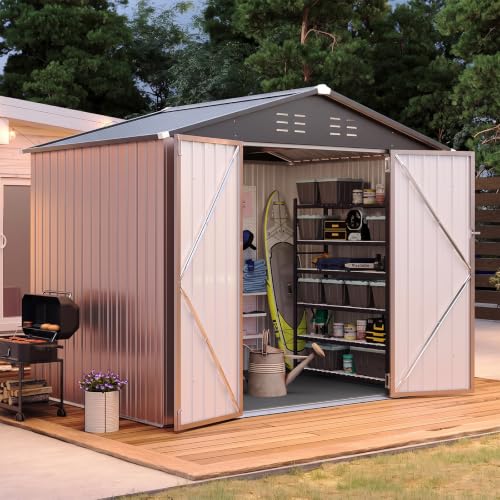 Aoxun 8'x6' Shed with Floor Galvanized Steel Outdoor8'x6'w72.9 x 94.1 x 76.26 inches159 PoundsCheck on Amazon

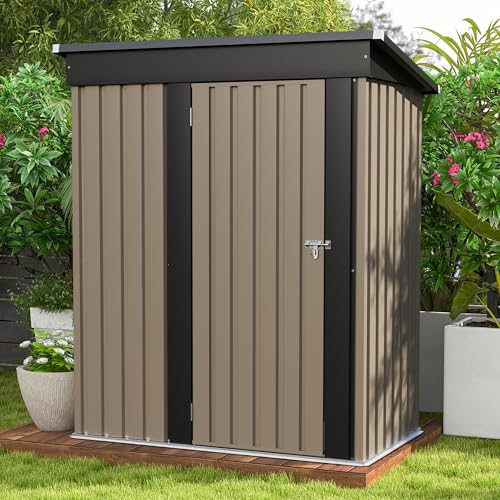

Top 3 picks at a glance

Best Garden Sheds for Every Yard in 2026
The best garden sheds in 2026 are chosen by matching the shed’s material, floor strength, weather resistance, storage capacity, and assembly demands to your available yard space—not simply by buying the largest model that fits.
Quick Recommendation
| Yard and storage situation | Best shed type | Recommended specification | Typical market range |
|---|---|---|---|
| Small patio or narrow side yard | Resin or compact metal shed | 4 × 6 ft, under 6 ft deep, double-wall panels if possible | Usually $250–$700 |
| General garden tools and bicycles | Resin or treated wooden shed | 6 × 8 ft, reinforced floor, 6 ft or taller walls | Usually $600–$1,500 |
| Lawn mower, bins, bicycles, and shelving | Large resin, wood, or metal shed | 8 × 10 ft, wide double doors, 50 psf floor capacity or more | Usually $1,000–$2,800 |
| Workshop or hobby room | Wooden shed or insulated panel building | 10 × 12 ft or larger, windows, ventilation, upgraded floor | Usually $2,000–$6,000+ |
| Wet, windy, or coastal location | Anchored resin or galvanized steel shed | Corrosion-resistant hardware, raised base, high wind rating | Usually $700–$3,000 |
How to Choose the Best Garden Shed
1. Measure the usable space, not just the empty space
Start by measuring the proposed location in several directions. Leave room for doors to open, roof overhangs to clear fences, and access for maintenance. A shed advertised as 8 × 10 ft may have a roof footprint slightly larger than its nominal floor dimensions, while interior dimensions can be several inches smaller after wall panels and trim are installed.
As an Amazon Associate we earn from qualifying purchases at no extra cost to you.


A practical rule is to leave at least 18 inches between the shed and a fence or wall where you need to paint, clean gutters, inspect panels, or remove snow. If the doors face a path, allow another 3 to 5 ft of clear space in front. Check local rules before ordering: some areas regulate maximum height, distance from property lines, foundations, and electrical installations.
For a narrow yard, door placement matters as much as floor area. A 4 × 8 ft shed with doors on the short end can be easier to use than a wider shed whose doors open directly into a fence or retaining wall.
2. Choose the material according to maintenance and climate
| Material | Strengths | Weaknesses | Best use |
|---|---|---|---|
| Resin or plastic | Low maintenance, rust-free, quick cleaning, relatively easy assembly | Can flex in heat, fade in strong sunlight, and need anchoring | Everyday garden storage and damp climates |
| Galvanized steel | Good security, fire resistance, slim walls, strong panels | Can condense internally, dent, rust at scratches, and become hot | Secure tool storage and limited floor space |
| Wood | Most customizable, attractive, easy to insulate and repair | Needs painting or staining, can rot, and usually takes longer to assemble | Workshops, larger yards, and buildings that should blend with a home |
| Composite or insulated panels | Better thermal stability and weather sealing than basic panels | Higher cost and more demanding base preparation | Year-round rooms, electronics, or temperature-sensitive storage |
Resin is usually the easiest choice for people who want storage rather than a construction project. Look for UV-stabilized panels, metal-reinforced roof sections, and molded ribs around the walls. Basic thin plastic panels may be adequate for cushions and hand tools but can feel insecure with heavy shelves.
Steel works well when theft resistance and narrow walls are priorities. Inspect the coating specification and hardware: galvanized or corrosion-resistant fasteners are more important than a glossy exterior in a wet climate. Steel sheds benefit from roof vents or passive ventilation because temperature changes can produce condensation on the interior.
Wood offers the best path to a proper workshop. A floor made from treated structural lumber and moisture-resistant sheet material is preferable to a thin floor panel laid directly on soil. The trade-off is continuing maintenance: plan to inspect the lower wall edges, repaint exposed surfaces, and keep water away from the base.
3. Treat the floor as a load-bearing component
Floor strength is one of the most overlooked differences between ordinary storage sheds and genuinely useful ones. A floor rated at 30 pounds per square foot may support light boxes, but concentrated loads from a riding mower, tool chest, or loaded shelving can exceed that rating.
Use this calculation before choosing a model. Suppose you want to store a 500-pound riding mower on a 6 × 8 ft shed floor. The floor area is 48 square feet, so the average load is:
500 ÷ 48 = 10.4 pounds per square foot.
That average appears safe on a 30 psf floor. However, the mower’s four tires do not distribute weight evenly, and a loaded shelf may create a much higher point load. Choose a floor rated for at least 50 psf, place the shed on a level base, and use load-spreading boards beneath shelving legs or jack stands.
For heavy equipment, confirm whether the stated capacity includes the floor panel, the support frame, or both. A shed with a strong floor can still fail if its base sits on uneven pavers that leave unsupported gaps.
4. Evaluate weather resistance beyond the wall material
Weather resistance comes from the entire design: roof overhang, door seals, panel joints, drainage, floor height, and anchoring. A waterproof-looking wall will not protect equipment if rain blows beneath the doors or water pools around the base.
- Rain: Choose overlapping roof panels, sealed or covered fasteners, and a raised floor or foundation.
- Wind: Anchor the shed to concrete, a properly framed timber base, or ground anchors rated for the local conditions.
- Snow: Check the roof snow-load rating rather than assuming a steep roof is automatically strong.
- Humidity: Add high and low ventilation openings, especially in metal sheds.
- Sun: Look for UV-resistant resin or a durable exterior coating; direct sunlight can make inexpensive panels brittle.
- Cold: Avoid storing liquids or electronics against uninsulated exterior walls where freezing and condensation are likely.
For coastal or frequently wet locations, prioritize stainless or hot-dip galvanized hardware, a non-porous floor, and a foundation that keeps the lower wall edge above standing water. No shed material eliminates the need for drainage.
Storage Capacity: Calculate Before You Buy
Nominal dimensions can make a shed look larger than it feels inside. A 6 × 8 ft shed has 48 square feet of floor area, but a 2 ft-deep shelving run along one 8 ft wall uses 16 square feet of floor footprint. If a mower occupies approximately 12 square feet and a 3 ft door swing blocks another 6 square feet, only about 14 square feet remains for loose access and storage.
Make a simple inventory divided into three groups:
- Frequent-use items: Keep near the door, such as a mower, hose, secateurs, and bins.
- Long items: Reserve wall space for rakes, ladders, and garden tools using vertical hooks.
- Seasonal items: Put decorations, spare pots, and cushions on high shelves or overhead racks.
If you need a walking aisle, keep at least 24 inches clear; 30 to 36 inches is more comfortable when carrying equipment. Wide double doors are often more valuable than a small increase in floor area because they let you move bulky items without disassembly.
Assembly and Foundation Requirements
Assembly difficulty depends less on the number of panels than on the precision of the base. A resin or metal shed may take two people one day on a prepared foundation. A wooden shed can take a weekend or longer once the floor, roofing, trim, and weatherproofing are included.
Do not install any shed directly on grass or bare soil. Grass retains moisture, soil shifts, and both can twist the frame. Suitable bases include a reinforced concrete slab, compacted gravel inside a timber or concrete border, or properly supported paving slabs. The foundation should be level within the tolerance specified by the manufacturer and large enough to support every perimeter wall.
Before assembly, check that you have a drill, level, tape measure, ladder, appropriate bits, work gloves, and a second person for lifting panels. For larger wooden or composite buildings, add time for cutting trim, sealing joints, and installing doors. If the site is difficult to access, a flat-pack design may be preferable to a fully assembled building regardless of material.
Decision Matrix: Which Shed Fits Your Situation?
| Your priority | Choose | Avoid or reconsider |
|---|---|---|
| Lowest maintenance | UV-stabilized resin with a raised floor | Untreated wood |
| Best security | Anchored galvanized steel with concealed or protected hinges | Lightweight panels with a decorative latch only |
| Workshop use | Wood or insulated panels with windows and ventilation | Unventilated steel in direct sun |
| Heavy mower or machinery | 50 psf or stronger floor with a solid foundation | Thin floor panels with unsupported gaps |
| Very limited yard space | Tall, narrow shed with doors facing the access route | Wide shed that leaves no door clearance |
| Wet or coastal climate | Raised resin or corrosion-resistant metal with ventilation | Wood touching soil or uncoated steel hardware |
Frequently asked questions
How much clearance should I leave around a garden shed?
Leave at least 18 inches where you need access for maintenance, and allow 3 to 5 ft in front of doors that face a path. Also account for roof overhangs and make sure doors can open fully. Check local rules for height, property-line setbacks, foundations, and electrical installations before ordering.
Is a resin shed suitable for heavy shelving?
It depends on the shed’s panel and floor construction. Basic thin plastic panels may not feel secure with heavy shelves, so look for molded wall ribs and metal-reinforced roof sections. Check the floor’s stated capacity, and use load-spreading boards beneath shelving legs when needed.
What foundation can I use for a garden shed?
Use a level, properly prepared base rather than grass or bare soil. Suitable options include a reinforced concrete slab, compacted gravel inside a timber or concrete border, or properly supported paving slabs. The base should support every perimeter wall and meet the manufacturer’s level tolerance.
How can I prevent condensation inside a metal shed?
Add passive ventilation with openings high and low in the shed. Temperature changes can produce condensation on the interior of steel walls, so ventilation is especially useful in metal sheds. In wet locations, also prioritize corrosion-resistant hardware and keep the foundation above standing water.
What shed size works for a mower, bins, and bicycles?
An 8 × 10 ft shed with wide double doors is a suggested option for a lawn mower, bins, bicycles, and shelving. Check the floor capacity as well as the footprint: the article recommends 50 psf or more for this situation. Allow room for an access aisle and consider shelving’s effect on usable floor space.
Final Buying Checklist
- Measure the floor area, roof overhang, door swing, and maintenance clearance.
- Confirm the floor’s load rating and whether it includes the support frame.
- Check the roof, wall joints, door threshold, and ventilation provisions.
- Budget for the foundation, anchors, shelves, ramps, and weather sealing—not only the shed.
- Verify local height, setback, permit, and electrical rules.
- Choose a model with enough interior height for vertical storage and enough door width for your largest item.
For most homeowners, the best garden sheds are a raised resin model for low-maintenance storage, a galvanized steel model when security and compactness matter most, or a treated wooden shed when the building must serve as a durable workshop. The right choice is the one whose floor, foundation, access, and weather protection match the job your yard actually requires.


