
The best lawn aerators for compacted soil are plug (core) aerators with hollow tines 2.5 to 4 inches deep, because they physically remove soil plugs to relieve compaction and improve oxygen and water infiltration, while spike aerators only puncture the surface and can worsen compaction over time.
For most homeowners in 2026, the decision comes down to lawn size, soil severity, and how much physical effort you can sustain. A manual step aerator is efficient for small lawns under 2,000 sq ft, a rolling or tow-behind plug aerator is the right class for 5,000+ sq ft, and a spike model only makes sense for lightly compacted, sandy soils where you want quick water penetration before overseeding.
As an Amazon Associate we earn from qualifying purchases at no extra cost to you.


Our Top Picks
 Lawn Aerator Tool with Non-Clogging Hollow Tines for15.6 x 10.5 x 2.8 Inches3.5 PoundsCheck on Amazon


Top 3 picks at a glance
Plug vs. Spike: Why Core Removal Matters for Compacted Soil
Both designs poke holes, but they affect soil structure differently.
Plug (Core) Aerators
Plug aerators use hollow steel tines that extract a 1/2 to 3/4 inch diameter core of soil and thatch. The empty channel collapses slightly and creates space for air, water, and roots to expand. On clay-heavy or high-traffic soil, this is the only mechanical method that measurably reduces bulk density. Cores are left on the surface to crumble and return microbes to the lawn. Expect more cleanup for a week but significantly better long-term results, especially when combined with overseeding and compost top-dressing.
Spike Aerators
Spike aerators use solid tines, star wheels, or shoe-attached spikes to push into the ground. They create a hole by displacing soil sideways rather than removing it. On compacted clay, this can seal the sides of the hole and increase compaction around the channel, causing the hole to close faster. Spike designs require less force, are cheaper, and work acceptably on sandy loam or lightly compacted lawns where the goal is just to improve initial water uptake before fertilizer application. They are not a substitute for core aeration on truly compacted soil.
Decision Criteria: How to Choose the Right Aerator Class
1. Tine Depth and Core Quality
Tine depth determines whether you reach the root zone. Most cool-season grasses root 3 to 6 inches deep, but the critical compaction layer is usually the top 2 to 4 inches.
- Manual step core aerators (2-3 hollow tines): Usually 2.5 to 4 inches deep when you apply full body weight. Depth depends entirely on soil moisture and operator weight. Best results when soil is moist 24 hours after a rain or deep watering – dry clay will prevent full penetration and bend tines.
- Rolling push core aerators: Typically 1 to 3 inches deep, often with shorter, thinner hollow tines. Easier to cover ground but less effective on severe compaction than a step aerator because weight per tine is lower.
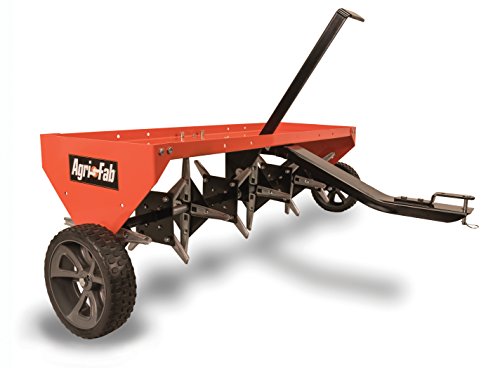
- Tow-behind plug aerators (e.g., Agri-Fab 45-0299 class, Brinly PA-40BH class): Usually 2.5 to 3.5 inches deep, with 32 to 48 hollow tines. Depth is controlled by added tray weight (concrete blocks or water jugs) and soil moisture. Needs 40-80 lbs of added weight on clay to achieve full depth.
- Spike aerators (rolling, shoe, or tow-behind star-tine): Usually 1 to 2.5 inches effective depth. Solid tines deflect on hard ground and rarely achieve advertised depth on compacted soil.
If your screwdriver test fails – you cannot push a screwdriver 3 inches into moist soil – you need a true hollow-tine plug aerator, not a spike model.
2. Working Width and Lawn-Size Suitability
Working width directly controls passes and time. Unlike mowing, aerators require overlapping passes on a 6 to 12 inch grid for effective coverage.
| Aerator Class | Working Width | Tines per Pass | Effective Coverage Rate | Best For Lawn Size |
|---|---|---|---|---|
| Manual Step Core (2-4 tines) | 6 – 8 inches | 2 – 4 | 300 – 500 sq ft per hour | Under 2,500 sq ft |
| Rolling Push Core / Spike Roller | 12 – 18 inches | 12 – 24 (spike) / 8 – 12 (hollow) | 1,500 – 2,500 sq ft per hour | 2,500 – 8,000 sq ft |
| Tow-Behind Plug (40-48 inch tray) | 40 – 48 inches | 32 – 48 hollow tines | 12,000 – 20,000 sq ft per hour at 2-3 mph | 8,000 sq ft – 2+ acres (requires lawn tractor) |
| Power / Walk-Behind Core Aerator (rental class) | 19 – 21 inches | 6 – 8 hollow tines, cam-driven | 4,000 – 6,000 sq ft per hour | 5,000 – 15,000 sq ft (single-day rental value) |
3. Effort, Terrain Handling, and Physical Demand
Manual step aerators like the Yard Butler ID-6C class or the Agri-Fab manual step type require lifting and stepping for every plug – roughly 400 to 600 stomps per 1,000 sq ft to achieve 2×4 inch spacing. They are excellent for precision around beds and on slopes, but fatiguing and slow. Look for models with a foot bar pad and ejector bar to clear soil from tines.
Rolling aerators reduce vertical effort but require sustained pushing, and they struggle on bumpy or sloped terrain where the drum bounces and tines skim. They also require more storage space and tend to clog in wet clay if tines lack ejection springs.
Tow-behind models eliminate physical effort but need a lawn tractor or ATV, turning radius clearance, and a relatively even surface. On slopes over 15% or yards with many trees, roots and tight turns make a tow-behind inefficient; a manual or powered walk-behind is more maneuverable. Hollow tines on all rolling designs need frequent clearing every 50 to 100 feet in moist soil to maintain depth.
Powered walk-behind aerators (the class rented at most equipment centers, including Ryan and Billy Goat type machines) are self-propelled and deliver the most consistent 2.5 to 4 inch cores with minimal operator force, but usually weigh 200+ lbs, cost significantly more to purchase, and are usually $80–$150 for a half-day rental.
Worked Calculation: How Long Will Aeration Actually Take?
Use this to match your lawn size to the right aerator class before you buy.
Formula: Total holes needed = (Lawn sq ft / (Hole spacing in feet squared))
For healthy relief of compaction, aim for 20 to 40 holes per sq ft – achieved with 2 to 4 inch spacing on center, which requires two to three offset passes.
Example: 6,000 sq ft lawn, target 3-inch spacing (0.25 ft):
- Holes per pass at 3-inch grid: 6,000 / (0.25 x 0.25) = 96,000 holes ideal, but a single pass with a typical aerator only covers 15-25% of that density.
- A 40-inch tow-behind with 32 tines spaced 6 inches apart creates about 1.3 holes per sq ft per pass. You need 3 passes (alternating direction) to reach ~4 holes per sq ft per pass x 3 = ~12 holes per sq ft, or more commonly you do 2 perpendicular passes for ~20+ holes per sq ft effective after overlap.
- Time: At 2.5 mph, a 40-inch tow-behind covers ~11,000 sq ft per pass in about 33 minutes including turns. Two passes = ~66 minutes plus weight adjustment and tine clearing time.
- By comparison, a manual step aerator at 400 sq ft per hour would need ~15 hours for the same 6,000 sq ft with double coverage. This is why manual tools are only realistic under 2,500 sq ft.
General rule: If your time budget is under 2 hours, choose a rolling or tow-behind/power class for any lawn over 5,000 sq ft. Under 2,000 sq ft, the manual step aerator is faster when you count transport and rental logistics.
Situation-to-Choice Matrix
Match your soil and yard to the design that will actually fix it.
| Your Situation | Recommended Aerator Class | Why |
|---|---|---|
| Heavy clay, fails screwdriver test, water pools | Hollow-tine plug – manual step (small yard) or tow-behind/power (large yard) | Only core removal opens macro-pores in dense clay |
| Sandy loam, moderate thatch under 1/2 inch, just needs overseed prep | Spike roller or hollow-tine roller acceptable | Spikes enough to improve seed-to-soil contact without compaction penalty |
| Thatch over 3/4 inch, spongy feel | Hollow-tine plug plus dethatching before aeration | Spikes cannot cut through thick thatch mat; cores pull through it |
| Small flat yard <2,000 sq ft, tight beds and slopes | Manual step core (e.g., Yard Butler ID-6C type) or fork-type hollow aerator | Precision and maneuverability outweigh speed |
| Large flat yard 1/2 acre+, owns lawn tractor | 48-inch tow-behind plug (Agri-Fab 45-0299 / Brinly PA-40BH class) | Width and weight produce consistent depth at low effort |
| Hilly or heavily rooted terrain | Manual step or powered walk-behind | Tow-behind drums skip on uneven ground and damage shallow roots |
What to Check Before and After Aerating
Moisture: Water deeply (about 1 inch) 24 hours before. Soil should form a loose ball that crumbles, not mud. If tines come up with mud and smear, it is too wet; if they cannot penetrate 2 inches, it is too dry.
Tine condition: Hollow tines should be sharpened or replaced when the cutting edge rounds over. A dull tine pushes rather than cuts and reduces core quality. For rolling models, check for clogged tines every few passes.
Weight: For tow-behind units, start with 50-60 lbs and increase until cores are 2.5+ inches. Adding too much weight on soft soil will bury the tray and scalp the lawn.
Aftercare: Leave cores to dry 3-5 days, then run a mower over them to break them up. This is the ideal window to overseed – seed falls into holes where moisture is retained – and apply 1/4 inch compost top-dressing. Avoid heavy traffic for a week.
Market ranges in 2026: manual step core aerators usually $30–$70, rolling push models usually $70–$150, tow-behind plug aerators usually $150–$300, and powered walk-behind machines usually $2,000–$4,000 to purchase. For most homeowners with compacted soil, a core plug aerator in the appropriate width class is the only type that delivers healthier grass beyond a single season.
Frequently Asked Questions
Is plug aeration better than spike aeration for compacted soil?
Yes. Plug aeration removes soil volume and creates lasting air channels. Spike aeration displaces soil and can increase sidewall compaction in clay, so holes close faster and roots remain restricted.
How deep should lawn aerator tines go?
Aim for 2.5 to 4 inches on compacted lawns. Less than 2 inches only affects thatch and the very surface, while deeper than 4 inches offers little extra benefit for most residential turf and increases effort or weight requirements significantly.
When should I aerate cool-season vs. warm-season grass?
Aerate cool-season grasses (fescue, bluegrass, rye) in early fall or early spring during active growth. Aerate warm-season grasses (Bermuda, zoysia, St. Augustine) in late spring to early summer when they are vigorously growing and can recover quickly.
Can I aerate a lawn with a lot of surface roots or irrigation heads?
Mark irrigation heads, shallow utility lines, and surface roots before aerating. Use a manual step aerator in those zones so you can control placement and avoid damage. Tow-behind and powered drum aerators can snag roots and hit heads on uneven ground.


