
The best portable massage tables for practitioners are the Earthlite Luna for a strong all-round balance, the Earthlite Harmony DX for frequent professional transport, and a lightweight 28-inch class table such as the Earthlite Spirit when carrying weight matters more than maximum width.
A portable table is a compromise between the load in your vehicle, the time needed to make a room safe and comfortable, and how stable the surface feels during treatment. The most useful comparison is not simply “lightest versus heaviest.” Look at folded size, working weight limit, padding thickness, usable width, and how much setup you must repeat each day.
As an Amazon Associate we earn from qualifying purchases at no extra cost to you.
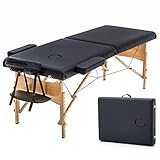

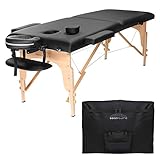
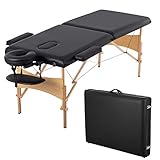
Our Top Picks
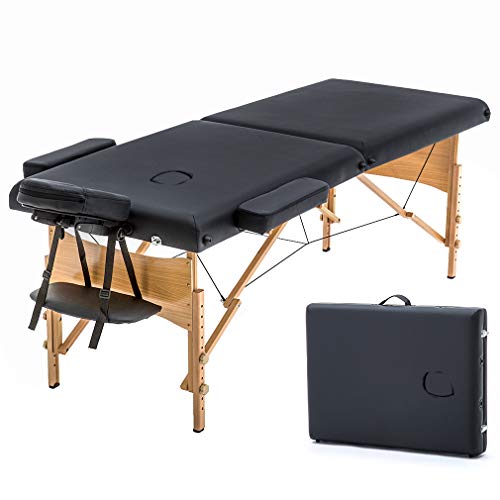 BestMassage Massage Bed Portable Folding Massage Table 24"73 x 24 x 33 inches29.1 poundsCheck on Amazon
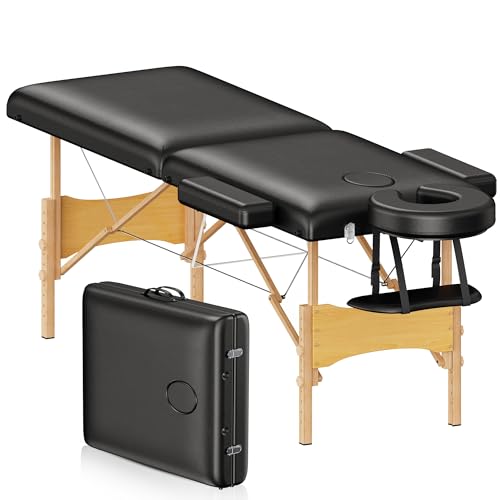 Brelley Massage Table Portable Wooden Lash Bed 2-Fold22.8 inch width80.3 x 30.7 x 34 inches30 PoundsCheck on Amazon
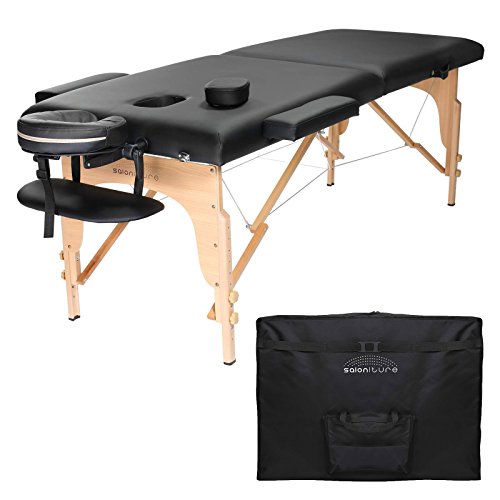 Saloniture Professional Portable Folding Massage Table with Carrying84 x 84 x 34.5 inches37.7 PoundsCheck on Amazon
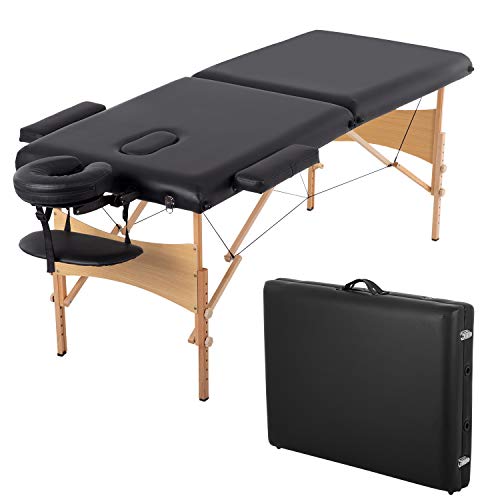 BestMassage Massage Bed Portable Folding Massage Table 28"2 Folding 28 inch wide73 x 28 x 34 inches32 poundsCheck on Amazon
Top 3 picks at a glance
Quick comparison of the best portable massage tables
| Table or class | Approx. table weight | Folded dimensions | Working weight limit | Padding | Typical setup | Best for |
|---|---|---|---|---|---|---|
| Earthlite Luna | About 32–35 lb | About 36 × 7–8 × 28 in | About 750 lb | 3 in high-density foam | 3–5 minutes | Mobile practitioners wanting a balanced professional table |
| Earthlite Harmony DX | About 34–38 lb | About 36 × 8 × 28 in | About 750 lb | 3 in foam, model-dependent upholstery | 3–5 minutes | Frequent travel with a stable, comfortable platform |
| Earthlite Spirit | About 27–30 lb | About 36 × 7–8 × 28 in | About 600 lb | About 2.5 in foam | 3–5 minutes | Practitioners who carry equipment upstairs or between appointments |
| Earthlite Classic Deluxe | About 35–40 lb | About 36 × 8 × 28 in | About 750 lb | 3 in foam | 4–6 minutes | Durability and comfort over minimum carry weight |
| 28-inch aluminum table class | About 20–30 lb | About 36 × 6–8 × 28 in | About 500–650 lb | 2–3 in foam | 3–5 minutes | Shorter journeys, smaller practitioners, and tight storage |
Manufacturers can publish different weights depending on whether the headrest, arm sling, face cradle, and carry case are included. Working weight limits also describe the combined client, accessories, and applied force—not merely the client’s body weight. Confirm the current configuration before buying.
Head-to-head: which table fits your working pattern?
Earthlite Luna: the best overall balance
The Luna is a sensible default for a practitioner who wants professional cushioning without moving a 40-pound table. Its roughly 3-inch foam gives more forgiveness for longer sessions than very light travel tables, while the wooden frame and cable support keep it suitable for normal massage pressure.
Choose it when your clients vary widely in size and you often work in homes, offices, or rented rooms. At around 32–35 pounds, it is manageable for most car-based mobile work, although it becomes tiring if carried several flights of stairs every day. The main trade-off is that a padded professional table is not truly compact: the folded package is usually close to 36 inches long and about 28 inches wide.
Earthlite Harmony DX: better for repeated professional use
The Harmony DX is aimed at practitioners who want a more substantial, stable feel while keeping a folding design. Depending on the version, it weighs in the mid-to-high 30-pound range and normally offers about 3 inches of cushioning with a working limit around 750 pounds.
It makes sense for a busy schedule where the table is opened and closed several times a week, especially when client comfort is a higher priority than saving the last few pounds. It is less attractive if you regularly use public transport or carry a table more than a short distance from your vehicle to the treatment space.
Earthlite Spirit: the portability pick
The Spirit targets the difficult middle ground between a basic lightweight table and a full professional platform. At roughly 27–30 pounds, it can save meaningful effort over a 35–40-pound model. That difference matters: carrying a 28-pound table up stairs requires about 20 percent less load than carrying a 35-pound table.
The compromise is typically a slightly lighter frame, a somewhat lower working limit, and less generous padding than heavier models. It is a strong choice for practitioners who work with mostly average-size clients, have limited vehicle space, or must move the table between rooms. Add a quality padded face cradle and a separate fitted table cover if the standard package does not provide enough support.
Earthlite Classic Deluxe: comfort-first portability
The Classic Deluxe is appropriate when “portable” means foldable rather than ultralight. Its extra mass can improve the impression of stability, and approximately 3-inch padding is more reassuring for clients who remain prone for extended treatments.
It is a better match for a home-based practitioner who occasionally travels than for someone carrying equipment to six different locations each day. The table may also need a larger vehicle compartment or more lifting assistance than a lighter aluminum model.
How to choose the right specifications
1. Start with the real carrying route
Measure the complete route, not just the vehicle. Include the distance from parking, stairs, narrow doorways, elevator dimensions, and whether you carry a stool, linens, bolster, oil, and a rolling case. A table advertised at 28 pounds can become a 40-pound lifting problem once accessories are attached.
For daily stairs or public transit, target approximately 25–30 pounds. For car-to-room work, 30–36 pounds is often a better comfort-to-durability range. Above 36–40 pounds, the table is usually best treated as occasional transport unless you have a cart or assistance.
2. Match width to the client population
A 28-inch table is easier to carry and fits more rooms. A 30-inch table gives clients noticeably more shoulder and hip room, particularly during prone work. A 31-inch table can improve comfort further but increases reach requirements for the practitioner and may be awkward in narrow treatment spaces.
Do not select width solely by client size. If you frequently perform deep work, a very wide surface may force you to lean farther across the client, increasing strain on your back and shoulders. Many practitioners find 28–30 inches a practical mobile range.
3. Treat padding thickness as usable comfort, not a luxury
Two tables with identical dimensions can feel very different. Around 2 inches of foam can be adequate for short sessions, but approximately 3 inches of firm, high-density foam generally provides better pressure distribution for 60–90 minute treatments. Softer foam is not automatically more comfortable: it can allow the client to sink, bottom out, or lose stable positioning.
A face cradle is equally important. A well-adjusted cradle with a supportive cushion often improves comfort more than adding another half-inch of foam to the table. Check that the table accepts the face-rest style and that replacement cushions are available.
4. Use the working limit with a safety margin
Calculate the expected load as client weight plus accessories, then leave room for movement and downward treatment force. For example, a 220-pound client, 10 pounds of blankets and bolsters, and an estimated 100 pounds of intermittent practitioner force produces a working demand of:
220 + 10 + 100 = 330 pounds.
A table rated for 500 pounds technically exceeds that demand, but a 750-pound-rated model provides a wider margin for heavier clients, dynamic movement, and long-term wear. Never interpret the rating as permission to exceed the manufacturer’s instructions or use the table for activities such as standing or jumping.
Decision matrix for common practitioners
| Your situation | Prioritize | Recommended direction | Accept this compromise |
|---|---|---|---|
| Daily stairs or public transportation | Under 30 lb, compact carry case | Earthlite Spirit or a 28-inch lightweight class table | Less padding and lower weight capacity |
| Car-based mobile practice | 3-inch padding and 700+ lb rating | Earthlite Luna or Harmony DX | About 32–38 lb to carry |
| Mostly home studio, occasional travel | Stability and client comfort | Earthlite Classic Deluxe or Harmony DX | Bulkier folded package |
| Small rooms and shorter clients | 28-inch width and short setup footprint | Lightweight 28-inch class table | Less elbow room for larger clients |
| Broad client range or heavier clients | 30–31-inch width and 750 lb rating | Luna, Harmony DX, or comparable professional table | More lifting effort and storage space |
Setup time: the overlooked portability specification
A table that weighs two pounds less is not necessarily faster to use. Look for leg height adjusters that are easy to reach, smooth hinges, secure locking hardware, and a headrest that can be fitted without tools. Practice the sequence before using it with a client:
- Place the folded table with the hinge side clear of walls and furniture.
- Open it fully and check that both halves are flat and the center cables are correctly positioned.
- Set all leg heights before attaching the face cradle or arm sling.
- Press down on each corner and inspect the locks; do not rely only on visual alignment.
- Fit the face cradle, cover the surface, and place the bolster where it will not become a trip hazard.
Once familiar, a quality folding table should take roughly three to six minutes to prepare. Add several minutes for linens, sanitation, and room positioning. A consistent setup routine reduces rushed height adjustments, which are a common cause of wobble and uneven posture.
What to budget
Portable professional tables commonly range from about $250–$450 for basic lightweight models, $400–$650 for established mid-range tables, and $650–$900 or more for premium construction and upholstery options. Also budget for a fitted case, face-cradle cushion, sheets, bolster, and possibly a folding cart. A table that costs less but requires immediate upgrades may not be the cheaper working solution.
Frequently asked questions
What accessories should I check before buying a portable massage table?
Check whether the package includes the headrest, arm sling, face cradle, and carry case. Manufacturers may give different table weights depending on which accessories are included, so compare the same configuration. Also check that the table accepts the face-rest style you want and that replacement cushions are available.
How can I make sure a table will fit in my vehicle?
Compare your available storage space with the table’s folded dimensions, not just its weight. The article describes many professional tables as about 36 inches long and 28 inches wide when folded. Also account for accessories and the carrying case, and consider whether the vehicle compartment leaves enough room to load and remove the table.
Is a wider massage table always more comfortable for clients?
No; a wider table can give clients more shoulder and hip room, but it can also make the practitioner reach farther across the client. The article identifies 28–30 inches as a practical mobile range for many practitioners. Consider your client population, treatment space, and working posture together.
Does thicker foam automatically make a table more comfortable?
No; foam quality and support matter as well as thickness. The article says softer foam can let a client sink, bottom out, or lose stable positioning, while firm, high-density foam around 3 inches generally offers better pressure distribution for longer treatments. A supportive, well-adjusted face cradle also contributes to comfort.
What should I check to make setup easier?
Look for easy-to-reach leg height adjusters, smooth hinges, secure locking hardware, and a headrest that fits without tools. The article also recommends practicing the setup sequence before using the table with a client. A lighter table is not necessarily faster to set up, so consider these features alongside carrying weight.
Final recommendation
Choose the Earthlite Luna when you want the safest all-purpose balance of weight, padding, capacity, and setup. Choose the Harmony DX if repeated professional use and client comfort outweigh a few extra pounds. Choose the Spirit or another 28-inch lightweight table when stairs, transit, and storage dominate your decision. Whichever model you select, prioritize a working limit with margin, approximately 3 inches of supportive foam, and a folded size that you can lift through your actual route—not merely fit inside your vehicle.


