
The best downriggers depend on your fishing depth, boat power, water type, and how often you want to control the cable by hand: manual models offer simplicity and value, while electric downriggers save effort and provide more repeatable depth control.
As an Amazon Associate we earn from qualifying purchases at no extra cost to you.


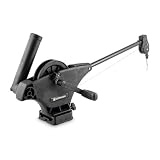

Our Top Picks
 Cannon 1902305 Magnum 10 Electric DownriggerOne Size15.5 x 10.5 x 24 inches22.5 poundsCheck on Amazon
 Cannon Uni-Troll 5 Manual Downrigger for Boat FishingOne Size27 x 15 x 7 inches10.5 PoundsCheck on Amazon


Top 3 picks at a glance
Best Downriggers at a Glance
| Fishing situation | Best choice | Why | Typical specification target |
|---|---|---|---|
| Occasional freshwater trolling | Manual downrigger | Lower cost, no battery wiring, fewer electrical failure points | 150–200 ft cable, 8–10 lb weight capacity |
| Frequent salmon, trout, or walleye trips | Electric downrigger | Faster retrieval and less fatigue when resetting multiple lines | 200–250 ft cable, 10–15 lb weight capacity |
| Deep freshwater or offshore fishing | Heavy-duty electric model | Handles deeper cable, heavier weights, and repeated use | 250–400 ft cable, 15–20 lb weight capacity |
| Saltwater use | Marine-grade electric or manual model | Better corrosion resistance and stronger hardware | Stainless cable or braid system, sealed electronics, sacrificial anode provisions |
Manual vs. Electric Downriggers
Manual downriggers
A manual downrigger uses a crank and spool to lower and retrieve the trolling weight. Models such as the Cannon Uni-Troll 10 and Scotty 1050 Depthmaster are representative choices for anglers who want a compact, mechanically simple setup.
The main advantage is reliability without a dedicated electrical circuit. A manual unit can be installed on a small boat, moved between mounting plates, and used even when the boat battery is weak. It also gives you direct control over the retrieval speed.
The trade-off becomes obvious when fishing 100 feet or deeper. Retrieving a heavy weight repeatedly takes time and physical effort, especially when one angler is steering, netting fish, and managing other rods. Manual models are best when you fish one or two lines, make relatively few depth changes, or trailer a small boat.
Electric downriggers
Electric units use a motor to retrieve the weight and commonly add features such as automatic raise, programmable depth cycling, depth counters, or integrated fish-finding connectivity. The Cannon Magnum 10 STX, Cannon Digi-Troll 5, and Scotty Depthpower 1106B are examples of established electric downrigger families.
Electric retrieval is particularly useful when targeting salmon, lake trout, striped bass, or offshore species where the lure may run well below 100 feet. A good electric model should raise the weight quickly, stop at a repeatable depth, and include an accessible manual override or clutch adjustment.
Electric does not automatically mean better. The motor draws current, installation takes more planning, and exposed connectors can corrode in saltwater. Confirm that your boat has suitable wiring, circuit protection, and enough battery capacity before choosing one.
How to Choose the Right Specifications
Cable length
Cable length should exceed your intended fishing depth by a useful margin. A practical rule is to buy at least 25 percent more cable than your deepest normal setting. That leaves room for the cable angle caused by boat movement, current, and blowback.
For example, if you normally fish at 160 feet, a 200-foot cable is a sensible minimum. If you regularly fish at 220 feet, choose a 250-foot unit rather than operating a 200-foot spool at its limit. Offshore anglers may need 300–400 feet, but longer cable increases drag and makes retrieval slower.
Weight capacity
Downrigger weights commonly range from 6 to 20 pounds. Heavier weights reach depth more efficiently because they reduce blowback, but they place greater load on the boom, clutch, mounting plate, and cable.
For inland lakes with modest trolling speeds, an 8–10 pound weight is often adequate. Strong current, deep water, or faster trolling may justify 12–15 pounds. Use a 15–20 pound system only when the manufacturer rates the boom, spool, and mount for that load.
Do not select a weight solely by cable capacity. The boat mount is equally important. A clamp-on mount designed for light freshwater use may flex or loosen under the repeated shock of a heavy offshore weight.
Depth control
A basic depth counter tells you how much cable has left the spool; it does not necessarily tell you the lure’s exact depth. Blowback means the weight and lure trail behind the boat at an angle, so 100 feet of released cable may put the weight shallower than 100 feet.
Digital depth control and programmable cycling are useful when you repeatedly fish a specific contour. However, the displayed value still depends on cable angle and calibration. Use your fish finder to verify where the weight and lure are actually tracking, then record the effective cable amount for your boat speed and lure setup.
Mounting and boom design
Check the mounting pattern before buying. Many downriggers use a fixed base plate that remains bolted to the boat while the main unit detaches for storage. This is more secure than repeatedly clamping a heavy unit to a thin gunwale.
- Clamp mounts: Convenient for rental boats and temporary use, but inspect for flex and slipping.
- Swivel bases: Make it easier to swing the boom over the water and bring the weight aboard.
- Fixed bases: Best for permanent installations and heavy weights.
- Telescoping booms: Useful when you need clearance around a wide stern or multiple rods.
- Short booms: Better for compact boats where a long boom could interfere with steering or docking.
Mount the downrigger where the boom can clear the outboard, swim platform, rails, and neighboring rods. Reinforce thin fiberglass or aluminum mounting surfaces with a backing plate and use marine sealant around fasteners.
Freshwater and Saltwater Requirements
Freshwater
Freshwater anglers can usually prioritize ergonomics, cable length, and price. A manual downrigger is often enough for seasonal trout or walleye trolling. Stainless-steel cable is common, although braid can reduce electrical and magnetic issues in some fishing applications and may be easier to handle.
Rinse the unit after every trip, keep the spool free of tangled cable, and lubricate moving parts according to the manufacturer’s schedule. Freshwater corrosion is slower, not impossible; road salt, fertilizer runoff, and damp storage can still damage hardware.
Saltwater
Saltwater demands more than a corrosion-resistant label. Look for stainless or marine-grade hardware, sealed switches and connectors, protected motor housings, UV-resistant wiring, and a design that allows thorough freshwater rinsing.
After saltwater use, disconnect power, rinse the downrigger and mounting hardware with low-pressure fresh water, and allow it to dry before storage. Do not direct a high-pressure spray at seals or electrical connectors. Inspect cable termination points, crimps, swivels, and the boom pivot because these areas often show corrosion first.
For offshore use, replace questionable cable rather than waiting for visible strand failure. A cable under load can store substantial energy, and a weakened termination is a safety problem as well as a tackle problem.
A Practical Selection Method
- Set your maximum working depth. Add at least 25 percent to determine the minimum cable length.
- Choose the weight. Start around 8–10 pounds for calm inland water and move toward 12–20 pounds for current, depth, or higher trolling speeds.
- Decide how often you retrieve. Choose manual for occasional depth changes; choose electric if you will reset several lines throughout the day.
- Inspect the mounting location. Measure available clearance and confirm that the base or clamp can handle the full weight and boom leverage.
- Match the electrical system. For an electric unit, use the specified fuse or breaker, marine-grade tinned wire, and a dedicated circuit where practical.
- Plan maintenance. Saltwater users should favor easy-to-rinse construction and accessible replacement parts over unnecessary electronic features.
Worked Power-Budget Example for an Electric Model
Suppose an electric downrigger draws 20 amps while lifting and takes 45 seconds to retrieve a weight. The approximate energy used per lift is:
20 amps × 45 seconds ÷ 3,600 = 0.25 amp-hours.
If you retrieve the weight 40 times during a trip, the motor uses approximately 10 amp-hours. Add power for fish-finder electronics, pumps, starting reserve, cold temperatures, and wiring losses, and a practical plan might reserve 20–30 amp-hours rather than treating the calculated 10 amp-hours as the entire battery requirement.
This calculation is only an estimate because motor current changes with weight, depth, boat motion, and voltage. It illustrates why a healthy marine battery is normally sufficient for ordinary use, while a dedicated battery or battery bank becomes more attractive for multiple electric downriggers and long offshore trips.
Price and Value Expectations
Basic manual downriggers commonly fall around $150–$350 per unit. Better-equipped manual models and compact electric units often cost about $350–$700. Heavy-duty electric systems with digital controls, deeper cable capacity, or networking features commonly range from $700–$1,500 or more.
Budget for the complete installation rather than the downrigger alone: base plates, swivel mounts, cable, release clips, weights, wiring, circuit protection, and replacement hardware can materially change the final cost.
Frequently asked questions
Do I need a dedicated battery or circuit for an electric downrigger?
Yes, an electric downrigger should have suitable wiring, circuit protection, and enough battery capacity. Use the specified fuse or breaker, marine-grade tinned wire, and a dedicated circuit where practical. A motor drawing 20 amps for 45 seconds uses approximately 0.25 amp-hours per lift, but battery planning should also include fish-finder electronics, pumps, starting reserve, cold temperatures, and wiring losses.
How much extra cable should I buy beyond my usual fishing depth?
Buy at least 25 percent more cable than your deepest normal setting. This provides useful margin for cable angle caused by boat movement, current, and blowback. For example, fishing at 160 feet calls for a 200-foot cable as a sensible minimum, while regularly fishing at 220 feet favors a 250-foot unit instead of operating a 200-foot spool at its limit.
Does the depth counter show the exact depth of my lure?
No, a depth counter usually shows how much cable has left the spool rather than the lure’s exact depth. Blowback causes the weight and lure to trail behind the boat at an angle, so 100 feet of released cable may place the weight shallower than 100 feet. Use the fish finder to verify tracking depth and account for boat speed and lure setup.
What should I check before installing a downrigger on my boat?
Before installation, confirm the mounting pattern, available clearance, and whether the base or clamp can handle the full weight and boom leverage. The boom should clear the outboard, swim platform, rails, and neighboring rods. Reinforce thin fiberglass or aluminum surfaces with a backing plate, and use marine sealant around fasteners. A fixed base is generally more secure for permanent installations and heavy weights.
How should I care for a downrigger after saltwater fishing?
After saltwater use, disconnect power, rinse the downrigger and mounting hardware with low-pressure fresh water, and let them dry before storage. Avoid high-pressure spray at seals or electrical connectors. Inspect cable termination points, crimps, swivels, and the boom pivot for corrosion. Replace questionable cable rather than waiting for visible strand failure, because a weakened termination can create a safety problem.
Final Recommendation
Choose a manual downrigger such as the Cannon Uni-Troll 10 or a comparable Scotty manual model if you fish freshwater occasionally and value low maintenance. Choose an electric model such as the Cannon Magnum 10 STX or Scotty Depthpower 1106B when repeated retrievals, deeper water, or multiple rods make cranking inconvenient. For saltwater, prioritize sealed electrical components, strong mounting hardware, corrosion-resistant fasteners, and an easy rinse-and-inspect routine before adding advanced depth features.


