
The best IEM under 10 dollars for gaming is the KBEAR K01 PRO, because it is one of the few listings at this tier with a real 10 mm dynamic driver, a detachable cable and a choice between a mic and no-mic version. The runner-up is the BlueFire wired gaming earbuds with a detachable mic, which is the better choice if you want an all-in-one headset replacement and do not plan to upgrade the cable later. Everything below sits in the entry-level tier, so the goal is to explain what you really get at this price, what you must give up, and which one fits your PC, console or phone.
A quick honest note before the list: true in-ear monitors with detachable cables and proper tuning usually start a little above the 10 dollar line. Several listings in this guide sit right at that mark and a few slip just over it depending on the colour, the mic option and the day, so check the current price before you buy. Where a model is clearly above the line, it is placed in the “Also Consider” section as a stretch pick rather than sold as a bargain.
As an Amazon Associate we earn from qualifying purchases at no extra cost to you.
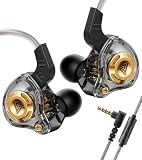


Our Top Picks
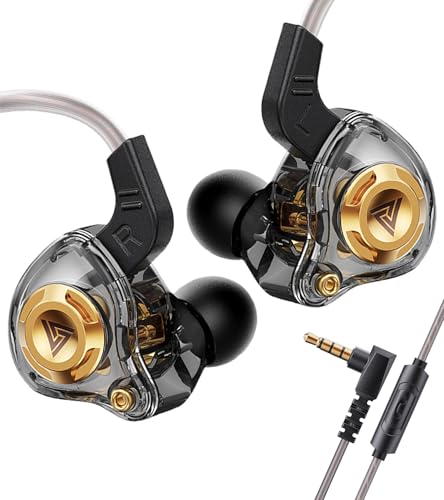

Top 3 picks at a glance
Top Picks at a Glance
| Product | Best for | Key specs (from the listing) | Watch for | Price tier |
|---|---|---|---|---|
| KBEAR K01 PRO | Best overall | 1 dynamic driver, 10 mm; detachable cable; mic and no-mic versions | Pick the mic version on purpose | Entry-level |
| BlueFire Wired Gaming Earbuds | Best with mic | 3.5 mm plug; detachable mic; volume control; PC, PS5 and phone | Inline controls add cable weight | Entry-level |
| QKZ AK6 SRS (Jacuate listing) | Best bass-leaning budget pick | 11 mm dynamic driver; mic; OFC cable | Brand-name reseller listing, read the title | Entry-level |
| QKZ ENZO (Piluyaa listing) | Best for music plus games | 1 dynamic driver, 11 mm; wired | Mic status not stated in the title | Entry-level |
| Yeabomy Ak3file | Cheapest real driver | 1 dynamic driver, 10 mm; wired | Several variants, check mic option | Entry-level |
| HOTOIQ Wired Gaming Earbuds | Best for console | 16 ohm impedance; 3.5 mm; mic; volume control; PS5, PS4, Xbox, PC | Sensitivity not listed | Entry-level |
| KZ Dawn | Best no-mic listening | 3.5 mm; noise isolating; no mic | Needs a separate mic if you talk | Entry-level |
What an IEM Does for Gaming at This Price
An in-ear monitor sits inside the ear canal and seals it with a silicone or foam tip. That seal does two jobs. It blocks a good share of room noise, so quiet cues such as footsteps and reload clicks are easier to pick out at a lower volume. It also puts the speaker closer to the eardrum, which helps imaging, the sense of where a sound is coming from. Both matter more for positional shooters than the headline bass number ever will.
The trade-off is that most IEMs are made for music and have no microphone. At the entry-level tier the picture splits in two: gaming-branded earbuds that include an inline or detachable mic, and music-style IEMs that leave the mic out. If you talk in voice chat, either buy the mic version, or plan on a clip-on mic or a mic cable later. If you only listen, a no-mic model with a detachable cable is often the better sound for the money.
There is also a limit worth stating plainly. At this tier you are not buying a precisely tuned instrument. You are buying a single dynamic driver in a plastic shell, and the main differences are driver size, tip fit, cable quality and whether a mic is attached. That is fine for gaming, where isolation and fit decide most of what you hear.
1. KBEAR K01 PRO: Best Overall
- Driver: 1 dynamic driver, 10 mm, with a PET dual-magnetic design noted in one variant title
- Cable: detachable, with mic and no-mic versions sold separately
- Connector: 3.5 mm plug
- Impedance and sensitivity: not listed
- Mic: the variant matters, so read the colour and mic option before ordering
Best for: a first IEM for a PC or console controller, where you want a real driver and a cable you can swap later. Skip if: you need a high-end microphone for streaming, because an inline mic on any earbud is only good enough for party chat.
The K01 PRO earns the top slot for a structural reason, not a sound claim. Many cheap earbuds have a cable that is permanently attached, so when the cable fails the whole earphone is finished. A detachable cable means the fragile part can be replaced. The listing also offers a mic version and a no-mic version, which lets you match the product to how you really play.
For gaming, the mic version is the natural pick if you use a controller 3.5 mm jack or a laptop combined jack. A no-mic version only makes sense if you already own a desk mic or plan to buy a mic cable. Because the two variants share a name, double-check the line that says “with mic” or “without mic” in the selector.
Pros:
- Detachable cable is rare at this tier
- Mic and no-mic versions let you choose
- 10 mm dynamic driver is a conventional, easy-to-drive design
- Works from a phone, controller or PC without extra hardware
Cons:
- Connector type for the detachable cable is not spelled out in the short title
- Exact tuning and sensitivity are not listed
2. BlueFire Wired Gaming Earbuds With Mic: Best With Mic
- Plug: 3.5 mm
- Mic: detachable mic listed in the title
- Controls: volume control listed
- Compatibility: PC, PS5 and phone per the listing
- Driver size and impedance: not listed in the title
Best for: players who want to plug in and talk without buying anything else. Skip if: you want a detachable audio cable you can upgrade, because the listing highlights the mic being detachable rather than the audio cable.
This is the closest thing in the list to a cheap headset replacement. A detachable mic is a useful design because you can leave it off when you only want to listen. The inline volume control is handy on a controller, where there is no on-screen slider to reach for.
The one thing to remember with any wired mic earbud on a console is the plug standard. Most phones, controllers and laptops use the CTIA wiring for a four-pole plug, which this kind of product is built around. If a PC has separate green and pink jacks, a single four-pole plug will give you sound but no mic, and you need a splitter or a USB audio adapter.
Pros:
- Mic included and detachable
- Volume control on the cable
- Broad device compatibility listed
Cons:
- Driver and impedance details are thin
- Inline hardware makes the cable heavier
3. QKZ AK6 SRS (Jacuate Listing): Best Bass-Leaning Budget Pick
- Driver: 11 mm dynamic driver per the listing
- Cable: OFC cable, with microphone version described
- Connector: 3.5 mm presumed from the wired earphone description; confirm in the selector
- Impedance and sensitivity: not listed
Best for: someone who likes a fuller, warmer sound for action games and music. Skip if: you play competitive shooters and want a flat balance, because a larger driver in a budget shell often leans toward bass.
This listing is sold under a reseller name and the product line is QKZ. That naming gap is common at the bottom of the market. The advice is simple: buy the exact variant whose title matches what you want, keep the packaging, and do not assume a similarly named listing is the same product.
The 11 mm driver is the headline. Larger drivers can move more air, which many people hear as more weight in the low end. For footstep clarity you may want to lower the bass, which you can do in a PC equalizer, and a bass-leaning IEM with a seal tends to reward that.
Pros:
- 11 mm dynamic driver
- Mic and OFC cable named in the listing
- Good for players who prefer a warm sound
Cons:
- Reseller naming can confuse
- Likely bass-heavy for competitive play without EQ
4. QKZ ENZO (Piluyaa Listing): Best for Music Plus Games
- Driver: 1 dynamic driver, 11 mm, described as new in the listing
- Design: wired, marketed for video, music and gaming
- Mic: not stated in the short title; a related Piluyaa line lists a detachable cable and mic versions
- Impedance and sensitivity: not listed
Best for: a single pair for movies, music and single-player games. Skip if: you need voice chat out of the box. Check the variant for a mic before you order.
Where the AK6 SRS leans on being a gaming product, the ENZO is described as an all-rounder. That difference is mostly marketing, and in practice the two share a similar driver size. If you cannot decide, buy the one whose listing clearly includes or excludes the mic you need.
Pros:
- 11 mm dynamic driver
- Marketed for both music and games
Cons:
- Mic status not obvious
- Limited specification detail
5. Yeabomy Ak3file: Cheapest Real Driver
- Driver: 1 dynamic driver, 10 mm
- Design: wired in-ear, described as an IEM for music, gaming and video calling
- Variants: more than one listing exists, including a version with a mic
- Impedance and sensitivity: not listed
Best for: the lowest-risk way to try the in-ear format on a controller or laptop. Skip if: you want a detachable cable, because the title does not claim one.
If you are curious whether you will even like an in-ear fit, this is the cheapest way in. The risk is low, and the main lesson you learn is which tip size seals in your ear. Once you know that, a better IEM becomes a far safer purchase.
Pros:
- One of the lowest-cost options with a dynamic driver
- Multiple variants including a mic version
Cons:
- No detachable cable claimed
- Thin specification sheet
6. HOTOIQ Wired Gaming Earbuds With Mic: Best for Console
- Impedance: 16 ohm, listed as low impedance
- Plug: 3.5 mm
- Mic and controls: microphone and volume control listed
- Compatibility: PS5, PS4, Xbox, PC and phone per the listing
Best for: a controller-first setup where the 3.5 mm jack is the only audio port. Skip if: your controller’s jack is weak and you need extra gain. Low impedance is easy to drive but it does not make a quiet source louder than its output allows.
A 16 ohm rating is useful because it tells you the earphone can reach a comfortable level from a phone or controller jack without an amplifier. It does not tell you how sensitive the driver is, and sensitivity is the other half of the loudness equation. The worked example later in this guide shows how the two numbers fit together.
Pros:
- Impedance is stated
- Console compatibility named
- Mic and volume control included
Cons:
- Sensitivity and driver size are not listed
- Entry-level build
7. KZ Dawn: Best No-Mic Listening
- Plug: 3.5 mm
- Mic: none, per the title
- Design: noise isolating wired earbuds, described for studio, gaming and all-day wear
- Driver and impedance: not listed
Best for: a listening-only pair for single-player games, or for players who already have a desk mic. Skip if: you want voice chat without buying anything else.
KZ is a name many people in the IEM hobby recognise, and the Dawn is pitched at gaming and long wear rather than studio precision. Its main appeal is simple: no mic means no inline module, so the cable is lighter. That helps comfort on a long session.
Pros:
- Lighter cable without a mic module
- Noise isolation claimed
- Recognisable IEM brand
Cons:
- No mic
- Specification sheet is short
Also Consider
Sony MDR-EX15AP
A familiar wired earbud with a mic and a 3.5 mm plug. It is a safe, plain choice if you value a recognised name over a detachable cable. The listing does not provide driver details here, so treat it as a dependable everyday pair, not a tuned gaming product.
LUDOS Omnitone
A wired earbud with a microphone, a 3.5 mm jack and a stated five-year warranty. The warranty is the selling point: if the cable fails early, the maker says it will be covered. It is aimed at calls and school use as much as gaming.
UGREEN USB-C to 3.5 mm Audio Adapter
If your laptop, tablet or phone has lost its headphone jack, this small adapter turns a USB-C port into a 3.5 mm output. The listing names 24-bit and 96 kHz support. It is not an IEM, but it solves the common problem of cheap earbuds with nothing to plug into.
KZ EDX Lite (stretch pick)
A step up for people who want a detachable 0.75 mm cable and a conventional in-ear shape. This listing is the no-mic version, so you would add a mic cable or desk mic if you talk. It often sits a little above the 10 dollar line, which is why it appears here as a stretch pick, not a main entry.
Cheap IEM Math: Loudness, Impedance and Your Source
Here is a worked example, using an illustrative earphone, not a specific listing. Assume an IEM rated 16 ohm with a sensitivity of 100 dB per milliwatt. Two numbers decide how loud it gets: how much voltage the source supplies, and how much power that voltage delivers into the earphone.
Power into the earphone is voltage squared divided by impedance. At 0.25 volts RMS, which is a modest level from a phone jack, the power is 0.0625 divided by 16, or about 3.9 milliwatts. Loudness in decibels is the sensitivity plus 10 times the base-10 log of the power in milliwatts. That gives 100 plus 5.9, or about 106 dB. That is far louder than anyone should listen for long.
The takeaway is practical. Efficient, low-impedance earbuds do not need an amplifier on a normal source, so a 16 ohm model like the HOTOIQ will reach plenty of volume from a controller. The real risk at this tier is listening too loudly for too long, not a lack of power. A common general guideline from workplace hearing-safety bodies is to keep long-session listening at or below roughly 85 dB. That is a general moderation guideline, not medical advice. If you need the volume near maximum to hear footsteps, the fit is probably not sealing, so try a bigger tip before turning it up.
Decision Matrix: Which Cheap IEM Fits Your Setup?
| Your situation | Pick | Why |
|---|---|---|
| Console controller, need chat | HOTOIQ or BlueFire | Mic and volume control on the cable |
| PC with a desk mic already | KZ Dawn or KBEAR K01 PRO (no mic) | No mic module, lighter cable |
| Want a cable you can swap | KBEAR K01 PRO | Detachable cable |
| Warm sound for story games | QKZ AK6 SRS or ENZO | 11 mm dynamic drivers |
| Laptop without a headphone jack | Any pick plus a USB-C adapter | Adapter restores the 3.5 mm output |
| First time trying IEMs | Yeabomy Ak3file | Low-risk way to learn your tip size |
How We Chose
This guide is research-based. We did not personally use these products. We started from the products available in the store connected to this site, kept only wired in-ear models and the accessories that make them usable, and read each listing for what it actually states: driver size, connector, mic option, impedance and compatibility. Where a listing did not give a specification we wrote that it is not listed instead of guessing. We also limited the main picks to at most two per brand and left out items that were unavailable or had no stated price tier. Treat the notes on sound as general expectations for each driver type and size, not measurements.
Buying Guide
Decide on the mic first
If you speak in voice chat, choose a model that names a mic in its title and check the variant selector. If you already own a desk mic or a headset, a no-mic IEM keeps the cable light and usually costs the same or less.
Check the plug and the port
A four-pole 3.5 mm plug works on phones, most controllers and laptops. A desktop with separate headphone and mic jacks needs a splitter. A device with only USB-C needs a USB-C to 3.5 mm adapter, and a few cheap USB-C earbuds are built with their own DAC.
Look for a detachable cable
The cable is the part that fails first. A detachable cable lets you replace it. Common connector types are 0.78 mm 2-pin and 0.75 mm 2-pin, which look similar but are not always interchangeable, so confirm the match before buying a spare.
Impedance and sensitivity
Under about 32 ohm is easy to drive from any phone, controller or laptop. A listing that states impedance but not sensitivity is only half-informative, so assume it is easy to drive, then raise the volume slowly.
Fit and eartips
Seal decides isolation and bass. Most packs include small, medium and large tips. If you hear thin sound or a lot of room noise, move up a tip size. Foam tips seal best but wear out sooner. Long sessions are more comfortable with the smallest tip that still seals.
Do not pay for driver count
At this tier a bigger number of drivers is not a reliable sign of quality. A single well-implemented dynamic driver is usually the safer purchase than a crowded budget multi-driver design.
Frequently Asked Questions
Are cheap IEMs good enough for gaming?
Yes, for most casual and mid-level play. The main benefits are isolation and a close fit, and a sealed budget IEM delivers both. You give up refinement and build quality, not the ability to hear footsteps.
Do IEMs under 10 dollars have a microphone?
Some do, and many do not. Gaming-branded earbuds such as the BlueFire and HOTOIQ list a mic, while music-style models like the KZ Dawn do not. Always check the variant title for “with mic” or “no mic”.
Can I add a mic to an IEM that does not have one?
Yes. Use a mic cable if the IEM has detachable connectors, a clip-on mic, or a separate headset-style mic. A desk mic works too. For a non-detachable earbud, a clip-on or desk mic is the only simple option.
Do I need a DAC or amplifier for a cheap IEM?
No. Low-impedance earbuds run well from any phone, controller or laptop. A USB-C adapter only matters when your device has no headphone jack, and then it simply restores the output.
Will IEMs work on PS5 and Xbox?
Wired IEMs with a four-pole 3.5 mm plug work in the controller jack. Chat support depends on the console and the plug wiring, and some earbuds with a mic need the controller’s headset port rather than a USB adapter. HOTOIQ lists PS5, PS4 and Xbox compatibility.
How long do cheap IEMs last?
It varies widely. The cable and the mic module are the usual failure points, which is why detachable cables and warranties count for more than the headline driver size. Coil the cable loosely and avoid pulling on it.
Is a bass-heavy IEM good for FPS games?
It can mask footsteps, so a flatter sound is safer for competitive play. If you own a bass-leaning model, lower the low frequencies in a PC equalizer rather than raising the overall volume.
Which One Should You Buy?
Buy the KBEAR K01 PRO mic version if you want the safest all-round entry-level IEM, since it combines a real dynamic driver with a detachable cable. Choose the BlueFire or HOTOIQ if your main need is plug-and-play voice chat on a console. Choose the KZ Dawn if you only listen and already own a mic. Pick the QKZ AK6 SRS or ENZO if you prefer a warmer sound, and the Yeabomy if you simply want to try the format at the lowest risk. If your budget can stretch a little, the KZ EDX Lite is the logical next step.
Sources
- Manufacturer and seller product listings for each model named above
- KZ, KBEAR and QKZ brand product pages
- CTIA and OMTP four-pole headset wiring conventions
- NIOSH guidance on occupational noise exposure
Last updated: October 2026
Related guides
More from Amazon
Programs that pair well with the guide above. Offers and eligibility are set by Amazon and may change.
Free shipping on eligible items, Prime Video and more. Eligible new members can start with a free trial.
Start a Prime free trialAd-free music streaming. Eligible new subscribers can start with a free trial.
Try Music Unlimited freeA Prime membership for ages 18-24 with a trial period. Eligibility is set by Amazon.
See Prime for Young AdultsAudiobooks and podcasts to listen to on the go. Eligible new members can start with a free trial.
Try Audible freeAs an Amazon Associate we earn from qualifying purchases.


