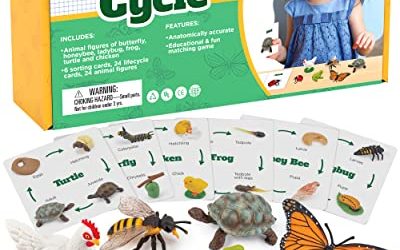
A child who asks for a toy booklouse is really asking to meet one of the smallest insects in the house, and that is where the shopping gets honest. No standalone toy booklouse exists on Amazon, because booklice are tiny barklice that almost never appear by name on a toy listing, so a search for the exact word comes back empty. The sensible move is to buy the closest match instead: a bug book that names small insects plainly, a big illustrated reference, or a catching kit with a magnifier that lets a child find and study real tiny insects safely.
This guide is for parents and teachers of curious children aged three to twelve who want a small, safe way into insect science without buying a pest-control product by mistake. Every pick below was chosen from the names and specifications printed on its Amazon product page, and each one earns its place by showing small insects clearly, even though none of them is a booklouse on its own.
Quick Picks
As an Amazon Associate we earn from qualifying purchases.
| Product | Best for | Key spec from title |
|---|---|---|
| On Beyond Bugs! All About Insects | A rhyming first bug book for a preschooler | Cat in the Hat’s Learning Library |
| Bugs Are Insects | A short read-aloud about what makes an insect | Let’s-Read-and-Find-Out Science 1 |
| Nature Bound Ultimate Critter Box | Catching and releasing backyard bugs outdoors | Net, tweezers, and magnifier included |
| Ultimate Bugopedia | An older child who wants one big bug reference | Most complete bug reference ever |
| The Fascinating Bug Book for Kids | A fact-hungry reader aged eight to twelve | 500 startling facts |
How to Choose
Accept the stand-in, then judge it on its own
Since no toy maker sells a booklouse on its own, judge every candidate by what a child can actually see, hold, or read. A good stand-in shows small insects clearly, with body parts such as legs, wings, and antennae, or with a magnifier that makes a real tiny insect visible. Read the listing for the exact contents before ordering, because a set named for insects may hold only butterflies or only ants. Count the pages, check whether a magnifier or net is included, and look for an age note. The closest picks in this guide all name their insects plainly, so a child knows which tiny creature is in hand.
Match the reading level to the child
Age guidance on the listing is the fastest filter, and it matters more with insect books than with most gifts. A rhyming picture book suits a preschooler who is learning through rhythm and pictures, while a forty-page read-aloud works for a young reader who is ready for simple facts about insect bodies. The two big reference books in this guide are listed for readers aged eight to twelve, with hundreds of pages and denser text that can overwhelm a younger child. A catching kit adds a different kind of age question, since small parts and live creatures need an adult nearby. Choose the reading level first, then pick the format inside it.
Decide between reading and catching
Books and catching kits teach in different ways, so pick the style that fits the child in front of you. A picture book is ready the moment it opens, and a child can return to the same pages again and again on a rainy afternoon. A big reference book rewards a child who likes to look things up, compare species, and collect facts to share at school. A critter box is slower and more physical, because a child must go outside, search under leaves and logs, and handle a real insect gently before letting it go. The book fills quiet days, while the kit fills garden afternoons, and many families will want one of each.
Read the listing details before ordering
Listings for insect books and kits vary in small print that changes the purchase, so read the details rather than the headline. Two listings for the same book can print different page counts, because editions and printings change, so confirm the edition by its ISBN before ordering. A reference book can be down to its last copy in one region while it stays in stock in another, and a read-aloud can take ten or eleven days to dispatch from one store. Confirm the publisher, the page count, the included parts, and whether a choking-hazard warning applies. If a detail is missing from the listing, treat it as missing from the purchase too.
The 5 Best Options
On Beyond Bugs! All About Insects
This rhyming picture book is the gentlest way into the insect world, and it suits the youngest bug hunters in this guide. The Cat in the Hat leads a tour of insect life in verse, with bright illustrations that keep a preschooler looking while the words explain legs, wings, and antennae. A glossary and an index sit at the back, so a parent can answer a follow-up question without reaching for another book. It works as a bedtime read-aloud and as a classroom introduction, and its short length means a child can finish it in one sitting and ask for it again.
Specs
- Publisher: Random House Books for Young Readers
- Print length: 48 pages
- Reading age: 5 – 9 years
- Grade level: Kindergarten – 4
- Dimensions: 17.15 x 0.86 x 23.5 cm
- Publication date: Oct. 12 1999
- ISBN-10: 0679873031
- ISBN-13: 978-0679873037
- Language: English
Best for: A preschooler meeting insects for the first time through rhyme and bright pictures.
Watch out for: Listings disagree on the page count, printing 45 pages in one place and 48 in another, so confirm the edition by ISBN before ordering.
ASIN: 0679873031
Bugs Are Insects
This slim read-aloud answers the exact question a booklouse hunter asks, which is what makes an insect an insect. Anne Rockwell explains six legs, three body parts, and antennae in plain language, while Steve Jenkins builds the creatures from torn-paper collage that shows texture and shape. At forty pages it is short enough for a single sitting, yet it covers the body plan a child needs before going outside to look for real tiny insects. It is the clearest teaching book in this guide, and it pairs well with a magnifier and a walk around the garden.
Specs
- Publisher: HarperCollins
- Print length: 40 pages
- Publication date: 8 May 2001
- Dimensions: 25.4 x 0.2 x 20.32 cm
- Series: Let’s-Read-and-Find-Out Science 1
- ISBN-10: 0064452034
- ISBN-13: 978-0064452038
- Language: English
Best for: A young reader who wants a short, clear explanation of what counts as an insect.
Watch out for: This pick was confirmed on regional Amazon listings rather than the usual US record, and one listing shows dispatch in ten to eleven days, so order early and check the edition.
ASIN: 0064452034
Nature Bound Ultimate Critter Box

This is the only pick in the guide that lets a child catch a real tiny insect, and it is the closest thing to meeting a booklouse in person. The kit holds a critter box with a lid and handle, a net, tweezers, and a magnifier, so a child can collect a bug, look at it closely, and release it again. The box works wet or dry, holding soil, water, rocks, or sticks, which means it suits pond edges and garden beds alike. It is a simple, sturdy tool for outdoor play, and it turns a walk into a proper observation project.
Specs
- Brand: Nature Bound
- Model number: NB568
- Manufacturer: Thin Air Brands
- Included components: 1 Magnifier, 1 Net, 1 Tweezers, 1 Critter Box
- Manufacturer recommended age: 36 months – 3 years
- Item dimensions: 13.3 x 21.6 x 15.2 centimetres
- Item weight: 272 g
- UPC: 856670005681
Best for: A child who wants to catch, study, and release real backyard bugs outdoors.
Watch out for: The listing carries a choking-hazard warning for small parts, not for children under three years, so keep the tweezers and magnifier with an adult for the youngest users.
Ultimate Bugopedia
This is the biggest reference book in the guide, and it suits an older child who wants one book that covers nearly every bug. At two hundred and seventy-two pages it gathers photographs and facts about insects from around the world, with enough detail to answer questions that a picture book cannot. The reading level is listed for ages eight to twelve, so a confident reader can use it alone, while a younger child can enjoy the photographs with a parent. It belongs on a shelf where it can be reached again and again, because a bug reference only earns its place by being consulted often.
Specs
- Publisher: National Geographic Kids
- Print length: 272 pages
- Reading age: 8 – 12 years
- Grade level: 3 – 7
- Dimensions: 22.4 x 2.3 x 27.4 cm
- Publication date: 22 October 2013
- ISBN-10: 1426313764
- ISBN-13: 978-1426313769
- Language: English
Best for: An older child who wants one big, photographic bug reference to keep and consult.
Watch out for: Two checked listings show only one copy left in stock, so check availability before ordering and do not leave this one until a birthday week.
ASIN: 1426313764
The Fascinating Bug Book for Kids
This fact book is the pick for a reader who loves trivia, because it packs five hundred startling facts about insects, arachnids, crustaceans, and other creepy crawlies into one volume. Full-colour photographs sit beside short facts, so a child can dip in for a single page or read through a whole section about beetles, termites, or cocoons. The reading level is listed for ages eight to twelve, which matches the older end of this guide, and the question-and-answer style suits a child who likes to test a parent. It is a lively companion to the Bugopedia, with facts where the Bugopedia offers reference depth.
Specs
- Publisher: Sourcebooks
- Print length: 206 pages
- Reading age: 8 – 12 years
- Grade level: 4 – 6
- Dimensions: 20.32 x 1.27 x 20.32 cm
- Publication date: Jan. 18 2022
- ISBN-10: 163878065X
- ISBN-13: 978-1638780656
- Language: English
Best for: A fact-hungry reader aged eight to twelve who likes trivia and photographs.
Watch out for: Listings disagree on the page count, printing 199 pages in one place and 206 in another, and one listing names Callisto Kids as publisher, so confirm the edition by ISBN before ordering.
ASIN: 163878065X
Which One Fits Your Situation
A preschooler who loves rhymes
Pick On Beyond Bugs! All About Insects for a child aged five to nine who learns best through rhythm and pictures. The rhyming text and the Cat in the Hat keep a young listener engaged, while the glossary and index let a parent answer the questions that follow. Its forty-eight pages are short enough for one sitting, which matters when attention is limited.
A young reader asking what an insect is
Pick Bugs Are Insects for a child who has found a tiny creature and wants to know whether it counts as an insect. The book explains six legs, three body parts, and antennae in plain language, with collage illustrations that show the body plan clearly. Pair it with a magnifier and a garden walk so the lesson leaves the page.
A child who wants to catch bugs outside
Pick the Nature Bound Ultimate Critter Box for a child who would rather be outdoors than reading. The box, net, tweezers, and magnifier give everything needed to collect a bug, study it, and release it again, and the box works wet or dry. Keep an adult nearby for the youngest users, because the listing warns about small parts.
An older child building a bug library
Pick Ultimate Bugopedia for a reader aged eight to twelve who wants one serious reference book. Its two hundred and seventy-two pages of photographs and facts answer questions that shorter books cannot, and it stays useful for years. Add The Fascinating Bug Book for Kids alongside it when the same child wants trivia and fun facts rather than reference depth.
Common Mistakes
- Searching only for the word booklouse, finding nothing, and giving up, when the closest honest picks are bug books and a catching kit.
- Buying a pest-control spray or trap by mistake, because booklice are also a household pest, instead of buying a toy or a book.
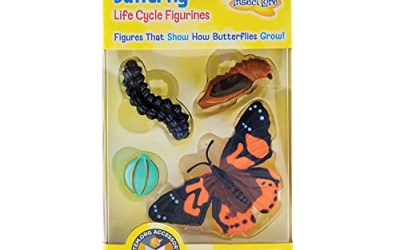
- Assuming a bug set contains a booklouse figure, when most insect figure sets hold only butterflies, ants, or beetles.
- Ignoring edition differences, such as page counts that differ between listings for the same book, and then receiving a different printing than expected.
- Ordering late when a listing shows slow dispatch of ten to eleven days or only one copy left in stock, and missing a birthday or a school project deadline.
Frequently Asked Questions
Is there a toy booklouse I can buy?
No, there is no standalone toy booklouse on Amazon, because toy makers almost never model tiny barklice by name. The honest alternatives are the picks in this guide: bug books that name small insects plainly, a big insect reference, and a critter-catching kit with a magnifier for finding real tiny insects. A mixed insect figure set can also work, but check its contents first.
Which pick suits a four-year-old best?
On Beyond Bugs! All About Insects suits a four-year-old best, because its rhyming text and bright pictures hold a young listener without demanding reading skill. Bugs Are Insects is the next step, with a short, clear explanation of insect bodies that a parent can read aloud. Save the big reference books for readers aged eight to twelve, and keep the critter box under adult supervision.
Can my child catch a real booklouse with the critter box?
Yes, a child can catch tiny insects like booklice with the Nature Bound Ultimate Critter Box, since booklice live in damp books and leaf litter. Use the net and tweezers gently, look through the magnifier, and release it where it was found. Real booklice are fragile and very small, so the magnifier matters more than the net, and never keep a caught insect in the box overnight.
Why do two listings give different page counts for the same book?
Editions and printings change, so two listings for the same title can print different page counts, publishers, or publication dates. On Beyond Bugs! shows 45 pages in one listing and 48 in another, while the Fascinating Bug Book shows 199 in one place and 206 in another. Check the ISBN against the edition you want before ordering, because the ISBN, not the title alone, identifies the exact printing.
Related guides
More from Amazon
Programs that pair well with the guide above. Offers and eligibility are set by Amazon and may change.
Free shipping on eligible items, Prime Video and more. Eligible new members can start with a free trial.
Start a Prime free trialAd-free music streaming. Eligible new subscribers can start with a free trial.
Try Music Unlimited freeA Prime membership for ages 18-24 with a trial period. Eligibility is set by Amazon.
See Prime for Young AdultsAudiobooks and podcasts to listen to on the go. Eligible new members can start with a free trial.
Try Audible freeAs an Amazon Associate we earn from qualifying purchases.