
Every gaming setup eventually hits the same fork in the road: a curved monitor that wraps the action around you, or a flat panel that does everything without drama. It sounds like a simple preference, but the choice affects your desk space, how long you can play without eye strain, how the screen looks to everyone else in the room, and what you’ll spend over the life of the display. And unlike a keyboard or mouse, a monitor is the one piece of gear you stare at for hours — so getting it wrong is expensive in a way a bad mousepad never is.
The good news is that this decision is more predictable than most marketing suggests. Curved and flat gaming monitors each have clear, well-understood strengths, and the right answer depends mostly on your room, your games, and whether anyone else shares your space.
As an Amazon Associate we earn from qualifying purchases at no extra cost to you. Product prices and availability are accurate as of the date shown and are subject to change.

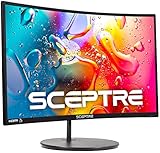
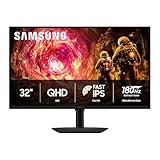

Top 3 picks at a glance
Quick Verdict
If you play immersive single-player games, sit alone at a desk, and want maximum screen presence per dollar, a curved monitor is the better buy — budget models like the Sceptre 24-inch curved (typically $75–$95) prove you don’t need to spend much to get the wraparound effect. If you play competitive shooters, share your desk or room with others, or mount your display on a wall, go flat. A flat QHD panel like a 32-inch Odyssey G5 in the $180–$230 range covers more use cases with fewer compromises. For mixed households, flat usually wins on flexibility; for dedicated solo battlestations, curved usually wins on experience.
Side by Side
| Factor | Curved Monitor | Flat Monitor |
|---|---|---|
| Viewing comfort at a desk | Excellent — 1500R to 1800R curves match the eye’s natural focus distance at 24–32 inches | Good — corners require slight eye movement on panels wider than 27 inches |
| Edge distortion | Minimal — edges stay in your natural field of view | Noticeable on 32-inch+ panels viewed up close |
| Price range | $80–$300 for common 24–32 inch gaming models | $65–$250 for equivalent sizes and specs |
| Durability | Comparable glass and panel life, but the curved surface is slightly more exposed on the desk | Same panel tech; flat face is marginally easier to protect |
| Maintenance | Curved surface needs angled wipes to clean edges; standard microfiber works fine | Simple straight wipes, easier to apply screen protectors |
| Space needed | Similar footprint, but curves inward roughly 2–4 inches at the center depending on radius — a 27-inch 1800R panel bows toward you | Predictable rectangular footprint; easier to calculate desk fit |
| Look | Distinctive, immersive, reads as a “gaming” piece of furniture | Neutral, blends with office or living room décor |
| Shared viewing | Image distorts and dims for viewers off-center | Consistent image from most angles, better for spectators |
| Resale value | Narrower buyer pool; curves are polarizing on the used market | Broader appeal; flat panels sell faster secondhand |
| Best for | Solo immersive gaming, sim racing, long sessions | Competitive play, shared rooms, wall mounting, dual setups |
Where Curved Wins
The core argument for a curved monitor is field of view. A 1800R curve — meaning the panel would form a circle about 1.8 meters across — places the screen edges roughly equidistant from your eyes, so you perceive the whole display without refocusing. On a 27- to 32-inch panel viewed from about two feet away, that translates into less eye travel in open-world games and racing sims, where HUD elements sit at the far corners. Many players also report the curve reduces the perceived brightness falloff at the edges, though this varies by panel and lighting.
Curved monitors also tend to be aggressive on price at the budget end. An entry model like the Samsung 27-inch Essential S3 curved at around $140, or the Sceptre 24-inch curved that regularly dips under $85, delivers the wraparound feel with 1080p resolution and dual HDMI inputs — enough for a console-and-PC hybrid setup. If your priorities are immersion and value rather than esports-grade refresh rates, the curved category offers more screen presence per dollar.
Finally, there’s the subjective factor that matters more than spec sheets admit: curved screens simply feel faster and more cinematic. In driving and flight games especially, the curve mimics a cockpit windshield in a way flat panels at the same size can’t.
Where Flat Monitor for Gaming Wins
Flat panels dominate competitive gaming for practical reasons. In fast-paced shooters, pros and serious amateurs prioritize consistent pixel response across the screen and simple aiming geometry — a straight, predictable plane. Curvature adds no measurable competitive advantage and can subtly complicate horizontal flicks for some players. Most tournament-grade 240Hz and 360Hz panels are flat for this reason.
Flat monitors also handle shared and non-gaming duties far better. Anyone watching from the couch or standing beside your desk sees an undistorted image. If your “gaming monitor” doubles as the family screen for homework, streaming, or photo editing, flat is the safer call. Wall mounting is cleaner too: a flat panel sits flush against the wall on a standard VESA arm, while a curved panel leaves a visible gap at the edges and looks odd on many arms.
Resolution is another flat-panel strength at the moment. A 32-inch QHD flat gaming monitor around $200 — the ballpark of the Samsung Odyssey G5 — gives you 2560×1440 pixels, noticeably sharper text and finer detail than the 1080p panels that dominate the budget curved category. If you split time between gaming and productivity, that extra resolution on a flat screen is arguably worth more than the curve.
Cost Over 5 Years
Assume a mid-range setup and five years of daily use, which is a realistic lifespan for a name-brand panel.
Curved: A budget 24–27 inch curved gaming monitor runs $80–$150. Add $25–$40 for a desk clamp or stand upgrade if you want more ergonomics. Power draw for a 1080p panel in this class is modest — roughly 25–40 watts in use, translating to about $10–$20 per year at average U.S. electricity rates. Five-year total: roughly $230–$290.
Flat: A 22-inch 144Hz flat panel starts around $65, while a 32-inch QHD flat monitor lands around $200. Power draw runs similar, 30–45 watts, or $12–$22 annually. Five-year total: roughly $155 for the small option, $330–$380 for the QHD one.
The hidden cost difference is resale and replacement. Flat panels hold broader appeal on the used market, so upgrading in year three recovers more of your money. Curved monitors depreciate faster because the buyer pool is smaller. If you replace gear often, factor that in; if you buy once and keep it, it’s a wash.
Which One for Your Home
Small apartment or studio
Space is the constraint, so measure first. A 27-inch panel — curved or flat — needs about 24 inches of width; a 32-inch needs closer to 29. A curved panel’s inward bow actually gains you an inch or two of usable desk depth at the corners, which matters on a 20-inch-deep desk. In tight quarters where the screen faces your bed or couch, though, a flat panel is more forgiving of off-angle viewing. For a solo desk setup in a studio, a 24-inch curved like the Sceptre at under $85 is the sweet spot; if the monitor doubles as your TV, go flat 27–32 inch.
Family with kids or pets
Durability and shared use tilt this scenario firmly toward flat. Curved screens present their face slightly more prominently on the desk, and a curved surface is harder to fit with an off-the-shelf screen protector. Kids and guests viewing from the side get a distorted image on a curve. A flat 22-inch 144Hz model around $65 keeps the entry cost low enough that an accident in year two isn’t a crisis, and built-in speakers save speaker-clutter and cable chaos in shared rooms.
Rental or frequently moved setup
Movers and renters should default to flat. Flat panels pack in standard foam inserts, stack safely in a car, and survive relocation with fewer worries about stress on the panel edges. Curved panels are fine to move but demand more careful packing — the bow makes them awkward in rectangular boxes. A flat 24-inch in the $90–$130 range is the rental workhorse: cheap enough to replace, generic enough to resell when you upgrade.
Long-term family home
If you’re building a dedicated gaming room that will stay put for years, this is where curved earns its keep. A 32-inch curved QHD monitor ($250–$350) on a solid desk becomes the centerpiece of a serious setup, and you’ll never need to accommodate spectators. Pair it with an adjustable arm bolted or clamped to a heavy desk. Alternatively, a flat 32-inch QHD around $200 serves dual duty if the gaming room might later become an office or guest room — flexibility is the flat panel’s long-game advantage.
FAQ
Are curved monitors better for your eyes?
At typical desk distances (24–32 inches from your face), a 1500R–1800R curve reduces how far your eyes travel to reach screen corners, which some users find reduces fatigue over long sessions. It’s a comfort difference, not a medical one — panel quality, brightness settings, and breaks matter far more than curvature.
Do pro gamers use curved or flat monitors?
Competitive players overwhelmingly use flat panels, typically 24–25 inch, high-refresh-rate displays. Consistent image geometry and tournament standardization matter more than immersion when matches are won by milliseconds.
Is a curved monitor good for console gaming?
It works, but consoles don’t specifically benefit from curvature. What matters for a PS5 or Xbox Series X is HDMI 2.0 or 2.1 support, refresh rate, and resolution. If you sit centered about 3–4 feet away, a curved screen is pleasant; if you game from a couch at an angle, flat is better.
What size curved monitor should I buy?
Match the curve radius to the size: 24-inch panels pair well with 1500R curves, while 27–32 inch panels suit 1800R. Sitting closer than two feet? Stay at 24–27 inches. Farther back, 32 inches works. Prices scale roughly linearly — expect to pay $80–$150 for 24 inch, $140–$250 for 27–32 inch in the current market heading into 2026.


