
Every desktop builder eventually hits the same fork in the road: do you spend $18–$42 on a proven tower air cooler, or push that same money into a 240mm all-in-one liquid cooler and hope the value holds up? The phrase “budget air cooler vs cheap 240mm aio value” sounds like jargon, but it describes a very real decision. Air cooling has quietly gotten excellent at the low end, while AIO prices have dropped enough that a liquid loop now costs the same as a premium air tower. This guide breaks down what you actually get at each price point, what each option costs to live with, and which one makes sense for your home.
Top 3 picks at a glance
Quick Verdict
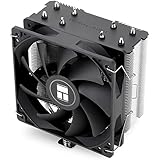
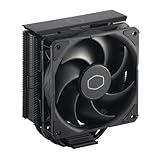
For most builders spending under $50, a budget air cooler is the better value. A unit like the Thermalright Assassin X120 Refined SE at $17.90 or the Cooler Master Hyper 212 Black at $41.99 cools chips in the 150–200W range reliably, lasts a decade with zero maintenance, and fails in ways that are obvious and fixable. A cheap 240mm AIO like the Thermalright Aqua Elite 240 ARGB V4 at $41.90 closes the gap remarkably well, especially if you want lower temps on sustained workloads or a cleaner case interior. Choose the air cooler if you value longevity and simplicity. Choose the budget AIO if aesthetics, case airflow, or slightly better thermal headroom matter to you and you accept a 5–7 year practical pump lifespan.
As an Amazon Associate we earn from qualifying purchases at no extra cost to you. Product prices and availability are accurate as of the date shown and are subject to change.


Side by Side
| Factor | Budget Air Cooler | Cheap 240mm AIO |
|---|---|---|
| Typical price range | $18–$45 | $40–$90 |
| Cooling capacity | Roughly 150–220W of heat dissipation on a 120mm tower | Roughly 180–250W depending on fan and radiator quality |
| Comfort (noise) | Single fan, usually 22–30 dBA under load; no pump noise | Two fans plus pump; 25–35 dBA under load with faint pump whine |
| Durability | 10–15 years; only the fan is a wear item and it’s replaceable for a few dollars | 5–7 years typical pump life; coolant slowly permeates tubing; whole unit replaced at failure |
| Price | Starts around $17.90 (Thermalright Assassin X120 Refined SE) | Starts around $41.90 (Thermalright Aqua Elite 240 ARGB V4) |
| Maintenance | Dust the fins every few months; repaste every 3–4 years | Dust two fans and the radiator; repaste every 3–4 years; no user-serviceable loop |
| Space needed | Stacks 150–160mm tall — check case clearance; may overhang RAM on some boards | Needs a 240mm radiator mount (top or front) plus two fan slots; low RAM clearance issues |
| Look | Functional tower, matte black on modern models; modest or no RGB | Sleek, low-profile around the socket; ARGB fans and pump caps dominate the category |
| Resale value | Holds value well; proven used market | Weak resale; buyers distrust used pumps with unknown hours |
| Best for | Budget builds, small cases, set-and-forget owners | Showcase builds, compact cases without tower clearance, sustained workloads |
Where Budget Air Cooler Wins
Longevity. A tower cooler has exactly one moving part: the fan. When a fan bearing wears out after five or eight years, you swap in a new 120mm fan for $5–$10 and the cooler keeps going. Pumps, by contrast, are sealed units — when they die, the whole cooler goes in the bin.
Dollar-for-dollar cooling. At $17.90, the Thermalright Assassin X120 Refined SE delivers four heat pipes and a PWM fan that handles mainstream chips from a Core i5 to a Ryzen 7 without breaking a sweat. Nothing in the liquid world touches that price, and even at $41.99 the Hyper 212 Black competes with 240mm AIOs twice its historical cost.
Failure you can hear coming. An air cooler degrades gracefully. Fans get noisy before they die, and even total fan failure leaves you days of warning as temps climb. A pump failure can go from quiet to thermal throttling in one session.
No radiator real estate required. If your case only has fan mounts and no 240mm radiator slot, the decision is made for you. Tower coolers also keep heat exhausted out the back of the case rather than dumping radiator warmth into your GPU airflow path.
Insurance against leaks. AIO leaks are rare but catastrophic when they happen near electronics. Air coolers carry zero liquid risk, which matters in a carpeted bedroom, a kid’s room, or anywhere a spill-prone household lives.
Where Cheap 240mm Aio Value Wins
Thermals on sustained loads. A 240mm radiator with two 120mm fans has more raw surface area than any single-tower cooler. For rendering, long gaming sessions, or a hot-running CPU pushing 200W+, the Aqua Elite 240 class of cooler typically keeps peak temps a few degrees lower than a comparable tower. The difference is real but modest — think 3–7°C, not a different league.
Socket-area cleanliness and access. With the cooling block sitting low over the CPU, you get unobstructed access to nearby M.2 slots and RAM. Tall memory kits with chunky heat spreaders that clash with a Hyper 212’s front fan are a non-issue.
Case clearance freedom. Small form factor cases that can’t fit a 155mm tower often still accept a 240mm radiator in the front or side. For mini-ITX and compact micro-ATX builds, liquid is sometimes the only way to get this level of cooling.
Aesthetics per dollar. At $41.90 the Aqua Elite 240 ARGB V4 brings two addressable-RGB fans and a lit pump cap for the same money as a plain black air tower. If your build has a glass side panel, that visual value is hard to ignore. Step up to the NZXT Kraken Plus 240 RGB at $89.99 and you get a display-equipped pump and a premium fan/pump tuning ecosystem — still far below what flagships cost.
Weight off the motherboard. A tower cooler with twin-tower designs can weigh 700–1,000g+ and stress the socket during moves. A pump block weighs a fraction of that, with the radiator bearing the mass on the case panel instead.
Cost Over 5 Years
Assume a mainstream build and average use: a few hours of gaming or productivity daily.
Budget air cooler path: $17.90–$42 purchase, plus $5 for a replacement fan around year 6–8 (likely outside the window), plus $5 of thermal paste for a repaste around year 3. Five-year total: roughly $23–$52. Power draw difference is negligible — a single fan runs 1–3W.
Cheap 240mm AIO path: $42–$90 purchase, plus $5 thermal paste at year 3, plus a realistic probability of pump replacement near the end of the window if you keep the cooler long-term. Two fans plus a pump draw roughly 4–8W — a few dollars a year in electricity, so under $25 over five years. Five-year total: roughly $55–$125, with replacement risk baked in.
Over five years the air cooler is cheaper in nearly every scenario, and the gap widens further if you keep hardware past the seven-year mark, where AIO replacement becomes likely and air coolers keep running.
Which One for Your Home
Small Apartment or Dorm
Compact cases and desk space both argue for the air cooler. The Assassin X120 Refined SE is 125mm tall in many configurations of small cases, draws minimal power, and needs no radiator mounting gymnastics. If your case does have a 240mm front mount and you’re building a showpiece, the Aqua Elite 240 works — but for pure practicality under $25, air wins.
Family with Kids or Pets
Pick air. No liquid near expensive electronics, no anxiety about a curious toddler tipping the case, and a cooler that survives being moved, bumped, or vacuumed around. Pet hair is also easier to pull off an accessible tower’s fins than out of a front-mounted radiator sandwiched behind dust-catching intake fans. Budget $18–$42 and you’re set for the life of the PC.
Rental or Frequently Moved Setup
Air again, with one caveat: remove the tower cooler before transporting the PC, since a heavy cooler bouncing in a car can crack a motherboard socket. That’s a five-minute job with a $5 tube of paste. AIOs are actually easier to move (nothing heavy hangs off the board), but the pump’s finite lifespan means your value erodes with every year of ownership. If you upgrade PCs every 3–4 years, a cheap AIO’s shorter life matters less and the portability is a genuine plus.
Long-Term Home Build
This is the air cooler’s home turf. A Hyper 212 Black installed in 2026 will almost certainly still be cooling a rebuilt system a decade later — socket brackets are cheap and many towers ship with mounting hardware for multiple generations. If you want the liquid look but plan to keep the machine long-term, budget for the possibility of one AIO replacement around year 6–7, which erases the initial price advantage over a $42 air tower.
FAQ
Do cheap AIOs actually outperform budget air coolers?
Usually by a small margin — often 3–7°C under sustained load — thanks to greater radiator surface area and two fans. But a well-made tower like the Hyper 212 Black keeps most mainstream CPUs within a few degrees of a budget 240mm AIO while costing the same or less and lasting twice as long.
How long does a budget 240mm AIO last?
Most manufacturers warranty them for 3–6 years, and real-world pump life commonly runs 5–7 years before noise, flow loss, or failure. Air coolers have no equivalent clock ticking; only the fan wears out.
Is a $17 air cooler like the Assassin X120 Refined SE actually good?
For mainstream CPUs in the 65–120W class, yes — four heat pipes and a decent PWM fan cover a huge share of real-world builds. It’s not the right tool for a 250W flagship chip, but it wasn’t priced for that job either.
Which is quieter: air or a cheap AIO?
At idle and light loads, air is usually quieter because there’s no pump hum. Under heavy load, a two-fan AIO can run each fan slower for similar cooling, so noise can even out. Budget pumps sometimes produce a faint whine that bothers sensitive ears, which is worth testing within your return window.


