
Buying a graphics card secondhand right now means confronting a question that didn’t exist a decade ago: is that cheap card off a decommissioned mining rig a gamble worth taking, or should you pay a bit more for a refurbished gaming GPU from a seller who at least replaced the fans? Both come from hard lives, but the risks are different in kind, not just degree. A used mining card has run 24/7 at high memory loads, often in a dusty open-air frame. A refurbished gaming card usually came from a gamer, but “refurbished” can mean anything from a full professional rebuild to a quick wipe-down in someone’s garage. This comparison breaks down where each option actually puts your money and your machine at risk.
Top 3 picks at a glance
Quick Verdict
If you want the lowest risk per dollar, a refurbished gaming GPU from a reputable seller with a 90-day warranty beats a used mining card at the same price, and it isn’t close. Mining cards often show up with worn fans, dried thermal pads, and memory that spent years under sustained load. However, a used mining card isn’t automatically dead — cards from a single-owner rig with a documented history can be fine, and the prices are sometimes 30–40% below equivalent refurbished units. If your build is a budget gaming PC and the savings matter more than longevity, a well-vetted mining card with replaced thermal pads can still work. Everyone else should lean refurbished.
As an Amazon Associate we earn from qualifying purchases at no extra cost to you. Product prices and availability are accurate as of the date shown and are subject to change.


Side by Side
| Factor | Used Mining GPU | Refurbished Gaming GPU |
|---|---|---|
| Comfort of purchase | Low — most sellers are individuals, no returns, no warranty | Moderate to high — sellers often offer 30–90 day warranties |
| Typical durability | Fans and thermal pads usually worn; memory stress is the big unknown | Fans and paste often replaced; remaining lifespan still a roll of the dice |
| Price range | $80–$350 depending on model and age | $120–$500 depending on model; renewed budget PCs with cards run $300–$450 |
| Maintenance | Expect to spend $15–$30 on thermal pads, paste, and possibly a fan swap | Little to none on day one; standard cleaning after a year |
| Wattage and power needs | Many mining cards draw 120–250W; verify your PSU has the right 6-pin/8-pin connectors | Gaming cards range from 75W low-profile models to 300W+; specs usually documented |
| Space needed | Sold as bare cards; full rigs occupy a large open frame, often 20+ inches wide | Standard card in standard case; or a compact renewed desktop taking under a cubic foot |
| Look | Often dusty, discolored backplates, sometimes no shroud brackets | Cleaned, re-cabled, presentable in a windowed case |
| Resale value | Poor — buyers assume the worst, and they’re usually right | Better — a working card with a refurb history still fetches 50–60% of purchase price |
| Documentation | Rarely any; serial numbers may be pulled from bulk lots | Often listed with a stated condition grade and repair notes |
| Best for | Tinkerers, secondary builds, buyers who enjoy diagnostics | First-time builders, family PCs, anyone who wants a working card on day one |
Where Used Mining Gpu Wins
Price, and it’s not subtle. When mining demand collapses, cards flood the market. A mid-range card that sold for $400 new can appear in mining condition for $140–$180, while a refurbished equivalent lists for $230–$260. That $80–$100 gap buys a new power supply or a solid-state drive.
Not all mining is equal. Cards used for memory-light algorithms, or rigs that ran undervolted to cut electricity costs, often aged better than gaming cards subjected to years of heat spikes. An undervolted card running a steady 60°C is arguably gentler than a gaming card cycling between idle and 80°C every session. Ask the seller what the rig ran and at what power limit — a straight answer is a good sign.
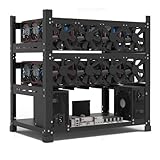
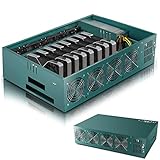
Simple architecture to inspect. Mining rigs were typically open-air frames, so the card itself is easy to examine. You can spin the fans by hand, check for rattling bearings, and look for warped or discolored boards before you spend anything. Complete frames — a basic 12-GPU steel open-air case runs around $67, while an 8-GPU complete rig with motherboard, 2000W power supply, CPU, RAM, and SSD sits near $499 — tell you the card likely lived in a structured, ventilated environment rather than a carpeted closet.
Replacement parts are cheap. A set of thermal pads and paste costs $15–$20, and aftermarket fans for common models run $10–$25 each. If you’re comfortable with a screwdriver, you can restore a mining card’s cooling to near-new condition in an afternoon.
Where Refurbished Gaming Gpu Risk Wins
Someone has already done the triage. A genuine refurbisher tested the card under load, replaced failed fans, repasted the die, and discarded units that couldn’t hold stable clocks. Your risk shifts from “unknown history” to “known, documented history” — an enormous difference.
Warranty coverage. Many refurbished sellers, including large renewed-goods platforms, back their products for 90 days. If the card dies in week six, you get a replacement. With a used mining card from a forum listing, a dead card is your money gone.
Gaming-appropriate duty cycles. A refurbished gaming card spent its first life doing what you’ll do with it: a few hours of load, then rest. Thermally, that’s a gentler profile than constant mining, and connectors, display outputs, and bracket hardware are all intact and matched to a case build.
Whole-system options. If your actual goal is a working computer rather than a component, renewed prebuilt desktops simplify everything. A renewed Dell gaming tower with an Intel Core i7, GTX 1050 Ti 4GB, 16GB RAM, and a 512GB SSD lists around $400 — tested, warrantied, and ready to game at 1080p in esports titles. For lighter builds, a new low-profile card like the Radeon RX 550 4GB at roughly $122 delivers solid everyday performance with a tiny footprint and modest power draw.
Resale and upgrades. Refurbished cards retain value better and are easier to sell because buyers trust the condition grade. When you upgrade in two or three years, you recover real money instead of eating the whole cost.
Cost Over 5 Years
Assume a mid-range card for 1080p gaming, moderate use.
Used mining GPU route: purchase at $180, plus $25 in thermal pads and paste, plus a possible $20 fan replacement in year two. Power draw runs roughly 150W under load. Total five-year hardware cost: roughly $225, with meaningful odds — realistically one in four or worse for older memory-heavy cards — that you’ll need a full replacement at $200 mid-cycle if the card proves unstable. Expected cost lands between $225 and $425.
Refurbished GPU route: purchase at $260 with a 90-day warranty. No immediate parts needed; a cleaning and repaste around year three costs about $15 if you do it yourself. Expected five-year cost: roughly $260–$290, with a small residual resale value of $100–$150 offsetting the total to an effective $130–$190.
Refurbished prebuilt desktop route: around $400 up front for a complete renewed system, minimal maintenance, and the ability to add a better card later. Effective cost per year of usable computing is often the lowest of the three when you factor in not needing a separate CPU, RAM, or storage.
By 2026, with mainstream card prices relatively stable, the refurb route’s total cost of ownership is generally lower than the mining route unless you get lucky — and “unless you get lucky” is exactly the risk premium you’re being paid to accept.
Which One for Your Home
Small Apartment
Space and noise matter. Skip full mining hardware entirely — an open-air rig frame is loud, dust-hungry, and takes up desk space. A refurbished gaming card in a compact case, or a renewed small-form-factor desktop with a low-profile card like the RX 550, keeps your setup under 15 inches wide and quiet. If you do buy a bare used card, the compact footprint is identical either way; just prioritize a refurbished unit so you’re not troubleshooting fan noise in a small room.
Family with Kids or Pets
Reliability wins outright. A family PC that blue-screens mid-homework is a bigger cost than the $80 you saved. Choose a refurbished gaming GPU with a warranty, or a renewed prebuilt tower where one vendor is accountable for the whole system. Pet hair is also a real hazard for open-air mining frames, which have no filtration and pull debris straight through the cards.
Rental or Temporary Setup
If you’re in a place for a year or two and want something to game on without commitment, this is actually the best case for a used mining card. The risk profile matches the short horizon — if the card lasts 18 months, you got what you needed, and you’re not carrying a depreciating asset to your next home. Keep the purchase under $200 and budget for a repaste on arrival.
Long-Term Home
For a desktop you expect to serve five or more years, buy refurbished with a warranty, and lean toward cards from gaming duty cycles with documented repair work. Better yet, start with a renewed complete desktop and upgrade the GPU later — the base system handles daily family use while you save for a card that will still be worth reselling. Longevity, serviceability, and resale all favor the refurbished path.
FAQ
Do mining GPUs always fail early?
No. Failure depends on the algorithm, power limits, and cooling. Undervolted cards from well-built rigs can outlast heavily overclocked gaming cards. The problem is that you rarely know which category you’re buying, so the average risk is higher even if many individual cards are fine.
Can I check a used mining card before buying?
Ask for the seller to run it in front of you or on a video call, watch a 15-minute stress test, and check that memory temperatures stay under about 100°C. Inspect fans for wobble, look for bulging or discolored components, and confirm the card isn’t on a stolen-goods registry if the price seems too good.
What does “refurbished” actually guarantee?
It varies by seller. Reputable renewed sellers test components, replace failed parts, and offer a return window of 30 to 90 days. Marketplace listings from individuals using the word loosely offer none of that. Read the condition description carefully and favor sellers with published grading standards.
Is it cheaper to buy a whole used mining rig and pull the cards?
Occasionally, yes — a complete 8-GPU rig without cards sells for around $499, and if cards are included at a reasonable total, the per-card cost can beat individual listings. But you’ll need a motherboard that supports multiple GPUs, a 2000W-class power setup, and time to test each card. It only makes sense if you actually want several cards or the rig hardware itself.


