
When curating a high-performance workspace or gaming sanctuary, every item on your desk must balance raw performance with domestic practicality. Deciding between optical vs magnetic keyboard switches for competitive gaming is no longer a technical debate reserved strictly for esports arenas. It has become a crucial decision for home office design, sound management, and long-term hardware longevity.
Whether you work from a compact city apartment, share a home office with a partner, or want a streamlined desk setup free from clatter, switch architecture shapes your daily living space. Optical switches rely on focused light beams to register inputs at the speed of photonics, while magnetic switches—often referred to as Hall Effect switches—use magnetic flux to offer customizable actuation distances and instantaneous resetting. Balancing key feel, physical footprint, acoustic profiles, and durability will determine which switch style earns a permanent spot on your desk.
As an Amazon Associate we earn from qualifying purchases at no extra cost to you. Product prices and availability are accurate as of the date shown and are subject to change.



Top 3 picks at a glance
Quick Verdict
For gamers who prioritize effortless maintenance, spill protection, and zero electrical wear in busy households, optical switches offer a dependable, low-hassle solution. However, if your primary goal is peak competitive precision—unlocked by customizable key actuation from 0.1 mm to 4.0 mm and instantaneous Rapid Trigger resets—magnetic switches are the clear winner. Magnetic boards allow you to convert a twitch-sensitive esports keyboard into a firm, comfortable typing tool for daily remote work with a quick profile toggle.
Side by Side
| Feature / Attribute | Optical Switches | Magnetic Switches (Hall Effect) |
|---|---|---|
| Comfort & Typing Feel | Smooth linear feel; fixed actuation point (1.0 mm to 2.0 mm). | Highly customizable feel; dynamic actuation travel (0.1 mm to 4.0 mm). |
| Durability Rating | 100 million keystrokes; excellent dust and spill protection. | 100 million+ keystrokes; no physical electrical contact points. |
| Price Range | $40 to $180 for complete keyboards. | $40 to $230 for complete keyboards; $25–$45 for switch sets. |
| Maintenance | Very low; optical sensors resist crumbs, dirt, and moisture. | Low to moderate; requires software calibration after switch swaps. |
| Desk Space Needed | Standard footprints (60% compact up to 100% full-size). | Highly compact friendly; 60% layouts maximize mouse movement area. |
| Aesthetic & Sound Profile | Slightly metallic or clackier bottom-out sound profile. | Deep, quiet, creamy acoustic profiles with pre-lubed switches. |
| Resale & Upgradability | Moderate; switches tied to specific optical board PCBs. | High; growing enthusiast market for custom magnetic stem swaps. |
| Best For | Spill-prone living rooms, casual-to-pro gamers, low-maintenance setups. | Tactical FPS competitors, dual gaming/work desks, audio-conscious homes. |
Where Optical Wins
Optical keyboard switches rely on an infrared light emitter and photodetector built into the printed circuit board (PCB). When you press a key, the switch stem interrupts the light beam, instantly registering the keypress. Because optical switches operate without physical copper contacts rubbing together, they eliminate mechanical debouncing delay and reduce physical wear to nearly zero.
From a home management perspective, optical switches excel in environment durability. Boards equipped with optical stems frequently carry IP56 or IP57 water-and-dust resistance ratings because the sensitive light sensors are sealed within protective housings. If you keep beverages, coffee, or snacks at your desk, an accidental spill is far less likely to ruin an optical keyboard compared to traditional copper-contact mechanical boards.
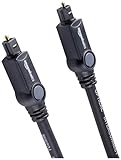
The concept of using light for clean, interference-free transmission is familiar across home entertainment systems. Just as fiber optics route audio signals without electronic buzz—such as using a KabelDirekt Optical Audio TOSLINK Cable – 6ft – Soundbar priced around $8.99 or an Amazon Basics Toslink Digital Optical Audio Fiber Optic Cable for $6.47 to connect soundbars—optical keyboard switches eliminate electrical signal noise. This results in ultra-consistent response times around 0.2 milliseconds without mechanical degradation over time.
Where Magnetic Keyboard Switches for Competitive Gaming Wins
Magnetic switches, powered by Hall Effect sensors, detect keypresses by measuring changes in magnetic field strength as a permanent magnet inside the switch stem approaches the PCB sensor. This contactless measurement opens up software capabilities that optical switches cannot replicate, making magnetic designs the top choice for modern esports.
The standout feature of magnetic technology is Rapid Trigger mode along with dynamic actuation. Instead of forcing you to press a key down to a fixed point (such as 2.0 mm) and release it back past a reset point, magnetic switches allow key registration and resetting the instant the stem changes direction. In fast-paced games like Valorant or Counter-Strike, this allows micro-adjustments, rapid counter-strafing, and instantaneous movement stops with sub-millimeter precision.
Looking ahead into 2026, magnetic switch keyboards have set the benchmark for hybrid desktop setups. Compact models like the Aula WIN60 HE – 60% Mechanical Gaming Keyboard Wired (priced around $39.99 with an 8000 Hz polling rate and a compact 11.4 x 4.0 inch footprint) prove that high-end features no longer demand massive desktop real estate or high budgets. Furthermore, customization has reached new heights. Home users concerned with keyboard noise can easily swap in sound-dampened options like EPOMAKER Creamy Jade Magnetic Switches (around $25.99 for a 70-pack of factory pre-lubed switches), delivering a deep, muted “thock” sound that keeps living rooms peaceful during late-night gaming sessions.
Cost Over 5 Years
When calculating total cost of ownership for a home setup, both optical and magnetic options prove significantly more cost-effective than standard mechanical keyboards, which often suffer from key chatter or contact degradation after two to three years.
- Initial Outlay: Entry-level magnetic keyboards start around $40, while premium magnetic and optical platforms range from $120 to $230.
- Replacement & Customization Costs: Optical switches are usually proprietary to the keyboard manufacturer, making individual switch replacements slightly harder to source. Magnetic switches use standardized stems and magnet orientations, allowing single switch set replacements for $25 to $45 if you want to alter switch weighting or sound profiles.
- Maintenance Expenses: Maintenance costs over 5 years are practically $0 for both technologies. Cleaning requires only compressed air and keycap removal, as neither type uses electrical contacts that oxidize or corrode.
Over a five-year lifespan, a quality magnetic or optical setup typically costs between $40 and $250 total, delivering exceptional value given their 100-million-click operational lifespan.
Which One for Your Home
Small Apartment or Micro-Desk Setup
If your home office double-dips as a bedroom corner or dining table end, saving desk space is paramount. A 60% compact layout magnetic board offers maximum mouse surface area for low-sensitivity gaming while slipping neatly into a desk drawer at the end of the workday. The ability to set deep, deliberate actuation points (3.0 mm) for typing prevents accidental keystrokes while working on short surfaces.
Family with Kids and Pets
Living rooms and multi-user home spaces are prone to pet hair, dust, crumbs, and occasional liquid spills. Optical switches are the clear winner here. Their sealed photodetector housings and lack of exposed magnetic sensor plates mean they handle household debris and quick water rinses far better than almost any other switch design on the market.
Rental or Shared Living Space
In a shared rental or home where noise travels easily through walls, acoustic control is a priority. Magnetic switches take the lead in sound customization. Because magnetic stems can be easily popped out and replaced with factory pre-lubed, sound-dampened switches, you can fine-tune your keyboard to operate at whisper-quiet sound levels under 45 decibels, preserving harmony with roommates or family members.
Long-Term Dedicated Home Office or Gaming Room
For dedicated gaming sanctuaries where peak competitive rank is the goal, magnetic switches reign supreme. Paired with high polling rates (up to 8000 Hz) and fine-tuned Rapid Trigger sensitivity (0.1 mm actuation), a magnetic keyboard provides a tangible competitive advantage while serving as a sleek, customized centerpiece for high-end desk setups.
FAQ
Do optical switches sound louder than magnetic switches?
Generally, stock optical switches produce a higher-pitched “clack” due to light-housing plastics and stem contact. Magnetic switches, particularly pre-lubed mechanical-style stems, offer a deeper, softer acoustic signature that blends better into shared living spaces.
Can I put magnetic switches into a regular mechanical or optical board?
No. Magnetic switches require a PCB equipped with Hall Effect flux sensors rather than metallic hot-swap sockets or optical infrared diodes. You must use a magnetic-compatible PCB board to use magnetic switches.
What is Rapid Trigger and why does it matter for home gaming?
Rapid Trigger dynamically enables key activation and deactivation based on the physical direction of key movement rather than fixed travel points. The moment your finger moves up even 0.1 mm, the key stops registering input, granting immediate in-game stopping power and faster consecutive presses.
How do optical keyboard switches differ from optical audio cables?
While both rely on fiber-optic concepts, optical audio cables transmit digital sound data through fiber strands via light pulses between audio components. Optical keyboard switches use localized infrared light beams inside individual switch housings purely to detect when a key stem blocks or allows light transmission.


