
Building a modern desktop PC is a balancing act of performance, aesthetics, and spatial planning. As a home office editor, I often look at how we allocate budget and physical space to create the ultimate productivity and gaming setups. When designing a setup from scratch, the internal components deserve just as much scrutiny as the desk they sit on. If you are currently planning a new PC, you might be asking yourself: do i need ddr5 ram for budget gaming build?
Memory technology is currently at an evolutionary crossroads. DDR4 has been the reliable standard for years, keeping systems running smoothly with minimal physical footprint and power consumption. However, DDR5 has arrived with promises of blazing speed and future platform support. Deciding which memory generation to purchase can make or break your budget, directly affecting how much money you have left over for a high-quality graphics card, a quiet CPU cooler, or a premium mechanical keyboard.
As an Amazon Associate we earn from qualifying purchases at no extra cost to you. Product prices and availability are accurate as of the date shown and are subject to change.

The Short Answer
No, you do not need DDR5 RAM for a budget gaming build, unless you are building your system around AMD’s Socket AM5 platform. AMD’s AM5 CPUs (such as the Ryzen 5 7600) exclusively support DDR5, meaning you have no choice if you select that platform. However, if you choose an Intel LGA 1700 platform (such as the Core i3-12100F or i5-12400F) or an older AMD AM4 platform (such as the Ryzen 5 5600), choosing DDR4 will save you roughly $30 to $80 across your motherboard and RAM purchase. This saved money is far better spent on a faster graphics card, which will yield a much higher frame-rate increase in modern games.
What You Actually Get
To understand the difference, we must look at what DDR5 brings to the table physically and technically. Standard DDR4 modules typically run at speeds between 3200MHz and 3600MHz. DDR5 starts where DDR4 ends, commonly running at speeds from 4800MHz up to 6000MHz and beyond. This massive jump in frequency greatly increases the maximum data bandwidth of your system.
However, DDR5 also introduces higher CAS latency (the delay between when a command is entered and when it is executed). While a good DDR4 kit might have a latency profile of CL16, a standard DDR5 kit operates around CL30 to CL40. This means that in some latency-sensitive games, the actual performance difference is negligible, especially when paired with an entry-level graphics card.
Physically, DDR5 modules look very similar to DDR4, but they are not cross-compatible. A standard DDR5 stick measures approximately 133 mm in length and varies in height from 31 mm (low-profile) to 44 mm (with aggressive aluminum heat spreaders). They weigh between 35 and 50 grams depending on the thickness of the heatsink. If you are building a compact Mini-ITX system for a small desk, low-profile RAM is crucial to clear large dual-tower CPU air coolers.
Power management has also changed. DDR4 relies on the motherboard to regulate its voltage (usually 1.2V to 1.35V). DDR5 moves the Power Management Integrated Circuit (PMIC) directly onto the RAM module itself, running at a lower base voltage of 1.1V, though high-performance profiles can push this up to 1.35V. This on-board power regulation improves efficiency but adds to the manufacturing cost of the sticks.
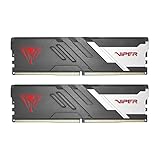
While standard budget-friendly DDR5 kits are gradually dropping in price, high-end enthusiast memory can still command staggering prices. For instance, premium kits like the Patriot Viper Venom DDR5 RAM 32GB (2X16GB) 6000MHz CL30 can retail around $479.99, while massive-capacity options like the G.SKILL Flare X5 Series DDR5 RAM 64GB (2x32GB) Up to 6000MT/s CL36 can reach up to $999.99. These extreme price points illustrate why budget builders must tread carefully when navigating the DDR5 landscape; spending hundreds of dollars on premium memory for a budget build is highly counterproductive.
Pros
- Superior Future-Proofing: Choosing a DDR5 platform ensures that you can upgrade your CPU and RAM in the future without needing to buy a new motherboard. This secures a viable upgrade path that will easily last into 2026 and beyond.
- Higher Bandwidth: DDR5 offers almost double the peak bandwidth of DDR4, which speeds up file compression, video rendering, and simulation-heavy games.
- On-Die ECC (Error Correction Code): DDR5 features built-in error correction at the chip level, which improves system stability and reduces crashes during long gaming sessions.
- Power Efficiency: Operating at a lower baseline voltage of 1.1V reduces overall system heat output, which is a nice bonus for small-form-factor home office setups.
Cons
- Higher Total Platform Cost: Both DDR5 RAM modules and DDR5-compatible motherboards carry a price premium over their mature DDR4 counterparts.
- Increased Latency: Higher CAS latency (CL36 to CL40 on budget kits) can offset the benefits of higher raw speeds in older or poorly optimized games.
- Zero GPU Bottleneck Relief: If your system is bottlenecked by a budget graphics card (such as an RX 6600), upgrading from DDR4 to DDR5 will result in a 0% increase in gaming performance.
- Incompatibility: You cannot reuse your existing DDR4 sticks in a new DDR5 motherboard, forcing a complete platform rebuild.
Who Should Buy It
You should opt for DDR5 RAM if you have a mid-range budget (around $800 to $1,000 total) and have chosen an AMD Ryzen 7000 or 9000 series processor. Because AMD’s modern AM5 socket is strictly DDR5, you must buy it to make the system run. It is also the correct choice for buyers who prioritize longevity and plan to upgrade their CPU and GPU incrementally over the next five years without rebuilding the entire PC from scratch. Finally, if you play simulation-heavy games like Cities: Skylines II, Microsoft Flight Simulator, or heavily modded Minecraft, the extra bandwidth of DDR5 is highly beneficial.
Who Should Skip It
You should skip DDR5 if you are working with a strict, entry-level budget under $700. At this price point, every single dollar matters. Saving $50 by choosing a DDR4 motherboard and a 16GB kit of DDR4 3200MHz RAM allows you to upgrade your graphics card from an entry-level GPU to a mid-range model. This swap will yield a massive, noticeable difference in visual quality and frame rates, whereas upgrading from DDR4 to DDR5 on the same low-end GPU would show no real-world difference. Builders utilizing older, ultra-value CPUs like the Ryzen 5 5600 or Intel Core i3-12100F should also stick to cheap, readily available DDR4.
Cheaper Alternatives
If you decide that DDR5 is too expensive for your current financial goals, there are highly competitive DDR4 configurations that will keep your budget gaming build running smoothly. The table below outlines the best alternatives, their average street prices, and the trade-offs you make by choosing them.
| Option | Cost | Trade-off |
|---|---|---|
| DDR4 16GB (2x8GB) 3200MHz CL16 | $35 – $45 | Limited multitasking capacity for heavy background apps; no upgrade path to next-gen CPU platforms. |
| DDR4 32GB (2x16GB) 3600MHz CL18 | $60 – $75 | Locks you into older, end-of-life motherboard sockets; cannot reuse these modules in future system builds. |
| Entry-Level DDR5 16GB (2x8GB) 5200MHz CL40 | $55 – $65 | Slower speeds and worse latency than premium DDR5 kits; still requires a more expensive DDR5 motherboard. |
FAQ
Does DDR5 RAM increase FPS in gaming?
DDR5 can increase your frame rates, but only under specific circumstances. If your system is CPU-bound—meaning you are playing at 1080p resolution with low graphics settings or playing CPU-heavy esports games—DDR5 can offer a 5% to 15% boost in average and minimum frame rates. However, if you are playing at 1440p or 4K resolution on high settings, your graphics card is the limiting factor, and DDR5 will offer virtually no performance difference over DDR4.
Can I put DDR5 RAM into a DDR4 motherboard slot?
No. DDR4 and DDR5 modules are physically incompatible. The key notch on the bottom connector of a DDR5 stick is placed in a different position than on a DDR4 stick to prevent users from accidentally inserting the wrong generation. Furthermore, the pin configurations are different, and DDR5 motherboards use different electrical circuitry to accommodate the on-board power management chips of DDR5 RAM.
Is 16GB DDR5 enough for budget gaming, or do I need 32GB?
For a budget gaming build, 16GB (running in a dual-channel 2x8GB configuration) is still sufficient for the vast majority of modern games. However, 32GB (2x16GB) has quickly become the sweet spot for modern PCs. Some newer, poorly optimized games can consume more than 16GB of system RAM, and having 32GB ensures you can leave web browsers and discord open in the background without experiencing stuttering.
Why is DDR5 memory more expensive than DDR4?
DDR5 is more expensive because it is a newer, more complex technology. It features on-die Error Correction Code (ECC) and moves power management circuitry (PMIC) off the motherboard and directly onto each individual RAM stick. This increases manufacturing complexity and component costs. Additionally, DDR4 has been mass-produced for nearly a decade, allowing manufacturers to optimize production lines and drive down costs to rock-bottom prices.


