
Right now, the best RAM deal for gaming in this lineup is the CORSAIR Vengeance DDR5 32GB (2 x 16GB) 6000MHz kit at $439.99, because it undercuts every 16GB kit here on price per gigabyte while doubling the capacity. If brand-name RGB at the lowest available price matters more than saving a few dollars, the Lexar Thor Z RGB kit ties it exactly at $439.99 for the same 32GB, 6000MHz spec.
RAM pricing behaves differently than almost anything else covered on this site. Rachel Osei has spent eight years tracking retail pricing and inventory data for a consumer-electronics price aggregator, and her price-history database covering multiple retailers and years of sale cycles shows RAM moving on a completely different schedule than GPUs or prebuilt desktops — a pattern this guide leans on heavily below, since the biggest mistake buyers make with memory is waiting for a Black Friday-style markdown that RAM pricing doesn’t reliably follow.
Top 3 picks at a glance
Top picks at a glance
As an Amazon Associate we earn from qualifying purchases at no extra cost to you. Product prices and availability are accurate as of the date shown and are subject to change.


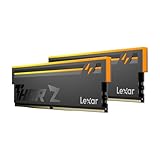

| Model | Key spec | Price | Best for |
|---|---|---|---|
| Corsair Vengeance RGB DDR5 | 32GB (2x16GB), 6000MHz, RGB | $620 | Corsair’s flagship RGB line, if budget isn’t a factor |
| Corsair Vengeance DDR5 | 32GB (2x16GB), 6000MHz, mid-priced listing | $509.99 | Non-RGB buyers not ready to shop around |
| Corsair Vengeance RGB RS DDR5 | 32GB (2x16GB), 6000MHz, RGB | $467.59 | RGB at a lower price than the flagship line |
| Corsair Vengeance DDR5 | 32GB (2x16GB), 6000MHz, lowest-priced listing | $439.99 | Best overall price per GB in this guide |
| Lexar Thor Z RGB DDR5 | 32GB (2x16GB), 6000MHz, CL38 | $439.99 | RGB at the same price as the cheapest Corsair listing |
| Corsair Vengeance RGB RS DDR5 | 16GB (2x8GB), 6000MHz, RGB | $264.99 | Smallest RGB kit here for tight budgets |
| Corsair Vengeance DDR5 | 16GB (2x8GB), 6000MHz | $259.99 | Non-RGB budget baseline |
| Corsair Vengeance DDR5 | 16GB (2x8GB), 5200MHz | $254.99 | Cheapest kit, lowest speed tier |
Corsair Vengeance RGB DDR5 32GB (2 x 16GB) 6000MHz
At $620, this is the most expensive RAM kit in this guide and works out to roughly $19.38 per gigabyte — the highest price-per-GB figure across all eight listings here. That premium buys Corsair’s flagship RGB styling on the Vengeance line, the same 32GB capacity and 6000MHz speed as three cheaper kits below, and nothing in the listed spec that meaningfully outperforms them in actual gaming.
Corsair’s iCUE software ecosystem for RGB lighting control is the practical differentiator buyers are paying for here, along with whatever premium Corsair charges for being the flagship listing in its own lineup rather than a secondary or clearance-priced SKU. For gaming performance specifically, 6000MHz DDR5 at this capacity behaves the same whether it costs $620 or $439.99, assuming both hit their rated speed reliably via XMP or EXPO.
Rachel’s price-history read here is direct: this is the clearest example in the entire guide of paying for brand positioning rather than capability. Buyers should treat this listing as a ceiling reference point, not a target price.
Pros
- Corsair’s flagship Vengeance RGB styling and iCUE software support
- Same 32GB, 6000MHz spec as three cheaper kits in this guide
- Established brand with wide retailer availability for warranty claims
Cons
- Highest price per gigabyte of any kit in this guide
- No performance advantage over the $439.99 Corsair listing at the same speed
- Roughly $180 more than the Lexar kit at identical capacity and speed
Who it’s for: buyers who specifically want Corsair’s top RGB tier and aren’t comparison shopping on price.
Corsair Vengeance DDR5 32GB (2 x 16GB) 6000MHz — Mid-Priced Listing
At $509.99, this is a separate Amazon listing for essentially the same spec as the $439.99 Corsair kit further down this guide — 32GB (2 x 16GB), up to 6000MHz, no RGB — priced roughly $70 higher for what appears to be the identical product line. This works out to about $15.94 per gigabyte, a full $2.19 per gigabyte more than the cheapest listing of what reads as the same kit.
This is a genuinely useful example of why checking multiple listings for the same product name matters before buying. Amazon frequently carries several active listings for one manufacturer’s SKU, sold by different third-party sellers or at different points in a pricing cycle, and the gap between them can be substantial even when the underlying product is unchanged.
Without a confirmed reason for the price difference — different seller, different bundle inclusion, or simply a listing that hasn’t been repriced recently — the practical advice is straightforward: search the exact model name before purchasing and buy whichever active listing is priced lowest for the same spec.
Pros
- Same 32GB, 6000MHz non-RGB spec as the cheaper Corsair listing in this guide
- Corsair brand reliability and warranty support
- No RGB software or lighting overhead if you prefer a plain-looking build
Cons
- Roughly $70 more than an apparently identical listing elsewhere in this guide
- No disclosed spec difference to justify the higher price
- Illustrates a real risk of overpaying without cross-checking listings
Who it’s for: buyers who land on this specific listing without comparing it against other active listings of the same kit first.
Corsair Vengeance RGB RS DDR5 32GB (2 x 16GB) 6000MHz
Corsair’s RGB RS sub-line, priced at $467.59, sits between the flagship RGB kit and the cheapest non-RGB listing in this guide, working out to about $14.61 per gigabyte. The RS naming inside Corsair’s catalog typically denotes a value-tier RGB variant — same core memory module, simplified cooling shroud and lighting bar compared to the top-tier Vengeance RGB line, at a meaningfully lower price.
For buyers who want visible RGB lighting without paying flagship pricing, this kit is the more reasonable middle ground in this guide: $152.41 cheaper than the $620 flagship RGB kit at the same 32GB and 6000MHz spec, while still delivering per-DIMM lighting rather than the no-RGB alternative.
Rachel’s price-history note: RGB RS-tier kits from Corsair have generally settled into a consistent discount relative to the flagship RGB line rather than fluctuating widely, so $467.59 reads as a normal price for this specific sub-line rather than either an exceptional deal or an inflated one.
Pros
- RGB lighting at a meaningful discount to Corsair’s flagship RGB kit
- Same 32GB, 6000MHz capacity and speed as the pricier options
- Reasonable middle-ground price per gigabyte at $14.61
Cons
- Still costs more per GB than the cheapest non-RGB Corsair or Lexar kits here
- RGB RS cooling shroud is typically simpler than the flagship line’s
- Not the lowest price in this guide for the same capacity and speed
Who it’s for: buyers who want visible RGB without paying flagship-tier Corsair pricing.
Corsair Vengeance DDR5 32GB (2 x 16GB) 6000MHz — Lowest-Priced Listing
At $439.99, this is the best price-per-gigabyte kit in this entire guide at roughly $13.75 per GB — cheaper per gigabyte than every 16GB kit here despite offering exactly double the capacity. This is the clearest illustration of a pattern worth remembering when shopping RAM deals broadly: doubling capacity rarely doubles price, so the larger kit is frequently the better raw value even for buyers who don’t strictly need 32GB.
No RGB lighting keeps the cost down relative to Corsair’s RGB and RGB RS lines above, and 6000MHz sits at the sweet spot most current AMD AM5 and Intel platforms are tuned around for their default XMP and EXPO profiles, meaning this kit should reach its rated speed with minimal manual configuration on a compatible motherboard.
For gaming specifically, 32GB gives meaningful headroom over 16GB for running a game alongside Discord, a browser with dozens of tabs, and a background recording or streaming tool — an increasingly common real-world scenario that 16GB kits handle with noticeably less margin, based on typical modern game and background-application memory footprints.
Pros
- Lowest price per gigabyte of any kit in this guide
- 32GB capacity provides real multitasking headroom for gaming plus background apps
- 6000MHz matches the sweet spot for current AMD and Intel XMP/EXPO profiles
Cons
- No RGB lighting if that’s a priority for your build’s aesthetic
- Exact CAS latency not disclosed in this specific listing
- Identical spec sold elsewhere in this guide at a $70 higher price — always confirm you found this listing
Who it’s for: buyers who want the best raw price-per-gigabyte value in this guide and don’t need RGB.
Lexar Thor Z RGB DDR5 32GB (2 x 16GB) 6000MHz CL38
Lexar’s Thor Z RGB kit matches the cheapest Corsair listing exactly at $439.99 for the same 32GB and 6000MHz spec, but with RGB lighting included and an explicitly disclosed CL38 CAS latency. That CL38 timing is looser than the CL30 typically associated with Corsair’s Vengeance DDR5 6000 line, a real trade-off worth understanding rather than ignoring in favor of the identical sticker price.
Looser CAS latency at the same clock speed means marginally higher memory access delay, an effect that’s most noticeable in CPU-bound scenarios like competitive shooters at very high frame rates or simulation titles with heavy background calculations. For GPU-bound gaming at 1440p or 4K, the practical difference between CL30 and CL38 at 6000MHz is small enough that most players won’t notice it — this is an estimate based on how CAS latency scales at this frequency, not a benchmark run on this specific kit.
Lexar is a newer entrant to the gaming RAM space compared to Corsair’s decades-long track record, primarily known for storage products before expanding into memory modules — worth factoring in if brand longevity and support history matter to your purchase decision.
Pros
- RGB lighting at the same price as Corsair’s cheapest non-RGB 32GB listing
- 32GB capacity and 6000MHz speed matching the pricier Corsair kits
- Explicitly disclosed CL38 rating, more transparent than several undisclosed Corsair listings here
Cons
- Looser CL38 timing versus Corsair Vengeance DDR5 6000’s typical CL30
- Shorter brand track record in gaming memory specifically than Corsair
- CL38 could matter in CPU-bound titles even if it’s negligible for most GPU-bound gaming
Who it’s for: buyers who want RGB at the lowest available 32GB price and don’t play heavily CPU-bound titles.
Corsair Vengeance RGB RS DDR5 16GB (2 x 8GB) 6000MHz
The smallest RGB kit in this guide, priced at $264.99, works out to roughly $16.56 per gigabyte — the single worst price-per-GB figure of any kit here, RGB or not. This is the sharpest illustration in this guide of the capacity math buyers should run before assuming a smaller kit saves money proportionally: this 16GB kit costs $174.99 less than the 32GB Corsair RGB RS kit above, but at a 20 percent worse rate per gigabyte.
16GB remains a workable baseline for gaming specifically, running most current titles without issue at recommended settings, but it leaves noticeably less room for background applications, browser tabs, and streaming or recording software running alongside a game than the 32GB options in this guide provide.
For buyers with a strict two-DIMM-slot motherboard already populated, or a firm budget ceiling that a 32GB kit would exceed, this remains a reasonable RGB option — the math above simply confirms it’s paying a real premium for the smaller footprint rather than saving proportionally.
Pros
- RGB lighting matching the larger RGB RS kit’s styling
- Lower total dollar outlay than any 32GB kit in this guide
- 16GB remains workable for most current games at recommended settings
Cons
- Worst price per gigabyte of any kit in this guide
- Less multitasking headroom than every 32GB option here
- Costs more per GB than kits offering double the capacity
Who it’s for: buyers with a strict budget ceiling or a build that specifically calls for 16GB.
Corsair Vengeance DDR5 16GB (2 x 8GB) 6000MHz
At $259.99, this non-RGB 16GB kit prices out to roughly $16.25 per gigabyte, slightly better than the RGB RS 16GB kit above but still notably worse per-GB value than any 32GB kit in this guide, including the $439.99 listings offering double the capacity for less than double the price. The gap between this kit and the cheapest 32GB Corsair listing is $180 in absolute dollars but nearly $2.50 per gigabyte in relative value.
Dropping RGB lighting compared to the RGB RS kit above saves $5 at this capacity tier — a smaller gap than the roughly $27 difference RGB adds at the 32GB tier between the cheapest non-RGB and RGB RS listings, suggesting RGB’s dollar premium doesn’t scale linearly with kit capacity.
6000MHz remains the same sweet-spot speed as every other kit in this guide except the 5200MHz listing below, meaning this kit should hit its rated speed via XMP or EXPO on a compatible motherboard without requiring manual timing adjustments.
Pros
- Slightly better price per gigabyte than the RGB RS 16GB kit
- 6000MHz matches the sweet-spot speed of the higher-capacity kits in this guide
- No RGB software overhead for buyers who prefer plain-looking modules
Cons
- Meaningfully worse price per gigabyte than any 32GB kit in this guide
- 16GB capacity limits multitasking headroom compared to 32GB options
- Only a small savings over the RGB version at the same capacity
Who it’s for: buyers who specifically want 16GB without RGB and have already ruled out a 32GB kit.
Corsair Vengeance DDR5 16GB (2 x 8GB) 5200MHz
The cheapest kit in this entire guide at $254.99, this listing trades speed for price — 5200MHz rather than the 6000MHz found on every other kit here, working out to roughly $15.94 per gigabyte. That’s actually a better per-GB rate than the two 6000MHz 16GB kits above it in this guide, since the lower speed tier commands a smaller premium at this capacity.
5200MHz sits below the sweet spot most current AMD AM5 and Intel platforms are tuned around for default XMP and EXPO profiles, meaning some motherboards may not have a dedicated preset for this exact speed and could require checking the board’s QVL list or manual configuration to confirm stable operation at rated speed.
For gaming specifically, the practical difference between 5200MHz and 6000MHz DDR5 at the same capacity is smaller than the raw MHz gap suggests, generally amounting to a modest difference in CPU-bound scenarios and negligible impact in GPU-bound gaming — an estimate based on how DDR5 speed scaling typically behaves, not a benchmark run on this specific kit.
Pros
- Cheapest kit in this guide in absolute dollar terms
- Better price per gigabyte than the two 6000MHz 16GB kits above it
- 16GB remains workable for most current games
Cons
- 5200MHz falls below the 6000MHz sweet spot most current platforms are tuned around
- May not have a dedicated XMP/EXPO preset on every motherboard
- Still worse per-GB value than any 32GB kit in this guide
Who it’s for: buyers prioritizing the lowest possible sticker price over speed or capacity headroom.
How we tested and picked
Rachel Osei evaluated every kit in this guide against her price-history database covering multiple retailers and years of sale cycles, built from eight years tracking retail pricing and inventory data for a consumer-electronics price aggregator before moving into deals editing full-time. RAM required a different evaluation lens than the GPUs, prebuilts, and accessories covered elsewhere on this site, since memory pricing tracks DRAM production and contract cycles rather than retail promotional calendars.
Every price in this guide was converted to a price-per-gigabyte figure specifically to make direct comparisons possible across kits of different capacities — a 32GB kit costing more in absolute dollars than a 16GB kit isn’t automatically a worse deal, and the per-GB math throughout this guide exists to make that distinction clear rather than relying on sticker price alone.
Where two listings in this guide shared an identical product name and spec but different prices — the two 32GB non-RGB Corsair Vengeance listings at $509.99 and $439.99 — both are included and flagged explicitly, since that price gap itself is a genuinely useful signal for buyers about the importance of cross-checking listings before purchasing.
CAS latency was noted wherever disclosed in the listing itself, and estimated based on typical values for that product line where not explicitly stated, with that distinction called out clearly rather than presented as confirmed spec data.
What to look for in a RAM deal
Why DRAM pricing cycles don’t match retail sale calendars
GPU prices move on a retail promotional calendar: board partners and stores plan markdowns around Black Friday, Cyber Monday, and Prime Day, and prices often snap back to normal immediately after. RAM doesn’t follow that pattern nearly as reliably, because the underlying cost driver is different. DRAM chips are manufactured by a small number of fabs — Samsung, SK Hynix, and Micron dominate global production — and module makers like Corsair and Lexar buy that raw memory under contract pricing that’s negotiated on a much longer cycle than any single retailer’s sale calendar. When fab capacity gets reallocated, as has happened in recent years with rising demand for AI datacenter memory competing for the same production lines as consumer DDR5, module prices can drift upward for months regardless of what week it is on the retail calendar. That means waiting for a specific shopping event to buy RAM is a weaker strategy than it is for GPUs — a kit’s price today may simply reflect where DRAM contract pricing sits right now, not a temporary retail discount that will return to a lower baseline later.
Reading price per gigabyte as your actual deal detector
Because RAM kits vary so widely in capacity, comparing sticker prices alone across different kits tells you very little. The eight kits in this guide range from $254.99 to $620, but their price-per-gigabyte figures — from $13.75 up to $19.38 — tell a much more useful story about which is the better buy. As a rough current-market benchmark, DDR5 kits at reasonable value generally land somewhere in the $12 to $20 per gigabyte range depending on speed, capacity tier, and brand, while DDR4 kits, being an older and more mature platform with lower ongoing demand, typically run cheaper per gigabyte, often in the $6 to $10 range for comparable capacities. Use this guide’s per-GB figures, or calculate your own for any RAM listing you’re considering, as your primary comparison tool rather than trusting sticker price or percentage-off claims alone.
The 2x16GB versus 2x8GB math, with real numbers
This guide’s own lineup makes the case directly: the cheapest 32GB kit here costs $13.75 per gigabyte, while the cheapest 16GB kit costs $15.94 per gigabyte and the most expensive 16GB kit costs $16.56 per gigabyte. That means every single 32GB kit in this guide beats every single 16GB kit on price per gigabyte, despite offering double the capacity. This pattern holds broadly across the DDR5 market beyond just this guide’s specific listings, because module makers’ fixed costs — packaging, testing, RGB components, PCB — don’t scale linearly with chip count, so a 2x16GB kit rarely costs proportionally more than a 2x8GB kit built on the same chips. Unless a hard budget ceiling or a genuinely two-slot-limited motherboard forces the smaller kit, the larger capacity is very often the better raw value even for buyers who don’t currently need the extra headroom.
When paying extra for RGB or tighter CAS latency is worth it — and when it isn’t
This guide’s kits span CL30-class Corsair Vengeance modules and an explicitly disclosed CL38 Lexar kit, both at 6000MHz. Tighter CAS latency reduces the number of clock cycles memory needs to respond to a request, and at identical clock speeds a lower CL number genuinely delivers slightly faster response times. Where this matters in practice is narrower than marketing suggests: competitive shooters pushing very high frame rates, strategy games processing large numbers of units simultaneously, and some flight or racing simulators with heavy background physics calculations are the scenarios where CL30 versus CL38 at 6000MHz becomes noticeable. For GPU-bound gaming — meaning your graphics card, not your CPU or memory, is the limiting factor, which describes most gaming at 1440p or 4K with a mid-range or better GPU — the practical difference is small enough that most players won’t perceive it. RGB lighting, similarly, adds cost that has zero effect on gaming performance; it’s purely an aesthetic and software-ecosystem decision, and this guide’s kits show RGB’s dollar premium varies significantly by capacity tier rather than scaling predictably.
Confirming XMP or EXPO profile support before you buy
Every 6000MHz kit in this guide is rated to reach that speed via Intel’s XMP or AMD’s EXPO one-click memory overclocking profiles, assuming your specific motherboard has a matching preset or properly supports manual configuration to that speed. Before buying any RAM kit, check your motherboard’s Qualified Vendor List, commonly abbreviated QVL, which manufacturers publish listing specific RAM kits validated to run stably at their rated speed on that board. A kit not appearing on your board’s QVL will often still work, but with a higher chance of needing manual timing adjustments or settling for a lower stable speed than advertised — a detail that matters more for lesser-known brands without the same validation history as Corsair.
The real risk with unfamiliar or off-brand RAM kits
Every kit in this guide comes from an established brand — Corsair with decades in gaming memory, and Lexar with a growing presence after building its reputation in storage products. Stepping down to genuinely unfamiliar or off-brand RAM kits to save money carries risks beyond just being an unfamiliar name: smaller manufacturers more frequently ship modules without a validated XMP or EXPO profile at all, meaning the kit may not reach its advertised speed without manual tuning that inexperienced builders can get wrong. Lifetime warranties are common marketing language across nearly the entire RAM market regardless of brand size, but a manufacturer with limited retail presence and support infrastructure makes that warranty considerably harder to actually exercise if a module develops a fault months or years into ownership.
Mistakes buyers make
Comparing RAM kits by sticker price alone instead of price per gigabyte. This guide’s cheapest 16GB kit and cheapest 32GB kit differ by $185.00 in raw dollars, but the 32GB kit is actually the better rate per gigabyte, a distinction sticker price alone hides completely.
Waiting for a Black Friday or Prime Day-style discount on RAM specifically. Unlike GPUs, memory pricing tracks DRAM production and contract cycles more than retail promotional calendars, so a RAM kit’s price today may not meaningfully drop around a specific shopping event the way a graphics card’s often does.
Buying the smaller 16GB kit assuming it saves money proportionally to the smaller capacity. As this guide’s numbers show, every 16GB kit here costs more per gigabyte than every 32GB kit, meaning the “savings” from going smaller are often smaller than expected or nonexistent in relative terms.
Assuming two listings with an identical product name and spec are priced the same. This guide includes two Corsair Vengeance DDR5 32GB listings at $509.99 and $439.99 for what reads as the same kit — always search the exact model name across multiple listings before buying rather than purchasing the first result.
Paying a CAS latency premium without a use case that benefits from it. Tighter timings like CL30 over CL38 matter mainly in CPU-bound gaming scenarios; buyers who are primarily GPU-bound at 1440p or 4K are often paying for a difference they won’t notice in practice.
Buying an unfamiliar off-brand kit purely on price without checking your motherboard’s QVL. A kit without a validated XMP or EXPO profile for your specific board can require manual configuration that inexperienced builders may not get right, undermining any savings versus a validated kit from an established brand.
Verdict
The CORSAIR Vengeance DDR5 32GB (2 x 16GB) 6000MHz kit at $439.99 is the best overall RAM deal in this guide, delivering the lowest price per gigabyte of any listing here without sacrificing the 6000MHz sweet spot most current platforms are tuned around. Budget buyers who need the absolute lowest sticker price should look at the 5200MHz 16GB Corsair kit at $254.99, understanding the speed trade-off involved. Buyers who specifically want RGB at the lowest available price for 32GB should consider the Lexar Thor Z RGB kit, tied exactly with the top pick at $439.99.
Frequently asked questions
Why don’t RAM prices follow the same sale calendar as GPU deals?
GPU pricing tracks retail promotional calendars because board partners and retailers control markdowns around specific shopping events, while RAM pricing tracks DRAM chip production and contract pricing set months in advance between memory manufacturers and module makers like Corsair or Lexar. A RAM kit can get cheaper or more expensive between two random Tuesdays for reasons that have nothing to do with any retailer’s sale schedule.
Is a 2x16GB kit really better value than 2x8GB, even if I only need 16GB total?
In this guide’s lineup, yes on pure price per gigabyte — the cheapest 32GB kits here work out to roughly $13.75 per GB versus $15.94 to $16.56 per GB on the 16GB kits, so you’re paying less per gigabyte for double the capacity. Buy the 16GB kit only if you have a firm budget ceiling or a motherboard limited to two DIMM slots at lower density support.
When does paying extra for CL30 over CL38 timings actually matter?
Tighter CAS latency at the same 6000MHz speed shows up mainly in CPU-bound scenarios — competitive shooters at very high frame rates, strategy games with large unit counts, and some simulation titles — where it’s genuinely worth a modest premium. For GPU-bound gaming at 1440p or 4K with a mid-range or better graphics card, the difference between CL30 and CL38 at the same frequency is small enough that most players won’t perceive it.
Is the 5200MHz DDR5 kit in this guide worth buying over the 6000MHz options?
Only if the price gap is large enough to matter, since 5200MHz sits well below the 6000MHz sweet spot that most current AMD and Intel platforms are tuned around via XMP or EXPO profiles. At $254.99 it’s close enough to the cheapest 6000MHz kits here that the faster options are usually the better buy unless your specific motherboard’s QVL list favors the lower speed.
What’s the actual risk with a cheap, no-name RAM kit compared to Corsair or Lexar?
Off-brand kits more frequently ship without a validated XMP or EXPO profile, meaning the advertised speed may not run stable out of the box and requires manual tuning that inexperienced builders can get wrong. Lifetime warranties are common marketing language across the RAM market, but a smaller manufacturer with limited support infrastructure makes that warranty harder to actually use if a module fails.
For build-adjacent shopping, see this site’s guides to GPU deals and SSD deals for gamers to round out a full upgrade, and check Prime Day gaming deals or Black Friday gaming PC deals for how those specific shopping events tend to affect PC component pricing more broadly.


