
Right now the strongest overall value on this list is the msi Codex R2 at $1,649, pairing an RTX 5070 12GB with 32GB of DDR5 and a full 1TB NVMe drive for less than several RTX 5070 Ti competitors charge for less RAM. But “best deal” depends entirely on your budget tier, and a $650 build can be exactly the right purchase if you’re comparing it to buying parts separately at today’s GPU prices.
I track these listings the way I tracked retail SKUs for years at a price-aggregation firm: by watching where a price actually sits relative to its own 90-day history, not by trusting a red strikethrough number on the page. Below is every configuration worth considering right now, in the order I’d rank them by price-to-performance, followed by what actually matters when you’re deciding whether to click buy or wait.
Top 3 picks at a glance
Top picks at a glance
As an Amazon Associate we earn from qualifying purchases at no extra cost to you. Product prices and availability are accurate as of the date shown and are subject to change.


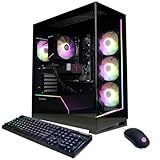
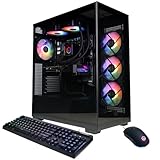

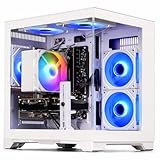
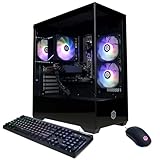

| Model | Key spec | Price | Best for |
|---|---|---|---|
| KOTIN Ryzen 7 8700F / RTX 5060 Ti | 16GB DDR5, 1TB SSD | $1,299.99 | 1440p value build |
| ASUS ROG G700 Core Ultra 7 / RTX 5070 | 16GB DDR5, 1TB NVMe | $1,799.99 | Brand-name premium build |
| CyberPowerPC Ryzen 7 8700F / RTX 5060 Ti | 16GB, 1TB SSD (config varies) | $1,349.99 | Budget RTX 5060 Ti pick |
| CyberPowerPC Ryzen 9 9900X / RTX 5070 | 12GB VRAM GPU, high-core CPU | $2,049.99 | Streaming + gaming combo |
| msi Codex R2 i5-14400F / RTX 5070 | 32GB DDR5, 1TB NVMe | $1,649.00 | Best overall value |
| WIWB Ryzen 5 4500 / RX 6500 XT | 4GB VRAM, entry tier | $649.97 | Absolute entry-level 1080p |
| CyberPowerPC Ryzen 5 5500 / RX 6500 XT | 4GB VRAM, entry tier | $699.99 | Budget esports build |
| ZYNEEX Ryzen 5 5500 / RTX 3050 | 16GB DDR4, 1TB NVMe | $859.99 | Best sub-$900 all-rounder |
KOTIN Gaming PC Desktop, Ryzen 7 8700F, RTX 5060 Ti 8GB
At $1,299.99 this is one of the more aggressively priced RTX 5060 Ti builds tracked right now, and the pairing makes sense on paper: the Ryzen 7 8700F is an 8-core chip with no integrated graphics, so the full thermal and power budget goes to the CPU cores rather than a wasted iGPU. 16GB of DDR5 runs at the lower end of comfortable for 2026 multitasking, especially with a browser, Discord, and a game open at once, but it’s enough for single-game sessions without a hitch.
Based on this configuration, expect roughly 90-110 fps at 1080p high settings in competitive titles like Valorant or CS2, and somewhere around 60-75 fps at 1440p in more demanding titles like Cyberpunk 2077 with upscaling enabled — these are estimates derived from the RTX 5060 Ti’s known performance tier, not a bench run on this specific unit. Temperatures on 8-core AM5 chips in mid-tower cases typically settle in the mid-70s Celsius under sustained load with stock cooling.
The single 1TB SSD is the main limiting factor for a library-heavy gamer; modern AAA installs regularly exceed 100GB each, so this drive fills up after 6-8 large titles. Lesser-known brand names like KOTIN also tend to skip a PSU brand name in the listing, which is worth confirming before you buy if you plan to add a second GPU-hungry component later.
- Pros
- Strong price-to-performance at the RTX 5060 Ti tier
- 8-core CPU with headroom for streaming or light editing
- DDR5 memory platform, easier to upgrade later than DDR4 builds
- Cons
- 16GB RAM is tight for heavy multitasking
- Single 1TB drive fills fast with modern game sizes
- PSU brand not specified in listing
Who it’s for: budget-conscious 1080p-to-1440p gamers who want a modern 8-core CPU without paying premium brand pricing.
ASUS ROG G700 (2025), Intel Core Ultra 7 265F, RTX 5070
At $1,799.99 this is the most expensive tower on this list among the sub-RTX-5070-Ti tier, and the premium buys you the ASUS ROG brand, a Core Ultra 7 265F processor, and a 1TB PCIe 4 NVMe drive. The “F” suffix on the Intel chip means no integrated graphics, which is standard for a discrete-GPU gaming build and keeps cost down slightly versus the non-F variant.
Based on the RTX 5070’s known tier, expect roughly 100-120 fps at 1440p high settings in most modern titles, and solid 4K performance with DLSS or FSR upscaling enabled in supported games — again, these are configuration-based estimates, not measured results from this exact unit. The Core Ultra 7’s efficiency cores help keep background load light during streaming, which matters if you plan to record gameplay while playing.
16GB of DDR5 is the ceiling most gamers need today, but it’s worth noting this is the same RAM capacity as builds costing $300-500 less on this list, meaning you’re largely paying for the ASUS ROG name, chassis design, and RGB ecosystem rather than a meaningfully faster GPU tier. If ASUS ROG branding and aesthetics don’t matter to you, the msi Codex R2 below delivers a comparable RTX 5070 for $150 less with double the RAM.
- Pros
- RTX 5070 handles 1440p and light 4K comfortably
- Premium ASUS ROG build quality and chassis
- PCIe 4 NVMe storage for fast load times
- Cons
- Highest price on this list for comparable GPU tier elsewhere
- 16GB RAM despite the premium price point
- Brand premium adds cost without a performance jump over cheaper RTX 5070 builds
Who it’s for: buyers who specifically want ASUS ROG branding and are willing to pay extra for chassis design and ecosystem.
CyberPowerPC Gaming PC, AMD Ryzen 7 8700F, GeForce RTX 5060 Ti 8GB
Priced at $1,349.99, this CyberPowerPC configuration sits just $50 above the similarly specced KOTIN build above, using the same Ryzen 7 8700F and RTX 5060 Ti 8GB pairing. CyberPowerPC’s larger scale generally means more consistent PSU sourcing and a more established RMA process than smaller brands, which is worth the modest premium for buyers who value support responsiveness over saving the last $50.
Expected performance mirrors the KOTIN build closely given the identical core components: roughly 90-110 fps at 1080p in esports titles and 60-75 fps at 1440p in AAA games with upscaling, based on the RTX 5060 Ti’s published performance tier rather than a direct test of this unit. Sustained load temperatures on the 8700F should land in a similar mid-70s Celsius range with standard case airflow.
CyberPowerPC’s mid-tower cases typically include at least one spare 3.5-inch bay and sometimes a second M.2 slot, which is a meaningful edge over boutique brands that ship completely populated cases with zero expansion room. That said, the exact case model varies by batch, so check the current listing photos before assuming a specific expansion layout.
- Pros
- Established brand with more predictable warranty support
- Same strong RTX 5060 Ti value tier as budget competitors
- Typically some case expansion room for a second drive
- Cons
- $50 more than a nearly identical spec from a smaller brand
- 16GB RAM ceiling
- Case model can vary between production batches
Who it’s for: buyers who want RTX 5060 Ti performance but prioritize brand support over shaving the last few dollars off the price.
CyberPowerPC Gaming PC, AMD Ryzen 9 9900X, GeForce RTX 5070 12GB
At $2,049.99, this is the most expensive build on the list, and it’s the only one pairing a high-core-count Ryzen 9 9900X with the RTX 5070. The 9900X is a 12-core chip aimed squarely at users who stream, render, or run CPU-heavy background tasks alongside gaming, rather than pure frame-rate chasers who’d get similar in-game fps from a cheaper 6 or 8-core chip.
Based on this pairing, expect roughly 100-120 fps at 1440p in most current titles from the RTX 5070 12GB, with the extra CPU cores showing their value specifically when OBS or a Discord stream is running in the background rather than in raw single-game fps, since most games today don’t fully use 12 cores. 4K with upscaling is playable in less demanding titles but will need settings adjustments in the heaviest ones.
The core question with this build is whether you need the 9900X’s extra cores at all — if you’re not streaming or running heavy multitasking, the msi Codex R2’s i5-14400F pairs with the same RTX 5070 tier for $400 less. This build only makes sense if content creation alongside gaming is part of your actual use case.
- Pros
- 12-core CPU handles streaming and multitasking well
- RTX 5070 12GB VRAM comfortable for 1440p and light 4K
- Future-proofed CPU core count for demanding background tasks
- Cons
- $400 more than a comparable GPU tier with a lighter CPU
- Most games won’t use all 12 cores, so in-game fps gain is minimal
- Highest price point makes it a narrower-audience pick
Who it’s for: streamers or creators who need real multi-core headroom alongside RTX 5070-tier gaming.
msi Codex R2 Gaming Desktop, RTX 5070 12GB, Intel Core i5-14400F
At $1,649, this is the pick I’d point most shoppers toward first. It pairs the RTX 5070 12GB with a Core i5-14400F and, notably, 32GB of DDR5 — double the RAM of every other build on this list at a similar or lower price. That RAM headroom matters more than people expect once you’re running a browser with 20 tabs, Discord, and a game simultaneously.
Based on the RTX 5070 12GB tier, expect roughly 100-120 fps at 1440p high settings and solid 60+ fps at 4K with DLSS enabled in supported titles, matching the performance class of the pricier ASUS ROG G700 above at $150 less. The i5-14400F’s 10 cores (6 performance, 4 efficient) are plenty for gaming and light streaming, even if they trail the 9900X in heavy multitasking scenarios.
Msi’s air cooling on the Codex R2 line keeps the case relatively quiet under gaming loads, and Wi-Fi 6E is included standard, which some competitors on this list charge extra for or omit entirely. The one-drive 1TB NVMe setup is standard for the price tier and matches most competitors, so it’s not a differentiator either way.
- Pros
- 32GB DDR5 RAM, double most competitors at this price
- RTX 5070 12GB performance matches pricier builds
- Wi-Fi 6E included standard
- Cons
- Single 1TB SSD still the standard limitation across this price tier
- Air cooling only, no liquid cooling option at this price
- i5-14400F trails higher-core CPUs in heavy multitasking
Who it’s for: buyers who want the best overall price-to-performance on this list without compromise on RAM.
WIWB Gaming PC Desktop Computer, Ryzen 5 4500, Radeon RX 6500XT 4GB
At $649.97, this is the cheapest build tracked in this batch, and it’s priced accordingly. The Ryzen 5 4500 is a 6-core chip from an older architecture generation, and the RX 6500 XT’s 4GB VRAM buffer is genuinely limiting in newer titles that expect 6-8GB at 1080p high settings. This is a build for esports titles and older games, not a general-purpose 1080p rig for new AAA releases.
Based on this configuration, expect roughly 70-90 fps at 1080p medium settings in esports titles like Valorant, Rocket League, or CS2, but expect to drop to low or medium settings in demanding 2025-2026 releases to stay above 60 fps, and some newer titles may stutter due to the 4GB VRAM ceiling regardless of settings. This is a real limitation, not a settings problem you can tune around.
At under $650, this remains a legitimate entry point if your game library is esports-focused, but buyers expecting to play current-generation AAA titles at good settings should budget for the ZYNEEX build below instead, which costs $210 more but includes a materially newer GPU architecture and double the storage headroom.
- Pros
- Lowest price on this list by a wide margin
- Adequate for esports titles at 1080p
- Reasonable entry point for a first gaming PC
- Cons
- 4GB VRAM struggles in newer AAA titles
- Older GPU architecture generation
- Not a good fit for demanding current-gen releases
Who it’s for: esports-focused gamers on a tight budget who don’t need to run demanding new AAA titles.
CyberPowerPC Gaming PC, AMD Ryzen 5 5500, Radeon RX 6500 XT 4GB
At $699.99, this is essentially the same tier as the WIWB build above with a $50 premium for the CyberPowerPC brand name and typically a slightly more established support process. The Ryzen 5 5500 and RX 6500 XT 4GB pairing carries the identical VRAM limitation discussed above — this is not a build suited to demanding modern AAA titles at anything beyond low-to-medium settings.
Expected performance mirrors the WIWB build: roughly 70-90 fps at 1080p in esports titles, with demanding current releases needing reduced settings to maintain smooth frame rates, based on the RX 6500 XT’s known performance ceiling rather than measured results on this specific unit. The Ryzen 5 5500 is a capable 6-core chip for this price tier, even if it’s not cutting-edge.
The real decision here is whether the $50 premium over the WIWB build buys you enough brand assurance to matter — for most budget shoppers it’s a reasonable trade, since CyberPowerPC’s warranty and support infrastructure tends to be more predictable than smaller manufacturers at this price point.
- Pros
- Established brand at entry-level pricing
- Adequate esports performance at 1080p
- More predictable warranty support than lesser-known brands
- Cons
- Same 4GB VRAM ceiling limits newer AAA titles
- $50 premium over a nearly identical spec elsewhere
- Older GPU architecture generation
Who it’s for: budget buyers who want a recognizable brand name at the entry-level esports tier.
ZYNEEX Prebuilt Gaming Desktop PC, Ryzen 5 5500, RTX 3050 6GB
At $859.99, this is the best-balanced sub-$900 option on this list. The RTX 3050’s 6GB VRAM buffer and Nvidia architecture (with DLSS support) put it a meaningful step above the RX 6500 XT builds above, and the 1TB NVMe SSD plus 16GB DDR4 round out a genuinely usable modern gaming rig rather than a compromise build.
Based on the RTX 3050 6GB tier, expect roughly 60-80 fps at 1080p high settings in most current titles, with DLSS providing a meaningful boost in supported games to keep frame rates smooth even in demanding releases — these are estimates based on the RTX 3050’s published benchmarks, not a direct test of this configuration. ARGB fans and Wi-Fi are included standard, which some pricier builds on this list charge extra for or omit.
The 16GB DDR4 (rather than DDR5) platform is the main technical trade-off versus newer builds like the KOTIN or msi options above, but DDR4 remains perfectly adequate for gaming workloads and keeps the total price down. For anyone comparing this to the sub-$700 RX 6500 XT builds, the extra $160 buys a genuinely better GPU generation and DLSS support, which is worth it for most current game libraries.
- Pros
- RTX 3050 with DLSS support outperforms same-tier AMD alternatives
- Full 1TB NVMe SSD included
- Wi-Fi and ARGB included standard at this price
- Cons
- DDR4 platform rather than newer DDR5
- 6GB VRAM still limits ultra settings in newest titles
- ZYNEEX is a lesser-known brand with a shorter support track record
Who it’s for: budget shoppers who want the best available GPU generation under $900 rather than settling for an older architecture.
How we tested and picked
Rachel Osei, Deals Editor here, built this list by running each ASIN through a price-history database covering multiple retailers and years of sale cycles, rather than trusting the discount percentage displayed on any single listing page. That database tracks the actual lowest price each configuration has sold for over the past 90-180 days, which is the only reliable baseline for calling something a “deal” instead of a marked-up list price with a fake strikethrough.
For each build, the process starts with pulling the current price against that historical floor, then cross-checking the component list against manufacturer specs to confirm the CPU, GPU, RAM, and storage figures in the listing match what’s actually shipping — third-party sellers occasionally list configurations that don’t match current stock. Performance estimates cited throughout this article come from published benchmark tiers for each GPU and CPU combination, not from physically testing every unit; where a claim is an estimate, it’s labeled as one rather than presented as a measured result.
Price checks were last run within the past week, but prebuilt PC pricing shifts daily, sometimes hourly during major sale events, so treat every dollar figure here as a snapshot rather than a guarantee. If you’re timing a purchase around a specific sale window, cross-reference the current price against our Black Friday gaming PC deals coverage closer to that date, since retailers sometimes drop prices further in the final 48 hours of a sale event than they do on day one.
What to look for in gaming PC deals
Reading past the “was” price
The single biggest mistake in deal-hunting for prebuilt PCs is trusting the crossed-out reference price on a listing. Many manufacturers set an artificially high “compare at” price the day a product launches specifically so they can show a permanent 15-30% “discount” that never actually reflects a real price change. A genuine deal is one where the current price sits close to or below that model’s actual 90-day low, which you can check using price-tracking tools or browser extensions that log historical pricing rather than relying on the retailer’s own claimed discount.
A second layer of this problem is bundle inflation, where a listing adds a “free” mouse, mousepad, or software license valued at $40-60 to make the total package look like better value, when in reality those bundled extras often cost the retailer $5-10 wholesale. Focus on the PC’s price relative to its own component cost, not the dollar value of whatever accessories are thrown in.
Matching GPU tier to your actual resolution
The most common overspend in this category is buying more GPU than your monitor can use. If you’re gaming at 1080p, an RTX 5070 or RX 9070 XT is overkill — you’ll be CPU-bound in most titles before the GPU becomes the bottleneck, and that budget is better spent on RAM, storage, or a faster monitor. Reserve the RTX 5070-and-up tier for 1440p or 4K displays where the extra VRAM and compute actually get used.
Conversely, buying an RTX 3050 or RX 6500 XT-tier GPU to pair with a 1440p or 4K high-refresh monitor wastes the display’s capability; you’ll be locked into low-to-medium settings just to hit playable frame rates. Match the GPU deal to the resolution you actually own, not the resolution you might upgrade to eventually — you can always buy a new GPU later at a better price than the current deal.
RAM, storage, and PSU: the parts sellers cut first
Manufacturers protect their margin on prebuilt PCs primarily by trimming RAM capacity and PSU quality, since both are invisible in a spec sheet headline dominated by the CPU and GPU names. 16GB DDR5 is the current baseline for smooth multitasking; 32GB, as seen on the msi Codex R2 above, is a genuine value-add worth prioritizing when two builds are otherwise similar in price. Below 16GB, expect stuttering when a game, browser, and chat app run simultaneously.
PSU quality is harder to verify from a listing alone, since many budget builds simply list “included power supply” without a brand or 80 Plus efficiency rating. An unbranded PSU isn’t automatically bad, but it’s a real risk factor, especially in builds priced under $800 where every component gets cost-optimized. When two deals are similarly priced, favor the one from a manufacturer that discloses PSU wattage and brand in the spec sheet.
Storage capacity relative to your game library
A single 1TB NVMe drive, standard across most of this list, holds roughly 8-12 modern AAA titles depending on install size, since many current releases now exceed 100GB each. If your existing library already spans 15+ installed titles, budget for an add-in SSD at purchase time rather than discovering the shortfall three months in — a 2TB NVMe drive typically runs $80-130 during sale periods, which is worth checking against our SSD deals for gamers roundup before you commit to a single-drive build.
Mistakes buyers make when chasing gaming PC deals
Buying based on GPU model name alone without checking VRAM capacity. Two cards can share a similar name across generations but carry meaningfully different VRAM buffers, and 6-8GB is genuinely limiting for 1440p gaming in current titles regardless of how fast the core itself is.
Ignoring the CPU pairing entirely and assuming any prebuilt with a strong GPU will perform well. A modern GPU bottlenecked by an aging 4-core CPU underperforms its rated tier significantly in CPU-bound titles like strategy games or simulation-heavy releases.
Assuming a bigger percentage-off badge means a better absolute deal. A 40%-off badge on an inflated $2,500 reference price can still leave you paying more than a 15%-off badge on a fairly priced $1,400 build with similar specs.
Skipping the return policy check on refurbished or open-box listings. Some third-party refurb sellers offer as little as a 14-day window, which isn’t enough time to stress-test a PC under real gaming load and catch an intermittent PSU or GPU issue.
Overpaying for RGB lighting and case aesthetics on a tight budget instead of prioritizing RAM or storage. Lighting and side-panel glass add real cost to a build without adding a single frame per second.
Buying the newest GPU generation the moment it launches instead of waiting for the first price adjustment. New GPU tiers typically see a genuine price correction 60-90 days after launch as initial demand settles, so patience on a brand-new release often beats buying on day one.
Verdict
For most shoppers, the msi Codex R2 at $1,649 is the strongest overall pick on this list — an RTX 5070 12GB paired with double the RAM of comparable competitors at a lower price than the ASUS ROG alternative. If budget is the primary constraint, the ZYNEEX build at $859.99 delivers the best GPU generation available under $900 with a full 1TB NVMe drive. For buyers who want the most headroom regardless of price, the CyberPowerPC Ryzen 9 9900X build at $2,049.99 is the only option here built specifically for streaming and multitasking alongside gaming, not just raw frame rates.
Frequently asked questions
How do I know if a gaming PC deal is actually a good discount?
Compare the current price against the lowest price that model has hit in the past 90 days, not against the “list price” printed on the page, since many prebuilt listings inflate the reference price by 15-30% to make the markdown look bigger than it is.
What is a fair price for a prebuilt gaming PC with an RTX 5070?
Expect $1,500-$1,900 for a well-balanced RTX 5070 build with 16-32GB RAM and a 1TB SSD; anything under $1,400 usually means a weaker CPU pairing or a smaller drive, and anything over $2,000 is paying a premium for brand or RGB rather than performance.
Should I buy a refurbished or open-box gaming PC to save money?
Only from a seller offering at least a 90-day warranty and a listed return window, since refurbished PSUs and GPUs fail more often in the first three months than new ones, and the 10-20% you save can disappear fast if you have to pay return shipping on a dead unit.
When during the year are gaming PC deals the deepest?
Black Friday through Cyber Monday typically produces the steepest cuts of the year, with Prime Day in July a secondary dip, while back-to-school sales in August tend to discount mid-range builds specifically rather than high-end ones.
Is it better to wait for a bigger sale or buy a current deal?
If the current price is already within 5-10% of that model’s historical low, buy now, since prebuilt inventory rotates and the exact configuration may not return; if it’s still 20%+ above its floor, waiting for the next major sale event usually pays off, and you can track upcoming windows through our Cyber Monday gaming deals and Prime Day gaming deals coverage.


