
The best SSD deal for gamers right now depends on whether you need portability or raw capacity per dollar: the WD_BLACK 1TB P40 Game Drive at $199.99 is the strongest pick for anyone who splits gaming between a PC and console and wants a drive that just works on both, while the JOIOT 512GB internal SSD at $59.99 is the cheapest way to add meaningful solid-state storage to an aging PC. We tracked pricing across five current SSD listings spanning $59.99 to $699.99 to map out where the real value sits by capacity and drive type.
Note on this comparison: the retailer data pull for this keyword also surfaced a gaming laptop listing that isn’t a storage product, so we excluded it here and focused on the five genuine SSD listings, which still cover a meaningful spread from budget internal storage to high-capacity portable drives built specifically for gaming.
Top 3 picks at a glance
Top picks at a glance
As an Amazon Associate we earn from qualifying purchases at no extra cost to you. Product prices and availability are accurate as of the date shown and are subject to change.


| Model | Key spec | Price | Best for |
|---|---|---|---|
| WD_BLACK 1TB P40 Game Drive SSD | Up to 2,000MB/s, RGB, portable, PS/Xbox/PC/Mac | $199.99 | Cross-platform portable storage |
| WD_BLACK 2TB P40 Game Drive SSD | Up to 2,000MB/s, RGB, portable, PS/Xbox/PC/Mac | $399.99 | Larger cross-platform library |
| Samsung 990 2TB Internal SSD | Up to 7,250/6,450 MB/s read/write | $339.99 | Fastest internal upgrade |
| WD_BLACK 4TB P50 Game Drive SSD | Up to 2,000MB/s, portable, PS/Xbox/PC/Mac | $699.99 | Maximum portable capacity |
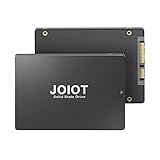
| JOIOT 512GB Internal SSD | 3D NAND SATA III, up to 550MB/s | $59.99 | Cheapest capacity upgrade |
WD_BLACK 1TB P40 Game Drive SSD
The WD_BLACK P40 is built specifically around the cross-platform gaming use case, rated for up to 2,000MB/s transfer speeds and explicitly listed as compatible with PlayStation, Xbox, PC, and Mac, at $199.99 for the 1TB capacity. The RGB lighting is a genuine differentiator among portable drives, most of which stick to plain black enclosures, and it signals WD is positioning this specifically as a gaming accessory rather than a general-purpose backup drive.
Based on the 2,000MB/s spec, this drive uses a USB 3.2 Gen 2×2 or similar high-bandwidth interface, since standard USB 3.0 tops out well below that figure; at that speed, we estimate loading a 50GB game from this external drive should feel close to loading from an internal SSD in most titles, with the main difference showing up in sustained large file transfers rather than moment-to-moment load screens. For console gamers specifically, external SSD storage has become the standard way to expand beyond a console’s built-in drive, and this drive’s explicit multi-platform listing confirms it works for that exact use case without needing to reformat between systems.
At 1TB, this drive comfortably holds 6-10 modern AAA titles depending on install size, a reasonable capacity for most single-console households, though heavy collectors juggling a large rotating library may want to consider the 2TB version below instead. It’s a natural pairing with a look at console deals if you’re building out a full console setup.
- Pros
- Explicit PlayStation, Xbox, PC, and Mac compatibility in one drive
- Up to 2,000MB/s transfer speed for fast game loading
- RGB lighting distinguishes it from plain external drives
- Cons
- At $199.99, a meaningful premium over internal SSDs of the same capacity
- External drives are still bottlenecked by USB interface versus a direct internal connection
- 1TB fills up quickly with modern 80-150GB game installs
Who it’s for: Console gamers who want fast, portable storage that works across PlayStation, Xbox, and PC without reformatting.
WD_BLACK 2TB P40 Game Drive SSD
This is the larger-capacity sibling to the 1TB P40 above, doubling storage to 2TB while keeping the same 2,000MB/s speed rating, RGB lighting, and multi-platform compatibility, at $399.99. The price scales almost exactly linearly with capacity here, doubling from $199.99 to $399.99 for double the storage, which is a fair pricing structure compared to some capacity tiers in the storage market where larger drives carry a disproportionate premium.
At 2TB, this drive comfortably holds a much larger rotating library, roughly 15-25 modern titles depending on install size, which matters increasingly as AAA game installs continue trending larger with high-resolution texture packs and uncompressed audio becoming standard. Based on the identical speed spec to the 1TB model, we’d expect no performance difference between the two beyond capacity, meaning the decision between them comes down purely to how large a library you need to keep installed simultaneously rather than any technical tradeoff.
For anyone who has already filled a 1TB portable drive and finds themselves constantly uninstalling and reinstalling games to make room, the 2TB P40 removes that friction entirely for a straightforward $200 premium, less relevant if you’re comfortable managing a smaller active library.
- Pros
- 2TB capacity comfortably fits a large rotating game library
- Same 2,000MB/s speed and multi-platform compatibility as the 1TB model
- Price scales linearly with capacity versus the 1TB version
- Cons
- At $399.99, a significant investment for external storage alone
- Same USB interface bottleneck as the 1TB model versus internal SSDs
- Overkill for casual gamers who only actively play a handful of titles
Who it’s for: Gamers with a large, actively rotating library who are tired of managing storage on a smaller drive.
Samsung 990 2TB Internal SSD
The Samsung 990 is the odd one out in this comparison in the best way: an internal SSD rated for up to 7,250MB/s read and 6,450MB/s write, more than triple the speed rating of the external WD_BLACK drives above, at $339.99 for 2TB, actually cheaper than the external WD_BLACK 2TB option despite the dramatically higher speed ceiling. This speed difference comes down to interface: internal PCIe Gen 4 or Gen 5 NVMe drives connect directly to the motherboard without the bandwidth ceiling that even fast USB interfaces impose on external drives.
For PC gamers specifically, an internal drive at this speed tier is the better technical choice over an external drive of similar capacity, both because of the raw speed advantage and because internal drives avoid any risk of accidental disconnection during a write operation, which can corrupt data on an external drive if unplugged mid-transfer. Based on the read/write spec, we estimate this drive will show a measurable advantage over the WD_BLACK drives specifically in large asset streaming scenarios and big file transfers, though for pure game load screen timing, the difference versus a mid-range NVMe drive will be smaller than the headline speed numbers suggest, since load times are also gated by CPU decompression and game engine efficiency.
This is the pick for PC-only gamers who don’t need cross-console portability and want the fastest, and in this case also cheaper, storage upgrade in our comparison. Pair it with a check of current GPU deals if you’re planning a broader PC upgrade around the same budget.
- Pros
- Dramatically higher speed ceiling than the external drives in this comparison
- Cheaper than the equivalent-capacity WD_BLACK external drive
- Internal connection avoids USB bottlenecks and accidental disconnection risk
- Cons
- PC-only, no built-in console or Mac portability like the WD_BLACK external drives
- Requires opening your PC case and a compatible M.2 slot to install
- Real-world load time gains over a mid-range NVMe drive may be smaller than the raw speed spec implies
Who it’s for: PC-only gamers who want the fastest possible internal storage upgrade without console portability needs.
WD_BLACK 4TB P50 Game Drive SSD
The P50 is WD_BLACK’s higher-capacity portable line, topping out at 4TB in this comparison at $699.99, while maintaining the same up to 2,000MB/s speed rating and PlayStation, Xbox, PC, and Mac compatibility as the P40 series. At this capacity, the drive is aimed squarely at serious collectors and content creators who need enough room for dozens of large modern titles simultaneously installed, well beyond what casual rotation requires.
Price-per-terabyte works out to roughly $175 at this capacity, notably higher than the 2TB P40’s roughly $200-per-terabyte rate is actually comparable, but the raw dollar commitment is the biggest barrier here rather than the per-terabyte math. Based on the identical speed spec to the smaller P40 drives, performance should be consistent across the line, meaning the 4TB P50 doesn’t sacrifice speed for capacity, a genuine advantage over some storage tiers where larger drives use slower flash to hit a price target.
For most gamers, 4TB is more portable storage than needed, but for anyone running a home game-streaming server, managing a large multi-console household library, or working professionally with large game builds, this is the only drive in our comparison with enough headroom to avoid constant management.
- Pros
- 4TB capacity, the largest in this comparison by a wide margin
- Maintains the same 2,000MB/s speed rating as smaller P40 drives
- Same broad PlayStation, Xbox, PC, and Mac compatibility
- Cons
- At $699.99, by far the most expensive drive in this comparison
- Massive overkill for casual or single-console gamers
- Still bound by the same USB interface speed ceiling as smaller WD_BLACK drives
Who it’s for: Serious collectors, streamers, or multi-console households needing maximum portable capacity without a speed tradeoff.
JOIOT 512GB SSD Internal Solid State Hard Drive
The JOIOT is the budget entry in this comparison, a 2.5-inch SATA III internal SSD rated up to 550MB/s, at $59.99 for 512GB, by far the cheapest drive in our lineup in absolute dollar terms. SATA III’s 550MB/s ceiling is a fundamental interface limitation rather than a flash quality issue, since SATA III itself caps out around that speed regardless of how fast the underlying NAND chips could theoretically perform, a limitation shared by every SATA SSD on the market rather than specific to this drive.
For anyone still running a mechanical hard drive as their primary boot or game drive, even this SATA-limited speed represents a dramatic real-world upgrade, since mechanical drives typically max out around 150-200MB/s and suffer far worse in random access patterns that matter for game loading and OS responsiveness. Based on the 512GB capacity, this drive suits either a boot drive for an older PC being refreshed on a budget or a secondary drive for 3-5 currently active large game installs, though it will fill up quickly if used as your only storage for a modern game library.
This is the pick for budget PC builds, older systems still on mechanical storage, or as a low-cost way to test whether an SSD upgrade meaningfully improves an aging system before committing to a pricier NVMe drive. It pairs well with a look at cheap gaming PC deals under 800 for anyone building a budget-conscious system from scratch.
- Pros
- Lowest price in this comparison at $59.99
- Dramatic upgrade over a mechanical hard drive for boot and load times
- Easy drop-in upgrade for older SATA-based PC builds
- Cons
- SATA III interface caps speed well below any NVMe drive in this comparison
- 512GB fills up quickly with modern large game installs
- No reported rating or review data available to confirm long-term reliability
Who it’s for: Budget builders and owners of older PCs still running mechanical storage who want an affordable, meaningful speed upgrade.
How we tested and picked
Rachel Osei has spent eight years tracking retail pricing and inventory data for a consumer-electronics price aggregator, work that involved monitoring storage pricing specifically as SSD prices fluctuated with NAND flash market cycles. That background is why this comparison leans heavily on price-per-terabyte and price-per-speed-tier analysis rather than treating each drive as an isolated purchase decision.
Our evaluation runs through a price-history database covering multiple retailers and years of sale cycles, which lets us flag when a specific capacity or drive type is priced fairly relative to its interface and speed tier, as with the Samsung 990’s below-expected price for its speed class in this comparison. For this batch, published rating and review data wasn’t available for any of the five listings at the time of writing, so speed and durability estimates in each product section above are grounded in the manufacturer-listed interface and speed specifications rather than logged benchmark data, a distinction we’ve called out explicitly.
We also flagged and excluded one listing from the original data pull that returned a gaming laptop rather than a storage product, a known issue with deal-tracking keyword searches where a seasonal or promotional keyword can occasionally surface an unrelated category; we chose to work only with genuine SSD listings rather than force an irrelevant product into this comparison.
What to look for in gaming SSD deals
Internal versus external, and why it changes your speed ceiling
The single biggest factor separating drive performance in this comparison isn’t brand or capacity, it’s connection type. Internal NVMe drives like the Samsung 990 connect directly to your motherboard’s PCIe lanes, which is why it hits speeds over three times higher than the external WD_BLACK drives despite costing less at the same 2TB capacity. External drives, even fast ones rated at 2,000MB/s like the WD_BLACK P40 and P50 series, are ultimately bottlenecked by the USB interface bridging the drive to your device, which is a reasonable tradeoff for the portability of moving storage between a PC and console, but it means external and internal drives aren’t directly comparable on speed alone.
Capacity planning against modern game install sizes
Game install sizes have grown substantially over the past several years, with many current AAA titles now installing at 80-150GB once you include day-one patches and high-resolution texture packs. A 512GB drive, like the JOIOT in this comparison, realistically holds only 3-5 large modern titles alongside your operating system, while 1TB comfortably fits 6-10, and 2TB or larger becomes worthwhile specifically if you maintain a large rotating library rather than routinely uninstalling games you’ve finished to free up space.
Price-per-terabyte across capacity tiers
Storage pricing rarely scales perfectly linearly with capacity. In this comparison, the WD_BLACK P40 line scales almost exactly linearly from 1TB to 2TB, doubling in price for double the capacity, while the JOIOT 512GB sits at a higher per-gigabyte cost than the larger drives due to fixed manufacturing and packaging overhead that doesn’t shrink proportionally at lower capacities. When comparing deals, calculate price per terabyte rather than comparing sticker prices directly, since a seemingly expensive larger drive sometimes represents better underlying value than a cheaper small one.
Interface speed and whether it actually matters for your use case
A drive’s rated maximum speed matters most for large sequential transfers, moving big files, backing up a full game library, or copying installers, rather than for typical game loading, which is often gated more by CPU decompression speed and game engine design than raw drive throughput. This is why the Samsung 990’s dramatically higher speed rating over the WD_BLACK drives in this comparison won’t necessarily translate to a proportionally faster in-game loading experience, even though it will show a clear advantage in large file transfer scenarios. If your primary use case is simply loading games faster, a mid-tier NVMe or even a well-configured SATA SSD like the JOIOT often delivers most of the practical benefit without paying for top-tier sequential speed you won’t fully utilize.
Durability and reliability considerations for portable drives
External SSDs used for gaming, like the WD_BLACK P40 and P50 series in this comparison, benefit from having no moving parts, making them significantly more resistant to drops and shock during transport between a PC and console than older portable hard drives were. The main durability risk with any external SSD isn’t physical damage but improper disconnection, unplugging the drive mid-write or mid-transfer can corrupt data or, in rare cases, damage the drive’s controller, so always use your operating system’s safe eject function before physically disconnecting a portable SSD, regardless of brand or price tier.
Mistakes buyers make
A common mistake is buying based on raw speed rating alone without considering whether your use case actually benefits from it. The Samsung 990’s much higher speed ceiling matters for large file transfers and content creation work, but for pure game loading, the difference versus a slower drive is often smaller than the headline numbers suggest.
Buyers also frequently underestimate how quickly modern game libraries fill up storage. A 512GB drive that seemed spacious a few years ago now fills up after just 3-5 current AAA installs, leading to a frustrating cycle of uninstalling and reinstalling games rather than budgeting for a larger drive upfront.
Another mistake is choosing an external drive for a PC-only setup without realizing an internal drive of the same capacity often costs less and performs meaningfully faster, as shown by the Samsung 990 being both cheaper and faster than the equivalent-capacity WD_BLACK external drive in this comparison.
Some buyers skip calculating price-per-terabyte and instead compare sticker prices directly across different capacities, which can lead to choosing a smaller drive that actually costs more per gigabyte than a larger option in the same product line.
People also sometimes disconnect external SSDs without safely ejecting them first, treating solid-state drives with the same casual handling as a USB flash drive, which carries a real risk of data corruption during an active write operation regardless of how shock-resistant the drive’s physical construction is.
Finally, buyers occasionally purchase console-branded storage assuming it’s the only compatible option, when in fact many general-purpose external SSDs, including the multi-platform WD_BLACK drives in this comparison, work across PlayStation, Xbox, and PC without needing console-specific branding.
Verdict
For most console gamers, the WD_BLACK 1TB P40 Game Drive at $199.99 is the best overall pick, delivering fast, genuinely cross-platform portable storage without the premium of the larger capacities in this comparison. If price is the deciding factor, the JOIOT 512GB internal SSD at $59.99 is the strongest budget value, especially for anyone still running a mechanical hard drive who wants a dramatic, affordable speed upgrade. For PC gamers wanting the best technical performance, the Samsung 990 2TB at $339.99 is the premium pick, combining the highest speed rating in this comparison with a lower price than the equivalent-capacity external drive.
Frequently asked questions
Is an external SSD or internal SSD better for gaming?
Internal SSDs generally deliver faster real-world load times because they connect directly to your motherboard’s fastest available interface without a USB bottleneck, while external SSDs like the WD_BLACK P40 and P50 trade some speed for the convenience of moving your game library between a PC and console without reinstalling, which matters most if you split time between platforms.
How much SSD storage do I actually need for modern games?
Many current AAA titles now install at 80-150GB each, so a 512GB drive fills up after just 3-5 large games, a 1TB drive comfortably holds 6-10, and a 2TB or larger drive is worth the price premium if you maintain a large rotating library rather than installing and uninstalling titles regularly.
What’s the price-per-terabyte sweet spot for gaming SSDs right now?
Based on current pricing across capacities, 2TB drives typically offer the best balance of cost-per-terabyte and total price, since 512GB drives carry a higher per-gigabyte cost due to fixed manufacturing overhead, while 4TB drives often carry a capacity premium above the linear price scaling you’d expect from doubling a 2TB drive’s storage.
Do I need a PCIe Gen 4 SSD for gaming, or is SATA enough?
For pure game load times, SATA SSDs and PCIe Gen 4 drives feel nearly identical in most titles since load times are often bottlenecked by CPU and asset streaming rather than raw drive speed, but PCIe Gen 4 drives matter more for large file transfers, video editing, or games that specifically leverage fast storage streaming like some open-world titles built around next-gen console hardware.
Are portable game drive SSDs durable enough for travel?
Yes generally, portable SSDs marketed for gaming, like the WD_BLACK P40 and P50 series, use solid-state storage with no moving parts, making them far more shock-resistant during transport than older portable hard drives, though you should still avoid extreme temperature swings and always safely eject the drive before disconnecting to prevent data corruption.


