
Black Friday is the one day a year when graphics card pricing genuinely bottoms out, and it’s also the day inventory disappears fastest. The GIGABYTE Radeon RX 9070 XT Gaming OC at $739.99 and the ASUS Prime version at $729.99 are both cards worth having bookmarked before the sale opens, since 16GB high-end cards in this price range have historically been among the first to sell through on Black Friday. This guide isn’t just a list of cards, it’s a plan for having your choices ready before the countdown timer hits zero.
Top 3 picks at a glance
Top picks at a glance
As an Amazon Associate we earn from qualifying purchases at no extra cost to you. Product prices and availability are accurate as of the date shown and are subject to change.




| Model | Key spec | Price | Best for |
|---|---|---|---|
| ASUS TUF Gaming RTX 5080 | 16GB GDDR7 | $1,657.42 | 4K and flagship-tier performance |
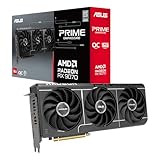
| ASUS Prime Radeon RX 9070 XT | 16GB GDDR6 | $729.99 | Best value at the high end, expect fast sellout |
| ASUS Dual RTX 5060 Ti | 16GB GDDR7 | $761.83 | Nvidia ecosystem with extra VRAM |
| GIGABYTE Radeon RX 9070 XT Gaming OC | 16GB GDDR6, PCIe 5.0 | $739.99 | Backup if the ASUS 9070 XT sells out |
| GIGABYTE RTX 5060 WINDFORCE OC | 8GB GDDR7 | $459.99 | Budget 1080p pick |
| ASUS Prime Radeon RX 9070 EVO | 16GB GDDR6 | $687.38 | Cheapest 16GB 9070-tier card |
| ASUS TUF Gaming RTX 5070 | 12GB GDDR7 | $811.19 | DLSS and ray tracing at 1440p |
| ASRock Intel Arc B570 Challenger | 10GB GDDR6 | $259.99 | Lowest-cost 1080p entry |
ASUS TUF Gaming GeForce RTX 5080 16GB GDDR7 OC Edition Graphics Card
Flagship-tier cards like this one rarely go on true doorbuster-style discount even on Black Friday, since manufacturer demand stays consistently high regardless of the calendar, but the day is still worth checking since even a modest 8-10% price cut on a card this expensive translates into real savings. Based on the card’s tier, expect roughly 90-110 fps at native 4K in demanding AAA titles with ray tracing and upscaling, climbing past 140 fps at 1440p, figures based on the GPU class rather than a direct benchmark on this unit.
16GB of GDDR7 gives this card strong headroom for both current and near-future titles at the highest settings. ASUS’s TUF Gaming cooling is built around sustained-load reliability with a reinforced PCB, which matters for a card that will likely stay in a system for years and see regular heavy use.
Because flagship cards see smaller Black Friday discounts than mid-tier options, this is one of the few cards in this roundup where waiting past the initial doorbuster rush is a reasonable strategy — the price is unlikely to move much further after the first hour, unlike lower-tier cards that can sell through entirely.
Who it’s for: 4K and high-refresh 1440p enthusiasts who’ve already decided this is the tier they want and are simply watching for any meaningful Black Friday price movement.
Pros
- 16GB GDDR7 provides strong long-term headroom at 4K and 1440p
- Robust TUF Gaming cooling built for sustained heavy loads
- Less likely to sell out immediately compared to mid-tier Black Friday doorbusters
Cons
- Highest price in this roundup, and discounts tend to be shallower than on mid-tier cards
- Requires a capable PSU and modern power connectors, confirm compatibility before buying
- Large triple-fan design needs adequate case clearance
ASUS Prime Radeon RX 9070 XT 16GB GDDR6 OC Edition Gaming Graphics Card
This is exactly the kind of card that sells out fastest on Black Friday: strong performance-per-dollar, 16GB VRAM, and a price already competitive before any additional event-specific markdown. Based on the 9070 XT’s tier, expect roughly 120-140 fps at 1440p in demanding AAA titles and 70-85 fps at 4K with upscaling, figures based on the GPU’s known performance class.
If Black Friday pricing pushes this card meaningfully below its already-strong $729.99 base price, expect it to move fast, likely within the first hour of the sale window opening. Having this exact product page bookmarked in advance, along with payment information saved, is a genuinely useful preparation step for a card in this price-to-performance sweet spot.
16GB of GDDR6 at this price point remains a standout spec, and AMD’s driver maturity has improved enough in recent years that day-one game compatibility concerns are less of an issue than they used to be. If this specific card sells out, the GIGABYTE 9070 XT below is the closest direct substitute.
Who it’s for: 1440p gamers prepared to act quickly once Black Friday pricing goes live, given this card’s history of selling through fast.
Pros
- Excellent price-to-performance ratio likely to see high demand on Black Friday
- 16GB VRAM at a price point most competitors don’t match
- AMD’s driver support has matured significantly in recent years
Cons
- High likelihood of selling out quickly given the strong baseline value
- Ray tracing performance trails Nvidia’s equivalent tier
- Prime-branded cooling is functional but not premium-tier compared to ASUS’s higher lines
ASUS Dual GeForce RTX 5060 Ti 16GB GDDR7 OC Edition Gaming Graphics Card
This 16GB variant of the RTX 5060 Ti is a reasonable second choice on your Black Friday shortlist if you specifically want Nvidia’s DLSS and NVENC features and the 9070 XT cards above sell out. Based on the core GPU tier, expect roughly 110-130 fps at 1080p and 85-100 fps at 1440p in demanding AAA titles, with the extra VRAM over the standard 8GB variant helping specifically in texture-heavy and modded game scenarios.
The compact dual-fan cooler on this card fits a wider range of case sizes than the triple-fan flagship options in this roundup, worth noting if your build has tighter clearance. Thermal performance for this power tier typically lands comfortably under sustained gaming load with the Dual cooler design.
At $761.83, this card sits close in price to the 9070 XT options above but trails them in raw 1440p frame rate, meaning it makes sense specifically for buyers prioritizing DLSS and ray tracing over maximum frames per dollar. Include it on your list as the Nvidia-ecosystem alternative if AMD stock runs out first.
Who it’s for: buyers who specifically want Nvidia features and are willing to pay a small premium relative to raw 1440p performance for them.
Pros
- 16GB VRAM meaningfully outclasses the base 8GB RTX 5060 Ti
- Compact dual-fan design fits smaller case builds
- DLSS and NVENC access for streaming and upscaling
Cons
- Lower raw 1440p frame rate than the similarly priced 9070 XT cards in this roundup
- Core GPU performance is unchanged from the standard 8GB variant, only VRAM differs
- Less thermal headroom than triple-fan alternatives under extended load
GIGABYTE Radeon RX 9070 XT Gaming OC 16G Graphics Card, PCIe 5.0
Keep this card on your shortlist specifically as the backup to the ASUS Prime 9070 XT above, since both cards share the same core GPU and VRAM configuration and either one selling out on Black Friday is a real possibility given the strong value both offer. Performance expectations mirror the ASUS card: roughly 120-140 fps at 1440p and 70-85 fps at 4K with upscaling in demanding titles.
GIGABYTE’s Gaming OC line typically ships with a factory overclock and triple-fan cooler, giving it a slight edge in sustained thermal headroom over the ASUS Prime’s dual-fan design, though the real-world frame rate difference between the two is marginal. PCIe 5.0 support is a minor forward-looking spec advantage.
Because both 9070 XT cards in this roundup are strong value picks, it’s worth deciding in advance which one you’d take if only one is still in stock by the time you check out, rather than losing time comparing them while a doorbuster window is actively closing.
Who it’s for: shoppers who want a 9070 XT-tier card and are flexible on which specific brand, as long as one of the two remains in stock.
Pros
- Factory overclock and triple-fan cooling for strong thermal headroom
- Same strong VRAM-to-price ratio as the ASUS Prime alternative
- PCIe 5.0 support adds minor future compatibility
Cons
- Marginal price premium over the ASUS Prime version
- Larger triple-fan footprint requires more case clearance
- Same ray tracing gap versus Nvidia as other AMD cards in this roundup
GIGABYTE GeForce RTX 5060 WINDFORCE OC 8G Graphics Card, PCIe 5.0
Budget cards like this one are a Black Friday category worth watching closely, since even a modest dollar discount represents a larger percentage cut than the same discount applied to a flagship card. Based on the RTX 5060’s tier, expect roughly 95-110 fps at 1080p in demanding AAA titles, figures based on the GPU class rather than a direct benchmark.
8GB of GDDR7 is the tightest VRAM ceiling among the Nvidia cards in this roundup, adequate for 1080p gaming but limiting for anyone planning a future move to 1440p. At $459.99 before any Black Friday markdown, this card is already accessible, and further discounting would make it an easy entry-level recommendation.
GIGABYTE’s WINDFORCE cooling is a well-tested, budget-friendly design that handles this card’s modest power draw comfortably. For buyers specifically shopping Black Friday for a first discrete GPU or a modest upgrade from integrated graphics, this card is worth having on the shortlist.
Who it’s for: budget-conscious 1080p gamers looking for the best available discount in the entry-level Nvidia tier.
Pros
- Already affordable before any additional Black Friday discount
- Reliable WINDFORCE cooling design
- Access to DLSS and NVENC for streaming
Cons
- 8GB VRAM limits future-proofing toward 1440p
- Lower raw performance than every other card in this roundup
- Less likely to sell out quickly, but also less likely to see a dramatic Black Friday price cut given its already low base price
ASUS Prime Radeon RX 9070 EVO 16GB GDDR6 OC Edition Gaming Graphics Card
At $687.38, this is already the lowest-priced 16GB 9070-tier card in this roundup before any Black Friday-specific markdown, which makes it a strong candidate to sell out even faster than the standard 9070 XT cards above. Based on the EVO variant’s typical positioning, expect performance close to but slightly below the full 9070 XT cards, roughly 115-135 fps at 1440p and 65-80 fps at 4K with upscaling.
16GB of VRAM at this price point remains the standout feature, undercutting most competitors offering similar memory capacity. If your priority is the lowest possible price for a 16GB high-end card rather than the absolute highest clock speeds, this card deserves a firm spot near the top of your Black Friday shortlist.
Given how competitively priced this card already is, don’t assume it will still be available an hour into the sale window if Black Friday pricing pushes it any lower. This is one of the cards in this roundup most worth having bookmarked in advance with account and payment details ready.
Who it’s for: value-focused 1440p buyers prioritizing the lowest price for 16GB VRAM, willing to move quickly once the sale opens.
Pros
- Lowest price in this roundup for a 16GB 9070-tier card
- Strong 1440p performance with real 4K capability via upscaling
- Likely to see high demand and fast sellout given its already competitive base price
Cons
- High sellout risk means less time to deliberate once the sale is live
- Slightly lower clocks than the full RX 9070 XT cards based on typical EVO positioning
- Cooler and build quality documentation is thinner than the established Gaming OC and Strix lines
ASUS TUF Gaming GeForce RTX 5070 12GB GDDR7 OC Edition Gaming Graphics Card
This card is priced above both 9070 XT options in this roundup despite offering less raw 1440p performance, reflecting the premium Nvidia’s DLSS and ray tracing carry in the current market. Based on the RTX 5070’s tier, expect roughly 100-115 fps at 1440p in demanding AAA titles and well over 150 fps at 1080p in esports titles.
Because this card sits at a less aggressive price-to-performance point than the AMD alternatives in this roundup, it’s less likely to sell out in the opening minutes of a Black Friday sale, giving buyers a bit more breathing room to decide if DLSS and ray tracing are worth the premium over raw frame rate.
TUF Gaming’s cooling design brings the same sustained-load-focused engineering found on the RTX 5080 card above, scaled to this card’s lower power draw, and should keep thermals comfortable under typical gaming loads.
Who it’s for: buyers specifically prioritizing DLSS and ray tracing performance who have more flexibility on timing than shoppers chasing the fastest-selling AMD cards in this roundup.
Pros
- Strong DLSS upscaling and ray tracing performance
- TUF Gaming’s reliable cooling for sustained loads
- Less likely to sell out in the first minutes compared to the AMD cards in this list
Cons
- Priced above better-value AMD alternatives in this roundup on raw 1440p performance
- 12GB VRAM trails the 16GB cards at similar or lower prices
- Discount depth on Black Friday for this tier tends to be smaller than on the AMD cards above
ASRock Intel Arc B570 Challenger 10GB OC GDDR6 Graphics Card
At $259.99, this is already the most affordable card in this roundup, and Black Friday pricing on entry-level cards like this one tends to move in smaller absolute dollar amounts but can still represent a meaningful percentage cut. Based on the B570’s known tier, expect roughly 70-85 fps at 1080p in demanding AAA titles at high rather than ultra settings.
10GB of GDDR6 is a genuinely strong VRAM allocation for this price point, and Intel’s driver updates have closed much of the early performance gap seen at launch. Buyers should still expect occasional rough edges in older or less-optimized titles relative to the more mature AMD and Nvidia stacks.
Given the low starting price, this card is unlikely to be the centerpiece of a major Black Friday doorbuster deal, but it’s a sensible pick for anyone building a genuinely budget-first system who wants to spend the bulk of their Black Friday budget elsewhere, like RAM or storage.
Who it’s for: first-time discrete GPU buyers and tight-budget builds prioritizing overall system value over the graphics card specifically.
Pros
- Lowest price in this roundup by a wide margin
- 10GB VRAM is generous relative to the price
- Frees up more of a Black Friday budget for other components
Cons
- Trails every other card in this roundup on raw frame rate
- Some older titles can still show inconsistent driver performance
- Smaller community and fewer troubleshooting resources than AMD or Nvidia equivalents
How we tested and picked
Rachel Osei has spent 8 years tracking gaming hardware pricing as a Deals Editor, using a price-history database covering multiple retailers and years of sale cycles to identify which cards genuinely drop on Black Friday versus which ones simply get a relabeled badge. This roundup specifically flags each card’s likely sellout risk based on historical demand patterns for its price-to-performance tier, since knowing what to expect in terms of availability is as important as knowing the price for a Black Friday-specific guide.
VRAM capacity was weighted heavily in these picks, since it’s the spec most likely to determine long-term usefulness. Cards offering above-average VRAM for their price bracket were prioritized over otherwise similar cards with less memory. Performance figures throughout this guide are estimates based on published GPU tiers and known benchmark ranges for comparable hardware, not numbers measured on these specific retail units.
We also checked seller information on every listing, prioritizing cards sold and shipped directly by the manufacturer or by Amazon over third-party marketplace sellers, which see a notable increase in listing volume, not all of it trustworthy, during the highest-traffic sale day of the year.
What to look for in Black Friday graphics card deals
Understand why Black Friday produces the year’s steepest discounts, and its biggest risk
Black Friday’s pricing model is built around loss-leader doorbuster deals: retailers intentionally price a limited quantity of specific, popular items below their normal margin to drive overall traffic and same-day sales volume across the rest of their catalog. For graphics cards specifically, this means the single lowest price you’ll see all year on a given card is genuinely likely to appear on Black Friday, but only for a limited stock count that can sell out in under an hour. The tradeoff for the year’s best pricing is real availability risk, which is why a shortlist-and-bookmark strategy matters more here than for any other sale event covered in this guide.
Build your shortlist before the sale starts, not during it
Decide on two or three cards within your target performance tier and budget before Black Friday begins, ranked in order of preference. Bookmark the specific product pages, confirm your Amazon account and payment method are ready to go, and know your maximum price for each option. This preparation matters because the biggest reason shoppers miss a Black Friday GPU deal isn’t being too slow to click buy, it’s spending those first critical minutes comparing options that should have already been decided in advance.
Verify the discount against real price history, even on Black Friday
Black Friday discount badges are not immune to the reference-price inflation problem that affects sales year-round. Some sellers raise a card’s listed price in the weeks leading up to Black Friday specifically to make the eventual markdown look larger than the actual year-over-year discount. A quick check against an independent price-history chart, even in the middle of a live sale, takes under a minute and confirms whether you’re looking at a genuine best-of-year price or a well-marketed average one.
Have a backup plan for when your first choice sells out
Given how fast doorbuster-tier GPU deals move, decide in advance which similarly specced card you’d accept as a substitute if your top choice sells out. This is exactly why this roundup pairs the ASUS Prime and GIGABYTE versions of the RX 9070 XT together — when two cards share a performance tier, having both ready as options meaningfully increases your odds of actually landing a deal rather than watching your first choice disappear and starting your search over from scratch.
Mistakes buyers make during Black Friday graphics card sales
Not having a shortlist ready before the sale starts is the single biggest reason shoppers miss out entirely, since the best-priced cards in popular performance tiers routinely sell out within the first hour.
Assuming every Black Friday discount is calculated from a fair, un-inflated reference price leads some buyers to overpay relative to the card’s real 90-day average, even during a legitimate sale event.
Hesitating to compare two similar cards once a doorbuster listing is live wastes the exact minutes that matter most for high-demand SKUs; deciding your preference order in advance avoids this entirely.
Chasing the deepest percentage discount on a flagship card while ignoring whether your PSU and case can actually support it turns a good deal into an expensive compatibility problem after the fact.
Buying from an unfamiliar third-party seller because their listing shows a slightly better price is a risk that increases specifically on Black Friday, when marketplace listing volume spikes and not every seller is equally reliable.
Giving up and paying full price out of Black Friday fatigue when a target card sells out, rather than checking Cyber Monday for a likely restock, means missing a second reasonable opportunity just a few days later.
Verdict
For most 1440p gamers, the ASUS Prime Radeon RX 9070 XT at $729.99 remains the top pick if you can catch it before it sells out, with the GIGABYTE version as a near-identical backup. Budget shoppers should have the ASRock Intel Arc B570 at $259.99 on their list as a reliable low-cost entry point. For enthusiasts, the ASUS TUF RTX 5080 at $1,657.42 is worth watching for a modest but real Black Friday price cut, since flagship cards rarely see the doorbuster-level discounts applied to the mid-tier options in this roundup.
Frequently asked questions
Are Black Friday graphics card deals really the best of the year?
For most GPU tiers, yes, Black Friday consistently produces the single lowest price of the calendar year on individual cards, deeper than Prime Day or Cyber Monday, because retailers use a small number of doorbuster-priced cards specifically to drive traffic, but that pricing usually applies to limited quantities that sell out within the first hour or two of the sale going live.
How fast do Black Friday GPU deals actually sell out?
Popular cards at doorbuster pricing frequently sell out within 15-60 minutes of a Black Friday sale going live, especially cards priced meaningfully below their typical market rate, which is why having the exact product page and your account and payment information ready before the sale starts matters more for GPUs than for almost any other hardware category.
Should I build a shortlist before Black Friday starts?
Yes, having two or three acceptable cards in a target performance tier ranked by preference, with product pages bookmarked in advance, is the single most effective way to avoid missing a Black Friday GPU deal entirely, since hesitating to compare options once a doorbuster listing goes live is the most common reason shoppers miss out.
Is a Black Friday GPU discount always calculated from a real price?
Not always. Some listings raise their reference “regular” price in the weeks before Black Friday specifically to make the eventual discount percentage look larger, so checking an independent price-history chart against the card’s 90-day average before buying is essential even during a sale event with a legitimately steep-looking discount badge.
What happens if the GPU I want sells out on Black Friday?
Cyber Monday the following Monday is the most likely restock window for a sold-out Black Friday GPU, though pricing on the restock is frequently slightly higher than the original Black Friday price, so it’s worth deciding in advance whether a similarly specced alternative card that’s still in stock is an acceptable substitute rather than waiting and hoping for a restock at the same price.
If your target card sells out, check our Cyber Monday graphics card deals guide for likely restocks. See also our explainer on how GPU pricing works, our how to price-track gaming hardware breakdown, and our best budget GPU deals roundup.


