
Setting up a budget PC in your home—whether it sits in a quiet corner of a studio apartment, serves as a dedicated media center in the living room, or acts as a homework station for the kids—comes with a series of small but critical decisions. While we often obsess over graphics cards and processor speeds, audio quality is what truly anchors our daily experiences, from virtual meetings to late-night movie streaming. When you look at the back of a budget PC motherboard or an external sound card, you are often faced with two digital choices to send sound to your speakers or home theater receiver: coaxial and optical (TOSLINK).
The real decision a buyer faces isn’t just about pure audio specs. Instead, it is about how these cables fit into your physical space, their durability against daily household hazards, and how much they will cost you upfront and over time. Both formats transmit high-quality digital audio, but they do so using completely different physical mediums. Choosing the wrong one can lead to annoying background hums, broken cables, or cluttered desks.
As an Amazon Associate we earn from qualifying purchases at no extra cost to you. Product prices and availability are accurate as of the date shown and are subject to change.


Top 3 picks at a glance
Quick Verdict
For most budget PC setups in modern homes, an optical audio connection is the superior choice. It uses light pulses to transmit data, which completely isolates the audio signal from the electrical noise generated by cheap PC power supplies and graphics cards, eliminating ground loops entirely. However, if you must run cables over long distances (greater than 15 feet) through walls, or if your cables are prone to being pinched by heavy furniture, coaxial is the more durable and practical survivor.
Side by Side
To help you visualize how these two connection types perform in a real household environment, here is a breakdown of their physical and operational characteristics.
| Feature | Coaxial Connection | Optical (TOSLINK) Connection |
|---|---|---|
| Comfort & Handling | Stiff, heavy, and behaves like standard electrical wire. Easy to grip. | Lightweight, highly flexible, but feels delicate to handle. |
| Durability | Excellent. Can survive being stepped on, pinched, or lightly chewed by pets. | Fragile. Sharp bends or heavy pinches will shatter the internal glass or plastic fiber. |
| Price Range | $5.00 to $15.00 for standard home lengths. | $6.00 to $12.00 for standard home lengths. |
| Maintenance | Virtually zero. Copper connectors may require occasional dusting. | High. Dust caps must be kept on when unplugged; dust on the lens blocks the light signal. |
| Space Needed | Requires 2 to 3 inches of clearance behind the PC for the stiff cable bend. | Requires minimal clearance (approx. 1 inch) due to thin, flexible cabling. |
| Aesthetic Footprint | Thicker cable (approx. 6mm to 8mm); harder to hide along baseboards. | Ultra-thin cable (approx. 2mm to 4mm); easily disappears under rugs or behind desks. |
| Future-Proofing | Declining in consumer motherboards; mostly found on older or high-end audio gear. | Widely supported across budget PCs, soundbars, and budget home theaters in 2026. |
| Best For | Long cable runs, hidden in-wall routing, and busy households with pets or kids. | Short desk setups, budget motherboards with high electrical noise, and clean aesthetics. |
Where Coaxial Wins
Coaxial cables utilize a thick copper core surrounded by robust shielding to transmit digital audio via electrical signals. This design gives coaxial connections a massive advantage in physical durability. If your budget PC sits under a heavy wooden desk, or if you route your cables along the floor where they might be stepped on, coaxial is virtually indestructible. Options like the Nixsto RG6 Coaxial Cable, 3FT 6FT 10FT 15FT 25FT 50FT 100FT Coax Cable Cord (priced at $6.99) or its shorter counterparts like the Nixsto RG6 Coaxial Cable, 3FT 6FT 10FT 15FT 25FT 50FT 100FT Coax Cable Cord (starting at $5.99) showcase how affordable and tough these cables can be. These cables feature heavy-duty shielding that protects the copper core from physical crushing.
Coaxial also wins when it comes to connection stability over long distances. Because electrical signals travel efficiently through copper, you can run a coaxial cable up to 50 feet from a PC to a receiver on the other side of a room without experiencing signal dropouts. The RCA-style connectors on coaxial cables plug in with a satisfying, snug friction fit, or even a screw-thread on some devices, meaning they won’t accidentally pop out if you bump your computer tower while vacuuming.
Where Optical Audio Connection for Budget Pc Wins
The primary challenge when dealing with a coaxial vs optical audio connection for budget pc is electrical noise. Budget PCs are often built using affordable power supplies (ranging from 400W to 600W) and motherboards that lack premium electrical shielding. When your PC’s graphics card ramps up to render a video or play a game, it dumps electromagnetic interference (EMI) into the system’s ground plane. Because coaxial cables use a physical copper connection, this electrical noise can travel directly into your soundbar or amplifier, resulting in an irritating, high-pitched hiss or low-frequency hum.
An optical audio connection completely solves this problem. Because it transmits data using pulses of light through a fiber-optic core, there is no physical metal connection between your noisy budget PC motherboard and your audio gear. This total galvanic isolation guarantees a dead-silent background with zero ground loops.
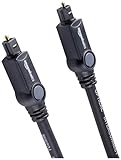
Optical cables are also incredibly thin and discreet, making them perfect for clean, minimalist workspaces. Affordable choices like the Amazon Basics Toslink Digital Optical Audio Fiber Optic Cable, Multi-Channel, for Sound Bar, Audio System, Home Theatre, Game Console, Blu-Ray Player, Gold-Plated Connectors, 6 Foot, Black (priced at $6.47) or the premium-feeling KabelDirekt – Optical Audio TOSLINK Cable – 6ft – Soundbar (priced at $8.99) offer incredible flexibility. These cables can be routed around tight desk corners and hidden behind monitor mounts far more easily than stiff coaxial wires.
Cost Over 5 Years
When analyzing the cost of ownership over a five-year period, both cable types are incredibly inexpensive, but their physical environments dictate which one will actually save you money.
- Optical Cables ($6 – $9 upfront): If plugged into a stationary desk setup and left undisturbed, an optical cable like the KabelDirekt or Amazon Basics options will easily last five years with zero performance degradation, costing you nothing but the initial purchase price. However, if you frequently unplug your PC to take it to LAN parties, or if a heavy office chair wheel rolls over the cable, the fiber-optic core will shatter. Replacing a broken optical cable once or twice over five years can bring your total cost up to $18 to $27.
- Coaxial Cables ($5 – $7 upfront): A coaxial cable like the Nixsto RG6 options is built to survive extreme wear and tear. You can step on it, drop heavy computer towers on it, and pack it tightly into boxes during a move without damaging the internal copper conductor. Over five years, the likelihood of needing to replace a coaxial cable due to physical damage is near zero, keeping your total cost strictly limited to your initial $6 investment.
Which One for Your Home
The layout of your home and who you share it with should play a major role in your final decision. Here is how each connection type fares in common household scenarios.
Small Apartment
In a small apartment, space is at a premium, and your budget PC desk is likely pushed flush against a wall or nestled into a multi-use living space. Here, the optical audio connection is the winner. Its thin profile allows you to push your desk closer to the wall without crimping a thick wire, and its immunity to EMI ensures that nearby microwave ovens, refrigerators, and apartment-grade power grids won’t inject static into your speakers.
Family with Kids/Pets
If you have toddlers crawling around your home office floor or a cat that loves to explore the dark, warm spaces behind your computer desk, choose coaxial. A robust Nixsto coaxial cable can withstand curiosity, tugging, and mild pet chewing. A delicate fiber-optic cable can be snapped instantly by a child pulling on the wire or a pet using it as a teething toy, which can also damage the optical ports on your expensive electronics.
Rental
Renters need a system that is easy to install, easy to hide, and leaves no damage behind. An optical cable is ideal because it is lightweight enough to be held in place along baseboards with simple, residue-free masking tape or tucked under the edge of a rental-friendly area rug without creating a noticeable, trip-hazard bump under the fabric.
Long-Term Home
If you own your home and are planning a clean, permanent installation—such as running cables through drywall, routing them down into a basement, or pulling them through ceiling joists to connect your PC to a wall-mounted media center—coaxial is the undisputed choice. Its high tensile strength means it won’t break when pulled through tight wall cavities, and its thick shielding ensures it won’t pick up electrical interference from home wiring sharing the same wall space.
FAQ
Can I use a standard yellow composite video RCA cable as a digital coaxial cable?
Yes. While a standard analog RCA cable may look identical, a true digital coaxial cable is rated for 75 ohms of impedance to prevent signal loss over long distances. For short runs under six feet, a standard yellow composite video cable will work perfectly as a digital coaxial cable without any loss in sound quality.
Does optical audio support high-end surround sound formats like Dolby Atmos?
No. Neither optical nor coaxial connections have the bandwidth required to transmit modern uncompressed surround formats like Dolby Atmos, DTS:X, or Dolby TrueHD. Both are limited to stereo PCM or compressed 5.1 Dolby Digital and DTS surround sound. For uncompressed multi-channel audio, you must use an HDMI connection.
What should I do if my budget PC motherboard doesn’t have an optical port?
Many budget motherboards omit optical ports to save manufacturing costs. You can easily solve this by purchasing a cheap USB-to-TOSLINK optical adapter for around $10 to $15. This external card plugs into a USB port on your PC and provides a clean optical output without requiring you to upgrade your motherboard.
Do gold-plated connectors on optical cables improve the sound quality?
No. Because optical cables transmit signals using light rather than electricity, gold plating on the connector tip has absolutely zero impact on the audio quality. Gold plating on an optical cable, like the Amazon Basics option, is purely used to prevent rust and corrosion on the metal housing surrounding the delicate fiber lens.


