
Designing an efficient home office or modern gaming nook involves more than picking out an ergonomic chair and a solid oak desk. Tucked away inside your computer chassis sits the most critical component for your electrical safety and peace of mind: the power supply unit (PSU). As home workstations handle higher power draws from multi-core processors and power-hungry graphics cards, choosing between atx 3.1 vs atx 3.0 power supplies becomes a essential decision for home builders.
Both standards were designed by Intel to handle high transient power spikes from modern graphics hardware, but key refinements set them apart. If you are setting up a streamlined desk setup, managing tight cable clearance in a compact case, or looking to keep your home quiet and fire-safe, understanding these subtle mechanical and electrical differences ensures your computer fits seamlessly into your living space.
As an Amazon Associate we earn from qualifying purchases at no extra cost to you. Product prices and availability are accurate as of the date shown and are subject to change.



Top 3 picks at a glance
Quick Verdict
For almost every home setup, ATX 3.1 power supplies are the superior choice. The revised ATX 3.1 standard introduces the 12V-2×6 connector, which fixes the mechanical latching and thermal risk issues associated with ATX 3.0’s original 12VHPWR header. By shortening the sense pins and lengthening the conductor pins, ATX 3.1 ensures power only flows when the cable is fully seated, virtually eliminating connector melting risks during tight cable bends in small home office cases.
ATX 3.0 power supplies remain electrically strong and capable, but unless you find an ATX 3.0 model on a steep clearance discount, buying an ATX 3.1 unit is the smartest investment for home safety, future-proofing, and long-term peace of mind.
Side by Side
| Feature | ATX 3.0 Power Supplies | ATX 3.1 Power Supplies |
|---|---|---|
| High-Power GPU Connector | 12VHPWR (12+4 pin) | 12V-2×6 (PCIe 5.1 compliant) |
| Connector Safety & Seating | Requires firm pressure; risk of unseated pins overheating | Recessed sense pins prevent power flow if not fully engaged |
| Hold-Up Time Requirement | 17ms at 100% continuous load | 12ms at 100% continuous load |
| Space Needed & Clearance | Requires ~35mm clearance before cable bending | Tighter side-panel bends supported safely |
| Price Range | $60.00 – $200.00+ | $54.99 – $220.00+ |
| Acoustic & Desk Comfort | Low-noise zero-RPM modes common | Optimized thermal profiles; quiet fan operation |
| Maintenance & Care | Requires periodic cable seating checks | Set-and-forget modular installation |
| Resale & Futureproofing | Moderate (older standard) | High (standardized hardware path through 2026) |
| Best For | Budget builders re-using existing ATX 3.0 stock | New home workstations, sleek desk builds, high-end GPUs |
Where Atx 3.1 Wins
The primary advantage of ATX 3.1 comes down to home electrical safety and connector design. The initial ATX 3.0 design featured the 12VHPWR high-power connector, which required meticulous seating and strict side-panel clearance. If a user bent the cable too tightly against a computer case glass panel, the internal terminals could loosen, leading to potential melting hazards.
ATX 3.1 solves this by standardizing the 12V-2×6 power connector. The sense pins (the small four-pin header top section) are recessed by 1.7mm, while the power terminals are lengthened by 0.25mm. This simple mechanical shift means that if the cable isn’t pushed in completely, the power supply detects the break in communication and restricts power delivery entirely, protecting your hardware and your home office setup.
Additionally, ATX 3.1 models offer broader accessibility across price tiers for modern desktop builds:
- Budget Workstations: The ASRock PRO 750G Power Supply ($54.99) delivers a standard 750W 80 Plus Gold rating, a quiet 120mm low-noise fan, and native 12V-2×6 support, making ATX 3.1 affordable for basic home desks.
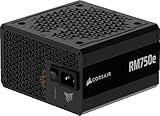
- Quiet Home Offices: Mid-tier options like the CORSAIR RM750e ATX 3.1 PCIe 5.1 Ready 750W Power Supply ($89.99) offer clean black fully modular cabling and quiet operation for shared living rooms or bedrooms.
- Compact Mid-Tower Setups: The MSI MAG A850GL PCIE5 ($109.99) features a compact physical footprint (140mm long x 150mm wide x 86mm tall) and a dual-color native 12V-2×6 cable that gives visual confirmation when fully plugged in.
- High-Performance Desks: Premium power supplies like the CORSAIR RM850x ATX 3.1 PCIe 5.1 Ready Fully Modular 850W Power Supply ($139.99) bring Cybenetics Gold efficiency, ultra-low noise operation, and Japanese 105°C capacitors built to handle multi-hour rendering workloads quietly.
Where Atx 3.0 Power Supplies Wins
While ATX 3.1 is the refined specification, ATX 3.0 still holds an edge in specific technical requirements, namely the continuous hold-up time standard. Under strict ATX 3.0 specifications, a power supply had to maintain voltage output for at least 17 milliseconds (ms) at 100% load during a brief power drop. In ATX 3.1, Intel adjusted this requirement down to 12ms.
For home owners living in rural areas or older rental properties with flickering grid power, a higher hold-up time gives uninterrupted power supplies (UPS) a split second longer to kick in without the PC rebooting. High-tier ATX 3.0 power supplies often packed larger, premium primary holding capacitors to meet that strict 17ms standard.
ATX 3.0 units can also offer substantial financial savings. Retailers clearing out older inventory frequently discount ATX 3.0 power supplies, making them an attractive choice for builders who plan to run traditional 8-pin PCIe graphics cards or who buy an aftermarket 12V-2×6 modular cable directly from their PSU manufacturer.
Cost Over 5 Years
When assessing the true cost of running a home computer setup over a five-year lifespan, utility bills, hardware risk, and initial purchase price all come into play.
A typical home workstation or gaming PC draws roughly 350W to 450W during active use. Running this system for 5 hours per day at standard US electricity rates (~$0.16 per kWh) equates to roughly 800 kWh of energy per year, or about $128.00 annually in power costs ($640.00 over 5 years).
Both ATX 3.0 and ATX 3.1 Gold-rated models deliver 87% to 90% power efficiency under normal desk workloads, meaning their direct impact on your monthly utility bill will be nearly identical. However, the true value difference lies in longevity and safety:
- Initial Outlay: ATX 3.1 power supplies range from $54.99 for entry 750W units up to $139.99 for ultra-quiet 850W units. ATX 3.0 units range similarly from $60.00 to $150.00.
- Maintenance and Component Protection: Replacing a damaged high-end graphics card caused by a poorly seated 12VHPWR connector on an older ATX 3.0 system can cost anywhere from $600.00 to $1,600.00. The mechanical peace of mind offered by ATX 3.1’s 12V-2×6 header reduces this risk to near zero.
- Warranty Value: Models like the MSI MAG A850GL back their ATX 3.1 standard with a 10-year warranty, lowering long-term replacement costs.
Which One for Your Home
Small Apartment
In a small apartment or studio living room, desk space is tight and noise carries easily. Modern compact ATX 3.1 power supplies like the MSI MAG A850GL feature a shallow 140mm depth, leaving vital space inside small chassis for neat cable routing. The fully modular design allows you to install only the wires you need, preventing cluttered air channels, reducing dust buildup, and keeping fan noise minimal while watching TV or working adjacent to sleeping quarters.
Family with Kids/Pets
Homes with active children or free-roaming pets demand elevated electrical safety. Bumping into computer desks or shaking side panels can strain delicate cables inside the case. An ATX 3.1 power supply with its recessed sense pins ensures that if an internal GPU cable gets jostled out of place, power cuts off cleanly rather than continuing to arc and heat up inside your home setup.
Rental
Living in a rental property often means dealing with unpredictable wall outlets, aging electrical circuits, or restricted airflow around smaller desks. An ATX 3.1 unit like the CORSAIR RM750e offers tight voltage regulation and clean modular management, allowing renters to easily dismantle, pack, and relocate their PC setup across moves without damaging stiff power cables.
Long-Term Home
If you own your home and are constructing a dedicated office space intended to last, future-proofing is paramount. Choosing a heavy-duty ATX 3.1 unit like the CORSAIR RM850x ensures full compatibility with PCIe 5.1 graphics hardware, efficient power delivery, and ultra-quiet acoustics that keep your home office feeling calm and organized for years to come.
FAQ
Can I use an ATX 3.1 power supply with an older motherboard and GPU?
Yes. ATX 3.1 power supplies are fully backward compatible with older motherboards, CPUs, and GPUs. Standard 24-pin ATX, 8-pin EPS CPU, and standard 6+2 pin PCIe cables are included alongside the newer 12V-2×6 connector.
What is the main physical difference between ATX 3.0 and ATX 3.1 cables?
The core structural change is inside the high-power GPU terminal header. The ATX 3.1 12V-2×6 connector has shorter sense pins and longer conductor pins than the ATX 3.0 12VHPWR connector, ensuring safe power negotiation only when the plug is fully pushed into place.
Does an ATX 3.1 power supply require a new PC case or special wall outlet?
No. ATX 3.1 power supplies use standard physical ATX dimensions (typically 140mm to 160mm in length, 150mm wide, and 86mm high) and plug directly into any standard standard 110V/120V household wall outlet.
Is upgrading from ATX 3.0 to ATX 3.1 necessary if my current PC works fine?
If your existing ATX 3.0 power supply is running smoothly, your cables are fully seated with adequate bend clearance, and your graphics card displays normal temperatures, an immediate upgrade is not required. However, for any new build or GPU upgrade, ATX 3.1 is the recommended standard.


