
If you’ve just picked up a 27-inch 1440p monitor with a 165Hz refresh rate, you already know the dirty secret of high-refresh gaming: the monitor is only half the purchase. Pushing 2560 x 1440 at 165 frames per second in modern titles is one of the most demanding workloads in consumer PC gaming, and the card that came bundled with your old 1080p build simply wasn’t designed for it. The problem most buyers face in 2026 is a crowded budget market where a $90 card and a $539 card sit side by side in the same search results, each promising “great 1440p performance” with wildly different realities behind that claim.
This roundup exists to cut through that noise. We looked at eight cards — plus one monitor pairing worth knowing about — spanning the full budget spectrum from $89.99 entry-level options to a $539 genuine 1440p workhorse. Some of these cards will drive your 165Hz panel beautifully in esports titles. Others are honestly better suited to home theater PCs, multi-monitor office setups, or as temporary stopgaps. Below, we rank them all, tell you exactly who each one is for, and explain when you should spend more — or less — than you planned.
As an Amazon Associate we earn from qualifying purchases at no extra cost to you. Product prices and availability are accurate as of the date shown and are subject to change.
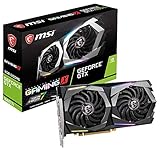

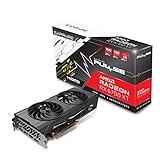


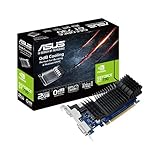

Top 3 picks at a glance
msi Gaming GeForce GTX 1660 Ti 192-bit HDMI/DP 6GB GDRR6 HDCP Support...msi Gaming GeForce GT 1030 4GB DDR4 64-bit HDCP Support DirectX 12...Sapphire 11306-02-20G Pulse AMD Radeon RX 6700 XT Gaming Graphics Card with...Quick Picks
| Product | Best for | Price |
|---|---|---|
| MSI GeForce GTX 1660 Ti Gaming X 6G | Balanced 1440p gaming on a mid budget | $399 |
| MSI GT 1030 4GD4 LP OC | Compact builds and light esports | $119.99 |
| Sapphire Pulse Radeon RX 6700 XT 12GB | True high-refresh 1440p gaming | $539 |
| Xynsviu Radeon R7 350 2GB | Multi-HDMI display setups on a tight budget | $107.39 |
| QTHREE GeForce GT 730 4GB | SFF and low-profile office PCs | $89.99 |
| AOPEN 27HC5UR 27″ Curved WQHD Monitor | Completing your 1440p 165Hz setup affordably | $169.99 |
| ASUS GeForce GT 730 2GB GDDR5 | Basic display output and media PCs | $89.99 |
| ASUS GT 730 2GB Quad-HDMI Passive | Silent multi-monitor workstations | $139.90 |
How We Picked
Our selection criteria were simple and buyer-focused. First, every card had to be genuinely available in the budget tier — roughly $90 to $540 — because that’s where most 1440p upgraders actually shop. Second, we prioritized cards with the specifications that matter at this resolution: VRAM capacity (6GB is the practical floor, 12GB is comfortable), memory bus width (a 192-bit bus moves data far faster than a 64-bit one), and modern output support for high-refresh displays. Third, we included a few intentionally modest cards because a large share of buyers need display-output solutions for SFF cases, HTPC builds, or multi-monitor workstations rather than raw gaming horsepower — and it’s better to know exactly what a $90 card can and cannot do before you buy it.
We deliberately avoided inventing benchmark numbers. Instead, we evaluate each card on its documented specifications, cooling design, power requirements, and the realistic class of workload it can handle at 2560 x 1440. Where a card cannot realistically drive 165fps at this resolution, we say so plainly — because the worst budget purchase is one made on marketing copy rather than honest expectations.
The 8 Best Picks
1. Sapphire Pulse AMD Radeon RX 6700 XT 12GB — Best Overall for 1440p 165Hz
This is the only card in this roundup genuinely built for the workload in the title. The RX 6700 XT pairs 12GB of GDDR6 with AMD’s RDNA 2 architecture and a wide memory bus, which is exactly the combination you want for texture-heavy modern games at 1440p. The Sapphire Pulse variant adds a capable dual-fan cooler at a friendly price point. If your goal is high-refresh 1440p gaming in 2026 — especially in esports titles where 165fps is achievable, and demanding AAA games at reduced settings — this is the card to buy.
- 12GB of GDDR6 gives real headroom for modern 1440p textures and future titles
- RDNA 2 architecture is efficient and well-supported by current drivers
- At $539 it consumes most of a budget build’s GPU allowance, and demanding AAA titles will still need settings adjusted to approach 165fps
Skip it if your games are older esports titles or your monitor is actually 1080p — a cheaper card will serve you fine.
2. MSI GeForce GTX 1660 Ti Gaming X 6G — Best Mid-Range All-Rounder
The GTX 1660 Ti with 6GB of GDDR6 on a 192-bit bus was designed for exactly this resolution class, and MSI’s Gaming X dual-fan cooler keeps it quiet and cool. It supports DirectX 12, HDMI and DisplayPort outputs, and carries VR Ready branding. For buyers who find the RX 6700 XT too expensive at $399 versus their budget, this card handles 1440p capably in mainstream and esports titles, though reaching a full 165fps in newer games means trimming settings.
- 6GB GDDR6 on a 192-bit bus is a properly balanced 1440p configuration
- MSI’s dual-fan Gaming X cooling is quieter than reference designs
- Turing-era architecture lacks modern feature support, so it will age faster than RDNA 2 alternatives
Skip it if you can stretch to the RX 6700 XT — the extra $140 buys meaningfully more VRAM and longevity.
3. MSI GT 1030 4GD4 LP OC — Best Ultra-Budget Card for Light Gaming
At $119.99, the GT 1030 4GB DDR4 is a low-profile, single-fan card built for compact cases and modest workloads. With a 64-bit DDR4 memory interface, it is not a 1440p gaming card in any meaningful sense — but it will drive your monitor at full resolution for desktop work, video streaming, and older or lightweight esports titles at reduced settings.
- Low-profile, single-fan design fits small form factor cases easily
- 4GB of memory and modern HDMI/DP outputs for well under $120
- The 64-bit DDR4 bus limits it to entry-level gaming, not high-refresh 1440p
Skip it for the title use case — buy it for an office PC, HTPC, or a temporary display solution while you save for a real GPU.
4. Xynsviu Radeon R7 350 2GB — Best for Multi-HDMI Setups
The standout feature here is six HDMI outputs on a single card at just $107.39, making this a niche gem for digital signage, trading desks, or any build driving multiple displays. With 2GB of GDDR5, it handles video playback and desktop acceleration across several screens without breaking a sweat. As a gaming card for 1440p at 165Hz, it is not a contender — treat this as a display-output specialist.
- Six HDMI outputs is exceptional for multi-monitor and signage builds
- Very affordable at $107.39 with low power draw
- Only 2GB of GDDR5, which rules out modern 1440p gaming entirely
Skip it for gaming; buy it if your “monitor problem” is six monitors, not 165 frames per second.
5. QTHREE GeForce GT 730 4GB — Best for SFF and Office PCs
This low-profile card targets small form factor systems that need display output. It offers 4GB of DDR3 on a 64-bit interface, dual HDMI plus DisplayPort and VGA outputs, PCI Express x8 connectivity, DirectX 12 support, and Windows 11 compatibility — genuinely useful for reviving an older prebuilt or SFF machine. For under $90, it’s a reliable way to get a modern monitor connected.
- Low-profile design with HDMI, DP, and VGA covers virtually any monitor
- Windows 11 support and $89.99 pricing make it an easy office-PC fix
- DDR3 memory and a 64-bit bus mean it’s not viable for 1440p gaming
Skip it for gaming altogether; buy it to make an older PC usable with a modern display.
6. AOPEN 27HC5UR 27″ Curved WQHD Monitor — Best Companion Display
Your graphics card is only as good as the panel it feeds. This 27-inch, 1500R curved VA monitor delivers the exact 2560 x 1440 target resolution of this roundup with a zero-frame design and adaptive sync support, at $169.99 — often less than a third the cost of the GPU driving it. If you’re assembling a complete high-refresh 1440p setup on a budget, starting here frees funds for a stronger card.
- Native 1440p curved VA panel with adaptive sync at a very accessible price
- 27-inch size is the sweet spot for 1440p pixel density
- VA panels trade some response-time speed for contrast, which competitive players may notice
Skip it if you already own a 165Hz panel — put every dollar toward the GPU instead.
7. ASUS GeForce GT 730 2GB GDDR5 — Best Bare-Basics Display Card
The ASUS GT 730 with 2GB of GDDR5 is one of the cheapest ways to add reliable display output to a system, at $89.99. GDDR5 memory gives it a modest edge over DDR3 variants for desktop responsiveness and video acceleration. It’s a single-slot-friendly, low-power solution for media centers, office towers, and systems whose integrated graphics have failed.
- GDDR5 memory and ASUS build quality for just $89.99
- Low power draw with no external connector required
- Absolute minimum gaming capability — do not buy it for 1440p play
Skip it for any gaming purpose; it’s a repair-and-restore part, not a gaming upgrade.
8. ASUS GT 730 Quad-HDMI Passive — Best Silent Multi-Monitor Card
This variant of the GT 733 platform pairs 2GB of GDDR5 with four HDMI ports, a single-slot design, and fully passive cooling — no fan, no noise, ever. At $139.90, it’s a purpose-built card for silent HTPCs, trading stations, and embedded displays. The passive heatsink means zero moving parts, ideal for living-room machines where noise matters most.
- Four HDMI outputs with a single-slot, fanless design
- Completely silent operation for HTPC and media use
- Priced above the GT 1030 while offering far less gaming capability
Skip it if you game at all — the MSI GT 1030 at $119.99 is the better budget purchase.
Buying Guide
VRAM and Memory Bus: The Numbers That Matter at 1440p
At 2560 x 1440, you’re pushing 3.7 million pixels — 78% more than 1080p. That demands both VRAM capacity and bandwidth. Look for at least 6GB of VRAM with a 192-bit or wider bus for modern titles; the RX 6700 XT’s 12GB on its wide bus is the comfortable configuration here. Cards with 64-bit buses and DDR3 or DDR4 memory — the GT 730 and GT 1030 class — simply cannot move data fast enough for high-refresh 1440p gaming, no matter how much memory they list.
Matching the Card to Your Monitor and Games
Be honest about your workload. Competitive esports titles (Counter-Strike, Valorant, Rocket League) are far easier to run at 165fps than open-world AAA games. A GTX 1660 Ti can realistically target high refresh rates in the former at 1440p; the RX 6700 XT is the entry point for the latter. And if your actual need is display output for an office PC or HTPC, spending $89.99 on a GT 730 instead of $539 on a gaming card is the smarter buy — matching the card to the job is what budget means.
Physical Fit, Power, and Cooling
Check three things before buying. First, case clearance: low-profile cards like the GT 1030 and QTHREE GT 730 measure around 2.5 inches tall at the bracket, while dual-fan cards like the Sapphire Pulse need roughly two expansion slots. Second, power: the GT 730-class cards draw under 50W from the slot alone, while the RX 6700 XT typically wants a quality 650W PSU with dedicated PCIe power connectors. Third, outputs: make sure the card’s HDMI/DP configuration matches your monitor, and note that quad-HDMI cards like the ASUS passive unit exist specifically for multi-display workstations.
Our Verdict
If your goal is genuinely the title use case — 1440p at 165Hz — the Sapphire Pulse RX 6700 XT at $539 is the only card in this roundup built for it, and it’s worth the stretch. The MSI GTX 1660 Ti at $399 is the honest fallback for esports-first players. Below that tier, be realistic: the GT 1030, GT 730, and R7 350 are display-output cards, not gaming cards, and they’re excellent value when used for what they’re designed to do. Pair your chosen card with the AOPEN 27HC5UR at $169.99 if you still need the panel, and you’ll have a complete, no-regrets high-refresh setup.
FAQ
Can a budget card really hit 165fps at 1440p?
Yes, but only in the right games and only with the right card. Esports titles are optimized to run at very high frame rates, and a card like the RX 6700 XT can target 165fps in many of them at 1440p. Demanding AAA releases will typically require reduced settings and adaptive sync to feel smooth. Sub-$150 cards in this roundup cannot meaningfully game at this resolution and refresh rate.
How much VRAM do I need for 1440p gaming?
6GB is the practical minimum for modern 1440p titles, and 8GB to 12GB provides comfortable headroom. That’s why the 12GB RX 6700 XT is our top pick and the 6GB GTX 1660 Ti is the runner-up. Cards with 2GB to 4GB of memory are designed for display output and light use, not texture-heavy 1440p gaming.
Is DDR3 or DDR4 memory on a graphics card a problem?
For gaming, yes. DDR3 (as on the QTHREE GT 730) and DDR4 (as on the MSI GT 1030 4GB) versions use narrower, slower memory interfaces that bottleneck game performance severely. GDDR5 and GDDR6 are dramatically faster. If gaming is even a secondary goal, choose a GDDR5 or GDDR6 card; DDR3/DDR4 cards are best reserved for office and media PCs.
Do I need to upgrade my power supply?
Depends entirely on the card. The GT 730 and GT 1030 class draws under 75W and runs entirely off the PCIe slot — any working PSU handles it. The GTX 1660 Ti typically wants a 450W–500W supply. The RX 6700 XT is the demanding one: plan on a quality 650W PSU with the appropriate PCIe power connectors before you buy.


