
Our Top Picks
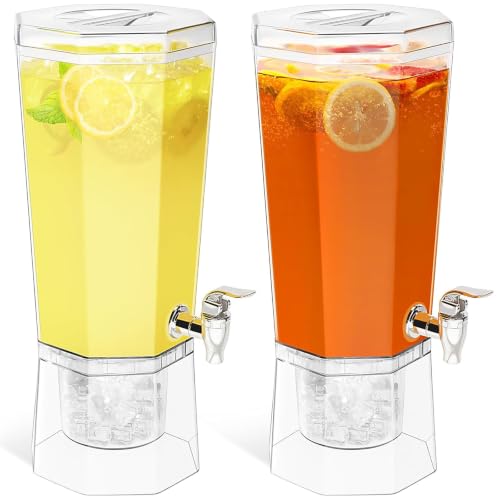
 1 Gallon Glass Drink Dispensers For Parties-Set of1 Gallon Double With Stand14.37 x 6.69 x 15 inches8.5 PoundsCheck on Amazon


Top 3 picks at a glance
Best drink dispensers for different kinds of gatherings
The best drink dispensers are clear, food-safe models with a tap that closes securely, enough capacity for your group, and an opening wide enough to clean by hand. For most households, a 1–2 gallon glass dispenser suits daily use and small gatherings; for larger parties, choose a 2–3 gallon model or use two smaller dispensers so guests aren’t waiting for a refill.
Capacity alone doesn’t tell you whether a dispenser will work well. A wide mouth, a reliable spigot seal, room for ice without blocking the outlet, and a base that fits your serving table can matter more than an extra half-gallon.
As an Amazon Associate we earn from qualifying purchases at no extra cost to you.



Choose by group size and serving style
| Situation | Suggested capacity | Approximate servings* | What to prioritize |
|---|---|---|---|
| Daily water, lemonade, or iced tea | 1–1.5 gallons | 16–24 | Easy cleaning, compact footprint, dependable tap |
| Small gathering, 6–10 people | 1.5–2 gallons | 24–32 | Wide opening, stable base, space for ice |
| Party, 10–20 people | 2–3 gallons | 32–48 | Large mouth, sturdy stand or table placement, secure spigot |
| Large event or multiple drinks | Two 2-gallon dispensers | About 64 total | Separate drink choices, easier lifting and cleaning |
*Estimates use an 8-ounce serving and assume the stated capacity is filled to its practical level. Ice, fruit, and headspace reduce the amount of liquid you can serve.
A useful planning calculation: for 15 guests having two 8-ounce servings each, plan on 240 ounces, or 1.875 gallons, before allowing for spills or extra servings. A nominal 2-gallon dispenser may be tight if you also add ice and fruit. A 2.5-gallon model, or two separate drinks in smaller vessels, gives you more margin.
How the main dispenser types compare
| Type | Best for | Advantages | Trade-offs |
|---|---|---|---|
| Glass jar with tap | Home counters and casual parties | Doesn’t retain odors as readily as many plastics; contents are visible | Heavy when full; can chip or break; tap fit and seal quality vary |
| Beverage-grade plastic | Children, outdoor use, and frequent moving | Lightweight and less fragile | Can scratch, stain, or hold odors; confirm it is intended for food and beverages |
| Insulated beverage dispenser | Long events and temperature-sensitive drinks | Helps maintain temperature; often designed for transport | Bulky, less convenient to inspect inside, and may be more than a kitchen needs |
| Two smaller dispensers | Serving different drinks or simplifying cleanup | Each is easier to lift and wash; guests can choose between drinks | Uses more table space and may require two stands or serving spots |
What to inspect before buying
Capacity and footprint
Check the dispenser’s filled height and width, not just its gallon rating. A full glass jar can be awkward to lift onto a refrigerator shelf or stand, and a wide base may not fit between other dishes. If it will remain on a counter, check that the tap sits high enough for a glass or pitcher to fit underneath. A stand can provide clearance, but it adds another part that must be stable and cleaned.
Material and food contact
Glass is a good choice when visibility and resistance to lingering odors matter. It is not the easiest option to carry when full, and decorative glass may have seams or corners that take longer to scrub. For patios, picnics, or busy family use, a food-contact-rated plastic vessel is often more practical. Avoid assuming that every clear plastic container is suitable for beverages, and follow the manufacturer’s guidance on hot liquids, dishwasher use, and temperature limits.
Tap quality and leak resistance
The spigot is the part most likely to cause frustration. Look for a tap with a secure nut, a gasket that sits flat against the vessel, and a lever that opens smoothly without feeling loose. Check whether the tap and seal can be removed for cleaning. A metal-looking exterior does not necessarily mean all internal parts are metal, so check the material description if that matters to you.
When assembling a new dispenser, fit the gasket in the position specified by the maker and tighten the retaining nut firmly by hand. Over-tightening can distort a gasket or stress glass. Before filling it for guests, set the empty vessel on a dry towel, add water, and leave it for several minutes. Inspect around the tap and seams, then operate the lever repeatedly. This simple check can reveal a poor seal before the drink is in the jar.
Ice, fruit, and the outlet
Ice can chill a drink, but loose cubes take up serving capacity and may drift toward the tap. If you want ice in the vessel, check that the opening is wide enough to add it and that the outlet is positioned above the bottom. For recipes with sliced fruit, herbs, or pulp, a small outlet can clog or slow to a trickle. Strain pulp-heavy drinks, cut fruit into pieces that won’t reach the outlet, or serve ice separately in a bucket.
Cleaning and storage
A wide mouth is worth prioritizing: it makes it easier to reach the bottom, remove residue, and dry the interior fully. Narrow-necked designs may look sleek but can be difficult to clean without a long bottle brush. Check whether the spigot comes apart and whether its small channels can be rinsed; sticky lemonade or sugary tea left inside can become difficult to clear. Wash and dry all components after use, and store the vessel with the lid off or loose so trapped moisture can escape.
Match the dispenser to your situation
| If you… | Choose… | Why |
|---|---|---|
| Serve water every day | A 1–1.5 gallon wide-mouth glass or food-safe plastic dispenser | It is easier to refill and clean than a party-size vessel |
| Host a mixed-age group outdoors | A lightweight plastic model, or smaller dispensers set on a stable table | Less risk from carrying or accidental knocks than a heavy full glass jar |
| Serve a crowded buffet | Two dispensers with separate drinks | Guests can choose quickly, and one empty vessel won’t stop all beverage service |
| Make drinks with sliced fruit | A wide-mouth model with a tap set above the bottom | It is easier to load and clean, and fruit is less likely to block the outlet |
| Need drinks to stay cold for hours | An insulated beverage dispenser, or a regular dispenser with ice served separately | Insulation or separate ice avoids sacrificing as much liquid capacity to cubes |
Best buying approach
For one all-purpose household option, start with a 1.5–2 gallon dispenser, a wide opening, a food-safe vessel, and a removable tap with a clear gasket arrangement. Move up to 2–3 gallons when you regularly serve a dozen or more people, but consider two smaller units if the drinks differ or you need to carry them. Choose glass for a stationary serving area and odor resistance; choose beverage-grade plastic when lower weight and impact resistance matter more.
Before settling on a model, confirm three practical details: the filled vessel will fit where you plan to use it, the tap leaves enough room for the cups you serve, and the opening lets you clean the bottom by hand. Those checks are often better predictors of everyday satisfaction than capacity or appearance alone.
Frequently asked questions
Can I put ice directly into a drink dispenser?
Yes, but ice reduces serving capacity and loose cubes can drift toward the tap. Before adding it, check that the opening is wide enough and that the outlet sits above the bottom. For drinks with sliced fruit, herbs, or pulp, consider serving ice separately, straining pulp-heavy drinks, or cutting fruit so it cannot reach and block the outlet.
How much drink should I prepare for a party?
Plan based on both guests and servings, then allow extra room for ice, fruit, spills, and additional servings. For example, 15 guests having two 8-ounce servings each require 240 ounces, or 1.875 gallons, before those allowances. A nominal 2-gallon dispenser may therefore be tight; a 2.5-gallon model or two smaller vessels provides more margin.
How can I check whether a new dispenser leaks?
Test the dispenser with water before filling it with a drink. Set the empty vessel on a dry towel, add water, and leave it for several minutes. Inspect the tap and seams, then operate the lever repeatedly. This can reveal a poor seal before guests arrive. Assemble the gasket as directed and tighten the retaining nut firmly by hand.
Is a stand necessary for a drink dispenser?
No, but a stand can provide clearance when the tap is too low for a glass or pitcher to fit beneath it. A stand also adds another part that must be stable and cleaned. If you plan to serve from a counter or table, check the tap height, the vessel’s footprint, and whether the complete setup fits securely.
What is the easiest way to clean a drink dispenser?
Choose a wide-mouth model and, ideally, a tap that can be removed for cleaning. A wide opening makes it easier to reach the bottom, remove residue, and dry the interior fully. Rinse the tap’s small channels after use, especially following sugary drinks. Wash and dry every component, then store the vessel with the lid off or loose so moisture can escape.


