
The best electric skateboard deal for most riders in 2026 is the MEEPO Campus V3 Series/Envy, because it pairs a listing-quoted 29 mph top speed and progressive four-speed braking with the deepest spare-parts ecosystem in this roundup — motors, ESCs, remotes, wheel sets and battery packs that you can actually buy again in two years. If your budget is tight, the Dnaskate V20 is the value pick: 28 mph and a quoted 22-mile range at a budget tier, which is more speed and range per dollar than anything else here. If you ride gravel, grass or genuinely steep streets, the isinwheel V10 and its 3000 W off-road drivetrain is the only board in this list built for that job. And if uptime matters more than outright speed — delivery riders, long commutes — the Uditer S3/Pixel/Mini and its swappable battery is the one to look at. Everyone else in this list is a specialist: short-hop learners, ultra-portable campus riders, all-terrain cruisers.
Our Top Picks
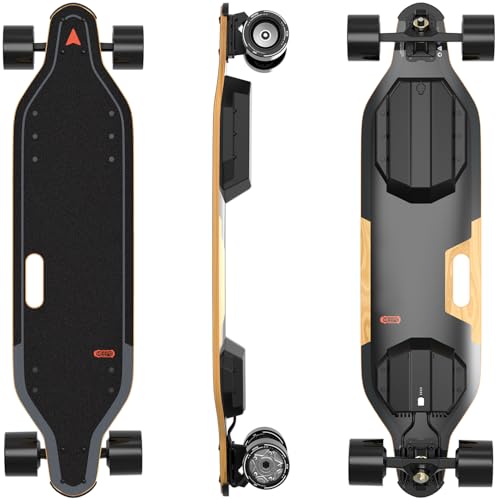 MEEPO Campus V3 Series/Envy Electric Skateboard with Remote38 x 11 x 5.7 inches17.6 PoundsCheck on Amazon


Top 3 picks at a glance
Quick Comparison
| Product | Best for | Key specs (as listed) | Price tier |
|---|---|---|---|
| Dnaskate V20 | Budget riders who want maximum quoted range and speed | 28 mph top speed; 22 miles range; 1000 W hub motor; longboard deck | Budget |
| DNASKATE M8 | First board, teens, short campus hops | 15 mph top speed; 9 miles range; 400 W hub motor; adult skateboard deck | Budget |
| Dnaskate V4 | Mid-range long-distance street cruising | 28 mph top speed; 22 miles range; 1200 W hub motor; longboard deck | Mid-range |
| MEEPO Campus V3 Series/Envy | Best overall for most riders; best parts support | Top speed up to 29 mph; four-speed smooth braking; Meepo ecosystem | Mid-range |
| isinwheel V10 | Off-road, gravel, steep hills, heavy riders | 3000 W off-road drivetrain; 32 mph; all-terrain build | Premium |
| Askate A1 | Budget buyers who value deck quality and range | Up to 17 miles range; 8-ply Canadian maple deck; smooth 4-speed remote | Budget |
| EBOSSOM 27″ | Ultra-portable commuting and younger riders | 350 W motor; 27-inch deck; 4 modes; max 10 mph; 8-layer deck | Budget |
| MEEPO Mini | Shortboard commuters mixing board with transit | 28 mph top speed; 11 miles range; 330 lb max load; maple cruise deck | Mid-range |
| Uditer S3/Pixel/Mini | Riders who need swappable batteries and big wheels | Swappable battery; 105 mm wheels; three deck options in the line | Premium |
| MEEPO Bamboo Series | All-terrain distance riding and comfort | 20–31 miles quoted range; off-road all-terrain mountain board; high-power drivetrain | Premium |
How We Chose
This roundup is built from published listing specifications, brand documentation and category-typical engineering figures — not from hands-on riding, because we don’t claim testing we haven’t done. The selection criteria were deliberately mechanical rather than marketing-led. First, stated performance: top speed, quoted range and motor wattage had to be specific enough to compare, so a board that only says “fast” was passed over. Second, category fit: we sorted each board by the job it actually does — a 27-inch, 10 mph deck and a 3000 W off-road mountain board are not competitors, so they’re not ranked against each other. Third, use case realism: we ran the range and hill-climb math in the How to Choose section against each board’s power class, because a quoted 22-mile range means something very different at 12 mph than at 28 mph. Fourth, upgrade path and replacement-part availability: a board whose wheels, bearings, bushings, motors and battery pack can be re-ordered in a couple of years is worth more than one that becomes disposable. Finally, we weighted price tier rather than absolute price, since listing prices move daily and a board that’s good value at budget tier may be poor value one tier up.
1. Dnaskate V20 – Best for Budget Long-Range Cruising
As an Amazon Associate we earn from qualifying purchases at no extra cost to you.

The Dnaskate V20 is the board to shortlist if you want the biggest quoted numbers in the budget tier and you mostly ride smooth pavement. It’s a full-length longboard with a 1000 W hub motor class, a listing-quoted 28 mph top speed and a quoted 22-mile range — figures that, on paper, match boards selling for one or two tiers more. That makes it the natural pick for a commuter doing a 6–10 mile round trip who wants a comfortable platform underfoot and doesn’t want to pay premium money for it.
- Top speed: 28 mph (listing-quoted, achievable on flat ground with a lighter rider)
- Range: 22 miles quoted — realistic 13–17 miles at mixed real-world speeds
- Motor: 1000 W hub-motor class
- Deck: full-length longboard, flexible cruiser profile
- Control: handheld remote included
- Wheels: large urethane street wheels (longboard class)
What it does well
The headline here is efficiency. Hub motors are direct-drive, so there’s no belt, no pulley, no tensioner and no belt dust — the drivetrain has very few parts to fail, and it’s effectively silent. That matters on a budget board, because the failure points you remove are the ones you’d otherwise be paying a shop to fix. The quoted 22-mile range also implies a reasonably sized pack. Working backwards: a typical electric skateboard consumes roughly 12–18 Wh per mile depending on rider weight, speed and terrain, so 22 miles implies somewhere around 265–400 Wh of usable capacity. That’s consistent with a 10S3P-to-10S4P class lithium pack. A pack that size takes roughly 3–4 hours to charge on the 1.5–2 A chargers that usually ship with budget boards, or about 1.5–2 hours if you buy a 4 A charger separately.
The 1000 W motor class also gives you real hill headroom for a budget board. At 10% grade with a 92 kg rider-plus-board total at 11 mph, you need roughly 565 W at the wheel — call it 705 W electrical at 80% hub efficiency. A 1000 W-class motor handles that with about 30% in reserve, which is the difference between a board that climbs and a board that stalls halfway up.
Where it falls short
Hub motors transmit road vibration straight into the deck because there’s no belt to absorb it, so on cracked asphalt or chip-seal roads a hub longboard rides noticeably harsher than a belt-drive board with the same deck. Urethane wheels also mean this is a street board, full stop — wet grass, gravel and dirt will end the ride quickly. And like most boards at this tier, the listing doesn’t publish an IP rating, so treat it as splash-tolerant at best and never submerge it or ride through standing water.
Replacement parts are the other caveat. Generic wear items — bearings, bushings, grip tape, urethane wheels in common sizes — are easy to source from any skate shop. Brand-specific parts (the ESC, the remote receiver, the battery enclosure) are thinner on the ground for smaller brands, so budget for the possibility that a major electronics failure means replacing the board rather than repairing it.
- Pros
- 28 mph and a quoted 22-mile range at budget-tier pricing
- Belt-free hub drivetrain with very few wear parts and near-silent running
- Longboard deck is comfortable for longer rides than a shortboard
- Enough motor headroom to climb typical 8–12% street grades
- Cons
- Hub motor ride quality is harsher than belt drive on rough pavement
- Urethane wheels rule out gravel and trails
- No published water-resistance rating
- Brand-specific spares are harder to find than the big-name alternatives
How it compares
The nearest alternative in this list is the Dnaskate V4, which shares the same 28 mph / 22-mile quoted profile but steps up to a 1200 W hub motor and a mid-range tier. If you ride hills regularly or weigh more than about 90 kg, the extra 200 W of headroom is the reason to spend up. If your terrain is flat, the V20 gives you the same range and speed for less. Against the Askate A1, the V20 wins on top speed and quoted range; the A1 counters with a specified 8-ply Canadian maple deck and a shorter, more portable footprint. Choose the V20 for distance and speed, the A1 for deck quality and a smaller carry.
2. DNASKATE M8 – Best for Learning and Short Campus Hops

The DNASKATE M8 is the sensible first board. With a listing-quoted 15 mph top speed, a 9-mile range and a 400 W hub motor, it’s deliberately slower and shorter-legged than everything else in the DNASKATE range, and that’s the point: 15 mph is fast enough to be fun and slow enough that a mistake doesn’t put you in a cast. It suits teenagers, students crossing a campus, and adults who want a low-commitment way to learn to ride before buying something quicker.
- Top speed: 15 mph quoted
- Range: 9 miles quoted — realistically 6–8 miles at mixed speeds
- Motor: 400 W hub-motor class
- Deck: adult-sized skateboard deck (not a longboard)
- Control: handheld remote included
What it does well
The value proposition is straightforward: this is a complete, working electric skateboard at the bottom of the price ladder, and its performance envelope is honest about what it is. A 9-mile quoted range covers a typical campus day if you charge at your desk, and the board’s lighter motor and smaller pack mean less weight to carry into a lecture hall or onto a train.
It’s also worth understanding what a 400 W motor can and can’t do, because that determines whether this board suits your route. Running the numbers: a 92 kg combined rider-and-board load at 11 mph on flat ground needs about 114 W at the wheel — roughly 140 W electrical. So on the flat, 400 W is generous. Add a 5% grade and the gravity term alone becomes about 225 W, pushing the requirement to roughly 425 W electrical — right at the motor’s rated ceiling. In practice that means the M8 climbs gentle ramps and shallow grades fine, holds speed on mild hills, and will slow noticeably or require a push on anything steeper than about 5–6%. If your daily route includes a genuinely steep bridge or hill, this is the wrong board.
Where it falls short
Range is the real constraint. Nine quoted miles translates to something like 6–8 miles in mixed riding, and that shrinks further in cold weather, which temporarily reduces lithium battery capacity, and at sustained top speed. Budget roughly 25–35% off any quoted range figure as a rule of thumb, and more if you’re heavy, riding into wind, or climbing. Charging is also slow at this tier — a small pack and a basic charger typically means a couple of hours from empty.
The shorter skateboard deck is less forgiving than a longboard over distance. It’s more portable and easier to kick around, but the narrower, stiffer platform transmits more vibration and demands better balance. There’s no published water-resistance rating, so keep it dry.
- Pros
- Lowest-risk way to learn; 15 mph is genuinely beginner-friendly
- Light and compact enough to carry indoors or onto transit
- 400 W is more than adequate for flat ground and shallow grades
- Simple hub drivetrain with minimal maintenance
- Cons
- 9-mile quoted range limits it to short trips
- 400 W saturates at roughly 5–6% grades
- Short deck is less comfortable over longer distances
- No published IP rating; not a wet-weather board
How it compares
The obvious step up within the same brand is the Dnaskate V20: nearly double the top speed and more than double the quoted range, on a longer deck. If you already know you’ll ride more than a few miles a day, skip the M8 and go straight to the V20 — you’ll outgrow 15 mph in a month. The M8’s closest true competitor in this list is the EBOSSOM 27″, which is even slower at a maximum of 10 mph but comes on a much smaller 27-inch deck with four ride modes. If your priority is the smallest possible board for the shortest possible trips, the EBOSSOM wins on portability; if you want a normal-sized skateboard you can still grow into, the M8 is the better call.
3. Dnaskate V4 – Best for Mid-Range Long-Distance Street Riding

The Dnaskate V4 is the version of the budget longboard formula with the motor turned up. It carries the same listing-quoted 28 mph top speed and 22-mile range as the V20 but steps up to a 1200 W hub motor and a mid-range price tier. That extra 200 W of rated power is not marketing padding — it’s the difference between a board that climbs your local hills at speed and one that climbs them slowly, and it matters most for heavier riders and hillier routes.
- Top speed: 28 mph quoted
- Range: 22 miles quoted — realistically 13–17 miles
- Motor: 1200 W hub-motor class
- Deck: full-length longboard
- Control: handheld remote included
- Wheels: large urethane street wheels
What it does well
The 1200 W rating buys headroom, and headroom is what keeps a motor cool. Electric motors lose efficiency as they heat, and a hub motor has no fan and no gearing — it’s sealed inside the wheel and relies on airflow and the wheel itself as a heatsink. A motor run at 70% of its rating on a long climb stays efficient; the same climb run at 100% of its rating heats up, loses torque, and eventually derates or cuts out. With the worked hill figure of roughly 705 W electrical needed for a 10% grade at 11 mph with a 92 kg load, a 1200 W motor sits at about 59% of rating — comfortably inside its happy zone. The 1000 W V20 is at 71%, still fine but with less margin on a hot day or a heavier rider.
The longboard platform is the other half of the appeal. A longer wheelbase is more stable at speed, tracks better over imperfect pavement, and gives you more deck between your feet to absorb vibration. For 20-minute-plus rides, that geometry matters more than a couple of mph. The quoted 22-mile range, meanwhile, is a genuine commuter figure once you discount it — plan on 13–17 real miles, which covers most urban round trips with charge to spare.
Where it falls short
The V4 has the same structural limitations as every hub-driven street longboard in this list. Ride quality on rough surfaces is firm because nothing between the motor and the deck damps the vibration. Urethane wheels limit you to pavement. There’s no published IP rating. And because the board’s speed and range claims assume a lighter rider on flat ground at moderate speed, a 100 kg rider at full throttle will see both numbers drop substantially — that’s physics, not a defect.
Parts availability is the longer-term question. Generic consumables — bearings, bushings, grip tape, common-size urethane wheels — are easy to replace. The proprietary electronics are the risk. If the ESC or the battery pack fails outside warranty, sourcing a replacement for a smaller brand can be difficult, and the practical fallback is often a new board.
- Pros
- 1200 W motor has real thermal and torque headroom for hills
- 28 mph and a quoted 22-mile range at mid-range pricing
- Long wheelbase is stable and comfortable at speed
- Hub drive keeps maintenance minimal
- Cons
- Ride is firm on coarse pavement
- Urethane wheels mean pavement only
- No published water-resistance rating
- Brand-specific electronics are harder to replace than the big-name alternatives
How it compares
Against the Dnaskate V20, the V4 is the same board with a stronger motor — if you’re under 80 kg and your route is flat, the V20 is the smarter buy and you’ll never notice the difference. If you’re heavier, or your commute includes a bridge or a hill you want to take at speed rather than crawl up, the V4’s extra 200 W is worth the tier jump. Against the MEEPO Campus V3 Series/Envy, the trade-off changes character: the Meepo is quicker on paper at up to 29 mph and has progressive four-speed braking plus a much deeper spares ecosystem, but the Dnaskate V4 is the board with an explicitly stated 22-mile range figure. Choose the V4 for distance, the Meepo for braking feel, speed and long-term parts support.
4. MEEPO Campus V3 Series/Envy – Best Overall for Most Riders

If you want one recommendation and no further reading, this is it. The MEEPO Campus V3 Series/Envy combines a listing-quoted top speed of up to 29 mph with four-speed smooth braking and, crucially, access to the widest replacement-parts ecosystem in this roundup. It suits the rider who wants a real commuter — someone doing 4–12 miles a day who needs the board to still be serviceable in two or three years, not just fast on day one.
- Top speed: up to 29 mph quoted (Envy configuration)
- Braking: four-speed smooth braking, progressive rather than on/off
- Range: not stated in the listing — treat by spec class as a short-to-medium commuter figure
- Motor: hub-drive class
- Deck: Campus series deck; the line spans more than one configuration
- Ecosystem: Meepo’s spare-parts catalogue — motors, ESCs, remotes, wheels, battery packs
What it does well
Braking is the most underrated spec on any electric skateboard, and it’s where this board separates itself. Four-speed braking means the remote’s brake input is mapped across multiple stages rather than being a single lever that goes from nothing to full. That gives you a progressive, predictable deceleration curve you can modulate — you can shed a little speed for a corner without pitching forward, then brake harder for a stop. On a 29 mph board, that’s a safety feature, not a comfort feature. A board that brakes abruptly at 29 mph will eventually throw an inexperienced rider.
The second differentiator is the ecosystem. Meepo is one of the few brands in this category with a genuine parts catalogue: replacement hub motors, ESCs, remotes and receivers, wheel sets and battery packs are all obtainable. That changes the ownership math completely. On a board with no parts channel, a failed ESC in year three means buying a new board. On this one, it means buying an ESC. Over a five-year ownership window, that difference can be larger than the price gap between tiers.
The listing doesn’t quote a range figure for this line, so treat range by spec class rather than trusting a number: the Campus series is a commuter platform, and boards of this type typically deliver a short-to-medium range — enough for a daily urban round trip, not enough for a 25-mile tour. If range is your single most important spec, the Dnaskate V4 and its explicit 22-mile claim is the more predictable purchase.
Where it falls short
Speed and braking are the headline, and both come with the usual trade-offs. A 29 mph top speed is well beyond what a new rider should use, and there’s no substitute for starting in a low mode and staying there for the first few weeks. Range is unstated, which makes it harder to compare directly against the Dnaskate boards. And like every hub-drive street board here, ride quality over broken pavement is firm, wet-weather capability is unstated, and urethane wheels confine you to paved surfaces.
- Pros
- Up to 29 mph with genuinely progressive four-speed braking
- Deepest replacement-parts ecosystem of any board in this roundup
- Multiple configurations in the line, so you can match deck and spec to your route
- Strong long-term ownership value thanks to serviceable electronics
- Cons
- Range isn’t quoted in the listing, making direct comparison harder
- 29 mph is far more than a beginner needs
- Firm ride over rough pavement, like all hub boards
- No published water-resistance rating
How it compares
The closest competitor is the Dnaskate V4. On raw specs the two are similar — 29 mph versus 28 mph, both hub-driven street boards — but they optimise for different things. The Dnaskate V4 publishes a 22-mile range and a 1200 W motor rating, so it’s the more predictable buy if you know you need distance. The Meepo wins on braking modulation, on speed, and decisively on parts availability, which is why it takes the overall recommendation. If you’re weighing the MEEPO Mini instead, that’s a question of form factor rather than quality: the Mini is a shortboard with a quoted 11-mile range and a 330 lb max load, better for mixed transit commuting, while the Campus line is the more comfortable distance platform.
5. isinwheel V10 – Best for Off-Road and Steep Hills

The isinwheel V10 is the outlier in this list and the only board here built around an off-road mission. With a listing-quoted 3000 W drivetrain and a 32 mph top speed, it operates in a different power class entirely — and that changes what it can do on gradients, on surfaces, and with heavier riders. It suits riders whose routes leave the pavement: gravel paths, park trails, dirt fire roads, steep driveways, and anyone who weighs enough that street-class motors struggle.
- Motor: 3000 W off-road drivetrain class
- Top speed: 32 mph quoted
- Build: off-road all-terrain configuration
- Wheels: pneumatic all-terrain tyres (off-road class)
- Rider: suited to heavier riders and steep terrain
What it does well
Power is the whole story, and the numbers back it up. Re-run the hill calculation at a 20% grade — a genuinely steep street, roughly the limit of what’s rideable — with a 92 kg combined load at 11 mph: gravity alone requires about 903 W at the wheel, plus roughly 66 W of rolling resistance and 46 W of aerodynamic drag, for about 1015 W total. At 80% hub efficiency that’s roughly 1270 W electrical. A 1000 W board cannot do this. A 1200 W board can do it briefly and will heat up. A 3000 W drivetrain does it at about 42% of rated power, which means it climbs steep grades repeatedly without derating — and it does the same job with a heavier rider or in summer heat.
All-terrain tyres are the second half of the equation. Pneumatic tyres have higher rolling resistance than urethane, which costs some range, but they absorb surface irregularities that would stop a urethane wheel dead. They also grip on loose gravel and damp grass in a way that urethane simply doesn’t. Combined with the power headroom, that makes this the board for terrain that the street boards in this list can’t handle at all.
Where it falls short
Everything that makes it capable makes it heavy. A 3000 W drivetrain needs a large battery pack to feed it, and large packs are heavy — this is a board you carry only reluctantly, and it’s awkward on public transport or up stairs. Expect to trade portability for capability. Range also suffers from the combination of pneumatic tyres, high available speed, and a rider who will inevitably use the power: off-road boards of this class consume noticeably more energy per mile than a street longboard, so a pack that would give 20 miles on urethane might give considerably less on dirt at speed.
Price tier is the other consideration. This is a premium board, and in the current market that generally means a higher four-figure range rather than the low hundreds. If your riding is entirely on smooth pavement, you’re paying for capability you’ll never use — a mid-range street board will be lighter, cheaper and more pleasant for that job.
- Pros
- 3000 W drivetrain climbs 20% grades with substantial margin
- All-terrain pneumatic tyres handle gravel, dirt and grass
- Suitable for heavier riders where street-class motors struggle
- Thermal headroom means repeated climbs without derating
- Cons
- Heavy and awkward to carry or take on transit
- Pneumatic tyres and high power reduce effective range per charge
- Premium tier pricing; overkill for pavement-only riders
- More drivetrain complexity means more maintenance than a hub street board
How it compares
The nearest alternative in this list is the MEEPO Bamboo Series, which is also an off-road all-terrain mountain board but emphasises range instead of peak power — its listing quotes 20–31 miles, which is a far more explicit distance claim than the V10 makes. If you want to cover long distances on mixed surfaces and you’re willing to trade some raw wattage, the Bamboo is the better touring choice. If your priority is climbing the steepest available gradient, or you’re a heavier rider who needs torque on demand, the V10’s 3000 W drivetrain is the more capable tool. Against every street board here — the Dnaskate V4, the Meepo Campus line, the MEEPO Mini — the V10 isn’t a faster version of the same thing; it’s a different category of vehicle.
6. Askate A1 – Best for Budget Deck Quality and Range

The Askate A1 makes its case with two specific, checkable claims: a deck built from 8-ply Canadian maple and a quoted range of up to 17 miles. That combination positions it as the budget board for riders who care more about the platform under their feet and the distance they can cover than about a headline top speed. It suits commuters on mixed-quality pavement, riders who’ve had a cheap deck delaminate on them before, and anyone who wants a shorter board than a full longboard without dropping to a tiny cruiser.
- Range: up to 17 miles quoted — realistically 11–14 miles
- Deck: 8-ply Canadian maple
- Control: smooth 4-speed remote with staged acceleration and braking
- Motor: hub-drive class
- Format: mid-length board, shorter than a full longboard
What it does well
Maple ply count is one of the few deck specs that actually tells you something. Canadian maple is the standard hardwood for skate decks because of its stiffness-to-weight ratio and its resistance to delamination, and 8 plies is a solid, substantial layup — boards built to that standard hold their pop and their structural integrity far longer than thin, low-ply decks that flex permanently after a season. If you’re buying a budget board you intend to keep, deck construction is the spec most likely to determine whether it’s still pleasant to ride in year three.
The 4-speed remote is the other meaningful feature. Staged control means the throttle and brake inputs are mapped across four levels rather than delivered as a single aggressive curve, which makes low-speed manoeuvring in pedestrian areas much easier and reduces the chance of an accidental full-power launch. That’s the same design philosophy as the four-speed braking on the MEEPO Campus line, applied at a lower price tier.
On range, 17 quoted miles is a real figure at this price. Applying the usual discount, plan on 11–14 miles of mixed riding, which comfortably covers a suburban commute or an afternoon of cruising. The pack is likely in the 200–280 Wh class given that claim, which means roughly 2.5–3.5 hours on a standard 2 A charger.
Where it falls short
The listing doesn’t quote a top speed, which tells you something about the board’s priorities — this is a range-and-comfort proposition, not a speed one, and it will be meaningfully slower than the 28–29 mph boards above. If top speed is what you’re shopping for, this isn’t your board. It’s also a hub-drive street board like the rest, so it’s pavement-bound, it rides firm over coarse surfaces, and no IP rating is published.
Parts availability is the standard budget-tier caveat. Deck hardware, bearings, bushings and grip tape are universal and cheap. The motor, ESC, battery and remote are brand-specific, and for smaller brands those are hard to source individually — budget for the possibility that a major electronics failure retires the board early.
- Pros
- 8-ply Canadian maple deck is a genuinely durable, quality platform
- Quoted 17-mile range is strong for the budget tier
- 4-speed staged remote is easier and safer to modulate at low speed
- Mid-length format balances stability against portability
- Cons
- No top speed quoted — clearly not a performance-first board
- Hub drive rides firm and is limited to paved surfaces
- No published water-resistance rating
- Brand-specific electronics are hard to replace individually
How it compares
Its closest competitor is the Dnaskate V20, and the choice comes down to priorities. The V20 wins on headline performance with a quoted 28 mph and 22 miles, and it’s a full longboard so it’s more stable at speed. The Askate A1 wins on specified deck construction — 8-ply Canadian maple is a concrete, verifiable material claim, whereas the V20’s listing doesn’t detail its deck layup — and it’s a shorter board, which is easier to store and carry. Buy the A1 if deck longevity and a compact footprint matter most; buy the V20 if you want the faster, longer-range board and you’re willing to accept an unspecified deck spec. Against the EBOSSOM 27″, the A1 is the more capable commuter by a wide margin in range terms.
7. EBOSSOM 27″ – Best for Ultra-Portable Commuting

The EBOSSOM 27-inch is the smallest, slowest and most portable board in this roundup, and it should be evaluated on those terms rather than against 29 mph longboards. With a 350 W motor, a maximum of 10 mph across four modes, and an 8-layer deck on a 27-inch platform, it suits riders who need something that fits in a locker, a footwell or a backpack-adjacent bag — students, short-hop commuters, and younger or lighter riders who want a genuinely gentle introduction to electric riding.
- Motor: 350 W hub-motor class
- Top speed: maximum 10 mph across 4 modes
- Deck: 27-inch, 8-layer construction
- Control: handheld remote with 4 ride modes
- Format: compact mini cruiser
What it does well
Portability is the entire point, and a 27-inch deck is dramatically easier to live with than a 38–40 inch longboard. It fits in the corner of a classroom, slides under a desk, stands up in a train vestibule without tripping anyone, and weighs little enough that carrying it isn’t a chore. If your commute involves a train or bus leg, that difference is worth more than any spec on a comparison table.
The 10 mph ceiling is also a feature, not a shortcoming, for the right buyer. At 10 mph, a fall is a scrape rather than a hospital visit, and the four ride modes let you start in the slowest and step up as your balance improves. For a younger rider or a nervous adult, that progression is exactly what you want. The 350 W motor is modest, but at 10 mph the power requirement is small — roughly 110–130 W electrical for an average adult on flat ground — so there’s adequate headroom for gentle grades at low speed.
Eight layers in the deck is a reasonable layup for a compact board, and it’s the reason a short deck can still feel solid rather than flexing alarmingly under an adult rider. It’s the same principle as the Askate A1’s 8-ply maple, applied to a much shorter platform.
Where it falls short
Range isn’t quoted in the listing, and given the small deck and modest motor, you should assume a short one — this is a last-mile board, not a commuter that replaces a car journey. The 10 mph maximum also means it’s genuinely unsuitable for road riding alongside traffic; it belongs on pavements, bike paths and campuses, not in a lane. And the small diameter wheels typical of a 27-inch cruiser handle potholes and cracked pavement much worse than a longboard’s larger urethane, so route choice matters.
Like every board at this tier, no IP rating is published, and the brand-specific electronics are the parts most likely to be irreplaceable if they fail.
- Pros
- 27-inch deck is exceptionally easy to carry and store
- 10 mph ceiling and 4 modes make it one of the safest ways to learn
- 8-layer deck keeps a short platform feeling solid
- Low price tier makes it a low-risk first purchase
- Cons
- 10 mph maximum rules out road riding and long commutes
- Range isn’t quoted; expect a short last-mile figure
- Small wheels struggle with rough pavement and potholes
- 350 W limits it to gentle grades
How it compares
Its nearest competitor is the DNASKATE M8, and the two sit at opposite ends of the budget learner category. The M8 is a full-size adult skateboard with a 15 mph top speed and a quoted 9-mile range — meaningfully faster and with a stated range figure — but it’s a normal-length deck that’s harder to stow. The EBOSSOM is slower and range is unstated, but it’s the more portable object by a wide margin. Choose the M8 if you want a board you can grow into and ride on real streets; choose the EBOSSOM if the deciding factor is whether the board fits in your bag or your locker. Against the Askate A1, the EBOSSOM is strictly the smaller, slower, more portable option.
8. MEEPO Mini – Best for Shortboard Commuting

The MEEPO Mini is the board for riders who want real performance in a shortboard format. It pairs a listing-quoted 28 mph top speed and an 11-mile range with a 330 lb maximum load rating and a maple cruise deck — a combination that suits urban commuters who mix riding with trains and buses, heavier riders who need a platform rated for them, and anyone who wants a board that accelerates hard and fits in a small space.
- Top speed: 28 mph quoted
- Range: 11 miles quoted — realistically 7–9 miles
- Max load: 330 lb
- Deck: maple cruise deck, shortboard format
- Motor: hub-drive class
- Ecosystem: Meepo spare-parts catalogue
What it does well
The 330 lb load rating is the standout number here, and it’s more meaningful than it looks. Many boards in this category are rated for 220–265 lb, and a rider near or above that limit will find the deck flexing uncomfortably and the motor straining on gradients. A 330 lb rating means the deck and drivetrain are engineered for a wider range of riders, including heavier adults who are often effectively excluded from the category. If you’ve been told you’re too heavy for an electric skateboard, this is the spec to look for.
The performance numbers are strong for a shortboard. 28 mph is longboard territory, and the Meepo ecosystem means the motors, ESC, remote and battery are all replaceable through the brand’s parts channel — the same long-term ownership advantage that makes the Campus V3 Series/Envy the overall pick. For a commuter who needs the board to keep working, that’s worth a lot.
Form factor is the reason to choose it over a longboard. A shortboard turns more sharply, is easier to kick around when the battery is low, and fits into spaces a longboard won’t. For a multimodal commute — ride to the station, carry it on, ride from the station — that agility and size matter more than the extra stability a long deck would give.
Where it falls short
Eleven miles quoted is the limiting factor, and the realistic figure after discounting is roughly 7–9 miles. At 28 mph you can burn through that quickly — riding at or near top speed consumes energy far faster than cruising at 12–15 mph, so a rider who uses the speed will see range drop well below the quoted number. Plan your round trip around 7 miles, not 11, and you won’t be caught out.
Short decks are also less comfortable over distance. Less deck length means less vibration damping and a more sensitive platform underfoot, and at 28 mph on rough pavement that gets tiring. Like all the hub boards here, it’s pavement-only, and no IP rating is published.
- Pros
- 330 lb max load makes it one of the most inclusive boards here
- 28 mph top speed in a genuinely portable shortboard format
- Meepo parts ecosystem supports long-term repair
- Turns sharply and is easy to carry on transit
- Cons
- 11-mile quoted range is the shortest of the performance boards
- Real-world range drops sharply if you ride near top speed
- Short deck is less comfortable over long distances
- Hub drive means firm ride and pavement-only use
How it compares
Within the same brand, the choice between this and the MEEPO Campus V3 Series/Envy is about shape and range. The Campus line is the more comfortable distance platform with progressive four-speed braking, while the Mini is the quicker-handling, more portable option with an explicit 11-mile range and a stated 330 lb load capacity. If your commute is multimodal, choose the Mini; if it’s a straight ride, the Campus is the better board. Against the Dnaskate V4, the trade is range for form factor: the Dnaskate quotes 22 miles to the Mini’s 11, but it’s a full longboard and it doesn’t publish a load rating as high as 330 lb. Choose the Mini if you need portability and a high weight rating; choose the Dnaskate if you need distance.
9. Uditer S3/Pixel/Mini – Best for Swappable-Battery Uptime

The Uditer line solves a problem that no other board in this roundup addresses directly: charging time. With a swappable battery and 105 mm wheels, and available in S3, Pixel and Mini configurations, it’s aimed at riders who measure a board in hours of uptime rather than miles per charge. It suits delivery riders, long-distance commuters, and anyone whose riding day exceeds a single battery’s range.
- Battery: swappable — the defining feature
- Wheels: 105 mm
- Configurations: S3, Pixel and Mini deck options in the line
- Motor: hub-drive class
- Format: varies by configuration
What it does well
The math on swappable batteries is the strongest argument in this entire roundup. Take a board with a 250 Wh pack that takes three hours to charge and delivers roughly 15 miles. Over an eight-hour riding day, a fixed-battery board gives you one full charge plus whatever partial charge you can accumulate — call it 20–25 miles of usable riding. Carry two spare packs instead, and you’re swapping in seconds rather than waiting hours: 15 miles on pack one, swap, 15 more, swap, 15 more. That’s 45 miles from the same board with no additional charging infrastructure. The effective range of a swappable-battery board is the number of packs you own multiplied by the range per pack, which is a completely different value proposition from a slightly larger fixed pack.
Charging becomes something you do in parallel rather than sequentially. Two packs on two chargers overnight gives you a full day’s riding without ever waiting. If you ride for work, that’s the difference between a toy and a tool.
The 105 mm wheels are the second meaningful spec. Standard electric skateboard wheels run around 90 mm; stepping up to 105 mm gives noticeably better rollover on cracked pavement, expansion joints and small debris, and the larger contact patch and thicker urethane absorb more vibration. There’s a trade-off — bigger wheels raise the effective gear ratio, which slightly reduces acceleration and hill-climbing torque unless the drivetrain is geared for it, and they can throw off a speedometer’s calibration — but for real-world street riding, 105 mm is a comfort upgrade most riders notice immediately.
Where it falls short
This is a premium-tier board, so you’re paying for the battery architecture and the wheel upgrade. Swapping batteries also means carrying them: a spare pack is a dense, heavy object, and if you’re carrying two spares plus the board, the weight adds up fast. That undercuts the portability advantage you might expect from a smaller Mini configuration.
Swappable battery systems also introduce a connection point that fixed packs don’t have. The latch and contacts are wear items — they need to be kept clean and dry, and a poorly maintained connector is a failure point. And as with the rest of this list, no IP rating is published, so treat the board and its spare packs as splash-resistant at best.
- Pros
- Swappable batteries multiply effective daily range without charging downtime
- 105 mm wheels improve comfort and rollover on rough pavement
- Three deck configurations let you match the board to your route
- Parallel charging of multiple packs removes range anxiety entirely
- Cons
- Premium pricing for the battery architecture
- Spare packs are heavy to carry
- Battery connectors add a maintenance point
- No published water-resistance rating


