
The best short throw projector deal for most people right now is the AWOL VISION LTV-3000 Pro. It is the most affordable way to get a 4K triple-laser ultra short throw image with Dolby Vision and Dolby Atmos support in one box, it fills a 100–150 inch screen from a few inches off the wall, and it holds up in a room that is not pitch black. Buy it if you have a flat wall, a soundbar or AV receiver, and a room where a ceiling-mounted projector would be awkward. If your budget is tighter or your room is smaller, the BenQ TH671ST is the smarter first purchase: a 3,000-lumen 1080p short throw that sits on a shelf and still throws a 100-inch picture from about five feet. If you want a single premium unit that handles daytime sports and movie night without compromise, the Hisense PX3-PRO and the AWOL VISION Aetherion Max are the two to compare directly. Deals in this category rotate weekly, so the picks below are grouped by room layout and lighting first, price tier second.
Our Top Picks
 Optoma ML1080UST Photon GO Ultra Short Throw 1080p9.92 x 2.56 x 6.18 inches6.85 poundsCheck on Amazon
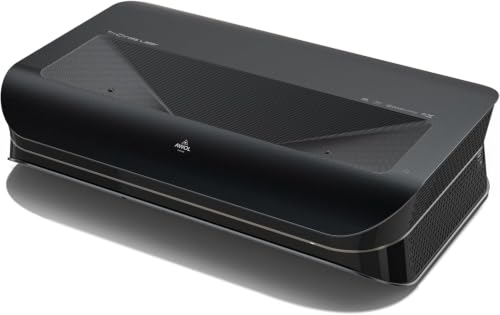 AWOL VISION LTV-3000 Pro 4K 3D Ultra ShortLTV-3000 Pro23.6 x 21.5 x 5.5 inches28 PoundsCheck on Amazon
 Optoma GT2000HDR Ultra-Compact Short Throw Full HD Home3500 Lumens, 1080p4.49 x 10.79 x 8.5 Inches9.6 PoundsCheck on Amazon


Top 3 picks at a glance
Quick Comparison
| Product | Best for | Key specs | Price tier |
|---|---|---|---|
| BenQ TH671ST | First short throw; bright living room; 1080p gaming on a shelf | 3,000 lumens, 1080p, short throw (sub-1:1 class), lamp-based, HDMI | Budget |
| Optoma ML1080UST | Renters and small rooms; portable ultra short throw with smart TV built in | 1080p, UST, LED/triple-laser light engine, DLP, Google TV | Budget |
| AWOL VISION LTV-3000 Pro | Best overall 4K UST value; dark-room cinema with Dolby Vision | 4K, triple laser, UST, Dolby Vision, Dolby Atmos, HDR10+, up to 150″ | Premium |
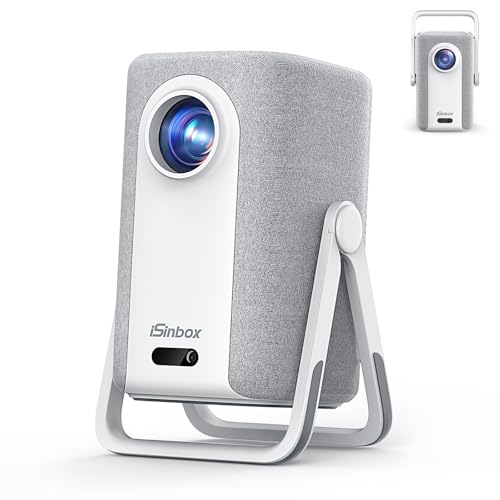
| iSinbox Short Throw Projector 4K | Budget 4K with streaming apps; casual family room use | 4K, short throw, built-in Netflix, auto focus, 40W Dolby audio | Budget |
| Optoma GT2000HDR | Small rooms and apartments; compact laser short throw | 1080p, laser light source, ultra-compact short throw, low input lag | Budget |
| Hisense PL2 | Mid-range 4K UST with strong black level for the money | 4K UHD, 2,700 lumens, 3000:1 contrast, 80″–150″, UST laser | Mid-range |
| Epson Lifestudio Grand Plus | Premium lifestyle UST; design-led living room installs | 4K UST laser, smart platform, integrated audio, 3LCD/laser class | Premium |
| Optoma GT2400HDR | Bright-room gaming and golf simulators | 1080p, 4,200 lumens, short throw, laser, low input lag, golf sim ready | Mid-range |
| WEMAX Nova Pro | Google TV 4K UST at a mid-range price | 4K UST, Google TV, 2,100 ISO lumens, triple-laser class light engine | Mid-range |
| AWOL VISION Aetherion Max | Daytime viewing; brightest triple-laser UST in this list | 4K triple laser UST, 3,300 ISO lumens, PixelLock alignment, daytime viewing | Premium |
| Hisense PX3-PRO | Premium all-rounder; Dolby Vision movies plus sports | 4K UHD triple laser, 3,000 lumens, 3000:1 contrast, 80″–150″, Dolby Vision | Premium |
| XGIMI MIRA Pro | Mid-range 3,000-lumen 4K UST with clean setup | 4K UHD UST laser, 3,000 ISO lumens, auto keystone/focus class | Mid-range |
How We Chose
This list is built from published specifications, manufacturer documentation and the practical geometry of real rooms — not from test benches we do not have. The first filter was throw type. A short throw projector (roughly 0.4:1 to 0.8:1) and an ultra short throw projector (roughly 0.2:1 to 0.3:1) solve different problems: short throw wants five to eight feet of floor or shelf space and tolerates a slightly imperfect wall, while ultra short throw wants a few inches of clearance and a genuinely flat, dedicated surface. Mixing those up is the single most common reason people return a projector, so every pick here is grouped by where it can physically live.
The second filter was brightness against screen size, because a projector that looks punchy on an 80-inch screen can look washed out at 150 inches. We checked rated lumens against the screen sizes each unit claims to support, then against the realistic light level of a living room rather than a bathtub-dark basement. Third was the upgrade path: does the unit have the HDMI version, HDR format support and audio output needed to grow into a receiver, a console and an ALR screen, or is it a closed box you replace in two years? Fourth was category fit — gaming, golf simulation, streaming-first, or cinema-first — since input lag, light-source type and smart platform matter far more than a single headline spec. Prices appear only as market tiers because listings move daily.
1. BenQ TH671ST – Best for a First Short Throw in a Bright Room
As an Amazon Associate we earn from qualifying purchases at no extra cost to you.

The TH671ST is the projector you buy when you want a big picture this weekend without rewiring a room. It is a 3,000-lumen 1080p short throw in the sub-1:1 throw class, which means it can sit on a shelf or a low table roughly five to seven feet from the wall and still fill a 100-inch diagonal image. That single characteristic makes it viable in apartments, bedrooms and rental units where a ceiling mount is not happening and a true ultra short throw cabinet placement is not possible either.
Its light source is lamp-based, which is the main trade-off at this tier. Lamps dim over time and eventually need replacing, but they are also cheap and widely available, and the upfront cost is far lower than a laser UST. For a first projector, that is a reasonable trade: you learn what screen size and room light you actually want before committing to a premium laser unit. The 3,000-lumen rating is genuinely useful at 100 inches — it is enough to watch sports with a lamp on in the corner and enough to make a 120-inch image look solid in a dim room.
Key specs
- 3,000 lumens rated brightness, 1080p native resolution
- Short throw optics in the sub-1:1 class — shelf placement, not coffee-table placement
- Lamp light source with user-replaceable lamp module
- Multiple HDMI inputs, analog and digital audio outputs, USB power
- Game-friendly picture modes with reduced processing for lower latency
- Built-in speaker for setup and casual use; external audio strongly recommended
Where it wins is flexibility. You can put it on a bookshelf behind the sofa, aim it at a plain white wall, and get a picture that most people will mistake for a much more expensive setup — provided the room is not flooded with daylight from a window facing the screen. The short throw ratio also means you are not walking through the beam every time you cross the room, which is the classic projector annoyance.
Where it loses is contrast and black level. Lamp-based 1080p units in this class typically deliver dark scenes that read as dark grey rather than black, and HDR support is limited compared with the laser UST models further down this list. If your movie diet is mostly dark science fiction and horror, a 4K laser UST with a 3000:1 contrast rating will be a visible step up. If your diet is sports, YouTube, party games and family movies, the TH671ST is doing 80 percent of the job for a fraction of the money.
Pros
- Cheapest credible route into a 100-inch short throw image
- Shelf placement works in rooms where ceiling mounting is impossible
- 3,000 lumens holds up better than most budget 1080p projectors in a lit room
- Low input lag modes make it usable for casual console gaming
- Replaceable lamp keeps long-term ownership cost predictable
Cons
- 1080p only — no native 4K detail at 100 inches and above
- Lamp dims over time and needs eventual replacement
- Black level and contrast cannot match triple-laser UST models
- Needs five to seven feet of throw distance, which rules out narrow rooms
- Built-in audio is fine for setup, not for movie night
Compared with the Optoma GT2000HDR, the TH671ST trades a laser light source and a more compact chassis for a lower entry price and a slightly brighter rated output. If you plan to run the projector four hours a night for years, the laser GT2000HDR will cost less to own and never needs a lamp. If you want the lowest possible cost of entry and you accept a lamp, the BenQ is the better deal.
2. Optoma ML1080UST – Best for Renters and Small Rooms

The ML1080UST is the most portable way to get an ultra short throw image in this list. It is a 1080p UST with a Google TV smart platform built in and an LED/triple-laser class light engine, which means no lamp to replace and no separate streaming stick to hide. Because it is ultra short throw, it sits inches from the wall — on a media console, a floating shelf or even the floor if you can live with the cable — and throws upward onto the screen. That is the configuration that makes projectors work in rented apartments where you cannot drill into a ceiling.
The trade-off versus a dedicated 4K UST is resolution and light output. 1080p at 100 inches is perfectly watchable from a sofa ten feet away, but if you sit six feet from a 120-inch screen, you will see the pixel structure in bright scenes and text will look softer than on a 4K unit. For streaming TV, sports and casual gaming, that is a non-issue for most viewers. For desktop use, flight sims with small instrument text, or anyone who has already been spoiled by a 4K television, it is noticeable.
Key specs
- 1080p native resolution, ultra short throw optics (0.2:1–0.3:1 class)
- LED/triple-laser class light engine — no lamp replacement
- DLP imaging with Google TV built into the projector
- Auto keystone and auto focus class features for fast setup
- HDMI input for consoles and receivers, USB for media and power
- Compact, appliance-sized chassis designed for shelf or console placement
The real value here is setup friction. There is no ceiling mount, no long HDMI run through a wall, no ladder. You set the unit on a console, let auto focus and auto keystone do their work, sign into your streaming apps, and you are watching in fifteen minutes. For a rental, a dorm, a spare bedroom or a camper, that is worth more than an extra few hundred lumens.
The constraint to respect is surface flatness. Ultra short throw projectors magnify any wall imperfection: a 1 mm bump in the drywall can show as a visible ripple across a 100-inch image. With a portable 1080p UST you have two options — a tensioned ALR screen that hangs flat, or a genuinely flat painted wall with an even matte finish. Gloss paint will produce a hotspot where the beam hits the wall closest to the lens.
Pros
- True ultra short throw placement works where ceiling mounts do not
- Google TV built in — no extra streaming device or second remote
- No lamp, no filter maintenance, no replacement cost
- Fast auto setup for people who move the projector between rooms
- Lowest-cost entry into the UST form factor in this list
Cons
- 1080p only, so large screens lose fine detail
- Light output is modest — best in dim rooms or with a good ALR screen
- Requires a flat screen surface; textured walls are unforgiving
- Not bright enough to fight a sunny window at 120 inches
- Compact chassis means small drivers — plan on a soundbar
Against the iSinbox 4K short throw, the ML1080UST wins on placement and smart-platform integration and loses on resolution and built-in audio wattage. If you must have the projector inches from the wall and you want a native smart TV experience, the Optoma is the cleaner answer. If you have a coffee table to spare and you want 4K, the iSinbox is the budget alternative.
3. AWOL VISION LTV-3000 Pro – Best for Premium 4K Cinema Value
The LTV-3000 Pro is the best overall pick in this roundup because it hits the sweet spot between price tier and capability: a 4K triple-laser ultra short throw with Dolby Vision and Dolby Atmos support, HDR10+ processing and support for screens up to 150 inches. Triple-laser light engines use separate red, green and blue lasers instead of a phosphor wheel, which means wider color coverage and no color wheel to spin — the practical result is a picture that stays saturated at high brightness instead of washing toward white.
This is a dedicated-room projector, and it wants a proper screen. At 150 inches, the image is roughly 130.7 inches wide and 73.6 inches tall — about 66.8 square feet of surface. Even a bright UST struggles to fill that with punch in a room with daylight, so the LTV-3000 Pro belongs on a tensioned ALR screen in a room where you can control the light. Do that, and it will outperform televisions costing several times more at the same size.
Key specs
- 4K UHD resolution, triple-laser light engine, ultra short throw optics
- Dolby Vision and HDR10+ dynamic metadata support
- Dolby Atmos audio support via eARC to a soundbar or receiver
- Screen sizes up to 150 inches diagonal
- Multiple HDMI inputs including an eARC output for audio return
- Smart platform with major streaming apps built in
The math on brightness matters here. For a 120-inch 16:9 screen with a 0.8-gain ALR surface, hitting a comfortable 30 foot-lamberts of reflected light needs about 1,600 lumens at the screen. Push to 50 fL for a punchier HDR presentation and you need roughly 2,700 lumens. A triple-laser UST in this class is rated in a range that makes 120 inches comfortable and 150 inches achievable in a dark room, which is exactly the intended use.
Setup is the other half of the story. Ultra short throw projectors need precise alignment: the unit sits a fixed distance from the wall, and the image geometry depends on that distance and the screen’s bottom edge height. Move the console two inches and the whole picture shifts. Plan the media cabinet around the projector’s footprint before you buy, not after, and leave yourself an inch or two of adjustment room.
Pros
- Triple-laser color with no lamp and no phosphor wheel
- Dolby Vision and Dolby Atmos support in one unit
- Supports very large screens up to 150 inches
- UST placement keeps the room walkable — no beam to cross
- Best price-to-capability ratio in the premium tier
Cons
- Premium tier pricing — this is not a starter projector
- Requires a flat wall or a tensioned ALR screen to look its best
- Demanding placement: a few inches of movement changes the image
- Needs light control to deliver its contrast potential
- External audio strongly recommended despite Atmos support
The nearest alternative is the Hisense PX3-PRO, which is also a 4K triple-laser UST with Dolby Vision and a 3000:1 contrast rating. The Hisense adds a slightly higher rated brightness, while the AWOL typically undercuts it on price. If you find the AWOL on promotion, take it; if the two are within a small margin, choose on the screen size you intend to use and the smart platform you prefer.
4. iSinbox Short Throw Projector 4K – Best for Budget 4K Streaming

The iSinbox is the budget-first answer to “I want 4K and I do not want to buy a streamer.” It is a 4K short throw with Netflix built into the projector’s own interface, auto focus, and a 40-watt Dolby-branded audio system. That combination is unusual at the budget tier, where most competitors are 1080p, ship with a weak speaker and expect you to plug in a Fire Stick or Google TV dongle.
Short throw rather than ultra short throw is the important detail. This unit needs a few feet of distance to the wall — think a coffee table, a low console or a shelf behind the seating position — which means it is far more forgiving about wall flatness than a UST. A normal painted wall with a light roller texture will look fine. That makes it a realistic first projector for a bedroom, a playroom or a basement rec room where you are not installing a dedicated screen.
Key specs
- 4K resolution class, short throw optics
- Netflix and other major streaming apps built into the projector interface
- Auto focus for quick setup and repositioning
- 40W Dolby-branded integrated audio
- HDMI inputs for consoles, plus USB media playback
- Keystone correction for off-axis placement
Where budget 4K projectors typically compromise is contrast and brightness uniformity, not resolution. The panel or DMD may genuinely be 4K-capable, but the light path and lens are built to a price. Expect the center of the image to look sharp and the corners slightly softer, and expect black levels that read as dark grey in a fully lit room. None of that matters much for cartoons, sports and casual movie nights; all of it matters if you are chasing reference-grade cinema.
The 40W audio system is a genuine differentiator. Most projectors in this class put out 5 to 10 watts per channel from drivers the size of a coin, which is fine for dialogue and hopeless for anything with bass. Forty watts with Dolby processing will not replace a soundbar with a subwoofer, but it is loud enough for a bedroom or a small room without adding another box and another power outlet.
Pros
- 4K resolution at a budget-tier price
- Netflix and streaming apps built in — no dongle required
- Auto focus makes setup genuinely quick
- 40W Dolby audio is unusually strong for the tier
- Short throw placement tolerates ordinary painted walls
Cons
- Contrast and black level are typical budget-tier, not cinema-grade
- Corner sharpness and uniformity will not match premium optics
- Smart interface performance varies with app updates
- Needs several feet of throw distance — not a UST replacement
- Brightness is best suited to dim or moderately lit rooms
Compared with the Optoma ML1080UST, the iSinbox gives you 4K and louder built-in sound but loses the true ultra short throw placement and the polish of a Google TV platform. If your room allows a few feet of throw distance and you want maximum resolution per dollar, the iSinbox is the pick. If the projector must live against the wall, the Optoma is the only one of the two that works.
5. Optoma GT2000HDR – Best for Compact Laser Short Throw in Small Rooms

The GT2000HDR is the small-room specialist. It is a 1080p laser short throw with an ultra-compact chassis, which solves two problems at once: it fits on a shelf in a room that cannot host a big media cabinet, and the laser light source means no lamp replacements and no warm-up wait — the picture is at full brightness within seconds of power-on. For a bedroom projector that gets switched on for an hour before sleep, that instant-on behavior is a bigger deal than it sounds.
Full HD at this size and price is the right call. A 1080p image on a 100-inch screen viewed from ten feet is sharp enough that most viewers stop noticing resolution entirely; what they notice instead is brightness consistency, black level and motion handling. Laser light sources hold their brightness better over thousands of hours than lamps do, which means year three looks much closer to year one.
Key specs
- 1080p native resolution, laser light source
- Ultra-compact short throw chassis for shelf or table placement
- Low input lag picture modes for console gaming
- HDR-compatible processing for streaming content
- HDMI inputs, USB power for streaming sticks
- Instant on/off with no lamp cooldown cycle
Gaming is where this unit earns its place. At 1080p and 120 Hz, each frame occupies 8.3 milliseconds, so the frame budget itself is tight enough that a projector adding two or three frames of processing is the difference between a responsive and a mushy feel. Optoma’s game modes cut that processing down, and on a 1080p panel the console is not fighting a scaler the way it would on a 4K projector fed a 1080p signal.
The honest limitation is brightness versus screen size. Compact short throw lasers in this class are typically rated in a range that comfortably lights an 80-to-100-inch image in a dim room but gets strained at 120 inches with the lights on. If your plan is a 120-inch screen in a living room with big windows, the 4,200-lumen GT2400HDR or a triple-laser UST is the better tool. If your plan is a 90-inch image in a bedroom or a converted spare room, the GT2000HDR is right-sized.
Pros
- Laser light source — no lamps, no dimming curve to manage
- Very compact, easy to relocate between rooms
- Instant on/off suits casual, frequent use
- Low-lag modes make 1080p console gaming responsive
- Lower entry price than most 4K UST units
Cons
- 1080p only — not ideal for very large screens or desktop text
- Modest light output for 120-inch-plus setups
- Built-in audio is basic; a soundbar is effectively mandatory
- Short throw still needs several feet of distance
- No ultra short throw convenience for tight rooms
Against the BenQ TH671ST, the GT2000HDR costs more upfront but removes the lamp from the equation and shrinks the chassis considerably. Over a five-year ownership window the laser unit’s total cost of ownership usually closes the gap. If you want the lowest sticker price and you are happy to replace a lamp every few years, the BenQ wins; if you want a projector you can turn on and forget, the Optoma does.
6. Hisense PL2 – Best for Mid-Range 4K UST With Strong Contrast

The PL2 is the value pick for anyone who wants a genuine 4K ultra short throw with a stated 3000:1 contrast ratio and a 2,700-lumen rating, at a mid-range price rather than a premium one. It supports screens from 80 to 150 inches, which covers the overwhelming majority of real living rooms, and its ultra short throw optics mean it sits on a console directly beneath the screen with no visible beam and no ceiling mount.
Contrast is the spec that matters most in this tier and the one most often fudged. A 3000:1 native figure on a laser UST is a meaningful number: it means dark scenes keep their shadow detail instead of crushing to black or floating up to grey. Combined with 2,700 lumens, the PL2 is comfortable at 100 inches in a dim room and usable at 120 inches with an ambient-light-rejecting screen. It is not a daytime sports projector in a sunlit room, but it is not a cave-only device either.
Key specs
- 4K UHD resolution, ultra short throw laser light engine
- 2,700 lumens rated brightness
- 3000:1 contrast ratio
- Supported screen sizes: 80 to 150 inches diagonal
- Smart platform with major streaming apps
- Multiple HDMI inputs plus eARC audio output
The brightness math explains the screen-size guidance. On a 100-inch 16:9 screen with a 0.8-gain surface, 2,700 lumens produces roughly 91 foot-lamberts of reflected light if nothing is lost — well above the 30 fL that a dim-room cinema presentation needs, and enough headroom to absorb light loss from an ALR screen with a 0.6 gain, which would land near 68 fL. At 150 inches, the same 2,700 lumens spread over 66.8 square feet drops to about 40 fL before gain losses, which is still watchable but noticeably less punchy. That is the reason 120 inches is the practical sweet spot for this class.
Alignment and placement deserve attention before purchase. Ultra short throw units project upward at a steep angle, so the bottom edge of the image sits well above the projector’s lens plane — typically 15 to 24 inches depending on screen size. That means the projector must sit below the screen on a console of the right height, and the console must be deep enough to hold the unit at its specified distance from the wall. Measure that before you buy the furniture.
Pros
- 4K UST at a mid-range rather than premium price
- 3000:1 contrast delivers credible black levels for the tier
- 80-to-150-inch range covers most room sizes
- No lamp, no filter, minimal maintenance
- eARC output makes soundbar integration simple
Cons
- 2,700 lumens is not a daytime-in-a-bright-room figure at 150 inches
- Requires a flat screen surface; UST magnifies wall imperfections
- Console placement is constrained by screen height and depth
- Premium triple-laser units deliver wider color volume
- Built-in audio will not satisfy a home theater audience
The nearest competitor is the WEMAX Nova Pro, which also lands in the mid-range tier with a 4K UST and a 2,100 ISO lumen rating. The Hisense has the brightness and contrast advantage on paper; the WEMAX has Google TV and a different light-engine approach. If you watch a lot of dark content, the PL2’s contrast rating makes it the safer pick. If you want the smart platform and a slightly lower price tier, the Nova Pro is the alternative.
7. Epson Lifestudio Grand Plus – Best for Design-Led Living Room Installs

The Lifestudio Grand Plus is the premium lifestyle option: a 4K ultra short throw laser projector built to look like a piece of furniture rather than a piece of equipment, with a smart platform and integrated audio designed for a living room where the projector is visible all the time. Epson’s 3LCD heritage matters here — 3LCD designs produce color by splitting white light through three panels rather than by a color wheel, which historically means no rainbow artifacts and consistent color brightness between white and colored content.
This is the pick for someone who has decided the projector lives in the main room, not a dedicated theater. That changes the requirements. It must look acceptable on a console in daylight. It must sound good enough that a soundbar is optional rather than mandatory. It must start quickly and be operable by people who do not want to think about inputs and aspect ratios. And it must handle a moderately lit room without looking grey.
Key specs
- 4K UHD resolution with ultra short throw laser optics
- 3LCD/laser class light engine for consistent color brightness
- Smart TV platform with built-in streaming apps
- Integrated audio tuned for living-room use
- Ultra short throw placement — inches from the wall
- Designed chassis suitable for open living-room display
What you are paying for at this tier is integration, not raw lumens. A premium lifestyle UST will not out-spec a dedicated cinema projector on contrast, but it will be quieter, better finished, easier to live with, and more likely to be used every day. For a family that watches two hours of streaming a night, daily usability beats a 10 percent contrast advantage every time.
The screen question still applies. Ultra short throw projectors of any tier reward a proper screen: an ALR surface with a gain in the 0.6-to-0.8 range rejects ceiling and window light from above while reflecting the steeply angled beam from below. On a plain wall the picture will look fine at night and noticeably washed out in daylight. If you are spending premium-tier money on the projector, budgeting for the screen is not optional — it is the difference between a good install and a mediocre one.
Pros
- Premium fit and finish suited to a visible living-room install
- 3LCD/laser color consistency with no color-wheel artifacts
- Built-in smart platform and audio reduce box count
- Ultra short throw keeps the room free of cables and beams
- Epson’s projector support and service network is long established
Cons
- Premium tier pricing for a lifestyle rather than cinema-first design
- Will not out-contrast dedicated triple-laser cinema USTs
- Requires a flat screen surface to look its best
- Integrated audio still trails a dedicated soundbar with a subwoofer
- Placement geometry is unforgiving of furniture changes
Compared with the AWOL VISION Aetherion Max, the Epson trades raw light output and daytime punch for design, integration and color-consistency behavior. If your room has a big window and you watch afternoon sports, the Aetherion Max’s higher ISO lumen rating is the more useful spec. If your projector sits on a console in a room you care about, the Lifestudio Grand Plus is the one that will not look like a gadget.
8. Optoma GT2400HDR – Best for Bright Rooms, Gaming and Golf Simulators
The GT2400HDR is the brightest short throw in this list and the only one explicitly positioned for golf simulation as well as gaming. It pairs 1080p resolution with a 4,200-lumen laser light source, short throw optics and low input lag. That specification set is not aimed at movie night in a dark room; it is aimed at rooms where the lights are on, the windows are open, and the projector needs to punch through ambient light onto a large screen.
Golf simulators are the clearest use case. A simulator setup projects onto a screen or impact panel from behind or above, and the room is usually lit well enough that players can see their own swing and find their ball. At 4,200 lumens, the GT2400HDR holds an image that a 2,000-lumen cinema projector would lose entirely. The same logic applies to a sports bar-style living room, a basement game room with overhead lighting, or a classroom-style space.
Key specs
- 1080p native resolution, 4,200 lumens rated brightness
- Laser light source with instant on/off
- Short throw optics for shelf or overhead placement
- Low input lag modes for gaming and simulator response
- HDR-compatible processing
- Positioned for golf simulation and bright-room entertainment use
The brightness math here is the point. A 100-inch 16:9 screen is 29.7 square feet. At 4,200 lumens with a 0.8-gain surface, the reflected brightness lands near 113 foot-lamberts — roughly four times the 30 fL a dark-room cinema presentation needs. That headroom is what lets the image survive ambient light. Even at 120 inches (42.8 square feet), you are still near 78 fL, which is bright enough to watch with a lamp on in the corner of the room.
The trade-off is resolution and contrast. 1080p at 120 inches is visible from close seating distances, and a laser DLP in this class will not deliver the black level of a 3000:1 triple-laser UST. But for simulator use, sports and party gaming, brightness and responsiveness matter far more than shadow detail. And critically, at 4,200 lumens the GT2400HDR can be paired with a low-gain screen — including a 1.0-gain matte white surface — without losing punch, which keeps screen costs down.
Pros
- 4,200 lumens — the brightest short throw here by a wide margin
- Laser light source with no lamp maintenance
- Low input lag suits gaming and golf simulator feedback loops
- Works with inexpensive low-gain matte screens
- Short throw placement keeps players out of the beam
Cons
- 1080p only — detail is limited on large screens at close range
- Contrast and black level trail triple-laser UST cinema models
- Brightness is overkill, and contrast suffers, in a dark theater room
- Needs several feet of throw distance
- External audio required for anything beyond casual use
The nearest alternative in this list is the Optoma GT2000HDR, which shares the compact laser short throw formula at a lower brightness and a lower price. Choose the GT2400HDR if ambient light is unavoidable or you are building a simulator; choose the GT2000HDR if you watch mostly at night and would rather spend the difference on a screen. Both are 1080p, so the decision is brightness versus budget.
9. WEMAX Nova Pro – Best for Google TV 4K UST Value

The Nova Pro is the mid-range pick for people who want the Google TV interface at the heart of their setup rather than a manufacturer’s own app store. It is a 4K ultra short throw projector with Google TV built in and a 2,100 ISO lumen rating. ISO lumens are measured under a stricter standard than the “light output” figures some brands publish, so a 2,100 ISO lumen rating is a more honest number than it looks at first glance — but it still places this unit firmly in the dim-room, not bright-room, category.
Google TV is a genuine advantage if you already live in that ecosystem. Recommendations, watchlists, casting from a phone and voice search all work the way they do on a Chromecast, and app updates arrive on Google’s schedule rather than a projector maker’s. For a household with several people and several streaming subscriptions, that consistency reduces friction more than an extra hundred lumens would.
Key specs
- 4K UHD resolution, ultra short throw optics
- Google TV smart platform built in
- 2,100 ISO lumens rated brightness
- Triple-laser class light engine, no lamp
- HDMI inputs plus eARC audio output
- Auto focus and auto keystone class setup features
The brightness figure sets expectations. At 100 inches with a 0.8-gain screen, 2,100 lumens yields roughly 71 foot-lamberts — comfortable for evening viewing and fine for a room with a single small window and blinds. At 120 inches the same output drops to about 49 fL, which is still watchable but no longer bright. With an ALR screen at 0.6 gain, expect roughly 53 fL at 100 inches and 37 fL at 120 inches. That is a realistic picture of what this projector can do, and it is more than enough for most people’s evening viewing.
Where it fits in the market is the middle of the road, deliberately. It costs less than the premium triple-laser units and more than the budget 1080p models, and it delivers the two things mid-range buyers actually want: native 4K and a first-class smart platform. If you want the brightest possible daytime picture, step up to the Aetherion Max or the PX3-PRO. If you want to spend less, the Hisense PL2 offers a similar 4K UST experience with a higher rated brightness but a different platform.
Pros
- Google TV built in with the full app ecosystem
- Native 4K UST at a mid-range price tier
- Triple-laser class light engine with no lamp replacement
- Auto setup features make initial placement quick
- eARC output supports a soundbar or receiver cleanly
Cons
- 2,100 ISO lumens is dim-room territory at 120 inches
- Ultra short throw demands a flat screen surface
- Will not match premium triple-laser units on color volume
- Built-in audio is adequate, not impressive
- Placement geometry constrains furniture choices
Against the XGIMI MIRA Pro, the Nova Pro gives up rated brightness — 2,100 ISO lumens versus 3,000 ISO lumens — in exchange for the Google TV platform and typically a lower price. If your room is dim and you value the interface, the WEMAX is the smarter buy. If you have any ambient light to fight or you want a 120-inch screen to stay punchy, the MIRA Pro’s extra lumens are worth paying for.
10. AWOL VISION Aetherion Max – Best for Daytime Viewing

The Aetherion Max is the daytime-viewing answer in this list: a 4K triple-laser ultra short throw rated at 3,300 ISO lumens with a PixelLock alignment system for precise geometry. Triple-laser light engines produce red, green and blue from separate laser diodes, which delivers wide color coverage at high brightness without the color-wheel artifacts of single-chip DLP with a phosphor wheel. At 3,300 ISO lumens it is the brightest UST here alongside the Hisense PX3-PRO, and ISO measurement makes that number directly comparable rather than marketing-inflated.
Daytime viewing is a system problem, not just a brightness problem. To watch with curtains open you need three things working together: enough lumens, an ambient-light-rejecting screen, and reasonable control over the light hitting the screen directly. The Aetherion Max supplies the first. An ALR screen with a 0.6-to-0.8 gain and a lenticular or fresnel structure supplies the second by rejecting light from above and reflecting the steeply angled beam from the projector below. The third is up to your curtains and your window orientation.
Key specs
- 4K UHD resolution, triple-laser ultra short throw light engine
- 3,300 ISO lumens rated brightness
- PixelLock alignment for precise image geometry
- Positioned for daytime viewing with appropriate screen
- Multiple HDMI inputs including eARC audio return
- Smart platform with major streaming apps built in
Run the numbers and the daytime claim holds up. On a 120-inch 16:9 screen — 42.8 square feet — 3,300 ISO lumens with a 0.8-gain ALR surface yields roughly 77 foot-lamberts of reflected light before ambient loss. Even with a 0.6-gain ALR screen, that is about 58 fL. Typical living-room ambient light might cost you half of that in perceived contrast, which still leaves a picture in the 30-to-40 fL range — the same ballpark as a dark-room cinema presentation. That is what makes daytime viewing genuinely possible rather than a marketing claim.
PixelLock matters more than it sounds. Ultra short throw projectors are extremely sensitive to placement: a small rotation produces visible trapezoid distortion, and a small height change moves the entire image up or down the wall. A powered alignment system that lets you nudge geometry electronically saves a frustrating hour of sliding a heavy console around by millimetres. If you are installing this yourself, that feature alone can justify the premium.
Pros
- 3,300 ISO lumens — among the brightest UST units available
- Triple-laser color with high brightness retention
- PixelLock alignment simplifies precise geometry setup
- Credible daytime performance with an ALR screen
- No lamp, no color wheel, minimal maintenance
Cons
- Premium tier pricing
- Requires an ALR screen to deliver its headline capability
- Ultra short throw geometry still demands careful furniture planning
- Overkill — and contrast-limited — in a fully dark theater room
- External audio recommended for cinema use
The direct rival is the Hisense PX3-PRO, which also sits in the premium tier with a 3,000-lumen rating, 3000:1 contrast and Dolby Vision. The AWOL has the higher rated brightness and the alignment system; the Hisense brings Dolby Vision dynamic tone mapping and a long track record in UST laser projectors. If your priority is fighting daylight, take the Aetherion Max. If your priority is HDR movie fidelity, take the PX3-PRO.
11. Hisense PX3-PRO – Best for Premium All-Round Movies and Sports

The PX3-PRO is the most complete projector in this roundup: a 4K ultra short throw triple-laser unit rated at 3,000 lumens with a 3000:1 contrast ratio, support for 80-to-150-inch screens, and Dolby Vision. That combination covers the two hardest jobs in a living room — dynamic HDR movie content and bright, fast-moving sports — without obvious weakness in either. If you want one projector and you do not want to think about which compromise you are accepting, this is the one to shortlist.
Dolby Vision support is the differentiator worth understanding. Standard HDR10 sends one set of tone-mapping metadata for an entire film, so the projector has to guess how to map a 1,000-nit or 4,000-nit master onto a display that might reach 200 nits. Dolby Vision sends dynamic metadata scene by scene, so dark scenes and bright scenes each get appropriate mapping. On a projector, where peak brightness is the fundamental constraint, that difference is visible in shadow detail and highlight retention.
Key specs
- 4K UHD resolution, triple-laser ultra short throw light engine
- 3,000 lumens rated brightness
- 3000:1 contrast ratio
- Dolby Vision HDR support
- Supported screen sizes: 80 to 150 inches diagonal
- Multiple HDMI inputs plus eARC audio output and smart apps
The contrast figure deserves context. A 3000:1 native ratio on a laser projector is a solid mid-to-upper figure for the category and translates into black levels that hold shadow detail in a controlled room. It will not match a high-end home theater projector with dynamic iris control and a dedicated dark room, and it will not match an OLED television on absolute black. What it will do is deliver a 120-inch image with convincing contrast for a fraction of what a 120-inch television costs — if you have the wall space.
Placement is the operational reality. This unit needs to sit on a console directly beneath the screen at a specific distance from the wall, with the screen’s bottom edge positioned according to the manufacturer’s offset guidance for your chosen size. Get that geometry right at install and the projector is a permanent, invisible appliance. Get it wrong and you will be adjusting keystone, which degrades sharpness and can introduce scaling artifacts. Measure twice, mount once.
Pros
- Dolby Vision dynamic tone mapping on a projector
- 3,000 lumens with a 3000:1 contrast rating — balanced rather than lopsided
- Triple-laser color volume without a color wheel
- 80-to-150-inch range suits most living rooms
- Strong brand support and a mature UST product line
Cons
- Premium tier pricing
- Requires a flat screen surface and precise console placement
- Not the brightest option if daytime sports in a sunlit room is the priority
- Built-in audio is not a substitute for a soundbar or receiver
- Large-screen performance still benefits from light control
Compared with the AWOL VISION LTV-3000 Pro, the PX3-PRO costs more and brings Dolby Vision plus a higher rated brightness. The LTV-3000 Pro remains the better value if you can find it on promotion, and it also supports Dolby Vision, so the gap is narrower than the price suggests. Compare the two on screen size, smart platform and current availability rather than on the spec sheet alone.
12. XGIMI MIRA Pro – Best for Mid-Range 3,000-Lumen 4K UST

The MIRA Pro closes the list as the mid-range projector that punches closest to premium brightness. It is a 4K UHD ultra short throw laser rated at 3,000 ISO lumens, which puts it level with premium units on the headline number while sitting a tier below them on price. XGIMI has built a reputation for clean industrial design and automatic setup features, and that shows here: the unit is designed to be placed, aligned and forgotten.
Three thousand ISO lumens at 100 inches with a 0.8-gain screen yields roughly 101 foot-lamberts, and at 120 inches roughly 70 fL. Both figures are comfortably above the 30 fL that a dark-room presentation requires, which means the MIRA Pro has headroom to absorb the losses that come with an ALR screen — an important point, because ALR surfaces typically carry a gain between 0.6 and 0.8 and therefore reduce measured brightness by 20 to 40 percent. A projector rated at 1,500 lumens cannot afford that loss; one rated at 3,000 can.
Key specs
- 4K UHD resolution, ultra short throw laser optics
- 3,000 ISO lumens rated brightness
- Auto keystone and auto focus class setup features
- Smart platform with major streaming apps built in
- Multiple HDMI inputs plus eARC audio output
- Design-forward chassis for visible living-room placement
Where it gives ground to the premium tier is contrast and processing depth. Laser UST units at the top of the market invest in dynamic tone mapping, higher native contrast and better lens quality, and those differences show up in dark scenes and in corner sharpness at 120 inches and above. The MIRA Pro will look excellent with sports, streaming series and games, and very good with film — but the very best film presentations in this list come from the Dolby Vision units.
It is also worth noting what 3,000 ISO lumens does for screen choice. Because you have brightness headroom, you can choose a 1.0-gain matte white screen for the widest viewing angles and most accurate color, accepting that daytime viewing will be limited. Or you can choose an ALR screen with a lower gain for daylight tolerance at the cost of some off-axis brightness. The projector has enough output to support either decision, which is not true of every unit in this list.
Pros
- 3,000 ISO lumens at a mid-range price tier
- Native 4K with ultra short throw convenience
- Automatic setup features reduce install friction
- Enough brightness headroom to use an ALR screen
- Clean design suited to a visible living-room install
Cons
- No Dolby Vision, unlike the premium tier above it
- Contrast and lens quality trail the top of the market
- Ultra short throw requires a flat screen surface
- Built-in audio needs supplementing for movie night
- Placement geometry constrains console and furniture choices
Against the WEMAX Nova Pro, the MIRA Pro wins on brightness by a clear margin — 3,000 ISO lumens versus 2


