
Our Top Picks
 Lodge Reversible Cast Iron Grill/Griddle Pan16.8" x 9.5" x 0.8"9.5 x 0.5 x 16.75 inches9.38 poundsCheck on Amazon
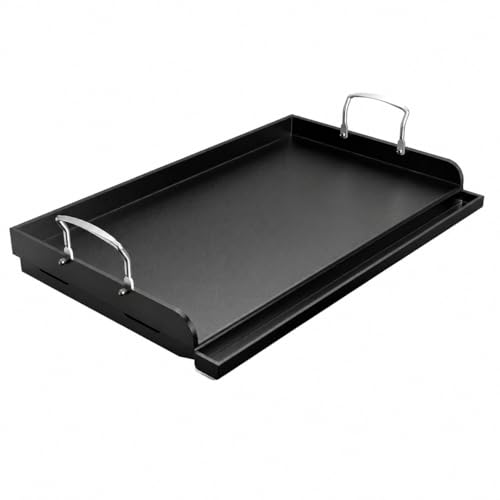 Griddle for Gas Grill Flat Top Grill Griddles25" x 16" x 3"25 x 16 x 3 inches21.9 poundsCheck on Amazon
 BBQ Future Universal Cast Iron Griddle for Gas23" x 16" x 2.6"23 x 16 x 2.6 inches28.1 poundsCheck on Amazon

Top 3 picks at a glance

Best Flat Top Grills and Griddles: Choose by Cooking Style
The best flat top grills and griddles are the ones that match your usual meal size, heat-control needs, and cleanup tolerance—not simply the model with the largest cooktop. For most households, a propane griddle with roughly 500–700 square inches of cooking area offers a useful balance; choose a smaller tabletop unit for portability, or a larger multi-zone model for parties and mixed-temperature cooking.
Well-known options include the Blackstone 36-inch Outdoor Griddle, the Weber Slate 36-inch Rust-Resistant Griddle, the Camp Chef Flat Top Grill 600, and the portable Blackstone 22-inch Tabletop Griddle. Their designs illustrate the key trade-offs: cooking area, burner layout, heat recovery, grease handling, surface care, and how much effort cleanup takes.
As an Amazon Associate we earn from qualifying purchases at no extra cost to you.


Quick comparison
| Model | Cooking area | Heat setup | Best fit | Portability |
|---|---|---|---|---|
| Blackstone 36-inch Outdoor Griddle | About 768 sq. in. | Four independently controlled burners | Large meals and several heat zones | Cart-style; best kept in one place |
| Weber Slate 36-inch Rust-Resistant Griddle | About 756 sq. in. | Four burners with separate controls | Frequent outdoor cooking and flexible zones | Full-size cart model |
| Camp Chef Flat Top Grill 600 | About 604 sq. in. | Four burners | Mid-size cooking with room to separate foods | Cart-style |
| Blackstone 22-inch Tabletop Griddle | About 361 sq. in. | Two burners with separate controls | Camping, small patios, and compact meals | Portable; requires a stable support surface |
Exact configurations and included accessories can vary by product version. Confirm the specifications for the particular model before buying, especially cooking area, burner count, fuel connection, and whether a stand or hood is included.
What matters more than the headline cooking area
Cooking area: plan for usable space, not the whole plate
A griddle’s advertised surface is not all practical cooking room. Food needs space between portions for steam to escape, and you’ll want an uncrowded area to hold finished food or keep ingredients warm. A 36-inch model is a strong choice when you regularly cook for a family or want to make breakfast foods and sides at once. A 22-inch tabletop model is more manageable for a couple, but batching is likely when cooking for a group.
Use a rough planning estimate of 80–100 square inches per person for a meal with multiple items, then add room for a holding zone. For four people, that’s 320–400 square inches of active cooking space, before allowing extra room for pancakes, buns, or cooked food. The estimate is a planning tool, not a manufacturer rating: bulky foods and crowded layouts need more room.
Heat zones and recovery: the difference between “hot” and controllable
Multiple burners with separate controls let you set up a high-heat searing area, a medium zone for eggs or vegetables, and a lower-temperature holding area. That arrangement is far more useful than treating the entire surface as one temperature. It also helps keep delicate food away from meat juices and gives you somewhere to move food if it is browning too fast.
Temperature recovery is how quickly the plate returns to heat after cold food is added. A heavy plate can hold heat well, but it still cools under a large load; burner output, wind, and food quantity all matter. For better recovery, preheat with the lid down if the model has one, add food in batches, and leave space around ingredients. A large single batch may lower surface temperature enough to steam rather than sear, even on a powerful grill.
Match the griddle to your cooking routine
| Your situation | A sensible choice | Why |
|---|---|---|
| Regular family breakfasts or dinners | Full-size, four-burner griddle | Room to cook separate foods and keep one area lower |
| Small patio or cooking for one or two | Compact tabletop model | Smaller footprint and less surface to clean |
| Camping or tailgating | Portable two-burner griddle | Easier to transport; check fuel and setup requirements |
| Frequent cooking in windy or changeable weather | Model with a compatible hood and stable cart | A hood can help with wind protection and heat retention |
| Cooking for a crowd | Large multi-burner model | More batch capacity and more room for a holding zone |
Surface material, grease handling, and cleanup
Many outdoor griddles use a steel cooking plate that needs seasoning: a thin, baked-on layer of cooking oil that helps protect the surface and improves release. Follow the manufacturer’s seasoning instructions, use a thin oil layer rather than a puddle, and avoid leaving the plate wet after cleaning. A rust-resistant surface can reduce maintenance demands, but it still benefits from prompt cleaning and protection from weather.
Grease management is easy to overlook in product photos. Check where the drain sits, whether the grease cup is reachable from the front or rear, and whether the collection system is sized for the foods you cook. Bacon, burgers, and other fatty foods produce much more grease than pancakes or vegetables. A poorly placed cup can be awkward to empty, particularly if the grill is against a wall. Keep the unit level and use only the grease collection components specified for it.
A practical cleanup routine is to scrape food debris toward the drain while the surface is still warm, wipe away residue with a suitable cloth or paper towel, and apply a very light protective coat of oil if the care instructions call for it. Don’t pour a large amount of water onto a hot plate: sudden cooling can damage surfaces, and hot grease can splatter. Let the grease system cool before removing and emptying its cup.
Portability and fuel are part of the decision
Tabletop models save storage space and can travel, but they still need a stable, heat-safe surface and clearance from combustible materials. Check whether the unit uses a small propane cylinder or can connect to a larger tank with an approved adapter. A full-size griddle on a cart is easier to work at, but its size and weight make it a poor choice if you need to carry it regularly.
Also account for storage. A cover helps protect the cooking surface from rain and dust, while a hood can make storage and cooking more convenient if it is designed for the model. Neither replaces checking the plate for moisture or following the manufacturer’s outdoor-use and storage guidance.
Which one should you buy?
- Choose the Blackstone 36-inch Outdoor Griddle if you want a widely recognized large format with multiple independently controlled burners and expect to cook for a group.
- Consider the Weber Slate 36-inch Rust-Resistant Griddle if a rust-resistant cooking surface and full-size multi-zone layout are priorities.
- Consider the Camp Chef Flat Top Grill 600 if you want a four-burner cart model with a cooking area between compact and extra-large formats.
- Choose the Blackstone 22-inch Tabletop Griddle if transport and storage matter more than cooking a full meal for a crowd in one batch.
If you’re undecided, buy for your typical meal rather than your rare biggest gathering. A full-size four-burner model is versatile, but takes more space and cleanup. A portable griddle is convenient, but its smaller area means more batch cooking. Compare the specific model’s burner controls, grease-cup access, surface-care instructions, and included stand or hood before committing.
Frequently asked questions
How much cooking area should I plan for per person?
Use about 80–100 square inches per person as a rough estimate for a meal with multiple items, then allow extra room for a holding zone. For four people, the article estimates 320–400 square inches of active cooking space before that extra room. Bulky foods and crowded layouts may need more space.
Can a large griddle cook different foods at different temperatures?
Yes, separate burner controls let you create hotter, medium, and lower-temperature areas. You can use them to sear food, cook eggs or vegetables more gently, and hold finished items. Multiple zones also give you somewhere to move food if it is browning too quickly.
What should I check about a griddle’s grease system?
Check where the drain is, whether the grease cup is easy to reach, and whether the collection system suits the foods you cook. Bacon and burgers produce more grease than pancakes or vegetables. Keep the griddle level and use only the grease collection components specified for it.
How should I care for a steel griddle surface?
Follow the manufacturer’s seasoning instructions, use a thin layer of oil, and avoid leaving the plate wet after cleaning. While the surface is still warm, scrape debris toward the drain and wipe away residue. Don’t pour a large amount of water onto a hot plate, and protect it from weather.
What do I need to check before using a tabletop griddle outdoors?
Make sure it sits on a stable, heat-safe surface with clearance from combustible materials. Check whether it uses a small propane cylinder or can connect to a larger tank with an approved adapter. The article also advises checking the model’s outdoor-use and storage guidance.


