Gaming with sore hands is a different challenge from gaming with fast hands. Stiff joints, aching wrists, and tired fingers turn a long session into a test of endurance, and the wrong mouse makes it worse: a flat shape twists the forearm, heavy clicks punish the index finger, and a heavy shell drags on every movement. The best gaming mouse for arthritis is therefore a comfort-first choice, built around shape, weight, and click feel rather than sensor numbers alone.
This guide covers four mice that suit hands that hurt. Two use a vertical handshake shape that keeps the wrist in a neutral position, one is a sculpted ergonomic mouse with quiet clicks and a thumb rest, and one is an ultralight gaming mouse that asks very little force from the fingers. None of these mice treats or cures joint pain, and anyone with persistent pain should talk to a clinician about the cause. What they can do is remove the unnecessary strain that a poorly shaped mouse adds, so the hands you have last longer into the session.
Before the picks, a short note on how to judge a mouse for sore hands. Pay attention to the angle of the grip, the force needed to click, the weight of the shell, and the size of the mouse relative to your hand. A mouse that fits well asks less of every finger, and that small saving adds up over thousands of clicks.
Our Top Picks
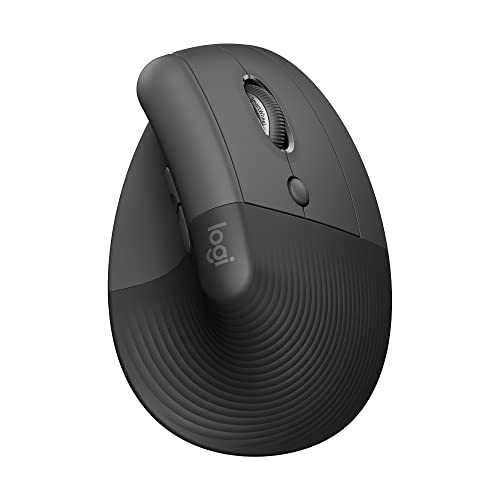
 Logitech MX Vertical Wireless Mouse Ergonomic DesignMouse for Medium-Large Hands4.7 x 3.11 x 3.09 inches0.5 poundsCheck on Amazon

Top 3 picks at a glance

What to Look For
A neutral wrist angle. A standard flat mouse forces the forearm to twist so the palm faces down, which loads the wrist during long sessions. A vertical mouse holds the hand in a handshake position instead, and Logitech describes the 57-degree angle on its vertical mice as a way to reduce wrist pressure. If your wrist aches after an hour at the desk, a vertical shape is the single biggest change you can make.
Light click force. Stiff switches punish sore fingers with every click. Look for mice with light, quiet clicks that need little force to actuate. Optical switches and quiet-click designs both help here, since they remove the heavy snap of a traditional mechanical switch. If possible, try the click feel in a store before buying, since click force varies more between models than any spec sheet suggests.
Low weight. Every gram counts when the hand is already tired. A mouse under 70 grams moves with a flick of the wrist, while a 140-gram mouse needs a deliberate push for the same movement. Ultralight mice suit players whose fingers ache, while heavier ergonomic mice suit players whose wrist aches, so match the weight to where the discomfort sits.
A shape that fits your hand size. A mouse that is too large forces the fingers to stretch, and a mouse that is too small forces them to curl tightly. Both positions add strain. Measure your hand from wrist to fingertip: under 17 centimeters is small, 17 to 19 is medium, and over 19 is large. Then check the mouse dimensions against that range before you buy.
A thumb rest and palm support. A sculpted thumb rest takes load off the thumb joint, and a full palm rest spreads contact across the hand instead of focusing it on the fingertips. Mice with a pronounced hump support the palm during long sessions, while low flat mice leave the hand hovering. If your thumb aches, a thumb rest matters as much as the click force.
Adjustable DPI without software. Sore hands benefit from a mouse that can be set once and left alone. On-board DPI buttons let you change sensitivity without opening software or holding awkward key combinations. A DPI range up to 4,000 is plenty for desktop and gaming use, and higher numbers add nothing for comfort.
Wireless freedom and battery life. A cable drags on the mouse and forces the hand to fight it during movement, which adds strain over time. Wireless mice remove that drag entirely. Look for a mouse that runs for months on a charge or on a single battery, so charging never interrupts a session.
Quiet operation for shared spaces. Quiet clicks are not only polite, they are also gentler. The softened click mechanism on quiet-click mice usually needs less force than a loud mechanical switch, which is a small comfort bonus on top of the lower noise. If you game near family or housemates, quiet clicks serve two purposes at once.
Top Picks
1. Logitech MX Vertical

The Logitech MX Vertical is the most widely recommended vertical mouse for sore hands, and the reason is its 57-degree angle. Instead of resting flat, the hand sits in a natural handshake position, which Logitech describes as a way to reduce wrist pressure during long sessions. For players whose wrist aches after an hour with a standard mouse, that angle change alone can make the difference between stopping early and finishing the session. The mouse pairs over Bluetooth and works with Windows, macOS, and iPadOS 13.4 or later, and it also ships with a USB receiver.
The 4,000 DPI sensor is more than enough for gaming and desktop work, and a dedicated DPI button on top switches between two sensitivity levels without software. Four customizable buttons sit within easy reach, and the textured rubber surface keeps the grip secure without demanding a tight hold. A rechargeable battery lasts up to four months per charge, and a one-minute USB-C top-up gives several hours of use, so the mouse rarely needs attention.
At 135 grams the MX Vertical is not light, and its full-size shell suits medium to large hands best. People with small hands may find the vertical wall a stretch to reach across. But if the discomfort sits in the wrist rather than the fingers, the angle matters more than the weight, and this mouse delivers the most proven vertical shape in its class.
2. Logitech Lift Vertical
The Logitech Lift Vertical takes the same 57-degree handshake angle as the MX Vertical and scales it down for small to medium hands. That matters, because a vertical mouse that is too large forces the fingers to stretch across a tall wall, which adds strain instead of removing it. The Lift keeps the thumb rest, the side buttons, and the soft-touch finish within easy reach of a smaller hand, and the result is a mouse that feels like it was shaped around the hand rather than imposed on it.
Quiet clicks are a headline feature here. The click mechanism is noticeably softer and quieter than a standard mouse, which helps in two ways: it needs less force from sore fingers, and it keeps the noise down in shared rooms. The 4,000 DPI sensor covers every screen size comfortably, and the mouse pairs over Bluetooth or the included Logi Bolt USB receiver. A single AA battery powers the Lift for up to two years of typical use, so it is a set-and-forget device.
The Lift is not built for competitive gaming, and its sensor ceiling and polling rate sit below the esports mice in this guide. For casual play, strategy games, and long work sessions, though, it is the most hand-friendly vertical mouse for smaller hands. If the MX Vertical felt too large, the Lift is the one to try.
3. Logitech MX Master 3S
The Logitech MX Master 3S is the pick for sore hands that want a standard flat shape done as comfortably as possible. Its sculpted right-handed body, deep thumb rest, and secondary scroll wheel spread the hand across a wide, supportive surface instead of forcing the fingers into a tight curl. The 8,000 DPI Darkfield sensor tracks on almost any surface, including glass, and the mouse pairs over Bluetooth Low Energy or the Logi Bolt receiver with switching between up to three devices.
Quiet clicks are the key comfort feature. Logitech cut click noise by about 90 percent compared with the previous model, and the softer click mechanism also needs less force from the index finger. The MagSpeed scroll wheel spins freely for long documents and clicks into precise steps for line-by-line work, so the middle finger does less work too. A rechargeable battery lasts up to 70 days, and a one-minute USB-C charge gives about three hours of use.
At 141 grams this is the heaviest mouse in the guide, and its full-size shape suits medium to large hands. It is also the most expensive pick here. But for players who want a flat mouse with the best thumb support, the quietest clicks, and the most complete feature set, the MX Master 3S is the most comfortable standard-shape mouse you can buy.
4. Razer DeathAdder V3 Wired
The Razer DeathAdder V3 Wired takes the opposite approach to comfort: instead of reshaping the hand, it removes weight. At 59 grams it is one of the lightest ergonomic gaming mice available, and that lightness means every movement asks less of the wrist and fingers. The right-handed ergonomic shell supports the palm with a gentle curve, the Focus Pro 30K sensor tracks flawlessly at up to 30,000 DPI, and the wired connection polls at a true 8,000 Hz for near-instant response.
The Gen-3 optical switches deserve a mention for sore hands. They actuate with a light, crisp press and avoid the double-click wear that mechanical switches can develop over time, so the click feel stays consistent for years. Six programmable buttons cover the essentials without crowding the shell, and the Speedflex cable is soft and light enough that it barely drags on the desk. A 2-year manufacturer warranty backs the build.
The trade-off is the cable. A wired mouse always has some cable drag, even a light one, and wireless mice remove that drag entirely. The DeathAdder V3 is also a gaming-first mouse, so it lacks the quiet clicks and thumb rest of the Logitech picks. But if finger fatigue is the main issue and you want the lightest ergonomic gaming mouse available, the low weight and light switches make this the best gaming-first pick in the guide.
Comparison at a Glance
| Mouse | Weight | Shape | Sensor / DPI | Connection |
|---|---|---|---|---|
| Logitech MX Vertical | 135 g | Vertical, 57 degrees | 4,000 DPI | Bluetooth, USB receiver |
| Logitech Lift Vertical | 125 g | Vertical, 57 degrees | 4,000 DPI | Bluetooth, Logi Bolt |
| Logitech MX Master 3S | 141 g | Sculpted ergonomic | 8,000 DPI Darkfield | Bluetooth, Logi Bolt |
| Razer DeathAdder V3 Wired | 59 g | Ergonomic right-handed | 30,000 DPI Focus Pro | Wired USB |
FAQ
Can a different mouse really help with sore hands?
A mouse cannot treat joint pain, and persistent pain deserves a clinician visit. But shape, weight, and click force change how much work the hand does during a session. A vertical angle reduces wrist twist, a light shell reduces movement effort, and soft clicks reduce finger force. Those small savings add up over thousands of clicks, and many people notice the difference within a week.
Should I choose a vertical mouse or a light gaming mouse?
It depends on where the discomfort sits. If the wrist aches, a vertical mouse is usually the bigger win, since the angle change addresses the wrist directly. If the fingers ache, a light mouse with soft clicks helps more, since it reduces the force each finger must apply. Some people keep both: a vertical mouse for work and a light gaming mouse for play.
Are quiet clicks actually easier on the fingers?
Quiet-click designs usually pair a softer click mechanism with the lower noise, so they need less force than a loud mechanical switch. The difference is small on a single click but noticeable over a long session. If you cannot try the mouse in person, quiet clicks are a safe choice for sore hands.
How do I know if a mouse fits my hand?
Measure from the wrist crease to the tip of the middle finger. Under 17 centimeters is small, 17 to 19 is medium, and over 19 is large. Then compare that range with the mouse length and width in the listing. A mouse that matches your hand size lets the fingers rest naturally instead of stretching or curling tightly.
Is wireless better than wired for sore hands?
Wireless removes cable drag, which is one less force the hand must fight during movement. That makes wireless the better choice for most people with sore hands, especially on a clean desk. A wired mouse with a soft, light cable can still work well, and it never needs charging, so the choice comes down to whether cable drag or battery charging bothers you more.
Conclusion
The best gaming mouse for arthritis is the one that asks the least of your hands while still playing the games you enjoy. The Logitech MX Vertical and Lift Vertical change the wrist angle and suit long sessions, the MX Master 3S wraps a standard shape in the best thumb support and the quietest clicks, and the Razer DeathAdder V3 Wired cuts weight to the bone for fingers that tire fast. Start with where the discomfort sits, pick the shape that addresses it, and give the new mouse a full week before judging it. Hands adapt slowly, and the right shape pays off over time rather than in a single session.
Disclosure: As an Amazon Associate, gamingpcpromo.com earns from qualifying purchases.
Related guides
More from Amazon
Programs that pair well with the guide above. Offers and eligibility are set by Amazon and may change.
Free shipping on eligible items, Prime Video and more. Eligible new members can start with a free trial.
Start a Prime free trialAd-free music streaming. Eligible new subscribers can start with a free trial.
Try Music Unlimited freeA Prime membership for ages 18-24 with a trial period. Eligibility is set by Amazon.
See Prime for Young AdultsAudiobooks and podcasts to listen to on the go. Eligible new members can start with a free trial.
Try Audible freeAs an Amazon Associate we earn from qualifying purchases.