
The best high pressure shower heads for strong flow in 2026 are pressure-compensating models with air-injection or Venturi design rated at 1.8 to 2.5 GPM, with the Speakman Anystream High Pressure, Kohler Forte, Delta Faucet In2ition, Moen Magnetix, and High Sierra Classic Plus representing the main performance classes for low-pressure homes, filtered water setups, and water-saving compliance.
As an Amazon Associate we earn from qualifying purchases at no extra cost to you.
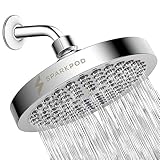

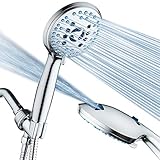

Our Top Picks

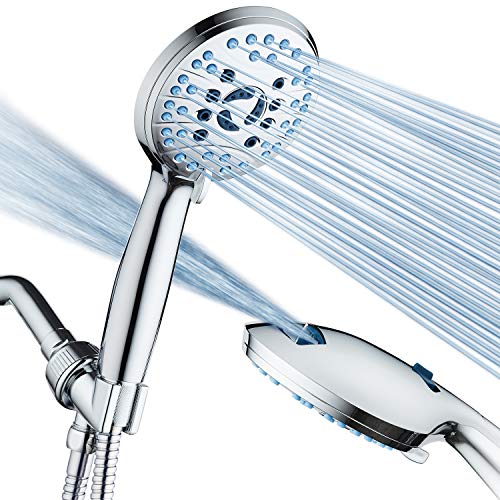

Top 3 picks at a glance
How High-Pressure Actually Works
High pressure in a shower head does not mean it increases your home’s water pressure. It optimizes how the available pressure is used. Most models do this in one of three ways:
- Pressure-compensating flow restrictors: Maintain a consistent 1.8 or 2.0 GPM flow whether your home is at 45 PSI or 80 PSI, preventing the trickle effect in low-pressure plumbing.
- Air injection / Venturi: Mixes air into the water stream to make droplets feel larger and more forceful while using less water.
- Smaller, angled nozzles: Concentrates the same volume of water through fewer or tighter apertures to increase velocity.
If your home has less than 50 PSI at the shower (common in well systems and older buildings), a pressure-compensating model with self-pressurizing nozzles will feel significantly stronger than a standard 2.5 GPM rain head that relies on volume.
The Water-Saving Limit You Need to Know
In the US, federal law limits shower heads to a maximum of 2.5 GPM at 80 PSI, and many states including California and New York require 1.8 GPM under WaterSense. A “high pressure” label does not exempt a product from this limit. What differs is perceived pressure.
A 2.5 GPM head delivers more total water, but a well-designed 1.8 GPM high-pressure head can feel stronger because it accelerates the water. If you are in a 1.8 GPM regulated state, look for models specifically engineered and certified for 1.8 GPM high-pressure performance rather than buying a 2.5 GPM head with a removable restrictor that would be non-compliant.
Worked Calculation: What Flow Rate Really Means for Flow Feel and Water Use
Use this to decide between 1.8 and 2.5 GPM based on your plumbing and bills:
Assume a 10-minute shower, once per day, per person:
- 1.8 GPM x 10 minutes = 18 gallons per shower = 6,570 gallons per year per person
- 2.0 GPM x 10 minutes = 20 gallons per shower = 7,300 gallons per year per person
- 2.5 GPM x 10 minutes = 25 gallons per shower = 9,125 gallons per year per person
The difference between 1.8 and 2.5 GPM is 2,555 gallons per year for one daily user. If your water heater is electric and you heat water from 55F to 105F, that extra volume requires roughly 1,065 kWh per year to heat. For homes with 40-60 PSI, a 1.8 GPM air-injection head often provides better perceived pressure than a basic 2.5 GPM head while cutting that energy and water cost.
Best High Pressure Shower Heads Compared by Spec Class
Instead of ranking one winner, match the design type to your situation. These are established spec classes available in 2026:
| Model Class | Rated Flow | Pressure Technology | Spray Patterns | Filter Compatible | Cleaning System | Typical Price Range |
|---|---|---|---|---|---|---|
| Speakman Anystream S-2252 / Anystream High Pressure | 2.0 – 2.5 GPM | Anystream plunger, pressure-compensating | 3 patterns (intense, massage, combination) | Yes, with standard 1/2″ inline filter | Self-cleaning plungers | Usually $30 – $60 |
| Kohler Forte K-10282 | 1.75 – 2.5 GPM | Katalyst air-induction | 3 patterns (full, pulsating massage, silk spray) | Yes | MasterClean silicone nozzles | Usually $35 – $70 |
| Delta Faucet In2ition Two-in-One | 1.75 – 2.5 GPM | H2Okinetic + Touch-Clean | 5 patterns + handheld combo | Limited – handheld hose restricts some filters | Touch-Clean rubber tips | Usually $60 – $120 |
| Moen Magnetix 26008 / Magnetix 6-Function | 1.75 – 2.5 GPM | Magnetix dock, optimized flow channels | 6 patterns (including high-pressure rinse) | Yes, but check magnetic dock clearance | Silicone nozzles | Usually $50 – $110 |
| High Sierra Classic Plus 622 | 1.5 – 1.8 GPM | Patented nozzle-in-nozzle, air injection | 1 optimized high-velocity pattern | Yes, ideal for low-flow compliance | Anti-clog nozzle, no small holes | Usually $30 – $50 |
Decision Matrix: Which Type to Buy for Your Situation
Use this matrix to eliminate unsuitable options before comparing patterns:
| Your Situation | Choose This Class | Why |
|---|---|---|
| Home pressure below 50 PSI, weak flow upstairs | Speakman Anystream or High Sierra Classic Plus | Designed to accelerate low-pressure water without needing volume |
| You need to meet 1.8 GPM WaterSense / state code | High Sierra Classic Plus 1.5/1.8 GPM or Kohler Forte 1.75 GPM | Certified high-pressure feel at legal low-flow rate |
| You want strong massage and adjustable intensity | Speakman Anystream or Kohler Forte | Mechanical plunger / air-induction creates pronounced massage pulse |
| You need a detachable handheld for cleaning or mobility | Delta In2ition or Moen Magnetix | Handheld provides focused high-pressure rinse at close range |
| Hard water (over 7 grains per gallon) or well water | Any model with silicone Touch-Clean / MasterClean nozzles | Rubber nozzles prevent mineral clogging that kills pressure over time |
| You use or plan to use an inline shower filter | Fixed-mount Speakman, Kohler, or High Sierra | Standard 1/2″ thread without magnetic dock or dual-hose interference |
Spray Patterns That Actually Affect Pressure
Marketing often lists 6-10 patterns, but only three change perceived pressure:
- Full / Concentrated Rinse: Uses all nozzles or a central cluster to maximize velocity. This is your daily high-pressure mode. Look for models where this pattern uses air induction.
- Pulsating Massage: Alternates pressure to feel stronger over sore muscles, but reduces continuous coverage. Good for short use, not for rinsing shampoo quickly.
- Mist / Silk Spray: Feels soft, lowers velocity significantly. Useful for sensitive skin but the opposite of high pressure.
If strong flow is the priority, avoid heads that achieve pattern count by adding weak mist settings. A head with 3 well-engineered high-velocity patterns will feel stronger than one with 9 diluted patterns. High Sierra intentionally offers one pattern to keep velocity high at 1.8 GPM, while Speakman and Kohler tune three patterns to maintain pressure across each.
Flow Rates and Real Pressure Performance
Rated GPM is measured at 80 PSI in a lab. At 45 PSI, a non-compensating head can drop to 1.2 GPM, while a pressure-compensating head holds near its rating. Check the spec sheet for “pressure-compensating” or “flow-compensating” language.
For reference:
- 45-55 PSI: You need pressure-compensating and air injection. A 1.8 GPM High Sierra or 2.0 GPM Speakman will outperform a standard 2.5 GPM rain can.
- 55-65 PSI: Most 1.8-2.0 GPM high-pressure models feel excellent. This is the sweet spot for WaterSense models.
- 70-80 PSI: Any 2.0-2.5 GPM high-pressure head will feel strong. You can prioritize coverage or handheld features over compensation.
Installation and Filter Compatibility
All five classes use a standard 1/2″ NPT fitting and install without tools beyond adjustable pliers and thread tape. Unscrew the old head, clean threads, apply 4-5 wraps of Teflon tape clockwise, hand-tighten plus a quarter turn.
Filter compatibility issues arise after the head is installed:
- Inline shower filters (e.g., carbon or KDF): Add 3-4 inches of length and 8-12 oz of weight. Fixed heads like Speakman, Kohler Forte, and High Sierra handle this fine. Magnetic docks like Moen Magnetix can droop if the filter is not bracketed.
- Filtered shower heads with built-in filters: Usually reduce pressure by 5-10 PSI due to media resistance. Pair them with a high-pressure design or you will lose the benefit.
- Handheld + filter combo: Avoid stacking an inline filter under a handheld hose on Delta In2ition type units unless you have 60+ PSI. The extra hose length plus filter media compounds pressure loss.
Cleaning Requirements to Keep Pressure Strong
Pressure loss after 3-6 months is almost always mineral buildup, not product failure. Maintenance depends on nozzle type:
- Silicone nozzles (Kohler MasterClean, Delta Touch-Clean, Moen): Rub the nozzles with your fingertip while water is running weekly. Soak the face in white vinegar for 30 minutes every 2-3 months in hard water areas.
- Plunger system (Speakman Anystream): The internal plunger is self-cleaning when you switch patterns. Cycle through all patterns for 10 seconds weekly. Avoid soaking the entire head in vinegar longer than 30 minutes as it can affect internal seals.
- Nozzle-in-nozzle (High Sierra): No small holes to clog. Rinse and occasionally soak the nozzle insert. This design needs the least descaling.
If flow drops suddenly, unscrew the head and check the screen washer filter at the inlet. Sediment from municipal work or well systems collects there first.
What to Skip If You Want Strong Flow
- Extra-large 10-12 inch rain heads without air injection: They spread 2.0 GPM over too large an area and feel gentle, not strong.
- Heads with built-in LED or Bluetooth speakers at the low end of the market: They add restriction and often use non-compensating restrictors to power features.
- Removing the flow restrictor to get more pressure: It increases water volume but lowers velocity and voids WaterSense compliance. A proper high-pressure design is faster than a gutted restrictor.
FAQ
Will a high-pressure shower head increase my water bill?
Only if you move from 1.8 to 2.5 GPM. A 1.8 GPM high-pressure head will lower your bill compared to an older 2.5 GPM standard head while feeling stronger due to air injection. Use the calculation above to estimate your household savings.
Can I get high pressure with a 1.8 GPM limit?
Yes. Models like the High Sierra Classic Plus 1.8 GPM and Kohler Forte 1.75 GPM are specifically designed to feel strong at that limit. Look for air-induction and pressure compensation, not just a low-flow label.
Why does my new high-pressure head still feel weak?
Check three things in order: 1) Is the inlet screen washer clogged with debris, 2) Is your home pressure regulator set below 50 PSI, 3) Are you using an inline filter that adds resistance without enough incoming pressure. Cleaning the screen and switching to a pressure-compensating head usually resolves it without plumbing changes.


